[Monkeyflowers: The Genera Diplacus, Erythranthe and Mimulus in the Columbia River Gorge of Oregon and Washington]
Common Monkeyflower, Common Monkey Flower, Seep Monkeyflower, Seep Monkey-flower
Erythranthe guttata
Synonyms: Mimulus
guttatus, Mimulus guttatus var. guttatus, Mimulus guttatus var. lyratus, Mimulus guttatus var. puberulus, Mimulus lyratus
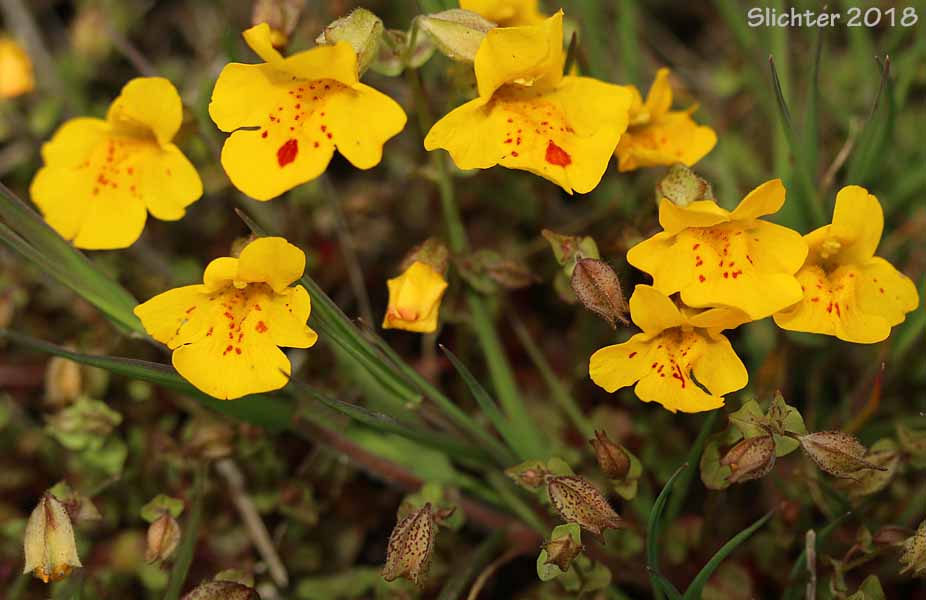
Common monkeyflower in bloom along the Memaloose Trail, Columbia River Gorge......April 14, 2018.
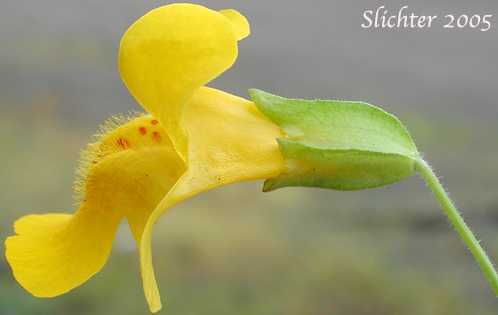 The
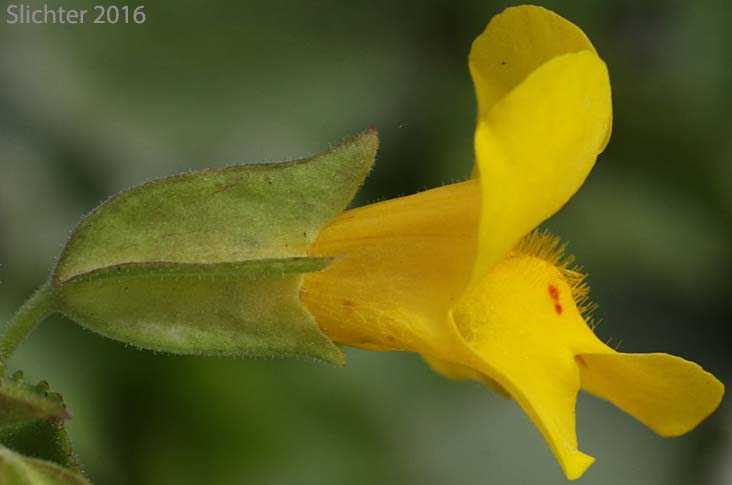
photo at right shows a close-up of the calyx and corolla of common monkey-flower.
Note the larger upper calyx tooth, a characteristic of this species and the hairy
palate and red spotting of the lower lip of the corolla. Photographed along Interstate
84 about one mile west of Celilo, OR........April 24, 2005.
The
photo at right shows a close-up of the calyx and corolla of common monkey-flower.
Note the larger upper calyx tooth, a characteristic of this species and the hairy
palate and red spotting of the lower lip of the corolla. Photographed along Interstate
84 about one mile west of Celilo, OR........April 24, 2005.
Characteristics:
Common monkey flower is a fibrous-rooted annual or perennial
with stout stolons. Depending on moisture content of its habitat, it may be
small to large in its stature. At its largest, its lax stems may arise as high
as 1 meter. The stems are succulent and range from glabrous to lightly pubescent.
The large leaves are palmately veined with 3-7 veins. The lower leaves are petiolate
while those of the upper stem become reduced in size and sessile. Individual
leaf blades are variable in shape, which range from kidney-shaped to ovate or
rounded. The margins are irregularly toothed and the larger leaves may be up
to 10 cm long.
The inflorescence is a terminal raceme of several to 2 dozen
flowers. Smaller flowers may have only one terminal flower. The calyx is tubular
with 5 short lobes, the uppermost being the longest. The tubular corolla is
strongly 2-lipped with a wide flaring throat. Coloration is yellow with multiple
reddish dots or marks in the hairy throat. Corollas range from 1-4 cm long.
Habitat:
Common monkey flower is a plant of moist seeps, springs, and
ditches.
Range:
Common monkey flower is a widespread native species of western
North America. It may be found from Alaska south to California and east to the
Yukon and hence south through the Rocky Mts. to New Mexico.
In the Columbia River Gorge, it may be found between the elevations
of 0'-4000' throughout the length of the Gorge.
 -
-  -
- 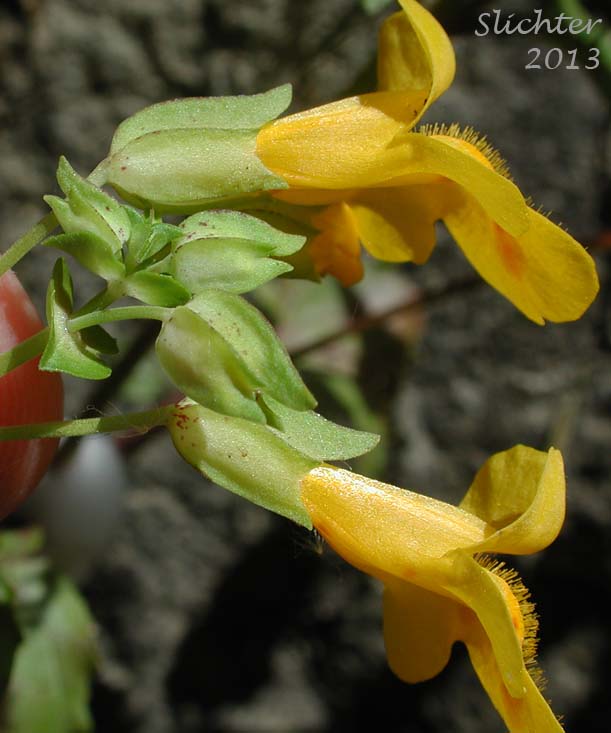
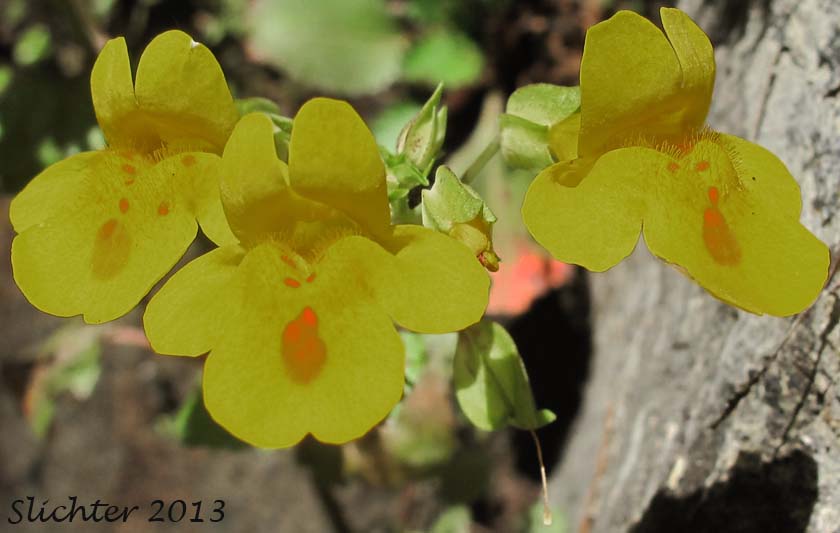
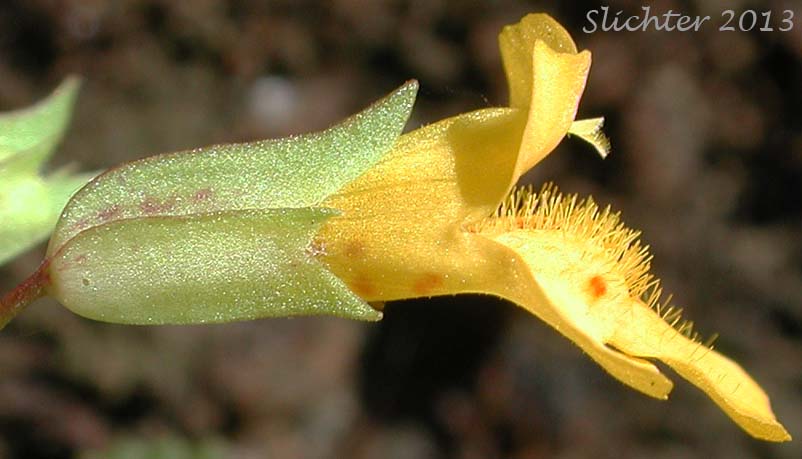
Additional close-up images of the flowers of common monkeyflower as seen along the Eagle Creek Trail, Columbia River Gorge..........May 20, 2013.
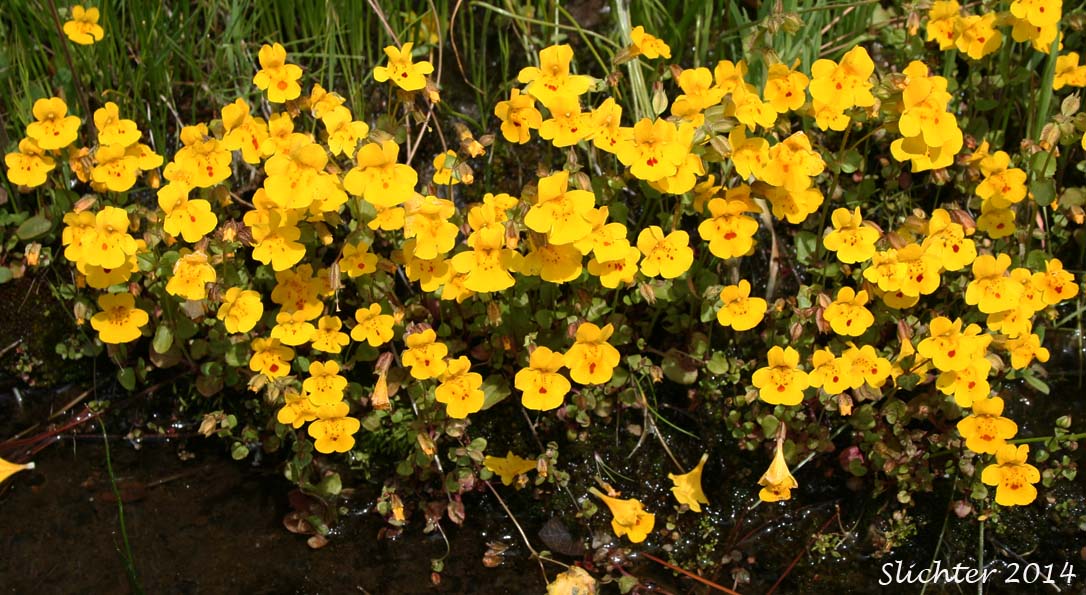
Common monkeyflower as seen at Catherine Creek, Columbia River Gorge.........May 2, 2014.
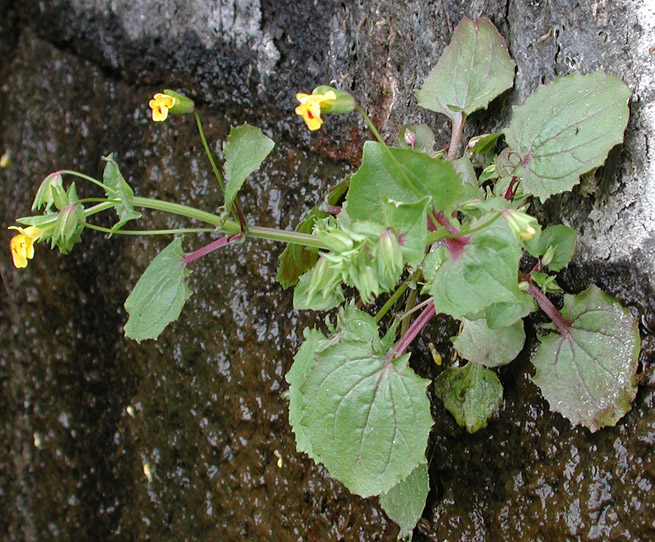
The photo above shows common monkey flower as seen on moist cliffs
near Sherar's Bridge on the Deschutes River.......April 18, 2004. Note
the large red spot on the lower lip of the corolla. This plant might at first
sight pass for chickweed monkeyflower, but when one looks at the calyx, one
can note that the upper tooth is much longer than the other calyx teeth, a characteristic
of common monkey flower. Note also the palmately veined leaves and the angular
stems.
Common monkeyflower still in bloom in Eightmile Creek atop the waterfall just uphill from the Crawford Oaks Trailhead in Columbia Hills State Park..........October 2, 2016.
 -
- 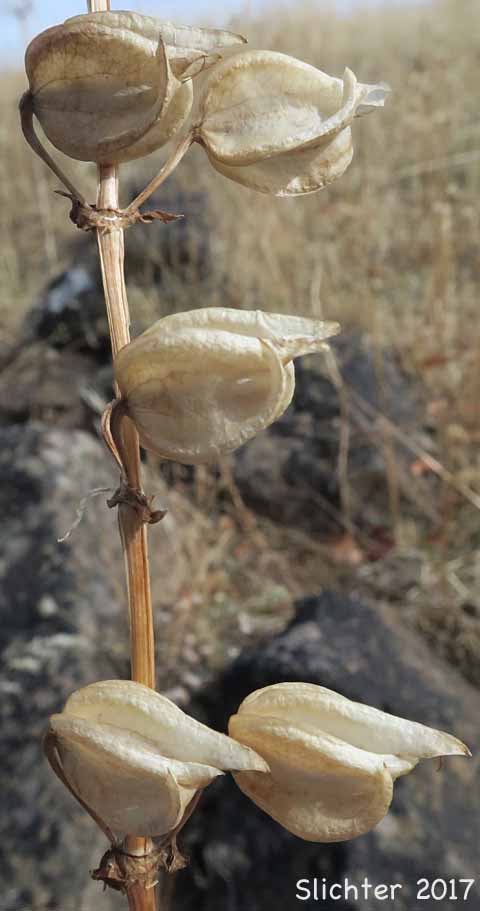
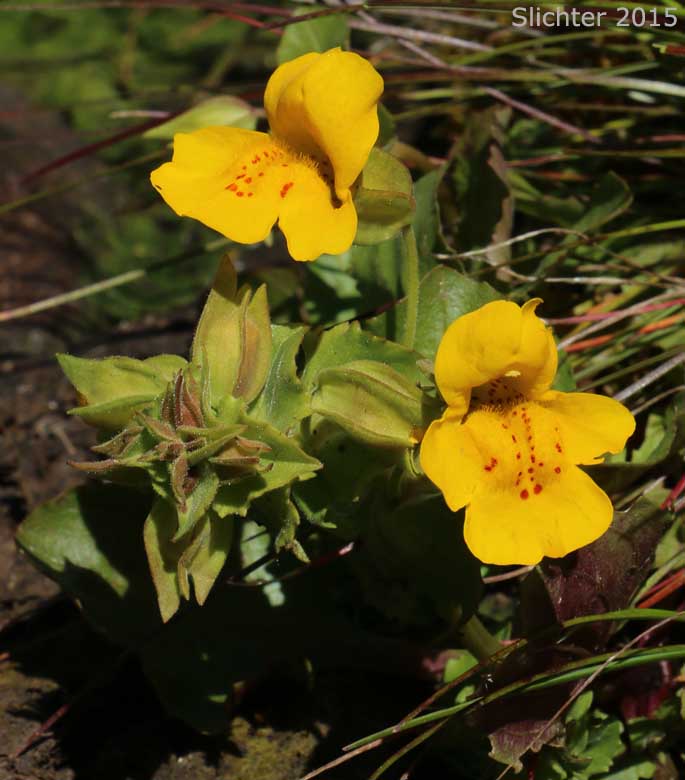
Common monkeyflower as seen at left at a small stock pond near the northwest corner of Columbia Hills State Park..........April 16, 2015. The photo at right shows the dry calyces (with prominent upper calyx tooth) as seen in vernally moist streambeds near Sheep Canyon, Klickitat Wildlife Area.......October 9, 2017.
 -
- 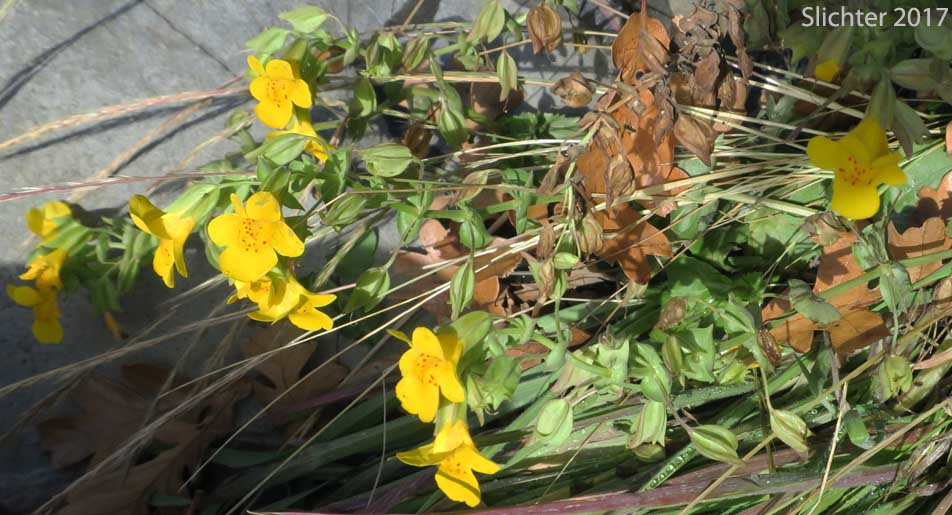
Common monkeyflower blooming at left with rosy plectritis on open slopes directly east of Warren Creek along the Starvation Creek Ridge Trail #414, Columbia River Gorge........April 26, 2015. The photo at right shows a late-blooming common monkeyflower in Eightmile Creek at the top of the waterfall above the Crawford Oaks Trailhead at Columbia Hills State Park.........November 18, 2017.
 -
- 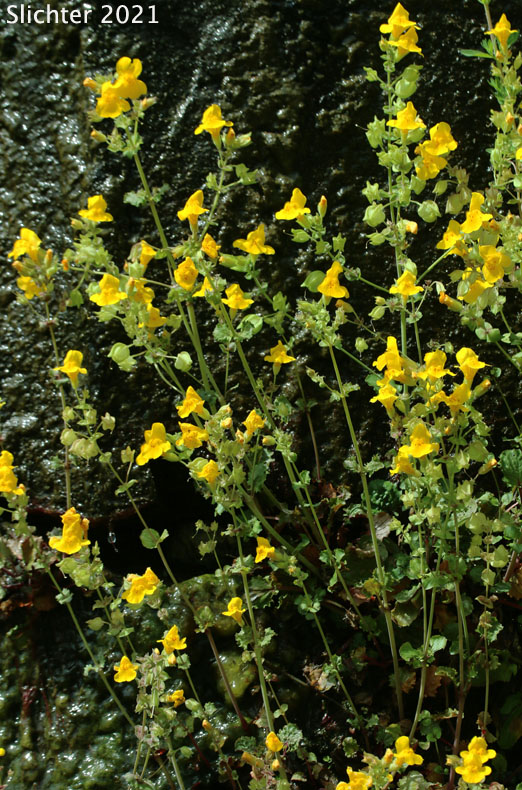
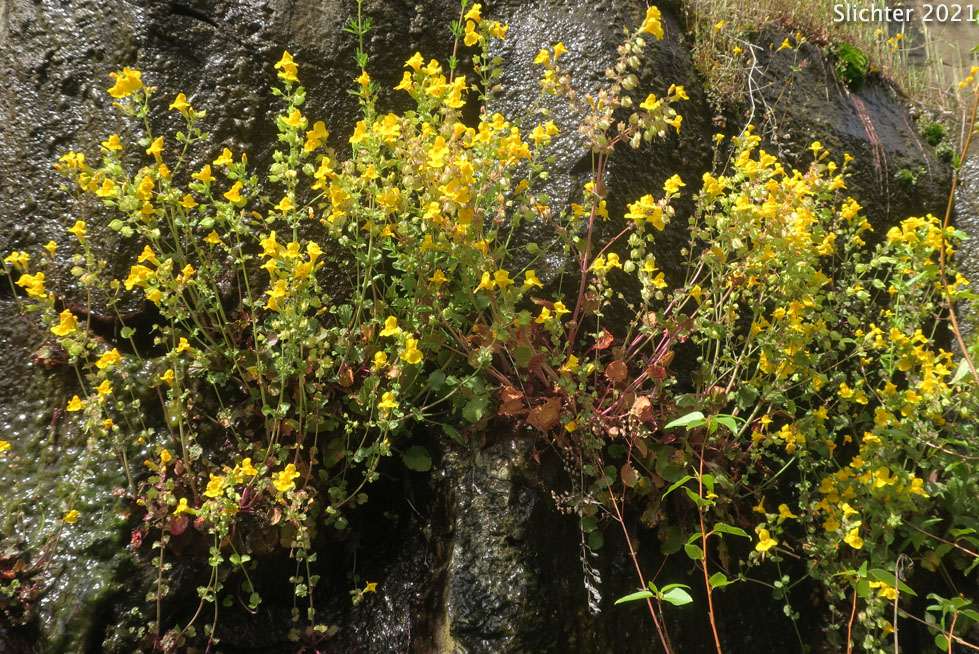
Common monkeyflower in bloom at seeps above the Klickitat River near Klickitat, WA.....April 29, 2021.
 -
- 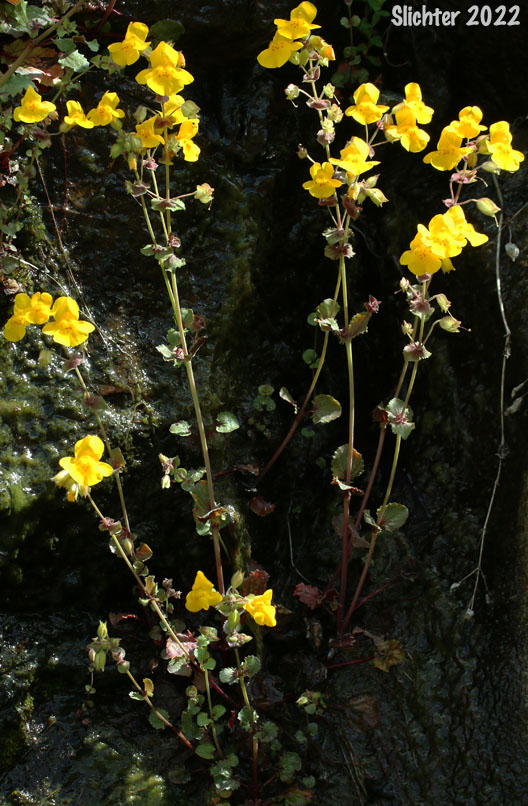
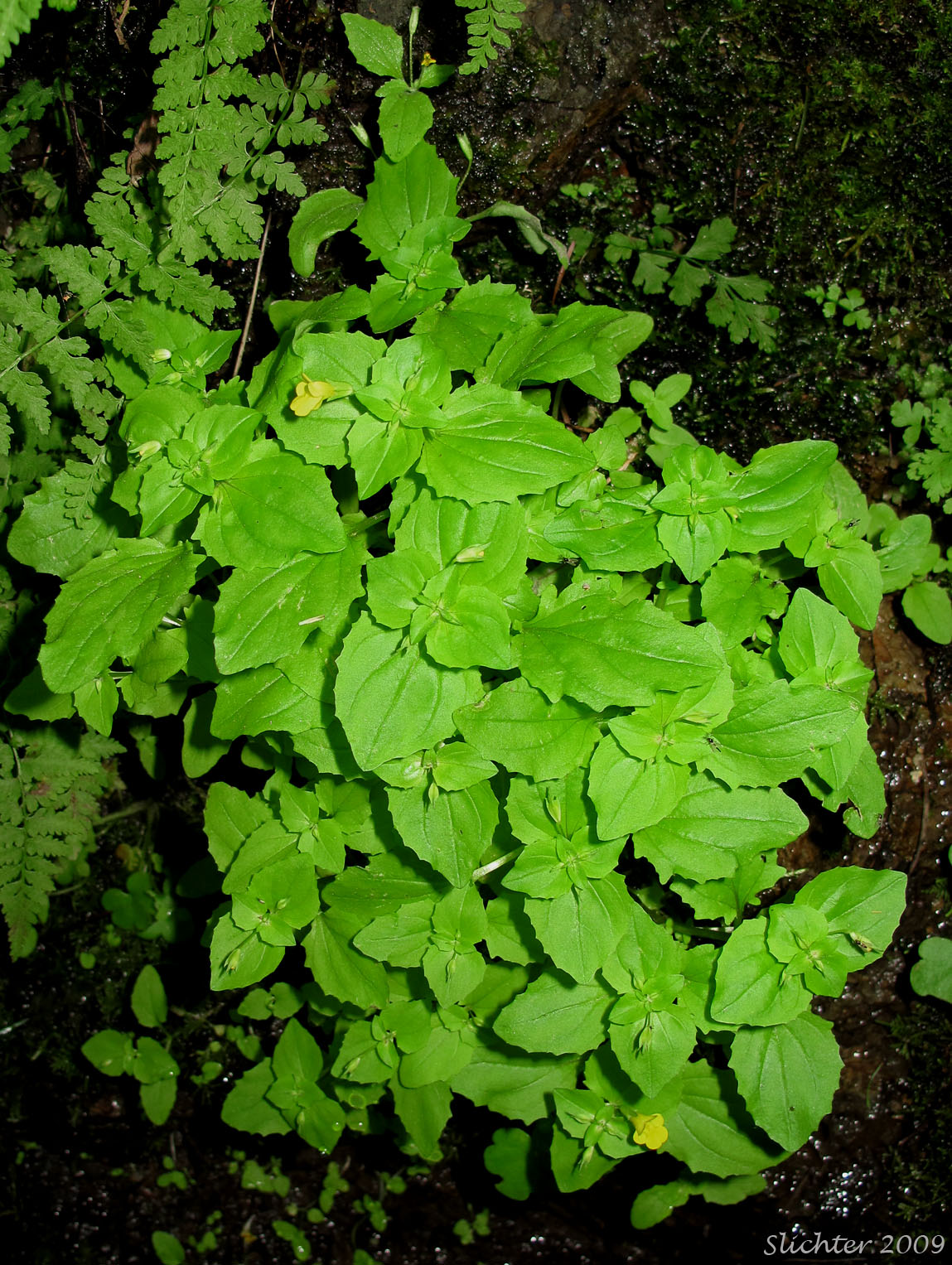
Common monkeyflower beginning to bloom at left at a seep on the steep, north-facing slopes of the McCord Creek Trail in the western Columbia River Gorge.........May10, 2009. The photo at right shows common monkeyflower blooming at a seep on basalt cliffs above the Klickitat River north of Klickitat, WA......April 29, 2022.
Paul Slichter