[Asters: The Genera Canadanthus, Eucephalus, Eurybia, Oreostemma and Symphyotrichum Found East of the Cascade Mountains of Oregon and Washington]
Eastern Showy Aster, Eastern Showy Wood-aster, Showy Aster, Western Showy Aster
Eurybia conspicua
Synonym: Aster conspicuus

The photo above shows showy aster from Swauk Campground, Wenatchee N.F............July
23, 2009.
Characteristics:
Showy aster is a stoloniferous aster, with solitary, stout stems arising from
woody rootstock. Leaves are large, ovate, elliptic, or obovate, up to 17 cm
in length, and up to 8 cm wide. The leaf margins are serrate. The flower heads
are few to numerous (10-40), in a narrow, leafy inflorescence. The rays are
violet or pale blue, the disc flowers yellow.
Habitat:
Showy aster is found in brush-filled openings in shady coniferous woods, at
medium elevation in the mountains.
Range:
Showy aster is found from northeast Oregon, north to British Columbia, east
to Saskatchewan and through central Idaho to northern Wyoming.
 -
- 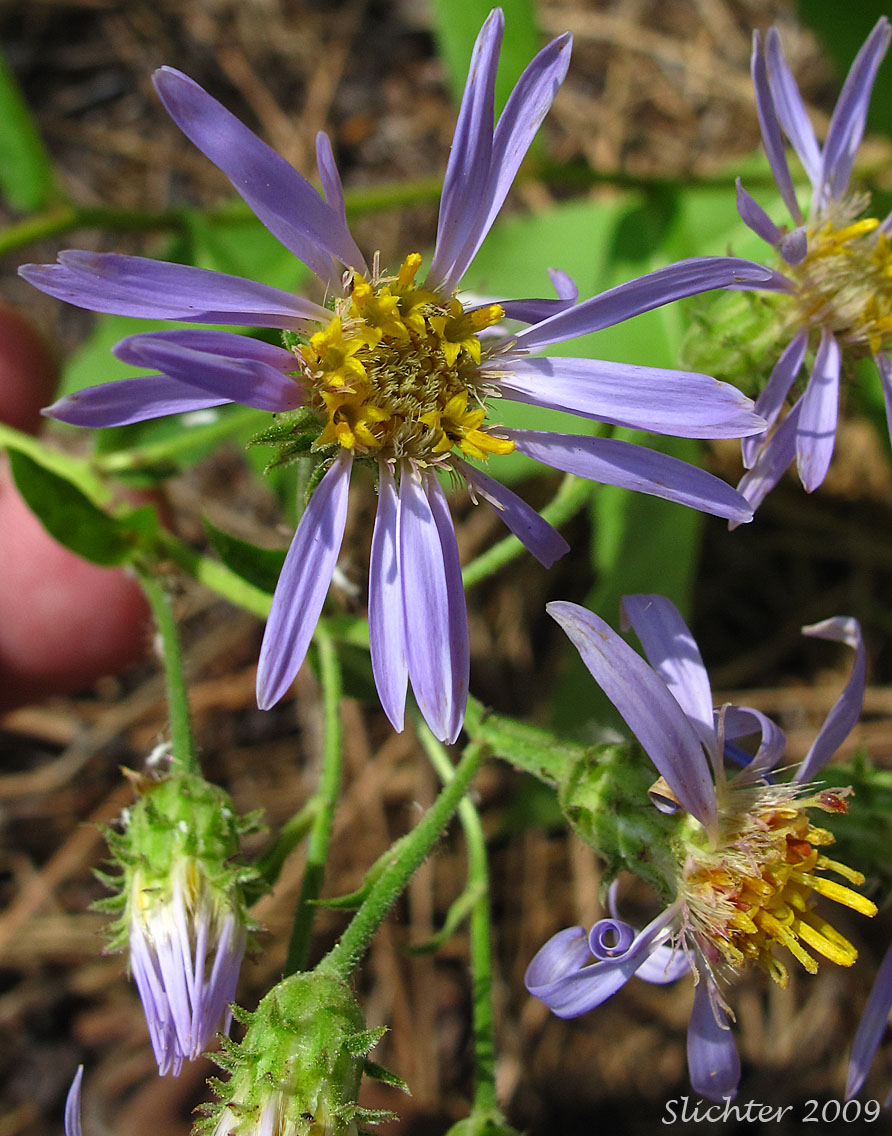

These 3 photos show close-ups of the flower heads and stem leaf of showy aster as seen from Swauk Campground, Wenatchee N.F............July
23, 2009.
 -
-  -
-  -
- 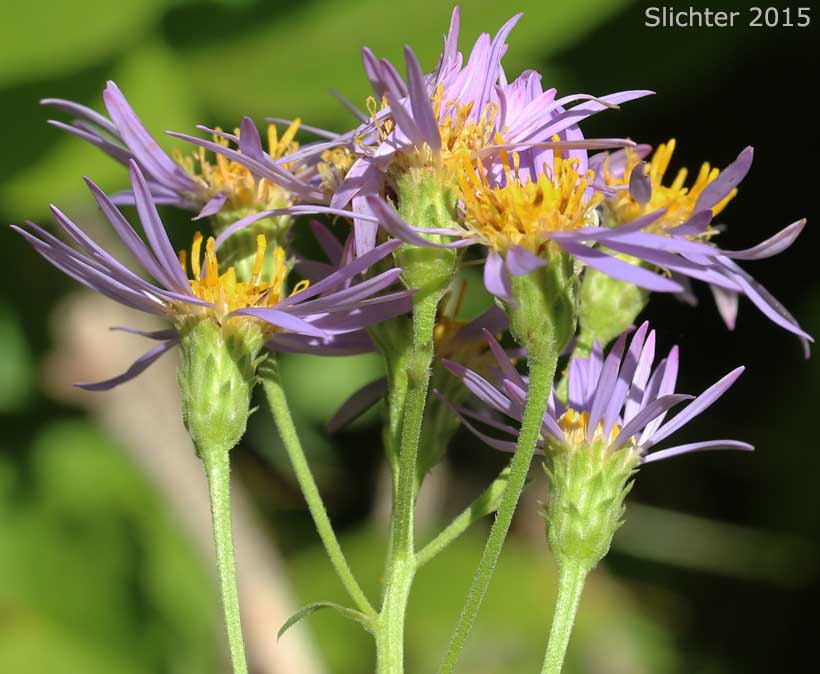
Showy asters blooming on open, gravelly slopes along the Slide Basin Trail #372 about one-quarter mile uphill from the junction with Trail #5005, Strawberry Mountain Wilderness.........August 11, 2015.
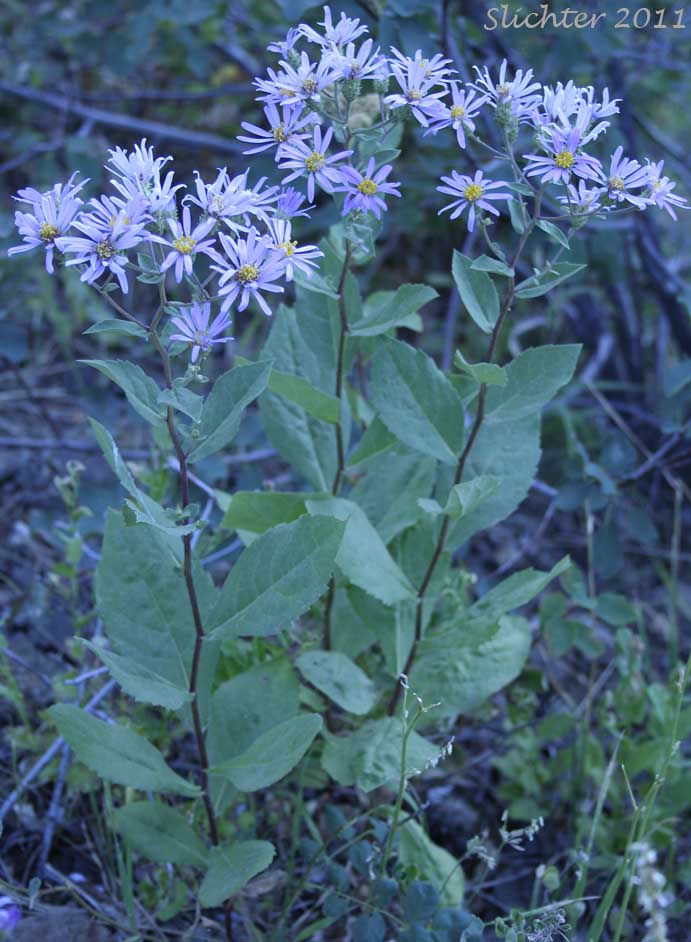
Showy aster as seen along Canyon Mountain Road just downhill of the Malheur National Forest boundary............August 19, 2011.
 -
-  -
-  --
--
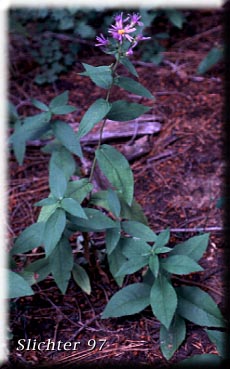
These 4 photos show showy aster from both the Bowman Trail and Chief Joseph Trail, Eagle Cap
Wilderness..........July 27, 1997.
Paul Slichter