[Biscuitroots and Desert Parsleys: The Genus Lomatium East of the Cascade Mts. of Oregon and Washington]
Donnell's Biscuitroot, Donnell's Lomatium, Glaucous Desert Parsley, Glaucous Lomatium
Lomatium donnellii
Synonym: Lomatium plummerae
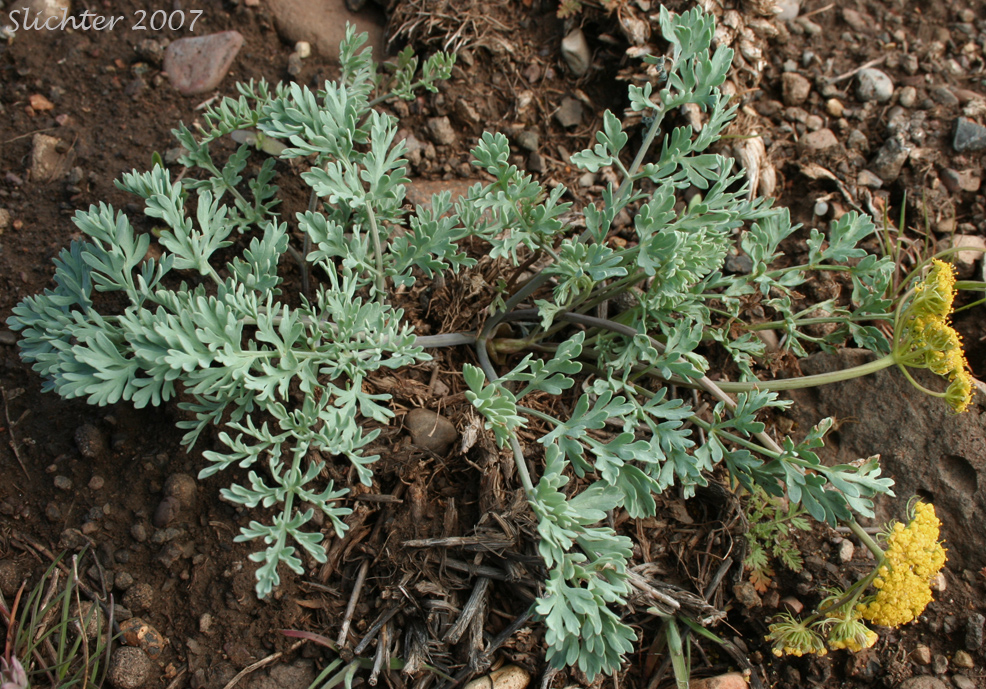
Glaucous desert parsley as seen along Ramsey Canyon Road several miles south of Condon,
OR in the northwestern foothills of the Blue Mts..........April 8, 2007.
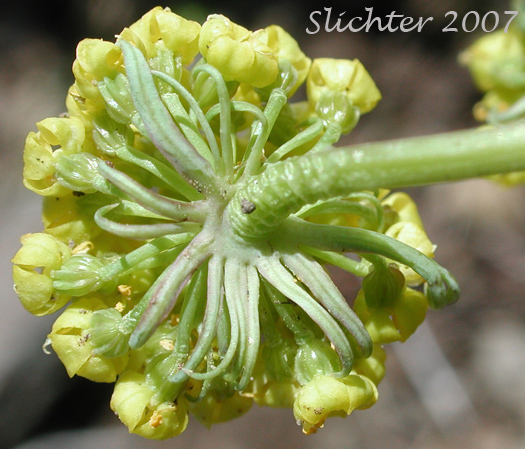 The
photo at right shows the distinct bracts below the umbelet of glaucous desert
parsley. The bracts are often found to one side of the underside of the umbellet.
The
photo at right shows the distinct bracts below the umbelet of glaucous desert
parsley. The bracts are often found to one side of the underside of the umbellet.
Characteristics:
Glaucous lomatium is also known as Donnell's desert parsley.
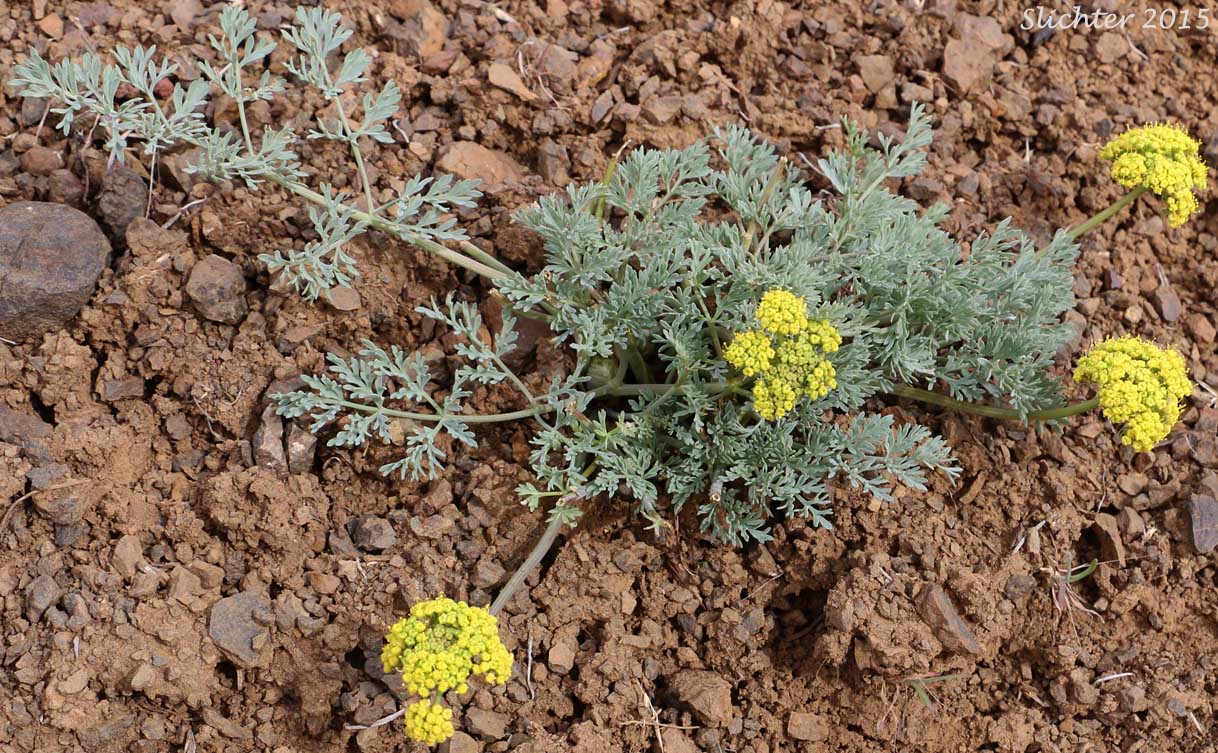
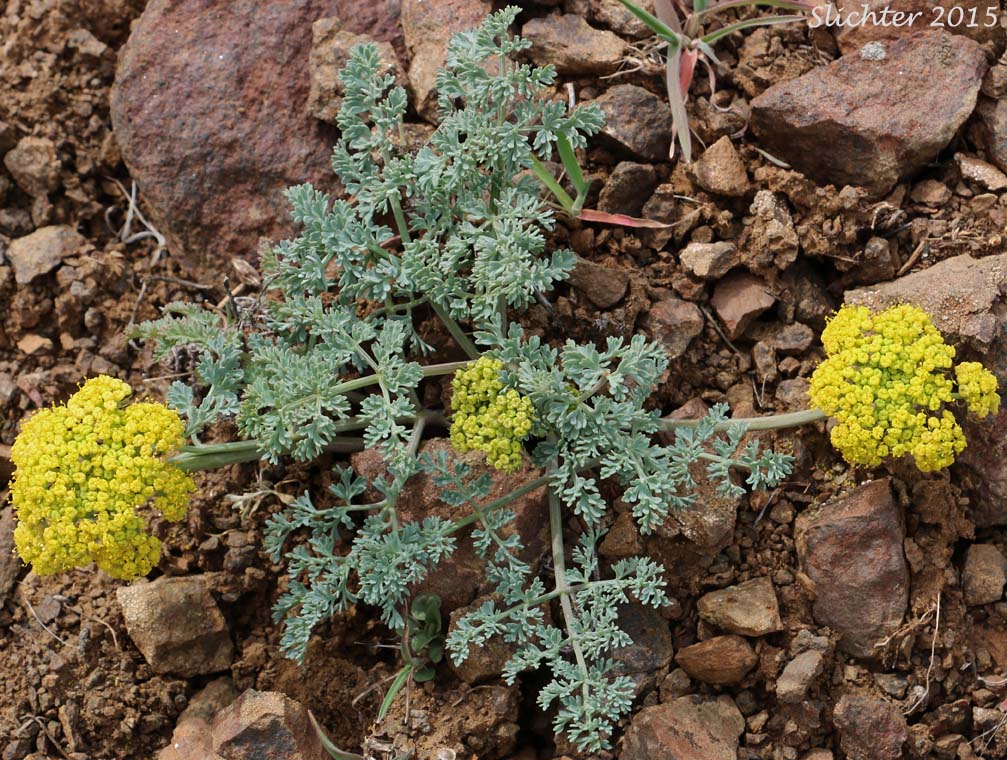
It is a fairly attractive perennial wildflower with its lacy leaves, glaucous
herbage, and tufts of yellow flowers. The one to several stems are largely leafless
and ascend from 15-30 cm high. The herbage is glabrous and highly bluish-glaucous.
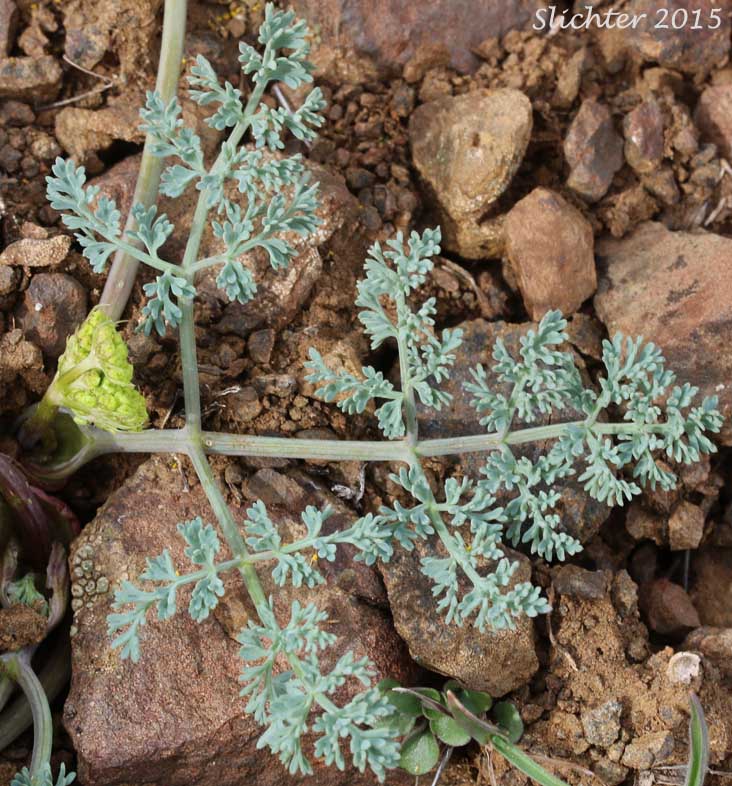
The short-petioled leaves are 5-10 cm long and are clustered near the base of
the plant. The base of the petioles, especially on the higher leaves, is broadly
expanded and sheathing on the scape, and may be reddish in color. The leaves
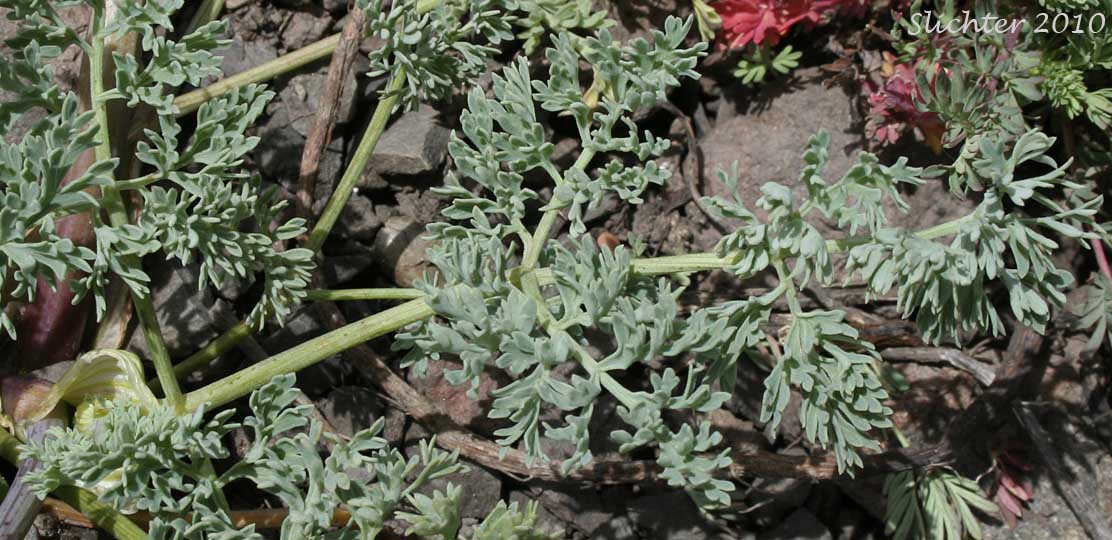
are ternate-pinnately divided into numerous elliptic-oblong to wide, linear
segments from 2-8 mm long. and from 1-2 mm wide (See photo below.)
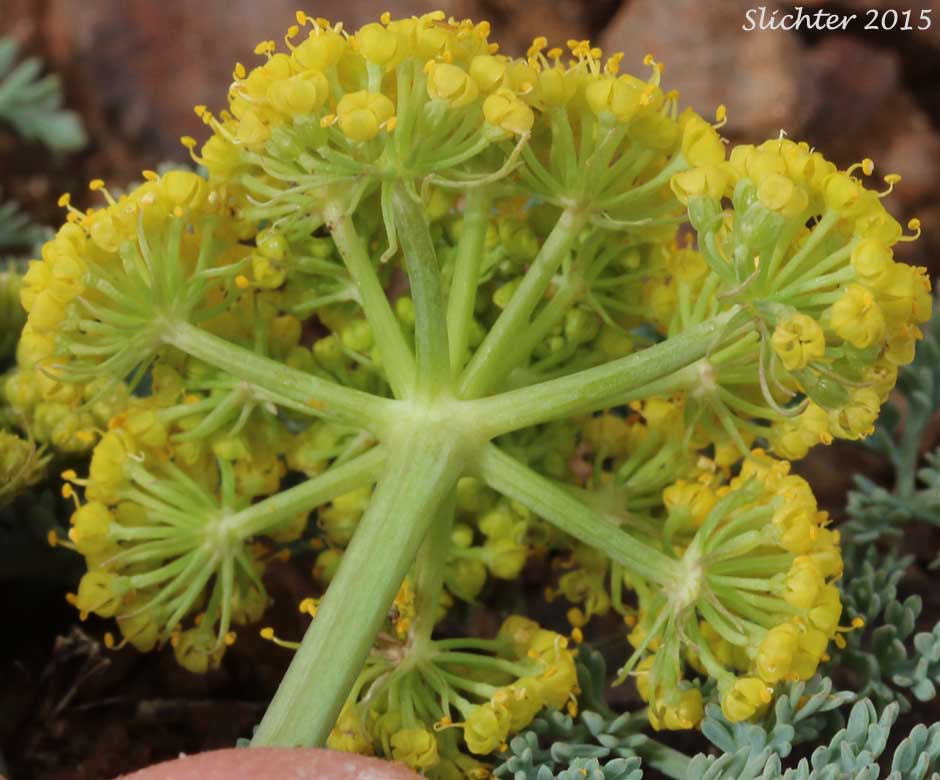
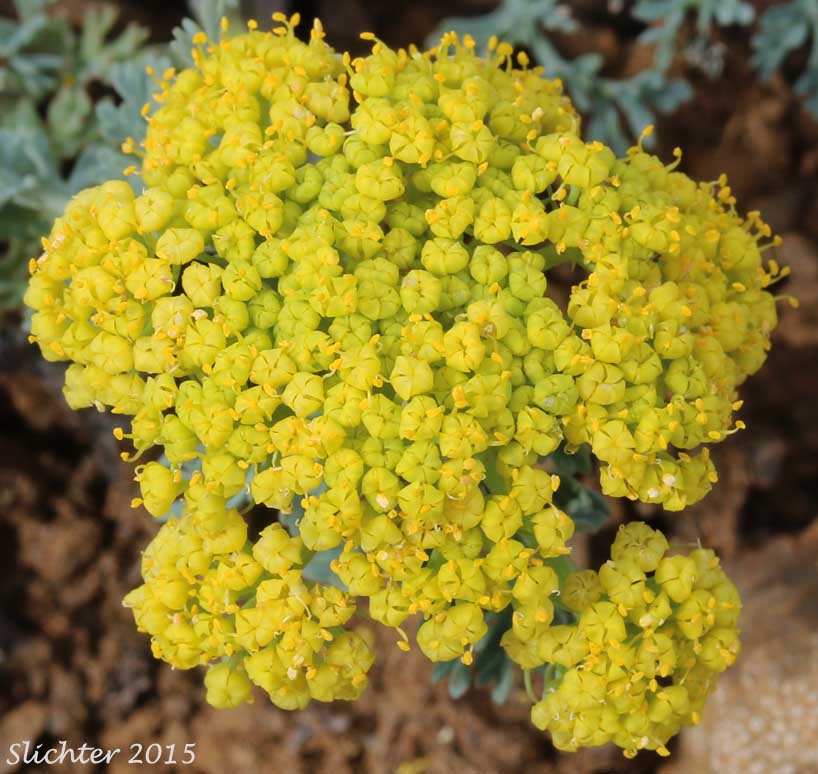
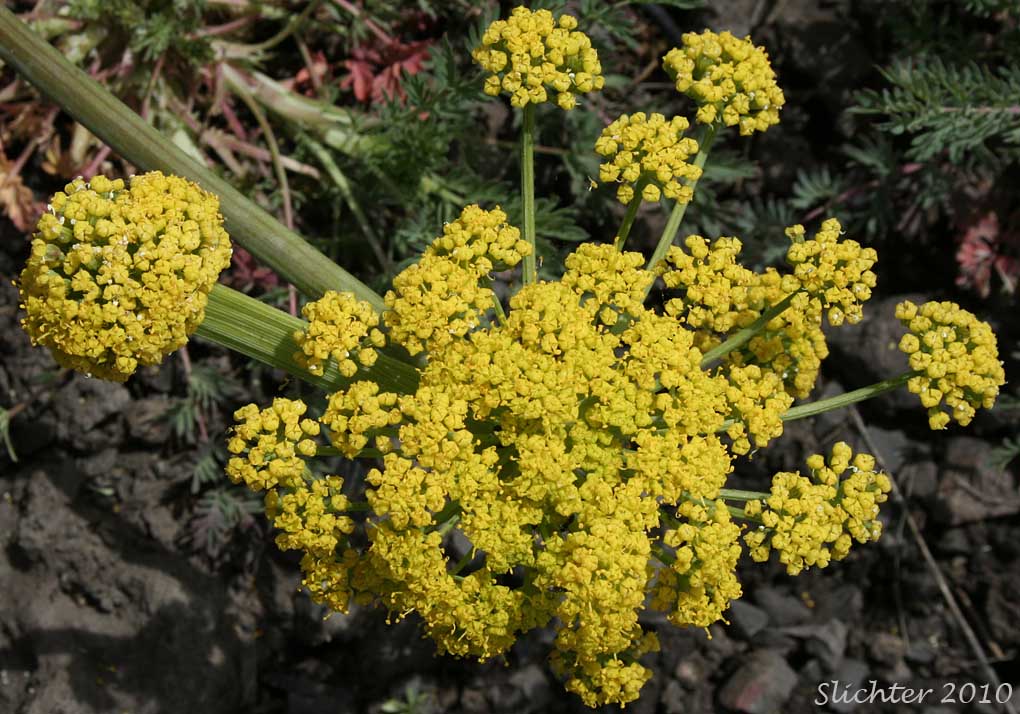
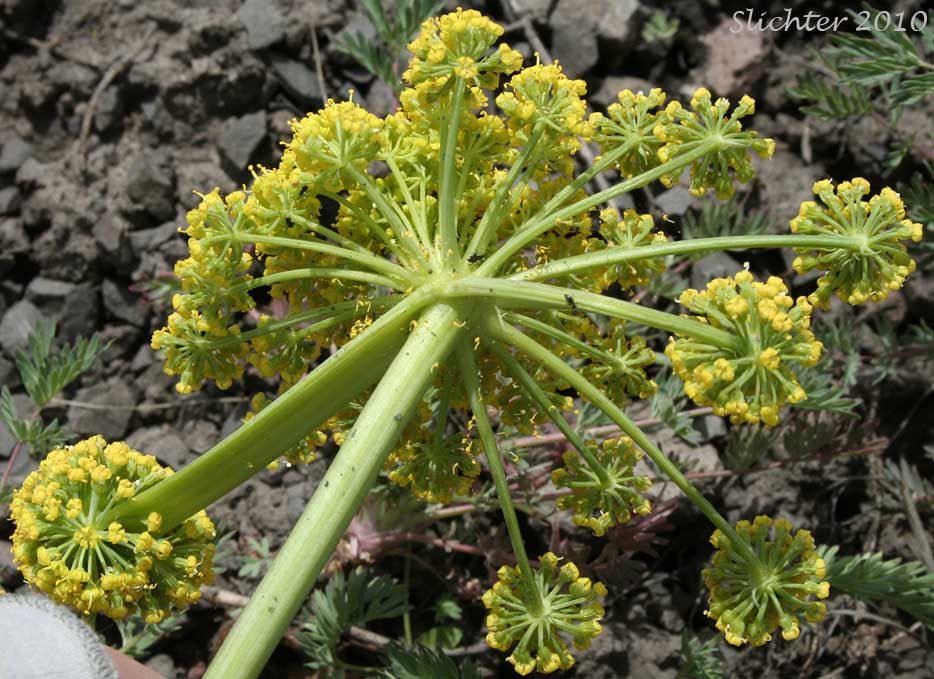
The inflorescence consists of a complex umbel of 8-30 unequal
stems, elongating from 1.5-9 cm long and topped by a small umbellet. The umbellets
are subtended by distinctive bracts as seen at right. The pedicels are 4-12
mm long while the flowers are yellow. The fruit are elliptic or elliptic-ovate
with the wings one-fifth to one-half as wide as the body. The fruit range from
5-10 mm long.
Habitat:
Glaucous desert parsley may be found on dry, open, rocky or
gravelly slopes, ridgetops, and in dry meadows in the foothills, valleys, and
lower mountains.
Range:
Glaucous desert parsley may be found in central and southeastern
Oregon from northern Jefferson and southern Wasco Counties and southern Gilliam
and Union Counties southeast to Harney and Malheur Counties.
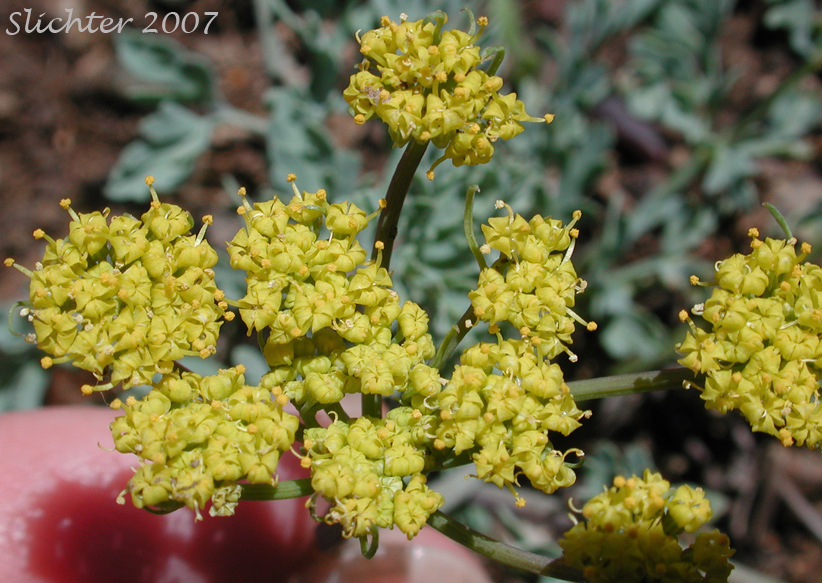
The photo above shows a close-up of the inflorescence of glaucous lomatium as seen south of Condon, OR.........April 8, 2007.
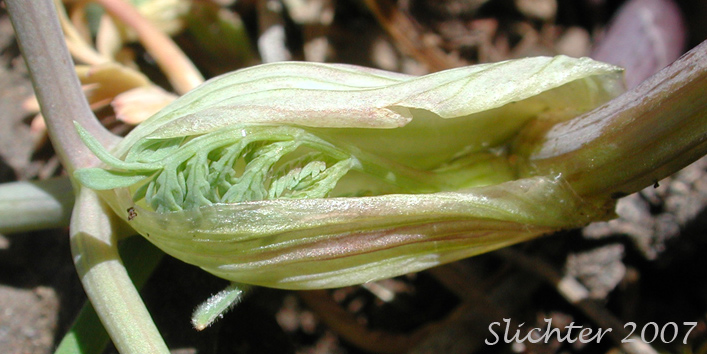
Note the broad, sheathing base of the petiole of glaucous lomatium.
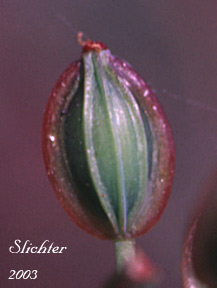
The photo above shows a close-up of the fruit
of glaucous lomatium as seen south of Condon, OR..........May 21, 2000.
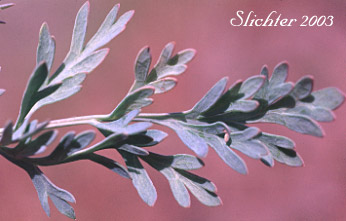
The photo above shows a close-up of the glaucous
leaflets of glaucous lomatium as seen south of Condon, OR........May 21, 2000.
 -
- 
 -
- 
 -
- 
Glaucous desert parsley as seen along Oregon Highway 218 near the top of the grade several miles north of Antelope, Oregon.........March 10, 2015.
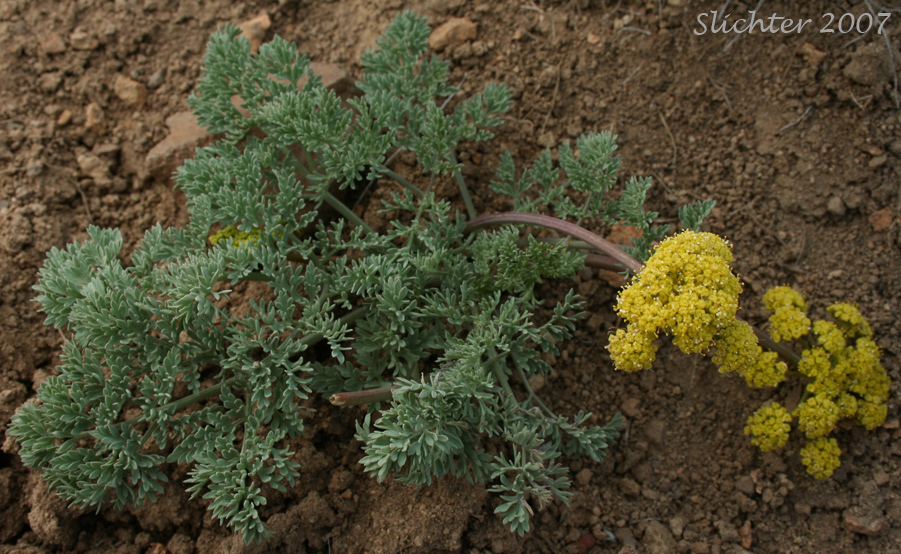
The photo above shows a nice specimen of glaucous desert parsley as seen several miles north of Antelope, OR.........April 19, 2007.
 -
- 
 -
- 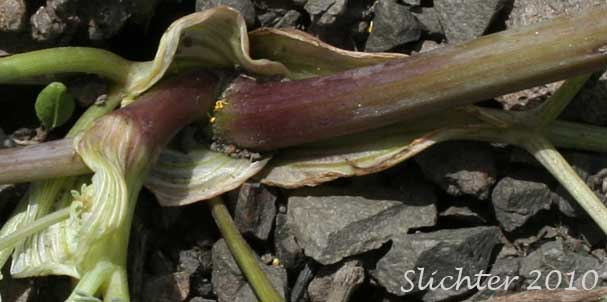
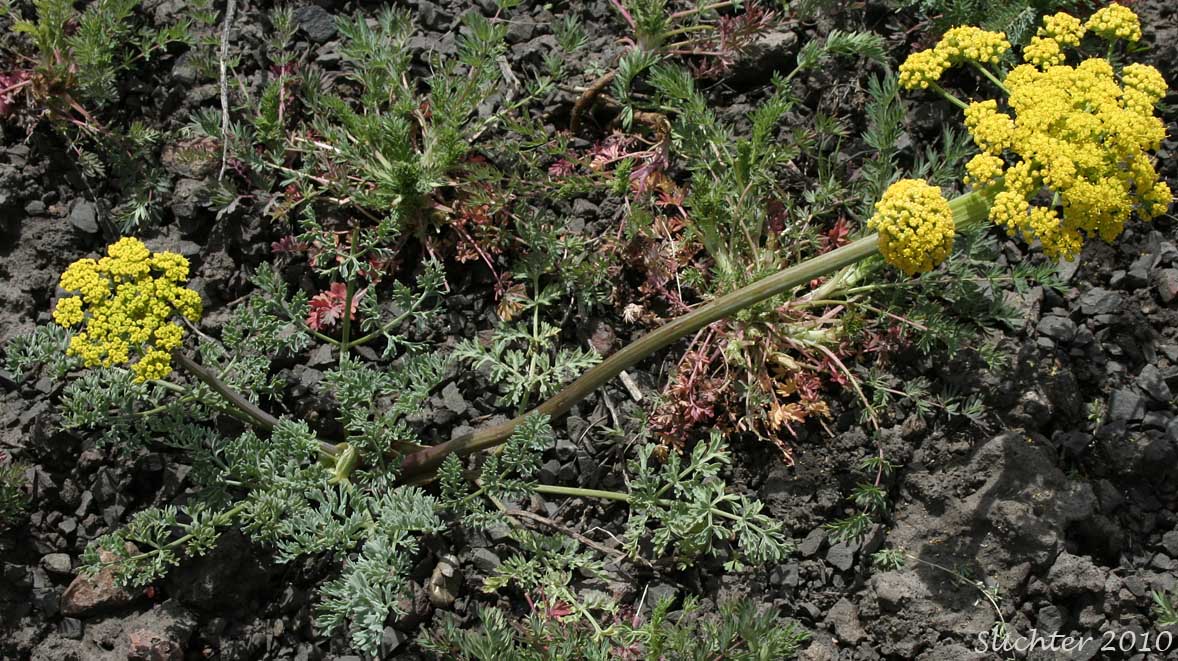
Additional close-up photos of glaucous lomatium as seen along Oregon Highway 218 at the summit of the pass between Antelope, OR and Clarno, OR........May 16, 2010.
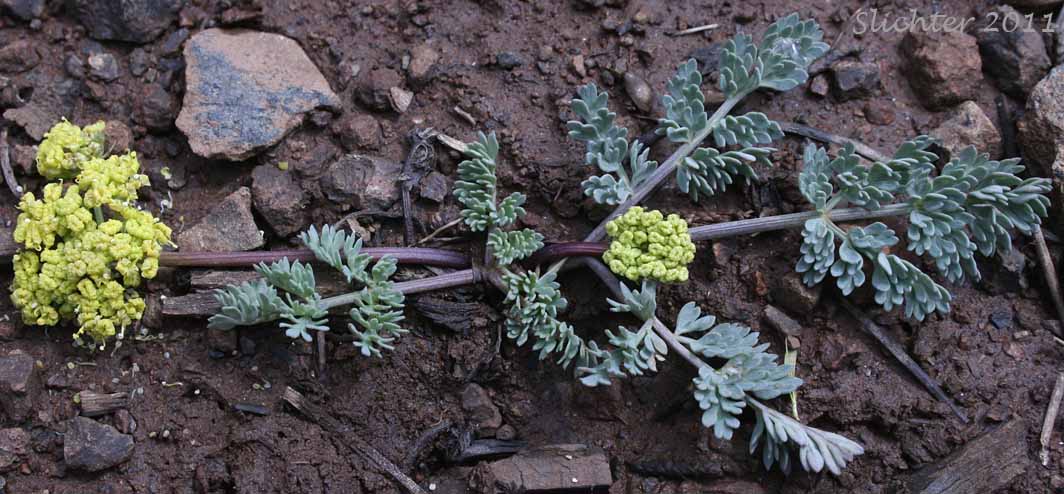 -
- 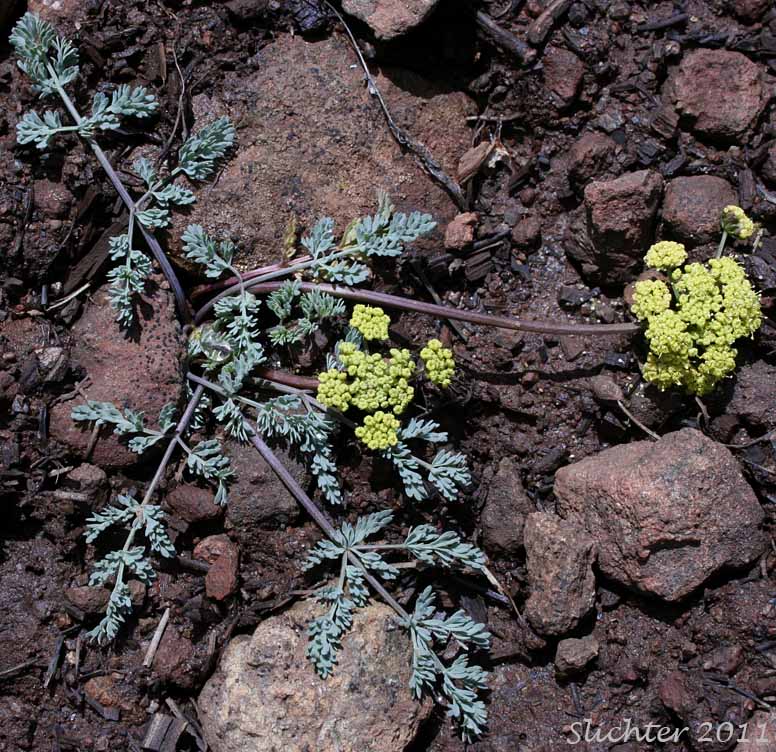
Several examples of glaucous desert parsley as seen along FS Road 5401-811 near the Malheur National Forest Boundary on the north-facing slopes of Baldy Mountain.........June 3, 2011.
 -
- 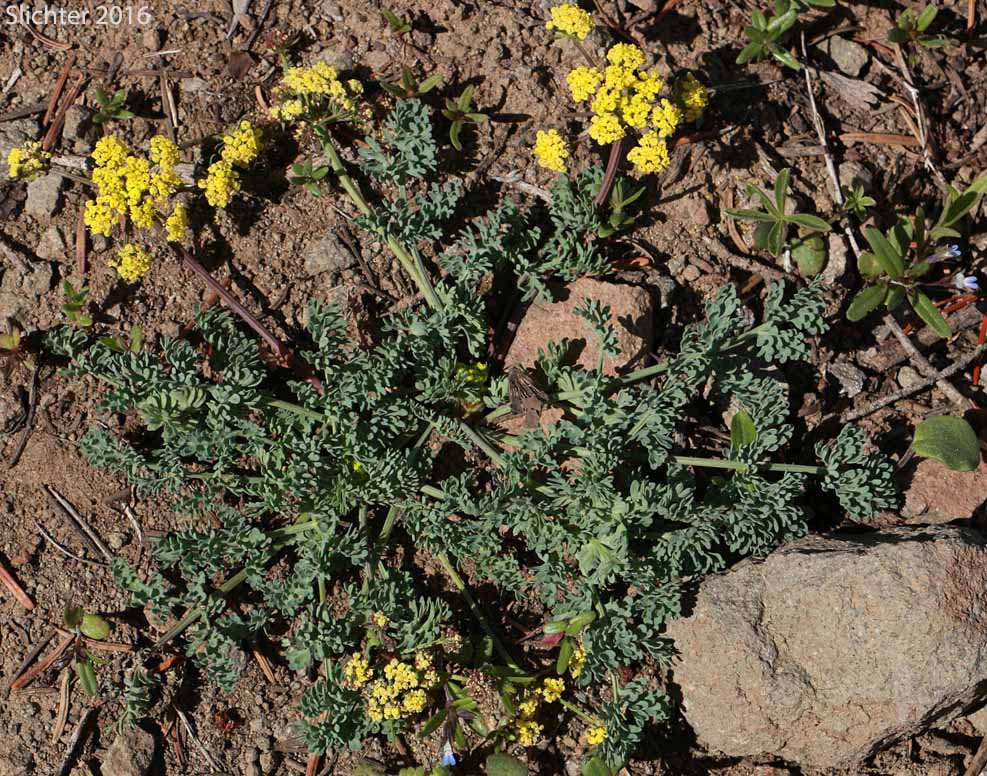
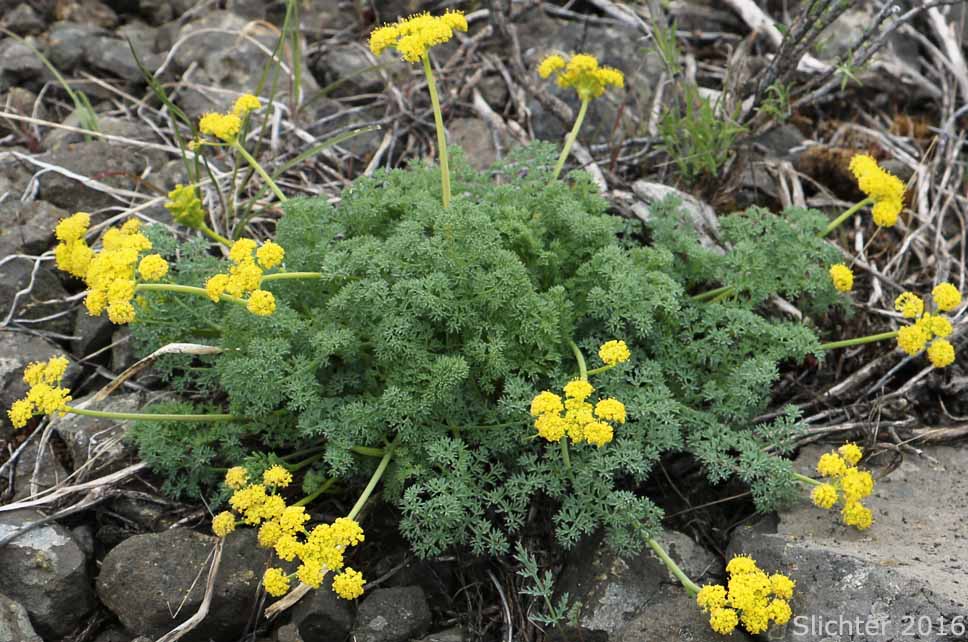
Glaucous desert parsley as seen (left) at the junction of FS Roads #42 and #3010 at the southeastern corner of Big Summit Prairie, Ochoco National Forest.........April 29, 2016. The photo at right shows glaucous desert parsley as seen along the Round Mountain South Trail #805 just south of the summit of Round Mt., Ochoco National Forest.........May 28, 2016.
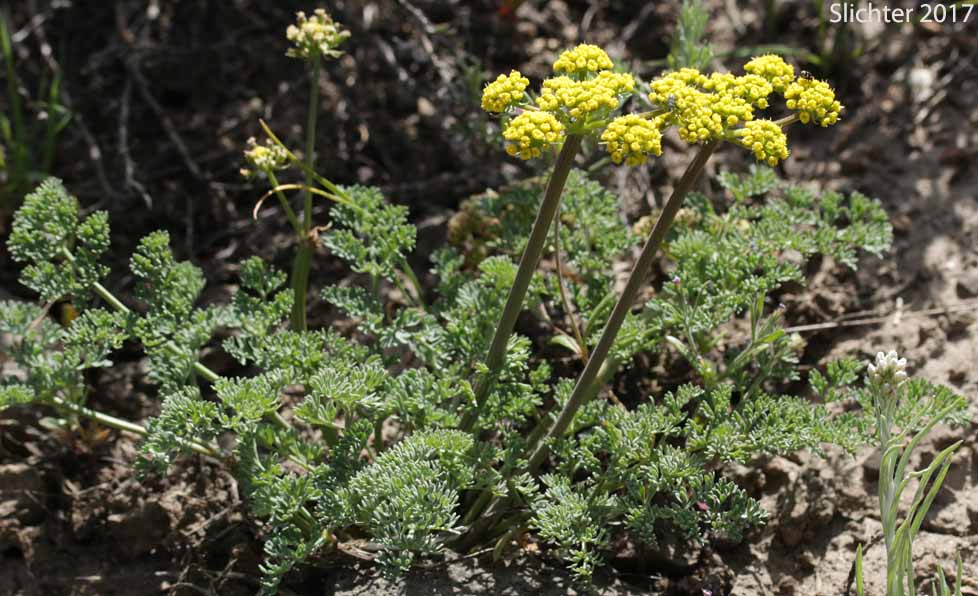
Glaucous desert parsley as seen in scablands along Forest Road #30 at the eastern edge of Big Summit Prairie, Ochoco National Forest........May 10, 2017.
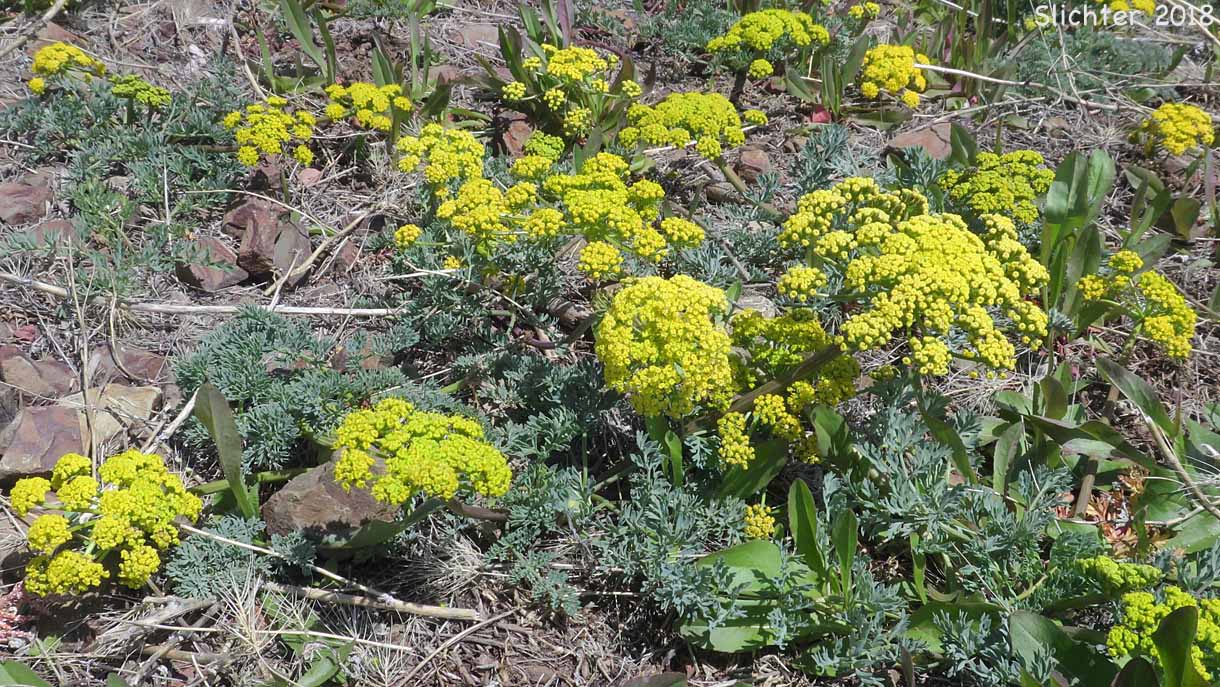
Glaucous desert parsley blooming on open ground between Gray Butte and Pine Ridge, Crooked River National Grasslands......April 24, 2018.
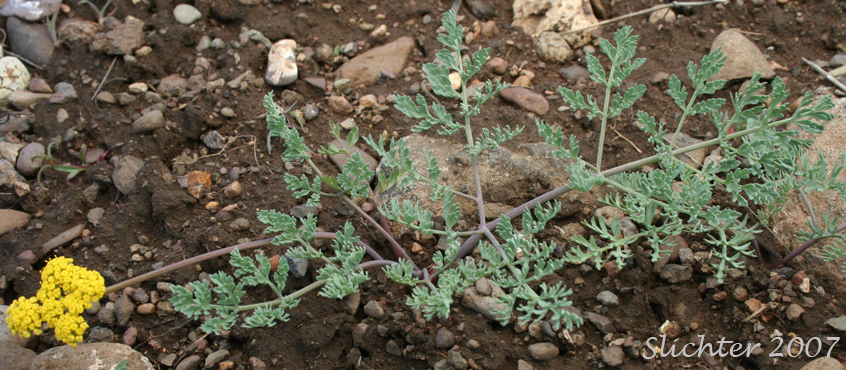
The photo above shows glaucous lomatium as seen south of Condon, OR...........April 8, 2007.
Paul Slichter