Besseya, Red Besseya, Red Coraldrops, Red Kittentails
Synthyris rubra
Synonym: Besseya rubra
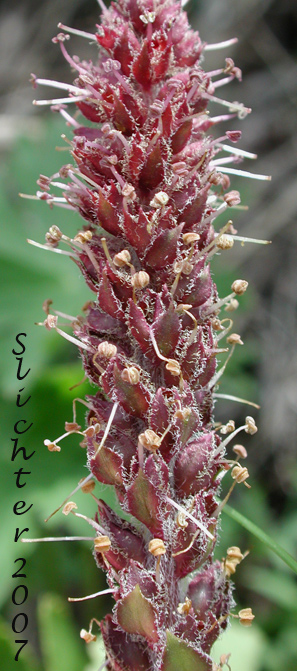
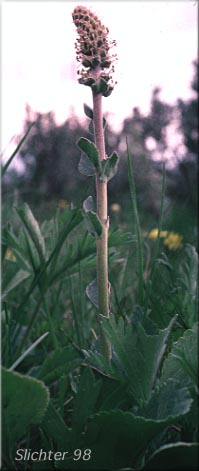
The photo above shows the inflorescence of red besseya as seen from grasslands next to Hog Lake east of Sprague, WA........April 29, 2006.
Characteristics:
Red besseya is a perennial from 20 to 60 cm tall. It is softly
short-haired (villous-puberulent), especially when young, and may be largely
glabrous (non-haired) in older plants. The basal leaves
are 4 to 12 cm long, elliptic-ovate to subrotund in shape, and either coarsely
toothed or often doubly crenately toothed. The base of most basal leaves is
deltoid to subcordate. The stem leaves are increasingly reduced in size up the
stem, and they are sessile.
The inflorescence is elongate, at first more compact, and then
extending as the flower season proceeds. Petals are either absent, or very much
reduced. The sepals as a unit are 3 to 4 lobed,often being unequal in size and
shape. The stamen filaments are often dark red and 4 to 6 mm in length.
Habitat:
Red besseya is found on opens slopes and in dry meadows in the
lowlands and foothills.
Range:
Red besseya is found entirely east of the Cascade Mountains in
Washington, and from central Oregon eastward to western Montana.
 -
-  -
- 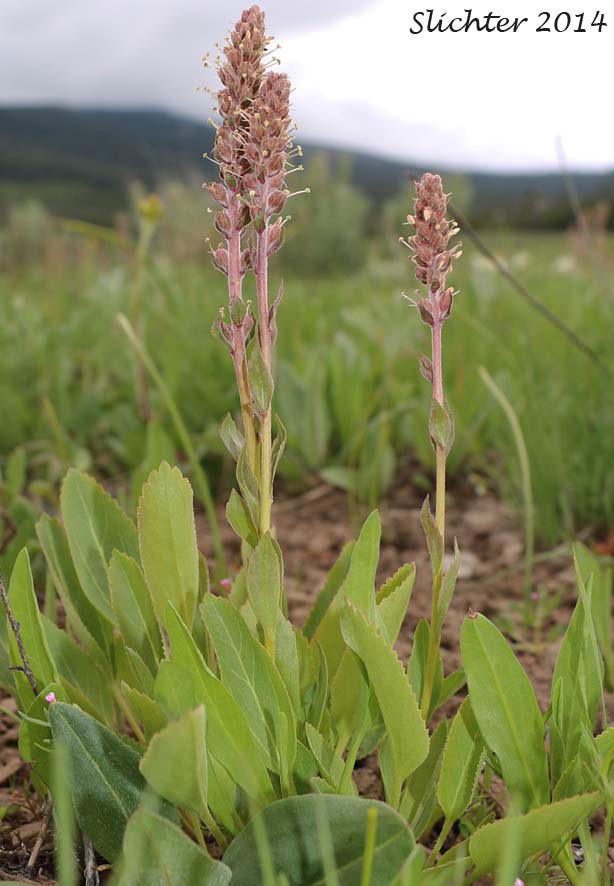
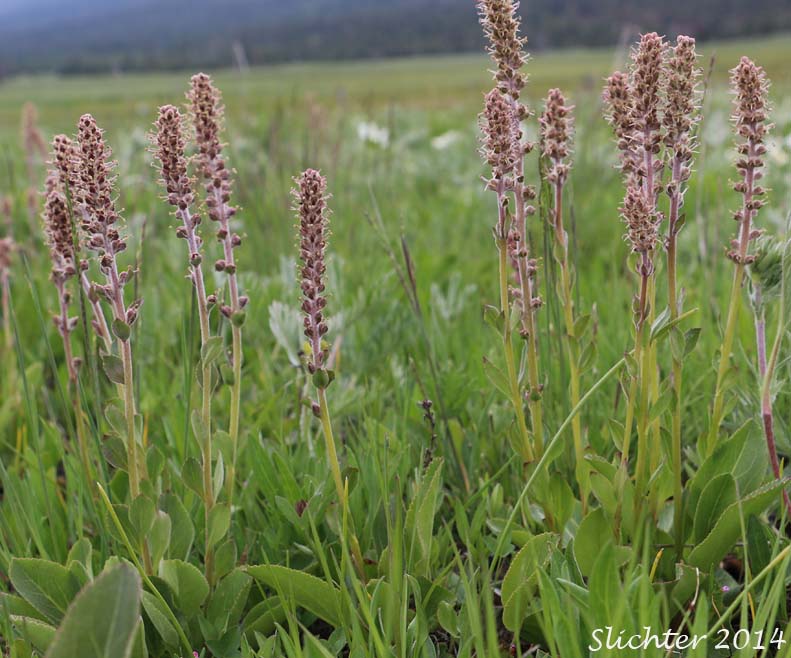
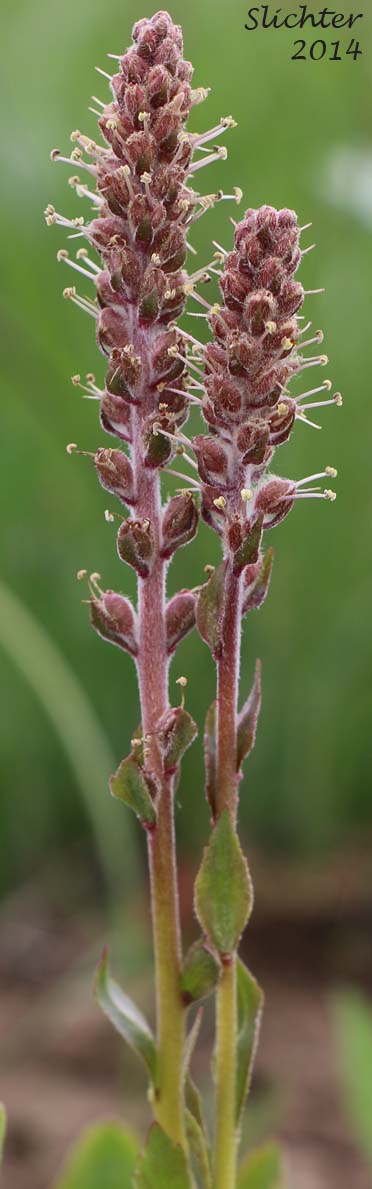
Red bessyeya as seen blooming in Summit Prairie, Malheur National Forest..........May 28, 2014.
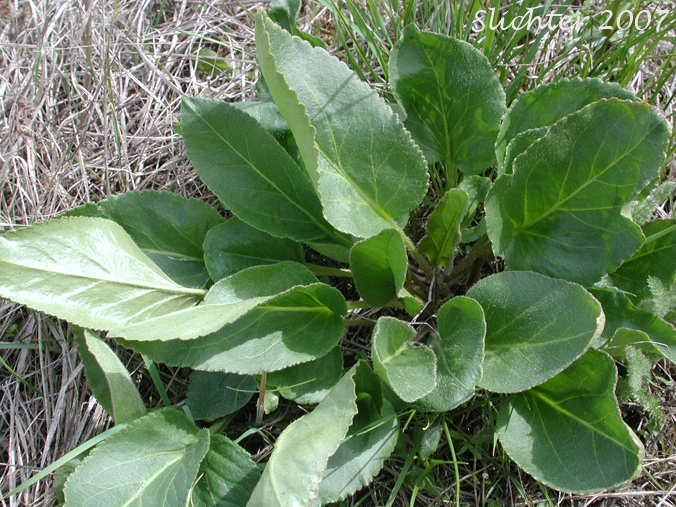
The photo above shows the basal cluster of leaves of red besseya as seen from grasslands next to Hog Lake east of Sprague, WA.........April 29, 2006.
 -
-  -
- 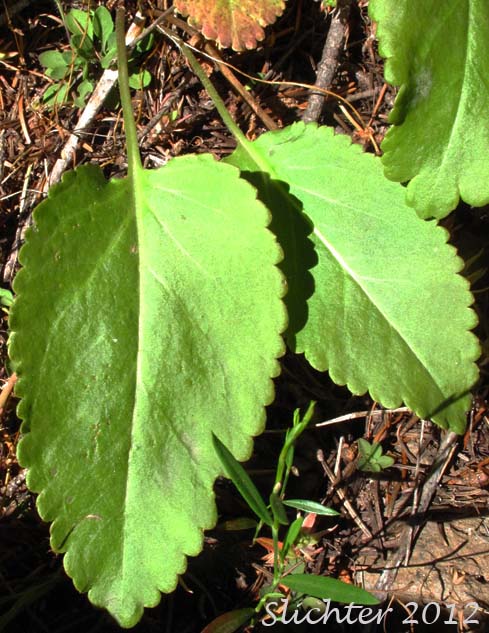
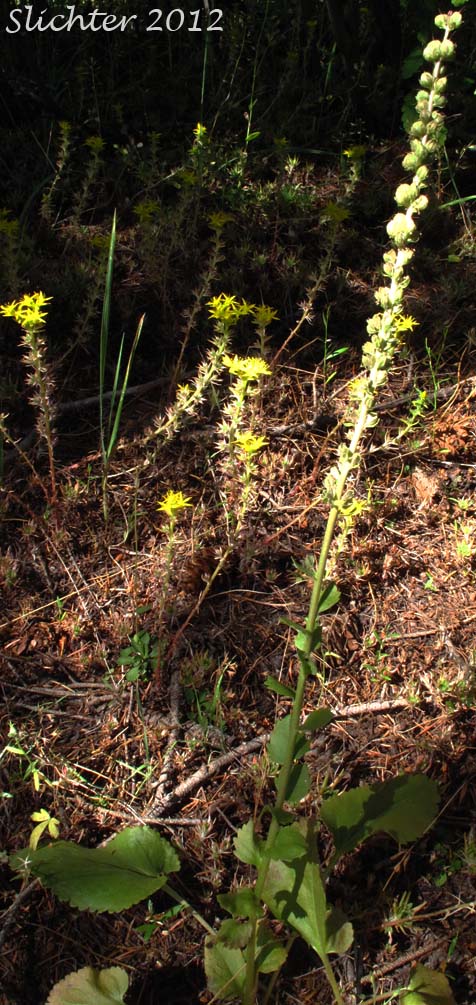
Image of red besseya as seen with fruits developing on the upright stems. Observed along the Umatilla Rim Trail at the northwest corner of High Ridge, Umatilla National Forest........July 24, 2012.
 -
- 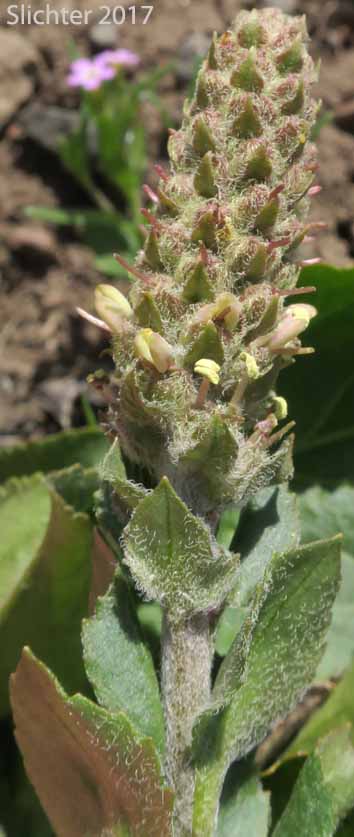
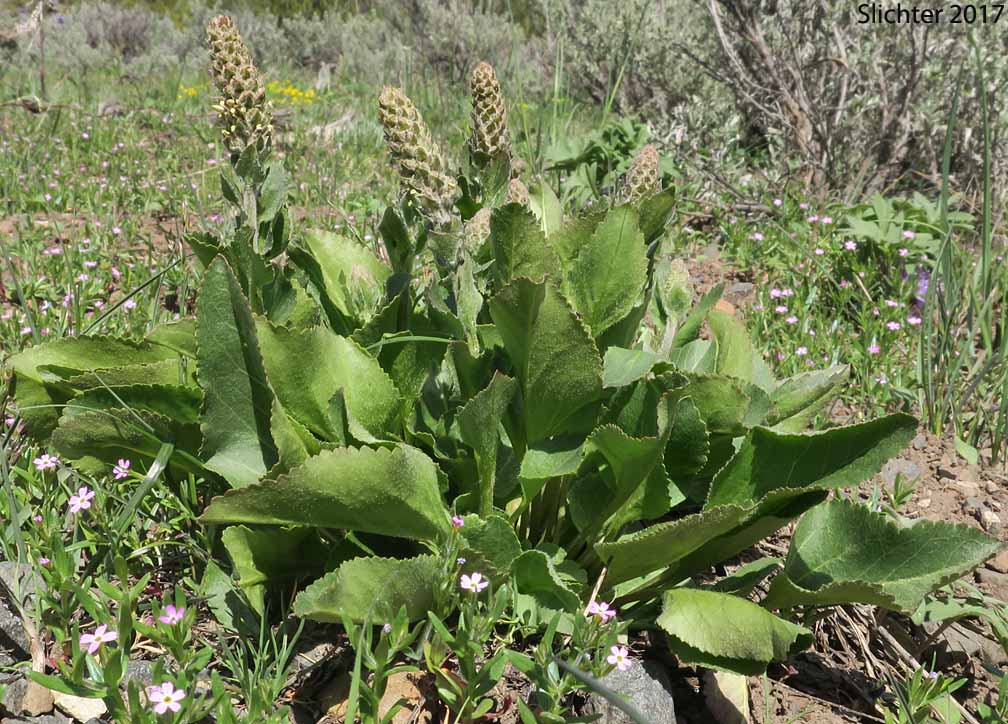
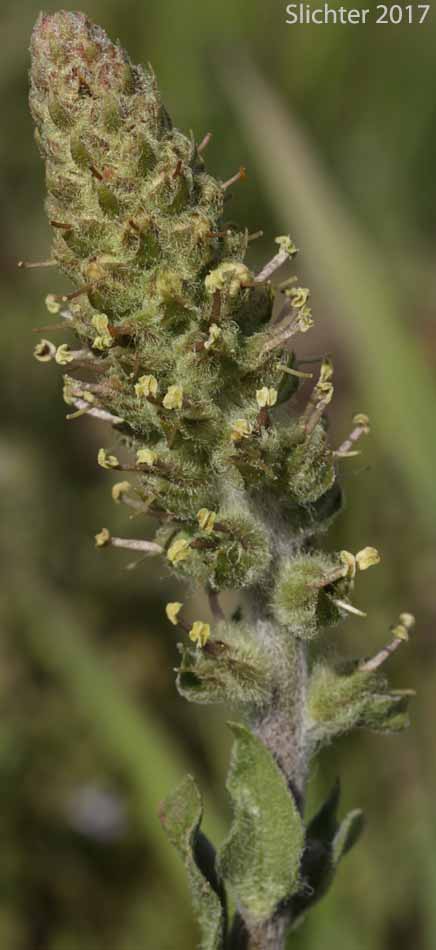
Red besseya blooming in moist prairie along Forest Road 4215 about a mile and a half south of the junction with Forest Road 42, Ochoco National Forest.........May 9, 2017.
 -
-  -
- 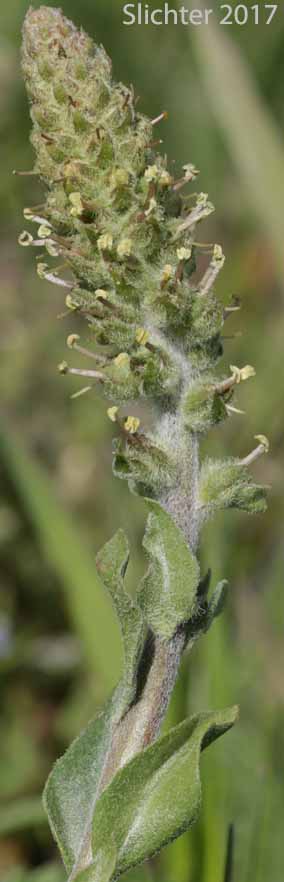
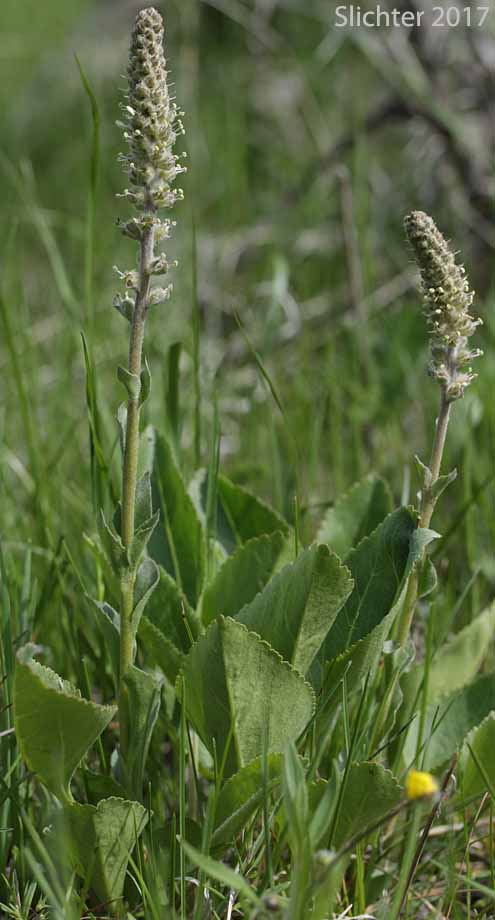
Red bessya as seen at the eastern edge of Big Summit Prairie about a half-mile southwest of the old Cold Springs Guard Station, Ochoco National Forest.........May 10, 2017.
The photo at right shows
red besseya as seen in meadows from Big Summit Meadows, Ochoco National Forest, late May,
1998.
Paul Slichter