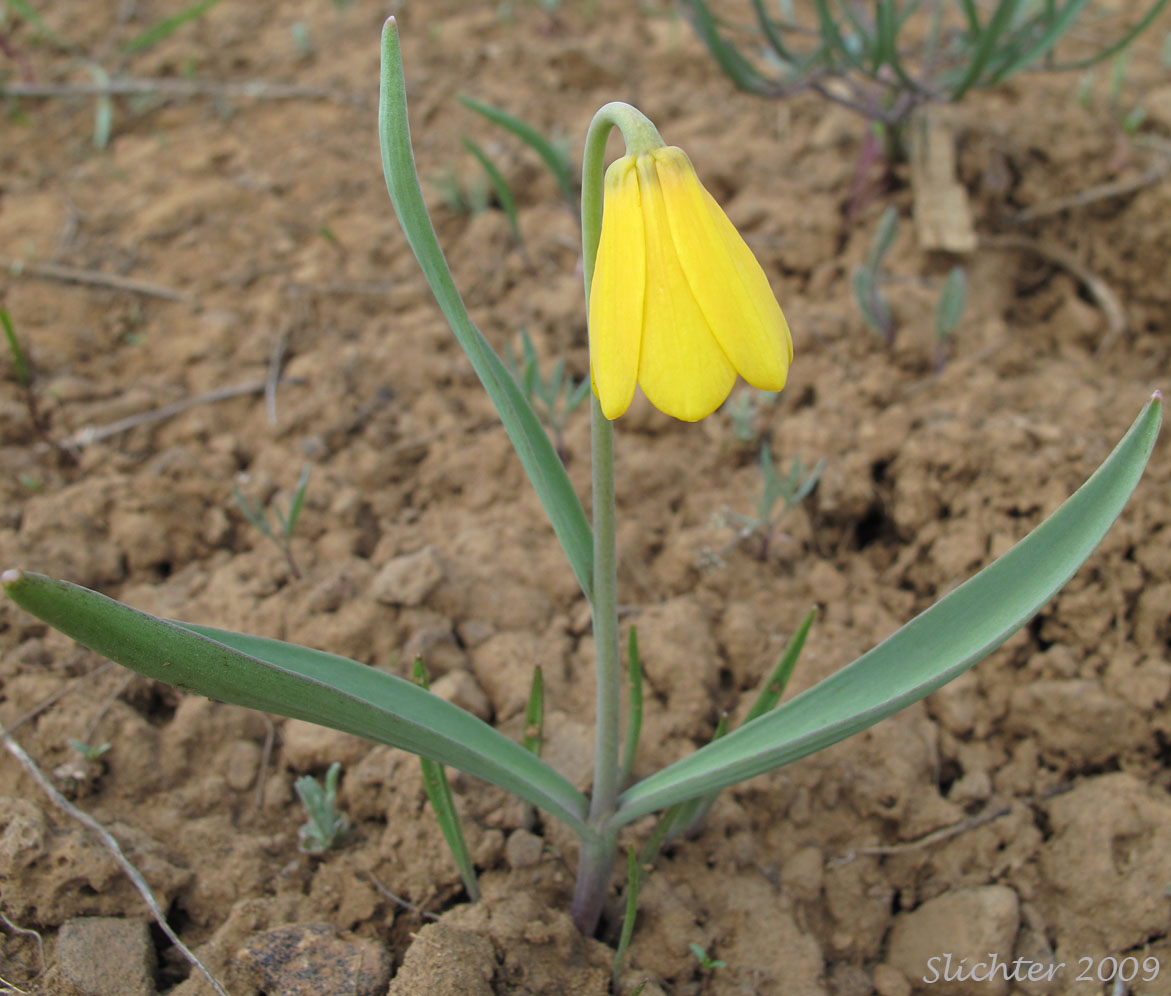
[The Genus Fritillaria East of the
Cascade Mountains of Oregon and Washington]
Yellow Bells, Yellow Fritillary, Yellow Missionbells
Fritillaria pudica
Synonyms: Lilium pudicum, Ochrocodon pudicus
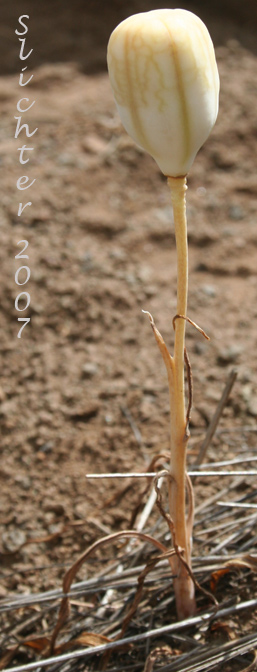
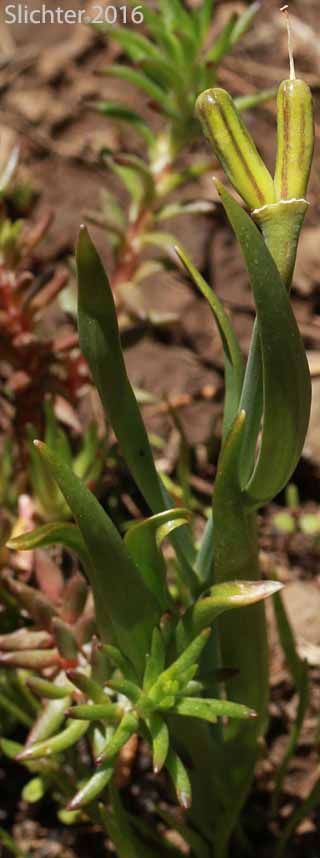
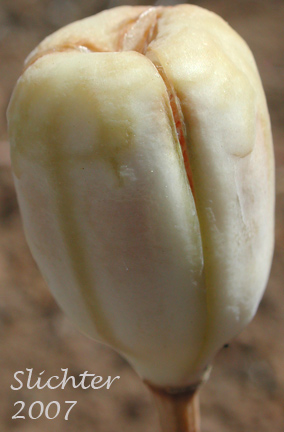 The photo at right shows an erect, non-winged
seed pod of the yellow bells. Photographed in the Simcoe Mts. to the northwest of Satus Pass in south-central Washington........June 16, 2007.
The photo at right shows an erect, non-winged
seed pod of the yellow bells. Photographed in the Simcoe Mts. to the northwest of Satus Pass in south-central Washington........June 16, 2007.
Characteristics:
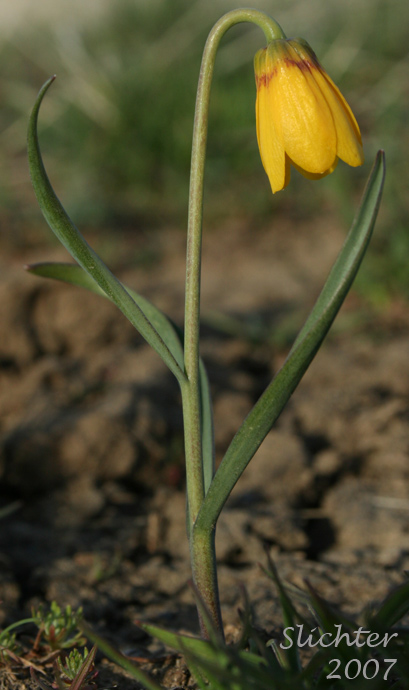
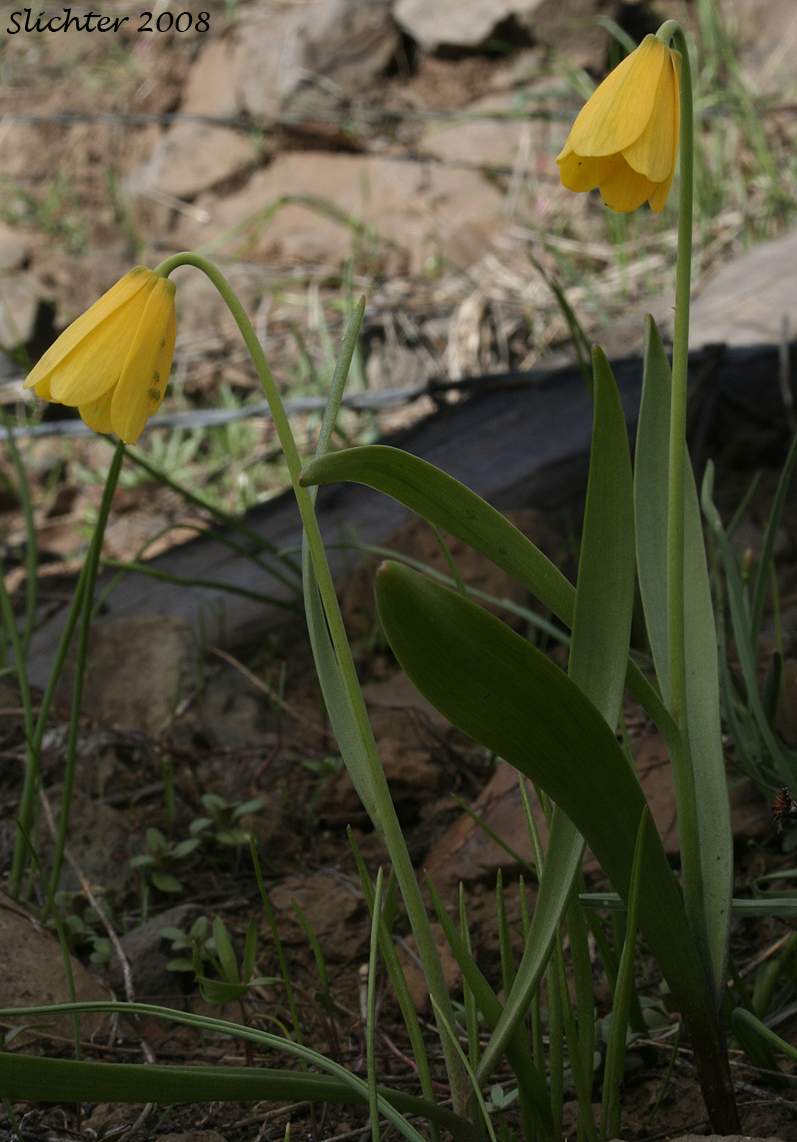
Yellow bells are a delightful wildflower consisting of a single
stem arising from a small bulb consisting of several fleshy scales and several
to many rice-grainlike offset bulblets. The stems may be as much as 35 cm tall.
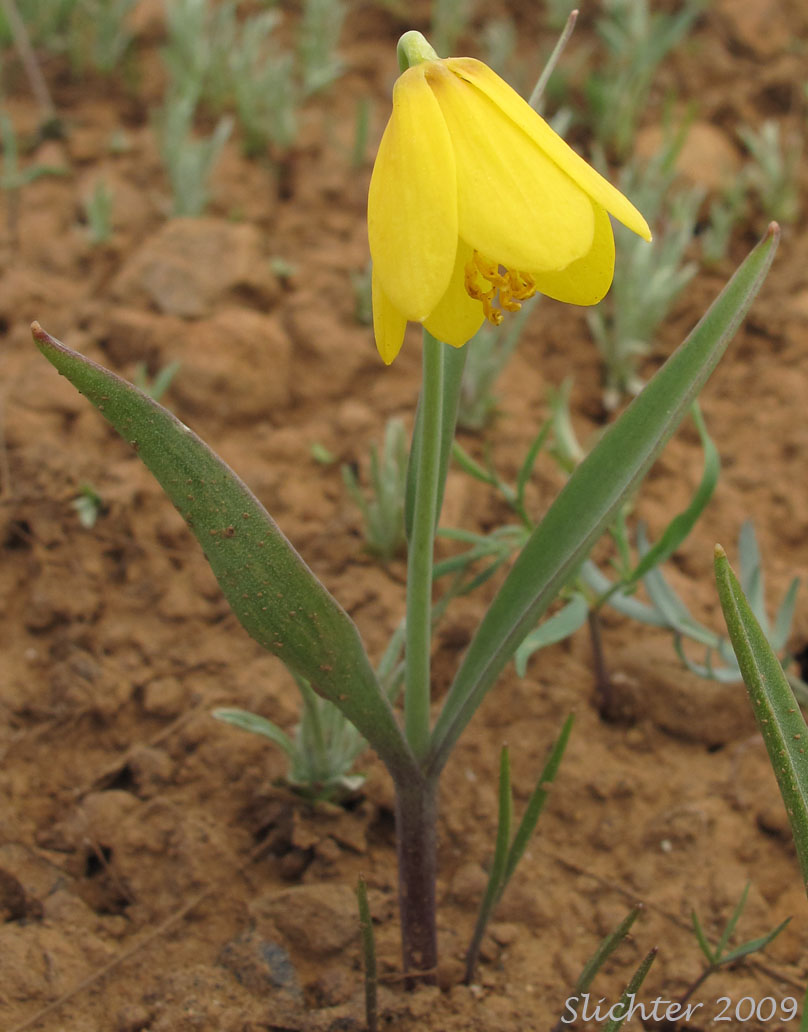
The leaves are either two and subopposite or three and alternate to somewhat
whorled. Some plants may have as many as 8 leaves, wth the upper ones reduced
in size upwards. The leaves are long, linear or linear-oblanceolate. They are
green and may be up to 16 cm long and 3 to 12 mm wide.
A solitary flower (occasionally two may be found), is found
atop the stem, which turns down so that the flower hangs down in bloom, and
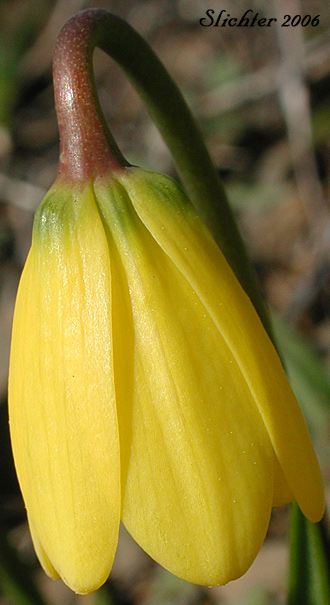
the seed capsule then turns upwards as it readies itself. Six yellow tepals
may be found, often with purplish or brownish streaks near the base of each
tepal. As they age, the tepals turn red or purple. Individual tepals are oblong-lanceolate
to oblanceolate in shape and 12-26 mm long and from 4-10 mm wide with rounded
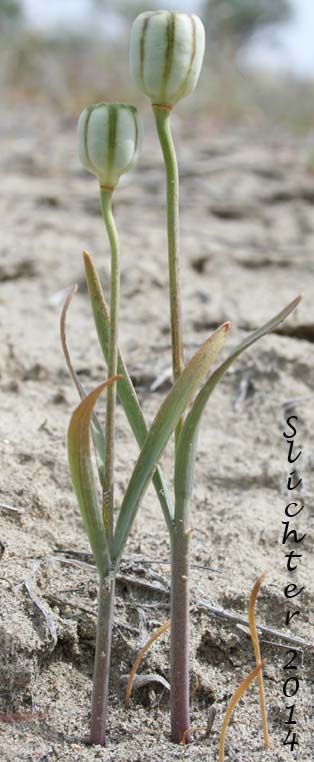
tips. The seed capsule (seen at right) is short and oblong in outline, measuring
from 15-20 mm long.
Yellow bells make delightful perennial wildflowers for the front of a rock
garden or dry, east-side prairie garden. Plants may occasionally be seen for
sale by wildflower nurseries. Wild plants should not be collected as they have
only a small chance of survival when transplanted in the garden (usually put in the wrong place, plus wild collected plants often suffer damage during the collection process)..
Habitat:
Yellow Bells may be found in grasslands, scattered among sagebrush,
or on the needled ground beneath Ponderosa Pines or in mixed coniferous forests.
They are one of the first wildflowers to bloom in the spring.
Range:
The range of Yellow Bells is from British Columbia
southward through Oregon and Washington (east of the Cascade crest) to northern
California. It is found eastward to Alberta, and southward through Montana,
Wyoming, Utah and Nevada.
 -
-  -
- 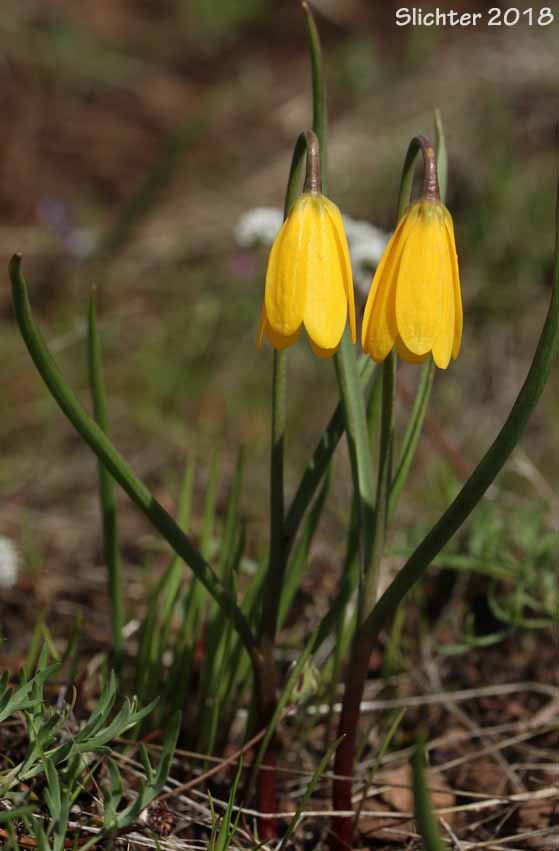
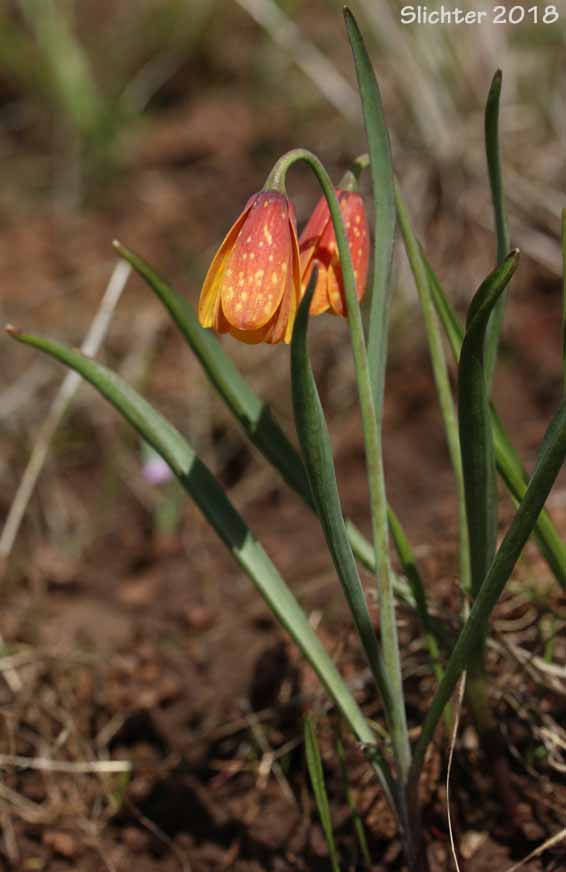
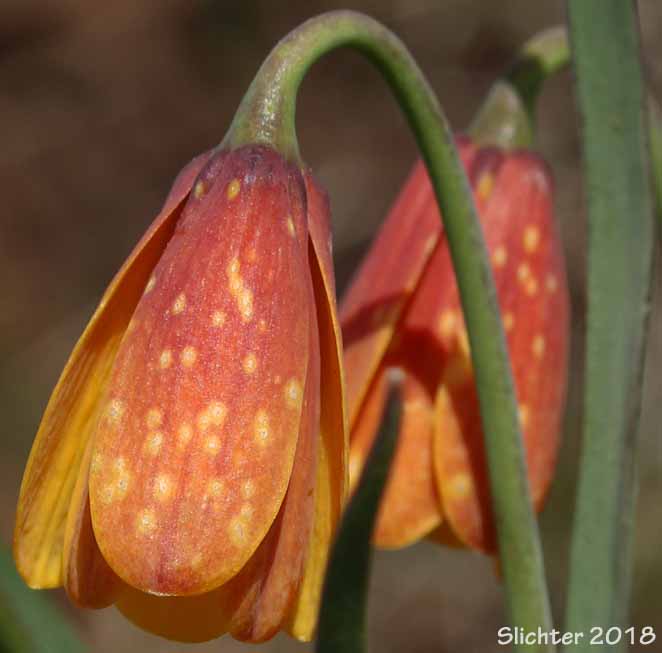
Yellow bells observed in bloom (the orange are fading out of bloom) on scabland soils at the Bickleton Ridge Unit of the Klickitat Wildlife Area.......April 20, 2018.
 -
- 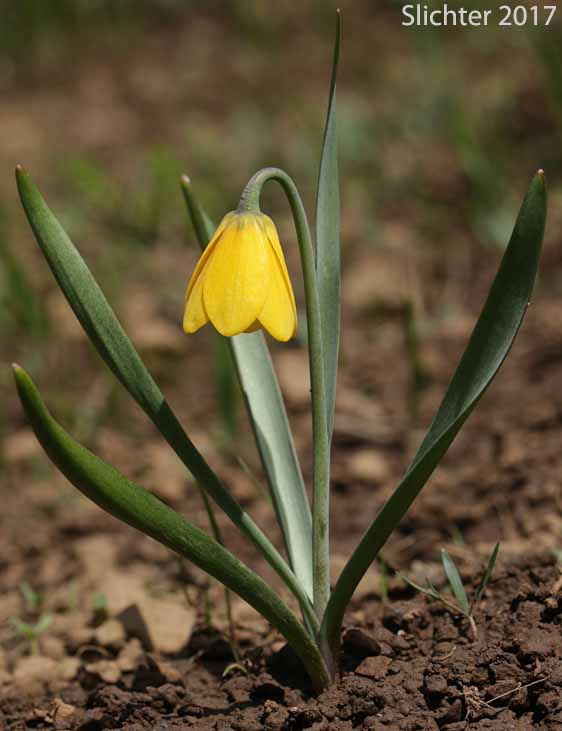
The photo at left shows the erect seed pod of the yellow bells. Photographed in the Simcoe Mts. to the northwest of Satus Pass in south-central Washington.......June 16, 2007. The photo at right shows yellow bells as seen on balds along Forest Road 2630 about half a mile above Scotts Campground, Ochoco National Forest........May 10, 2017.
 -
- 
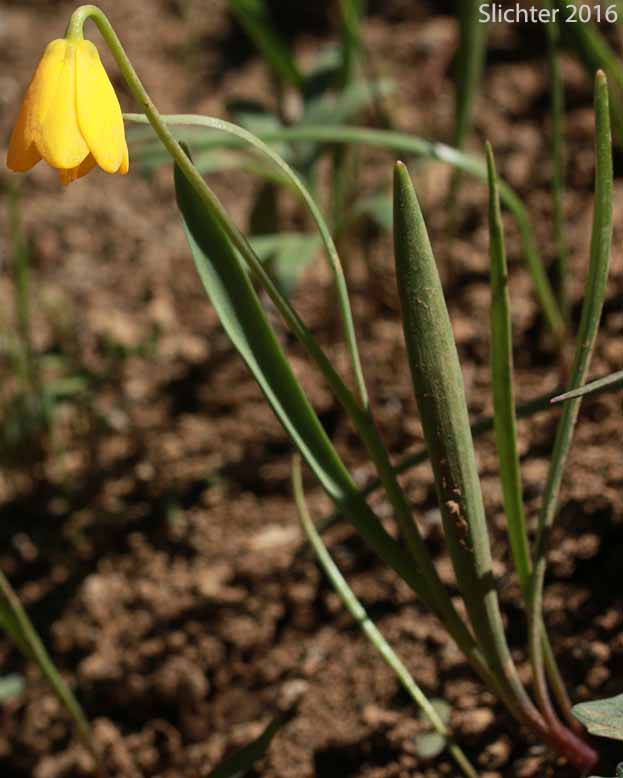
Yellow bells as seen on vernally moist lithosol soils along Trail #808A near 6400' where the trail crests the north rim of Lookout Mountain above the old Independent Mine, Ochoco National Forest.........May 29, 2016.
 -
-  -
- 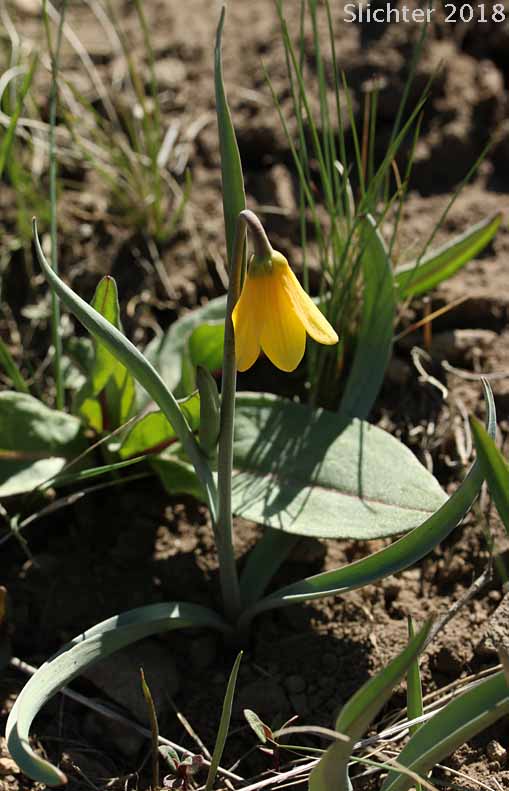
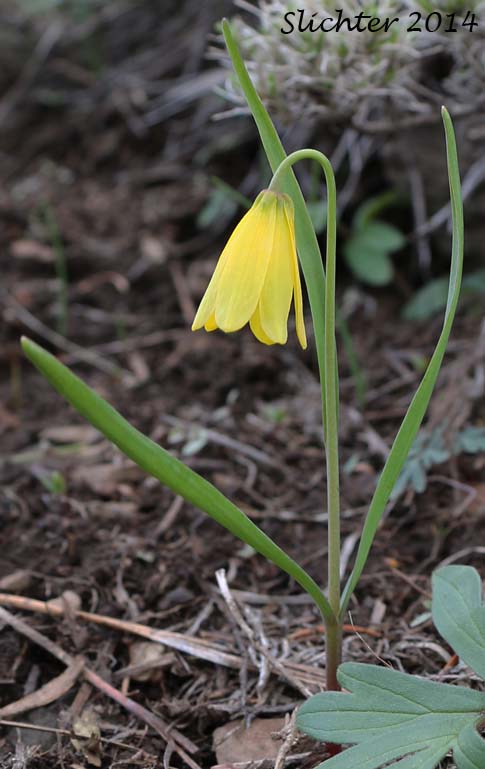
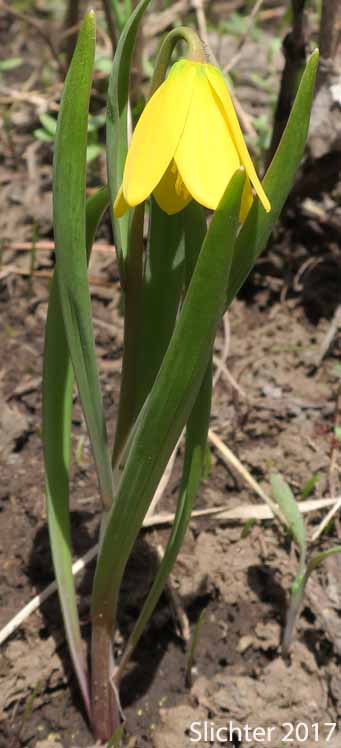
Yellow bells blooming (left) along the Skyline Trail at the east end of the Strawberry Mountains..........May 28, 2014. The photo at center shows yellow bells beginning to bloom along the Line Butte Trail #807 about a half mile uphill from the Fawn Creek Trailhead, south side of Lookout Mountain, Ochoco National Forest..........May 22, 2017. The photo at right shows yellow bells blooming near a snow bank above the Pine Mountain Observatory, Deschutes National Forest......May 12, 2018.
 -
-  -
- 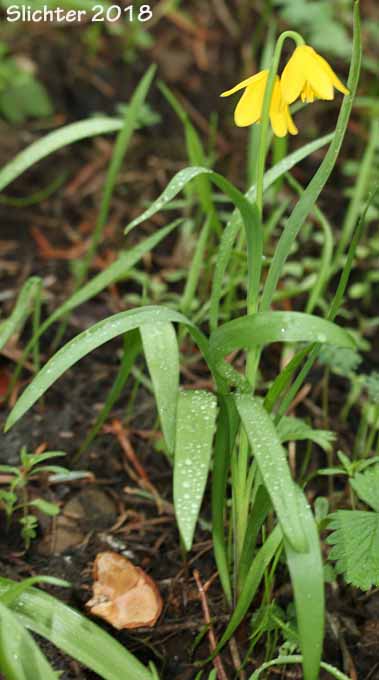
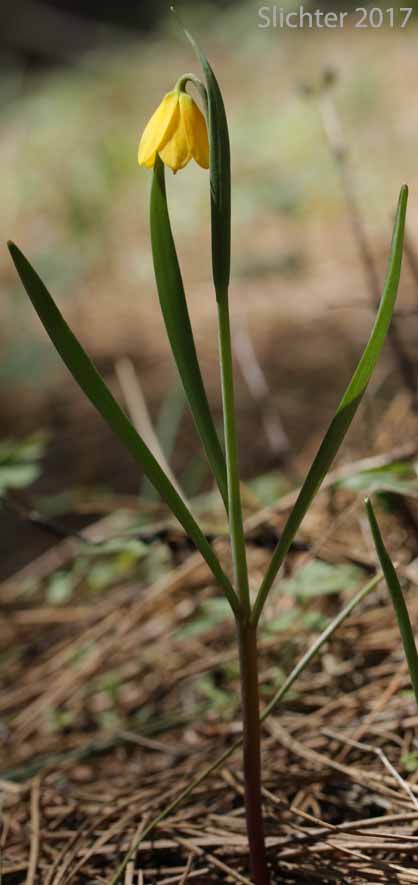
The photo at left shows the seed pods of yellow bells as found on weed-infested sand dunes atop the White Bluffs, Hanford Reach National Monument...........April 26, 2014. The photo at cenyer shows yellow bells blooming on Klickitat Wildlife Area lands on Bickleton Ridge to the northwest of Bickleton, WA........May 7, 2017. The photo at right shows yellow bells in bloom under conifers along the Baneberry Trail on the north side of Lookout Mountain, Ochoco National Forest.......May 24, 2018. There were still snow patches under the conifers near this latter site.
 -
- 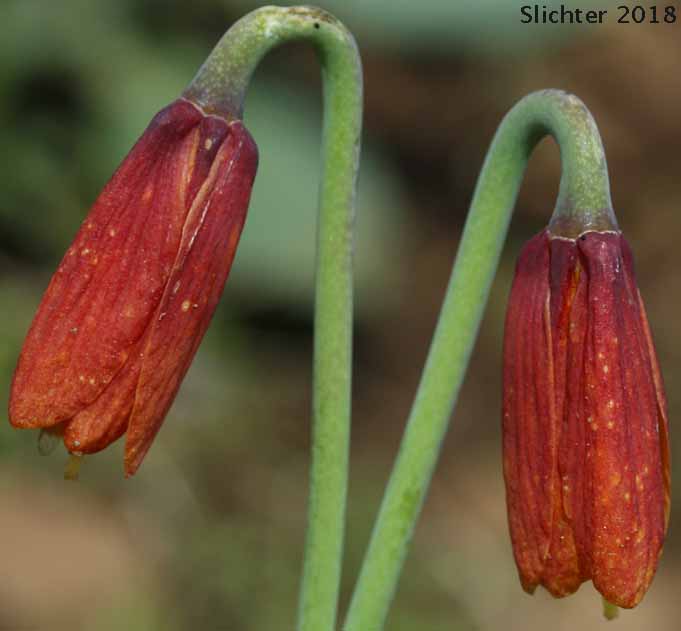
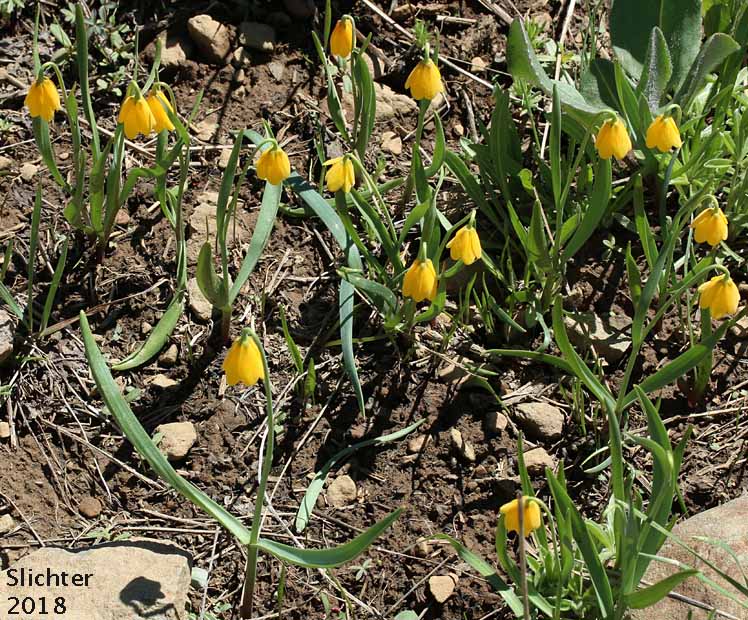
Yellow bells observed on scablands along Trail #808A, Lookout Mountain, Ochoco National Forest......May 26, 2018.
 -
- 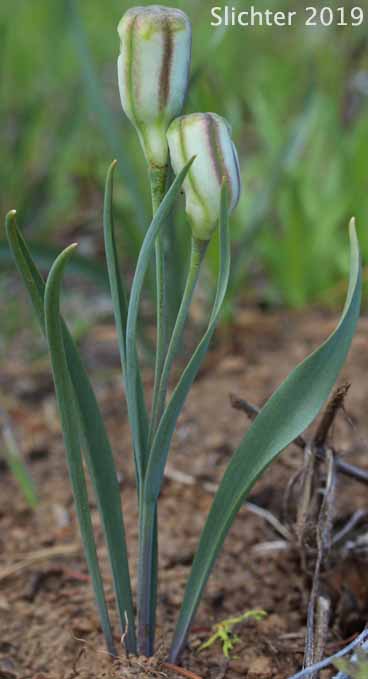
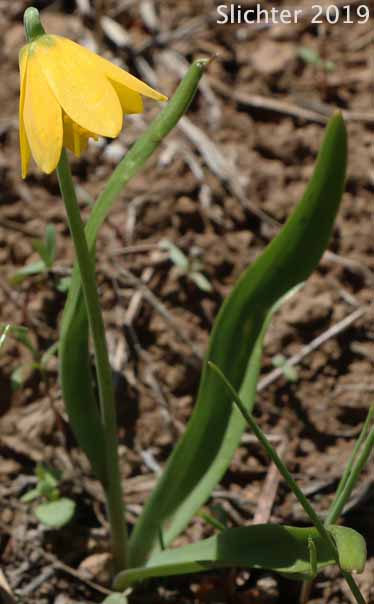
A late-blooming yellow bell on vernally moist soils (as seen at left) at the northeastern base of Spanish Peak, Ochoco National Forest.......June 17, 2019. The photo at right shows maturing fruits of two yellow bells as seen on Bethel Ridge, Oak Creek Wildlife Area, Yakima County, WA......June 8, 2019.
Paul Slichter
 -
- 
 -
- 
 -
-