[Camas: The Genus Camassia East of the
Cascade Mountains of Oregon and Washington]
Cusick's Camas
Camassia cusickii
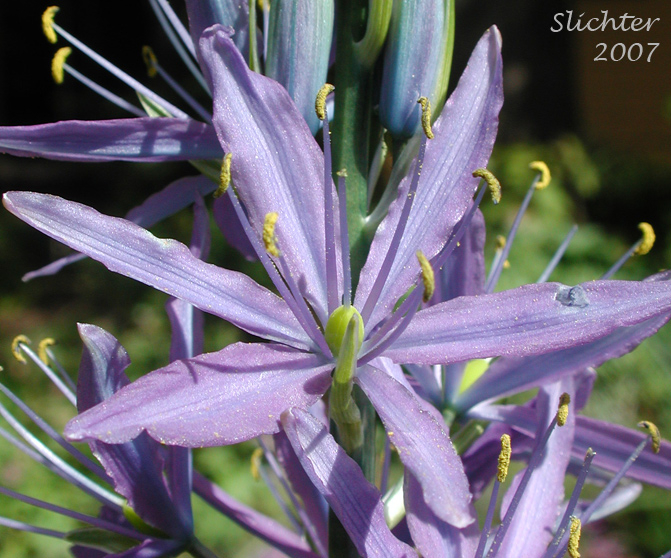
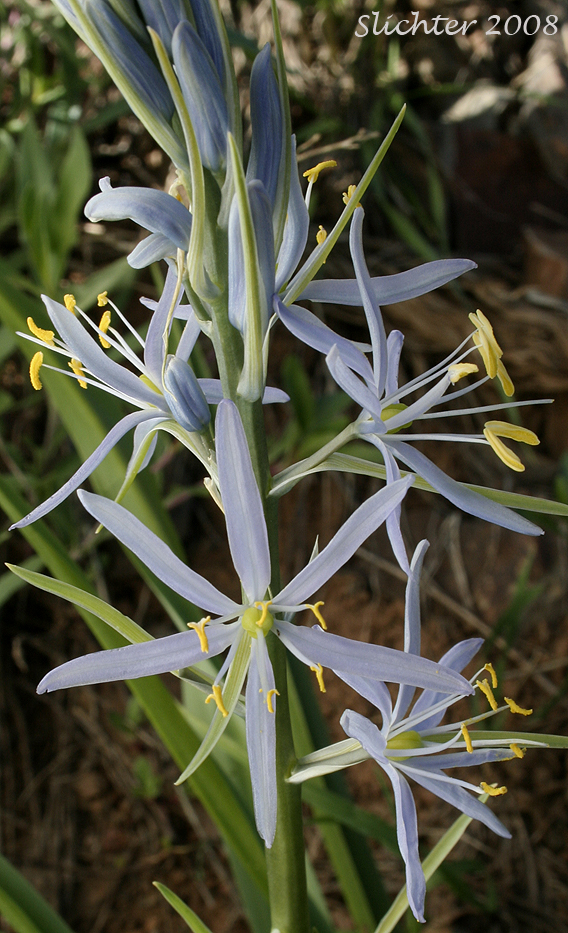
The photo above shows a close-up of the flower of Cusick's camas as seen in the webmaster's yard........April 26, 2007.
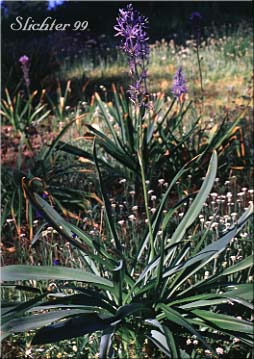 The
photo at right shows Camassia cusickii
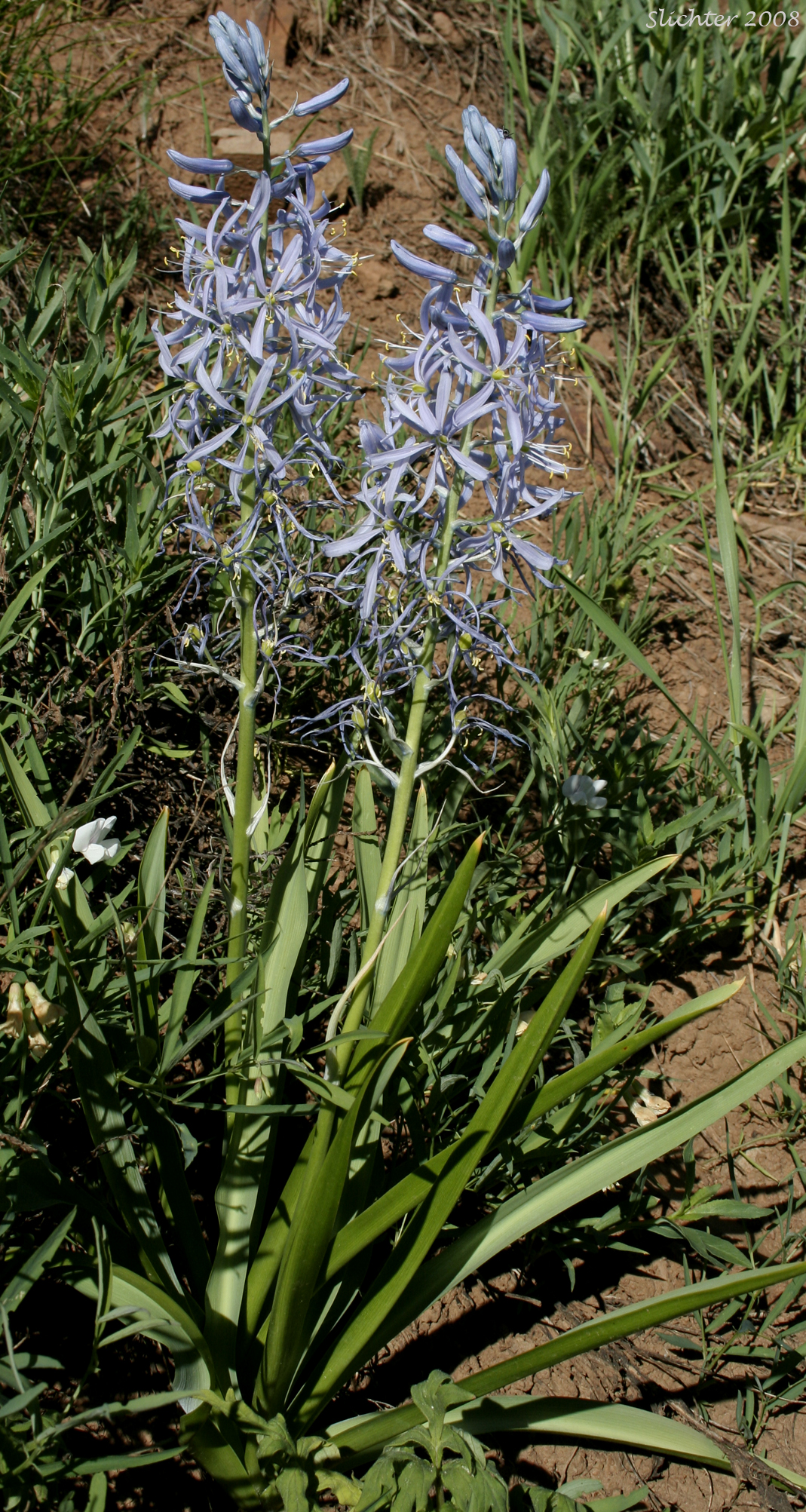
from Hell's Canyon rim, northeastern Oregon.......July 7, 1999. Note the numerous
leaves with broad blades.
The
photo at right shows Camassia cusickii
from Hell's Canyon rim, northeastern Oregon.......July 7, 1999. Note the numerous
leaves with broad blades.
Characteristics:
Cusick's camas is a large, robust wildflower, reaching a height
of 80 to 100 cm. The bulbs are often clustered, joined by short, fleshy rhizomes.
They are mucilaginous-slimy, and foul-tasting and smelly.
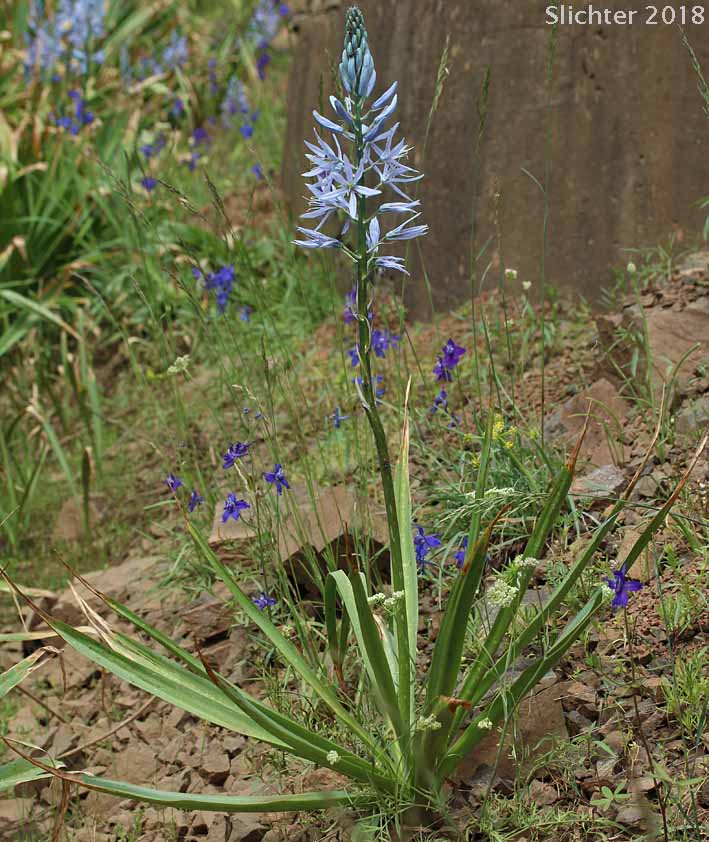
The leaves are distinctive, generally with more than 10 in the
basal cluster. Most are 5 to 25 mm in width, and 30 to 50 cm long (Notice the
size of the leaves in the photo at right.).
The racemes are long (25-40 cm long) and densely flowered, with
the flowers overlapping each other. The flowers are slightly ascending, light
blue, the 6 tepals being slightly irregular. Individual tepals are 20 to 25
mm long with 5 nerves, and all wither separately to the base of the capsule.
The six stamens all have yellow anthers.
The similar common camas (Camassia
quamash) differs in being smaller in stature with smaller and less numerous
(less than 10) basal leaves.
Habitat:
Cusick's camas along the steep moist hillsides bordering the
Snake River and some of its tributaries.
Range:
Cusick's camas is found from Baker and Wallowa counties in Oregon,
lining the steep hillsides of the Snake River canyon, and perhaps found in the
upper Imnaha River drainage.
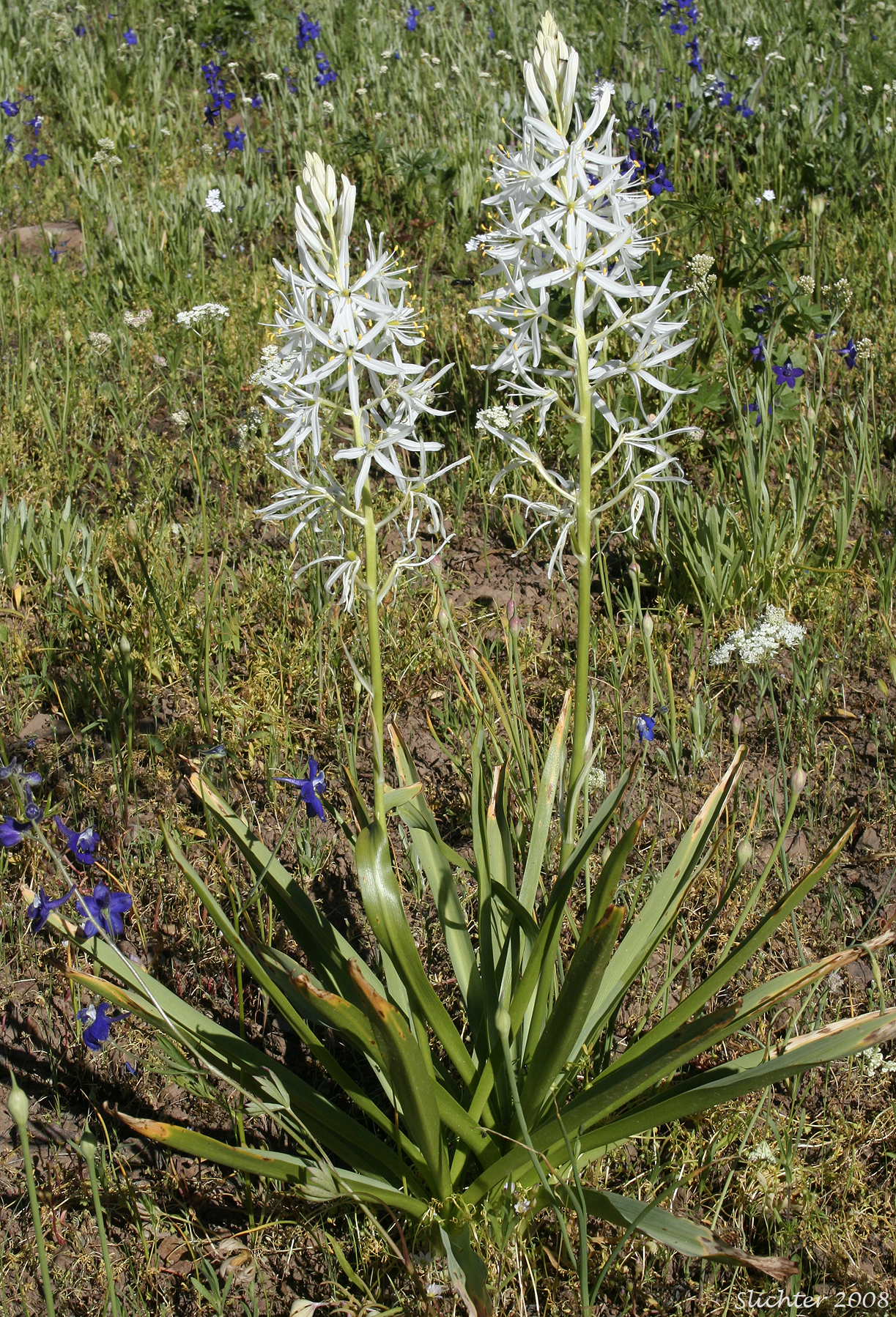
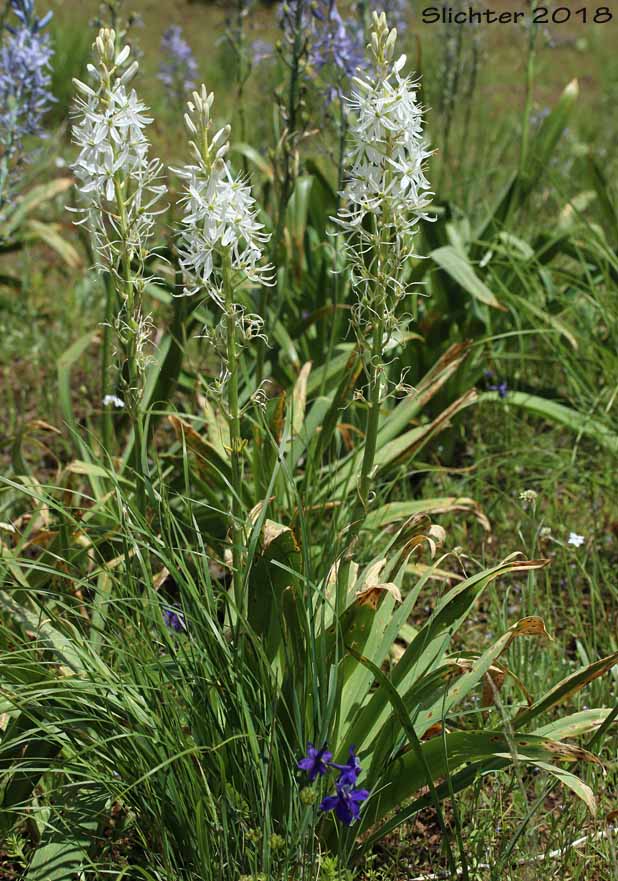
The photo above shows a white-flowered Cusick's camas as seen about one-half mile west of the Hells Canyon Overlook in Hells Canyon NRA.........June 28, 2008.
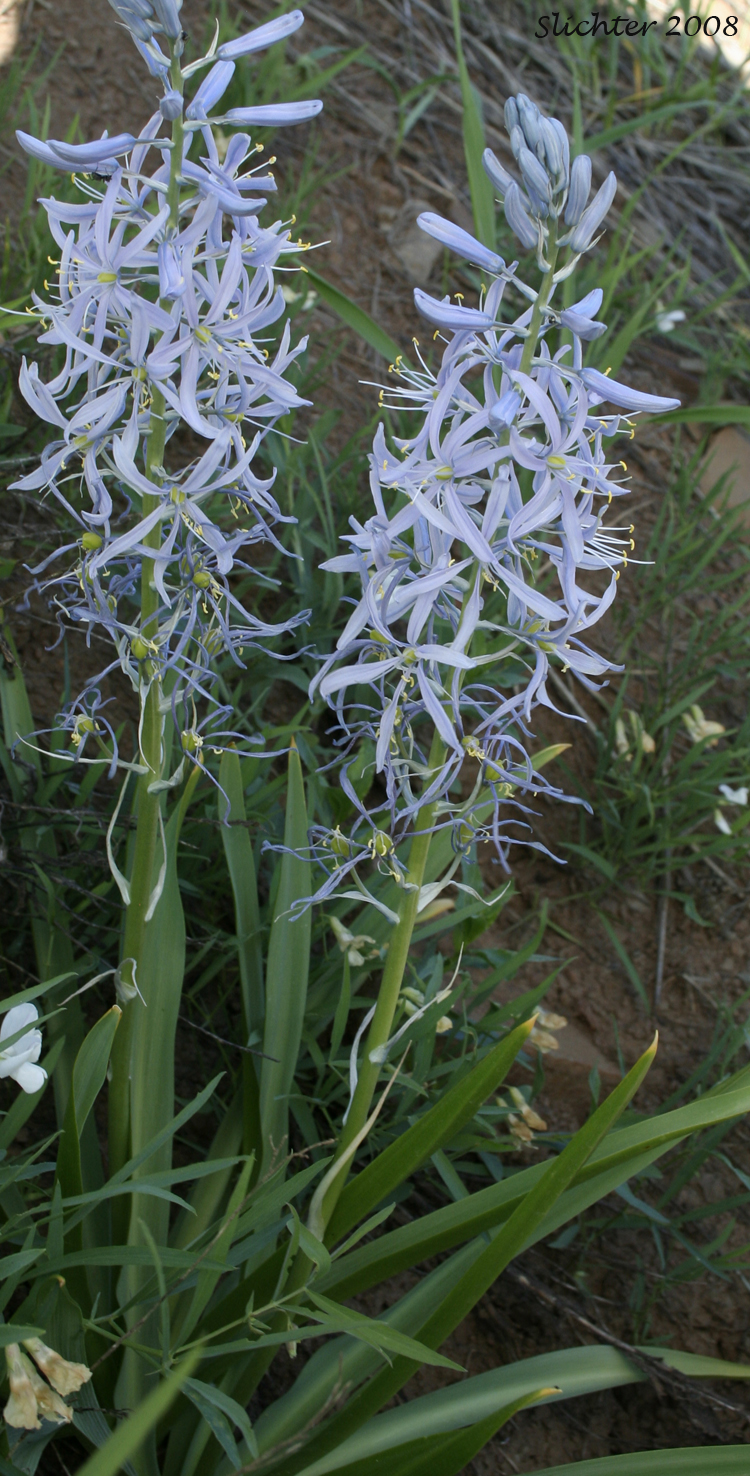 -
-  -
- 
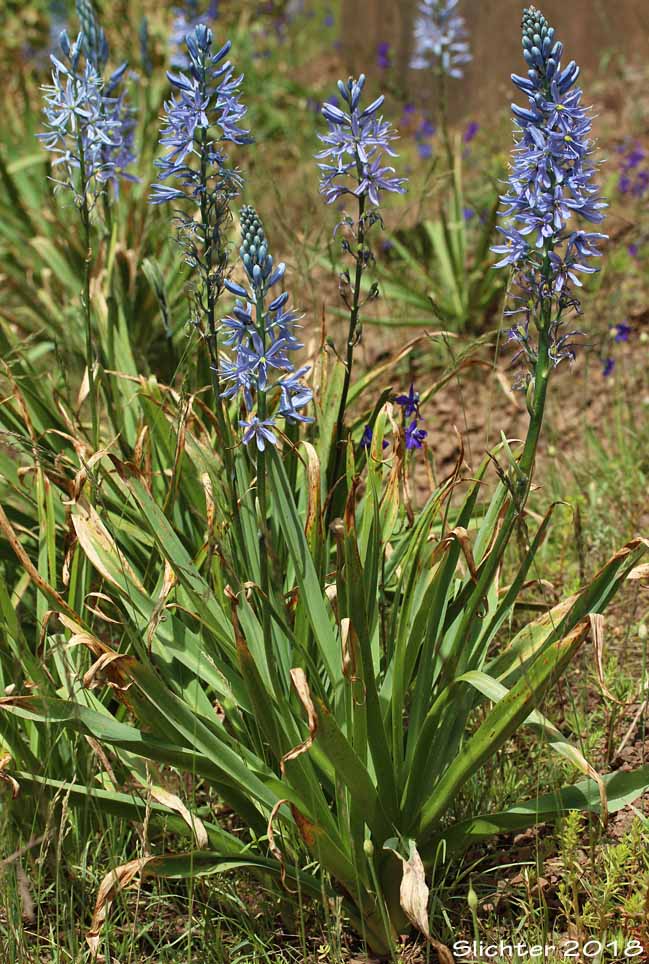
The 3 photos directly above show close-up views of Cusick's Camas as seen along Forest Road #39 one-half mile south of Nesbit Butte in the Wallowa-Whitman National Forest..........June 27, 2008.
 -
-  -
- 
 -
-  -
- 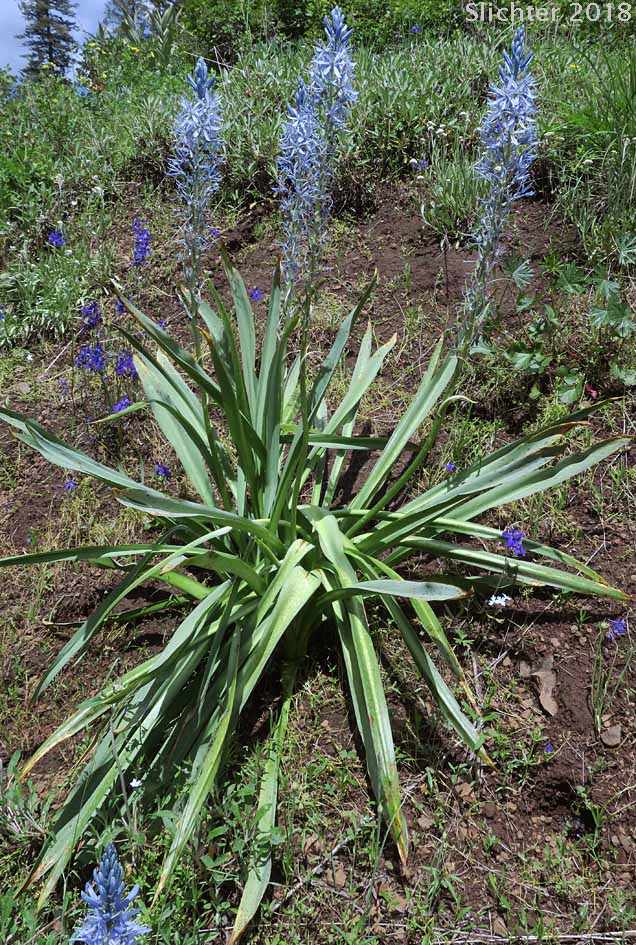
Cusick's camas as seen along Forest Road #3965 about a mile west of the Hells Canyon Overlook, Hells Canyon Recreation Area......June 11, 2018.
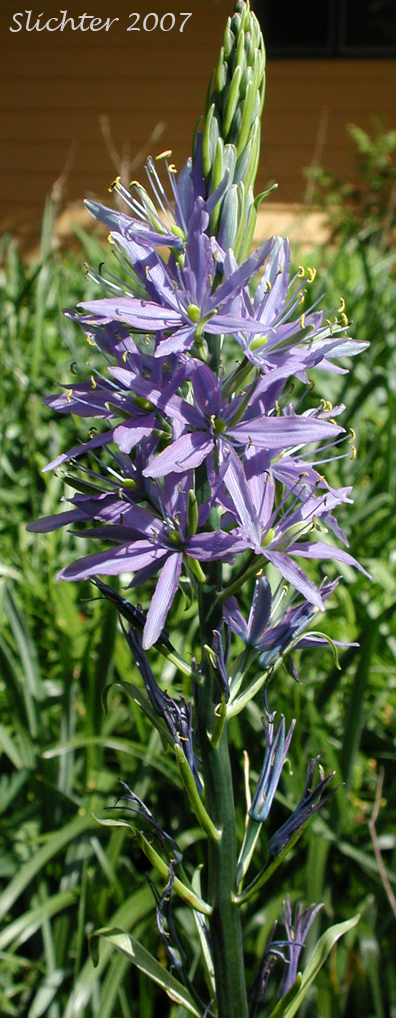
The photo above shows a close-up of the inflorescence of Cusick's camas as seen in the webmaster's yard........April 26, 2007. Cusick's camas has a tight inflorescence where the flowers overlap their neighbors. In addition, it can be seen that the tepals do not twist and wrap around each other as they do in some other species of camas.
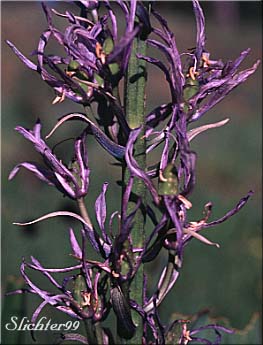
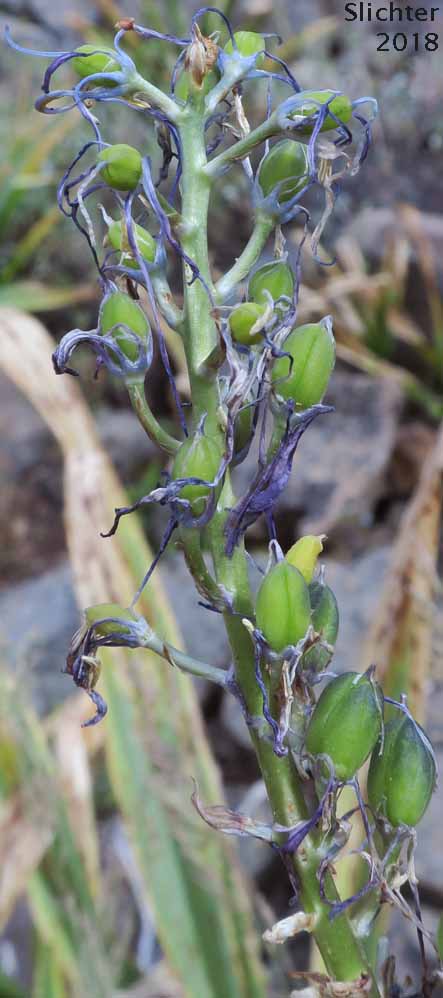
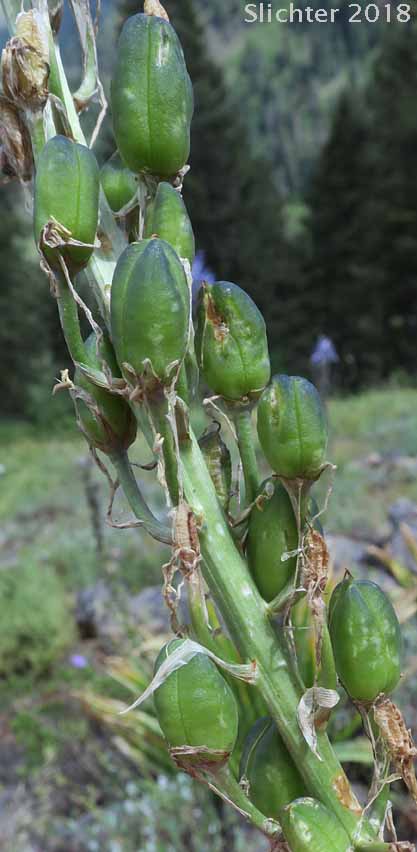
The photo above shows the tepals withering separately
around the capsule, rather than twisting together as with Camassia leichtlinii.
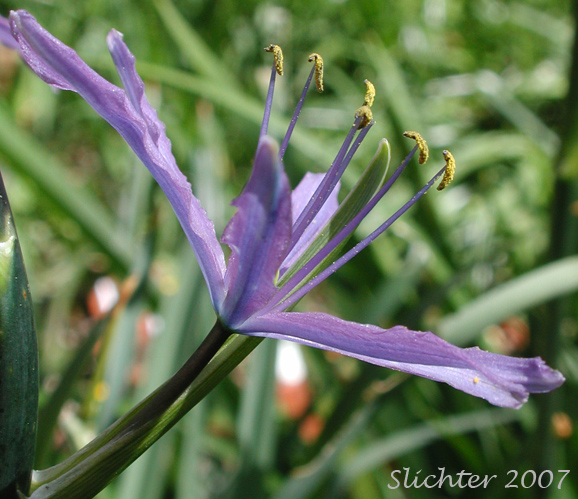
The photo above shows a close-up sideview of the flower of Cusick's camas as seen in the webmaster's yard..........April 26, 2007.
Paul Slichter