[Shrub-like Members of the Sunflower Family in the Columbia River Gorge of Oregon and Washington]
Gray Rabbitbrush, Rubber Rabbitbrush
Ericameria nauseosa var. speciosa
Synonyms: Chrysothamnus nauseosus ssp. albicaulis, Chrysothamnus nauseosus var. albicaulis, Chrysothamnus nauseosus ssp. speciosus, Chrysothamnus nauseosus var. speciosus, Ericameria nauseosa ssp. nauseosa var. speciosa
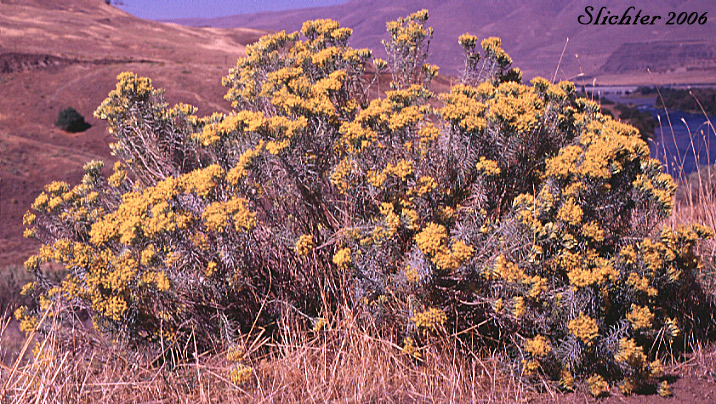
Ericameria nauseosa - Gray Rabbit-brush as seen along the Deschutes River within a mile of its junction with the Columbia
River........October, 2004.
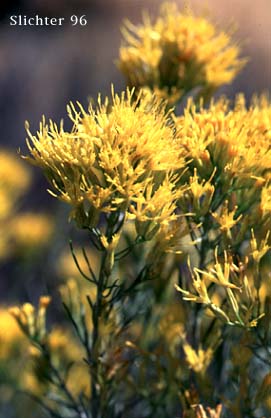 Characteristics:
Gray rabbit-brush is a low to mostly tall shrub covered with
soft, gray, felt-like and dense hairs. The general shape of this shrub is open
to rounded- or flat-topped. Plants range to 2 meters tall. The numerous, erect
stems are covered with persistent, dense hairs, giving the stem a grayish, felt-like
appearance(thus giving the plant its name).
The leaves are linear with entire margins. Individual leaves
are 2-7 cm long and about 0.5-3 mm wide. The leaves are tomentose to almost
smooth, and are not twisted.
Yellow flower heads in cymose clusters of about 5 flowers each.
Flower heads are discoid and narrow. The disk corollas are mostly 6.5-11 mm
long. Gray rabbit-brush flowers in late summer to fall.
Habitat:
Open dry place in the valleys, plains, and foothills, occasionally
extending to moderate elevation in the mountains.
Range:
From southern British Columbia south along the eastern edge
of the Cascades to southern California, east to Saskatchewan and hence south
to Texas and northern Mexico.
In the Columbia River Gorge, Ericmaeria nauseosa var. speciosa
is found between the elevations of 100-600' from approximately Mosier, OR east
towards Wallula Gap.
Uses/ Importance:
Gray Rabbitbrush is a potential source for rubber. The flowers
are grazed by wildlife and livestock in fall. The twigs are browsed by both
pronghorn and mule deer, while the leaves are eaten by rabbits. This plant may
be an aggressive weed on heavily grazed sites, and may also be found on disturbed
fill slopes along roadways in the sage-grass steppe. Due to its silvery foliage,
yellow flowers, and tendancy to draw butterflies and other pollinating insects,
I believe it would also make a dandy shrub for the naturalized garden in areas
east of the Cascade Mts. I can't attest for its resistance to wildfire, so plant
it away from buildings and don't plant it under trees!
 -
- 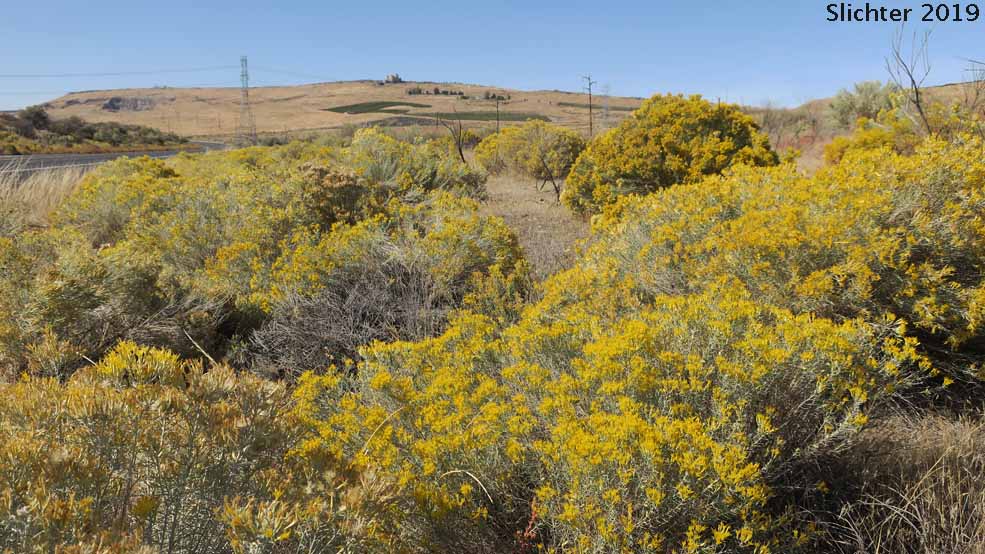
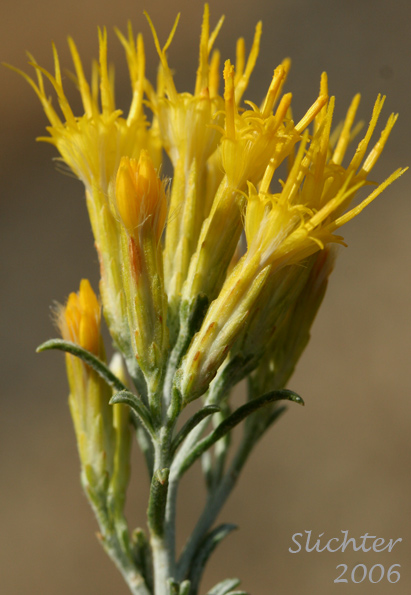
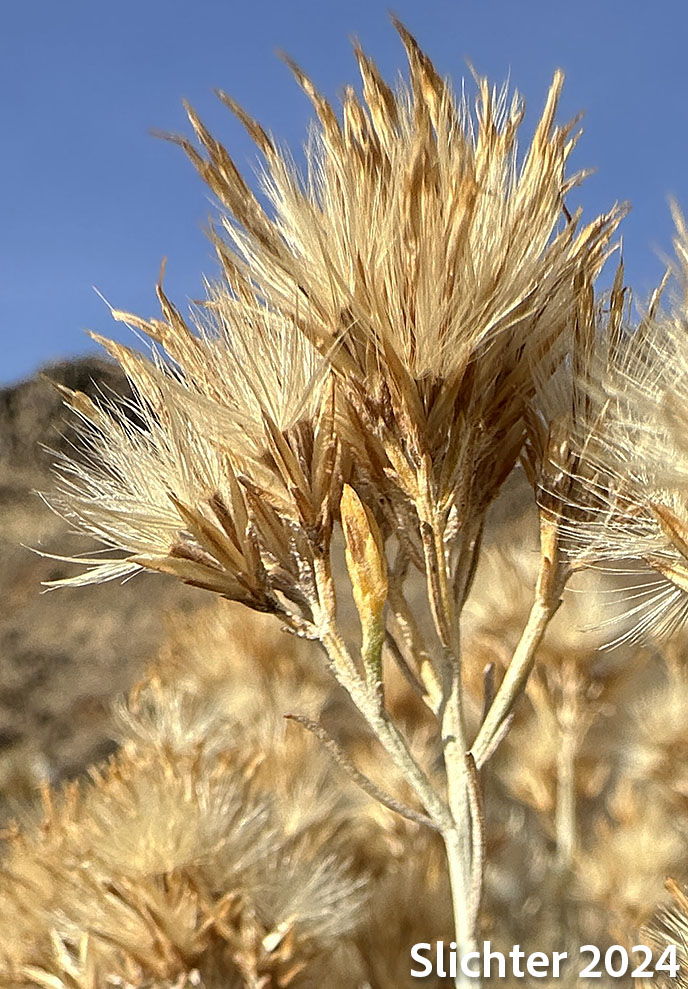
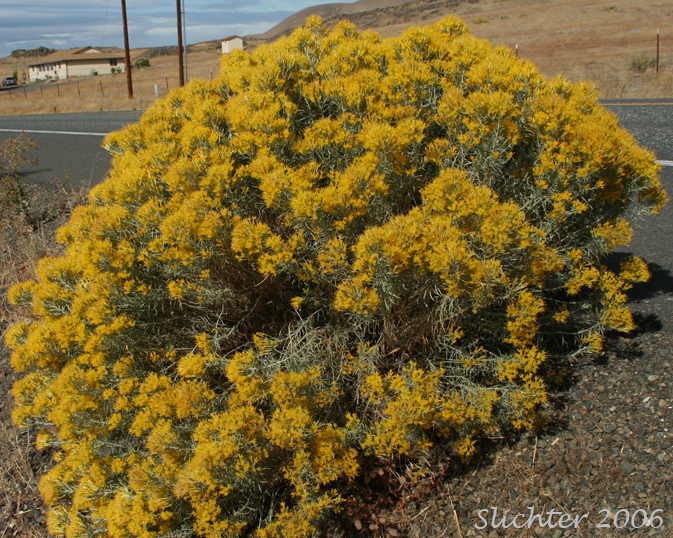
The photo at left shows a close-up of the flower heads of gray rabbitbrush as seen along Washington Highway SR14 at the intersection with The Dalles Mt. Rd.........October 7, 2006. The photo at right shows gray rabbitbrush blooming enmasse along Washington Highway 14 just east of Crow Butte Park........October 6, 2019.
 -
- 
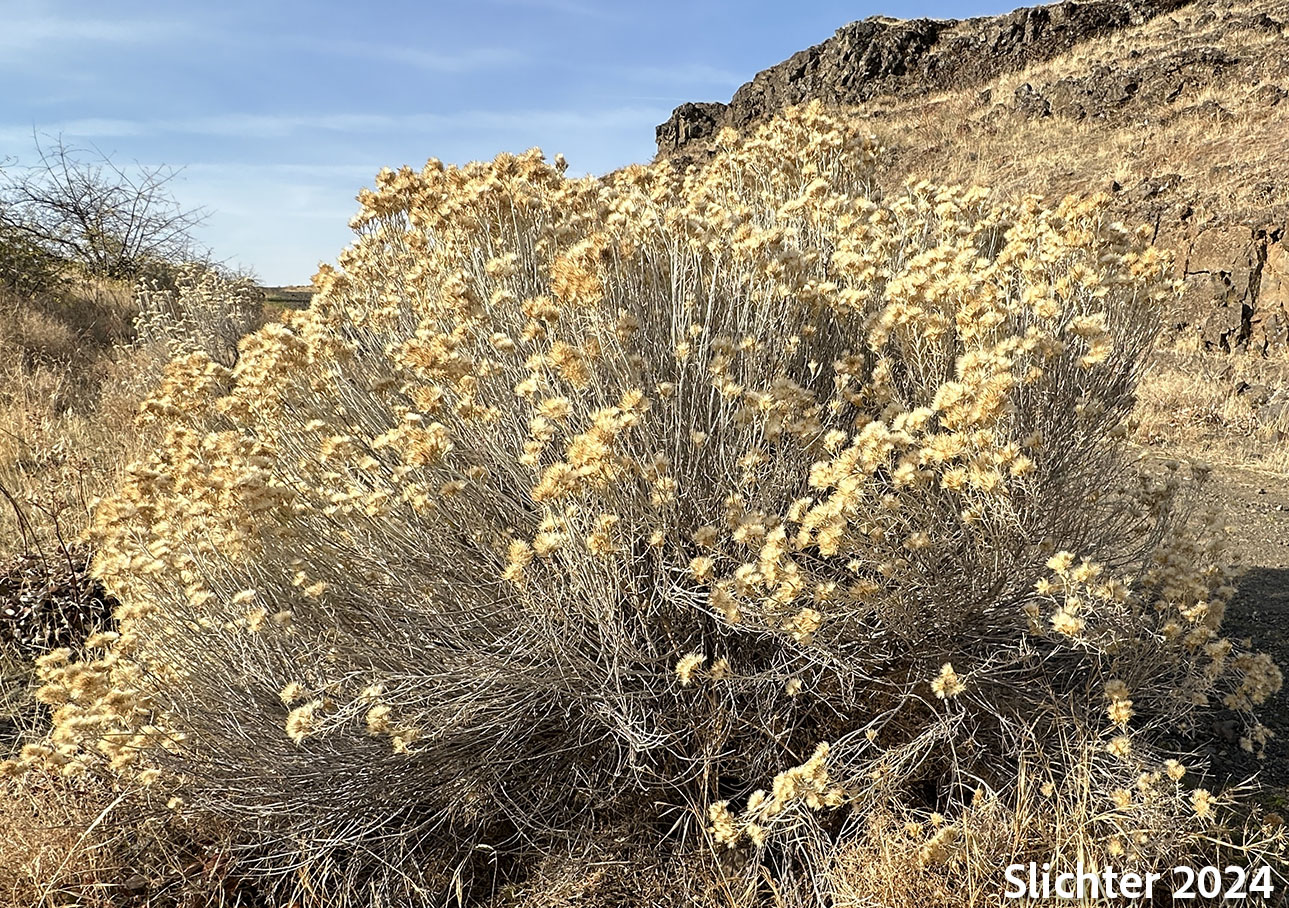
Mature seed heads on gray rabbitbrush as seen near the top of the waterfall on Eightmile Creek, above the Crawford Oaks Trailhead, Columbia Hills Historical State Park......November 8, 2024.
 -
- 
The photo above left shows gray rabbitbrush as seen along Washington Highway SR14 at the intersection with The Dalles Mt. Rd..........October 7, 2006. The photo at right shows gray rabbitbrush as seen on grassy slopes above the east side of the Deschutes River about 2 miles upstream from its mouth.........October 6, 2016.
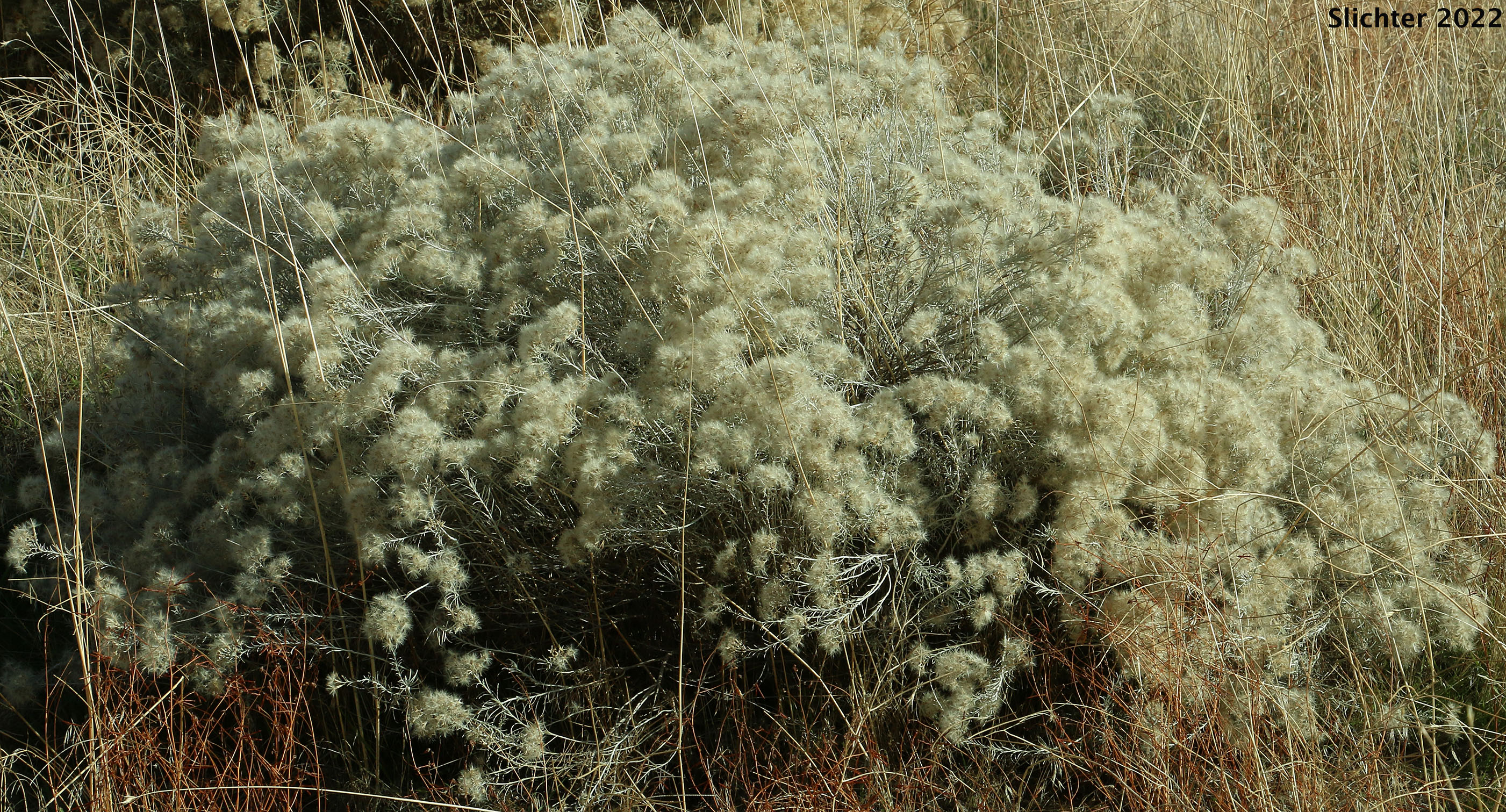
Gray rabbitbrush with ripe seed heads observed along trails along the east bank of the Deschutes River about 2 miles upstream from the junction with the Columbia River.......November 26, 2022.
 -
- 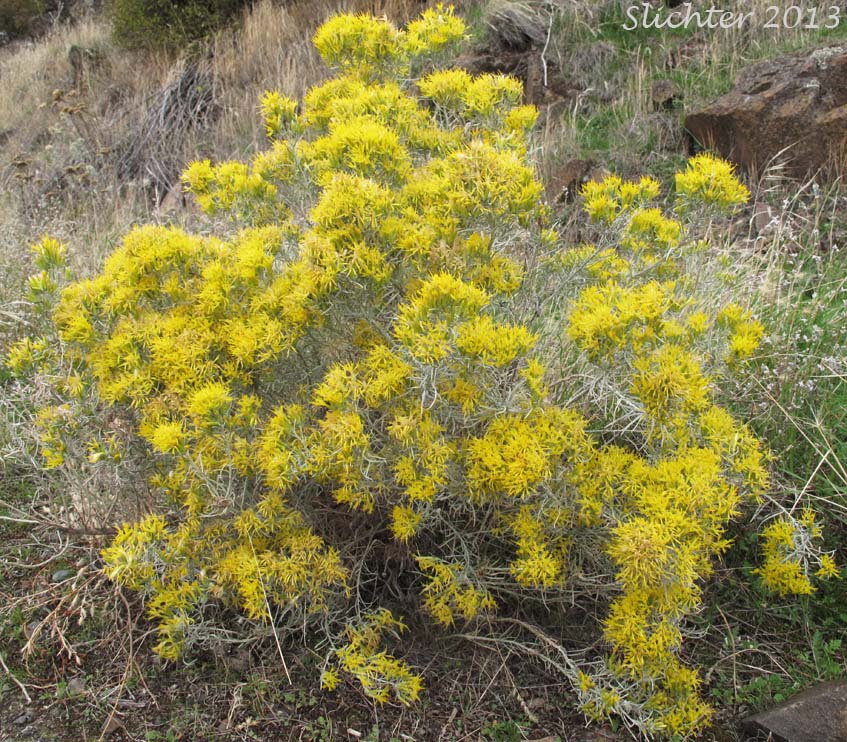
Gray rabbitbrush blooming nicely on rocky slopes above the Crawford Oaks Trailhead, Columbia Hills State Park..........October 12, 2013.
 -
- 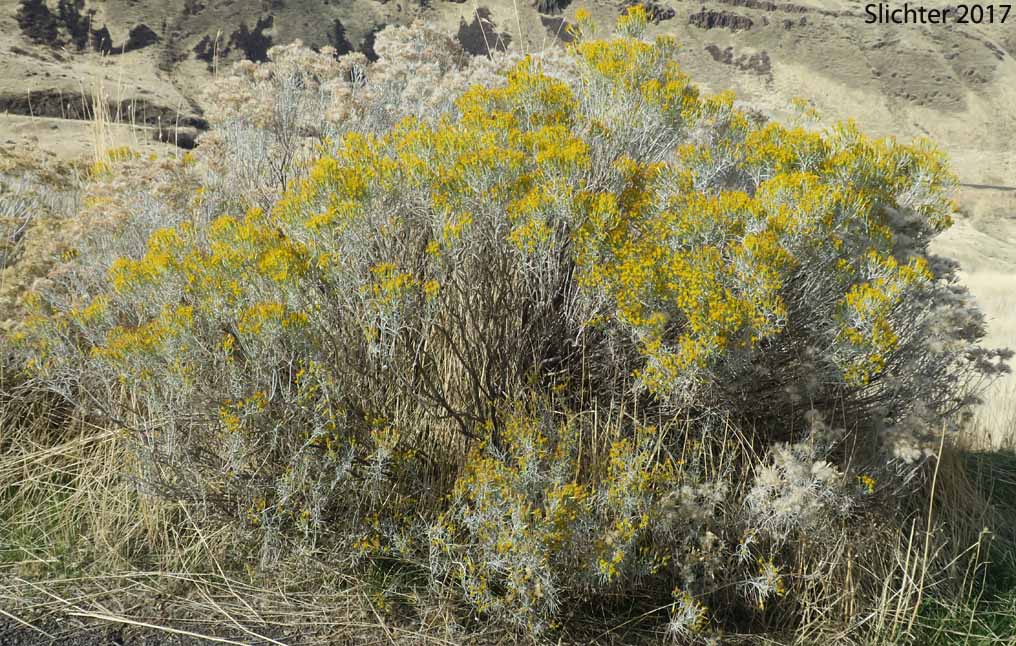
Gray rabbitbrush as seen on grassy slopes above the east side of the Deschutes River about 2 miles upstream from its mouth.........November 12, 2017.
 -
- 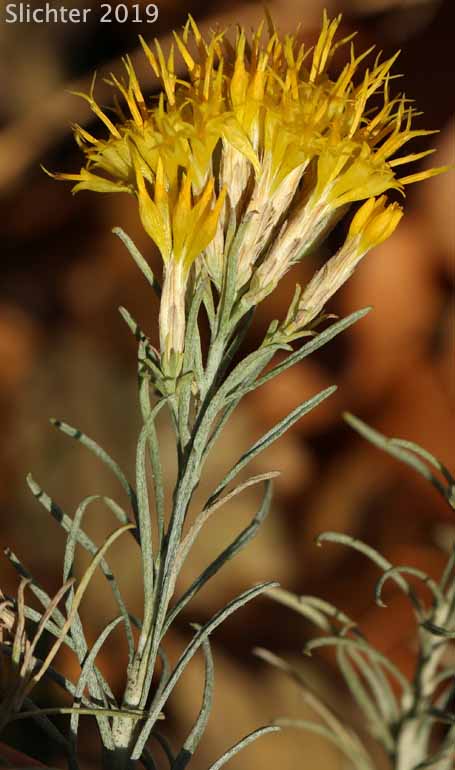
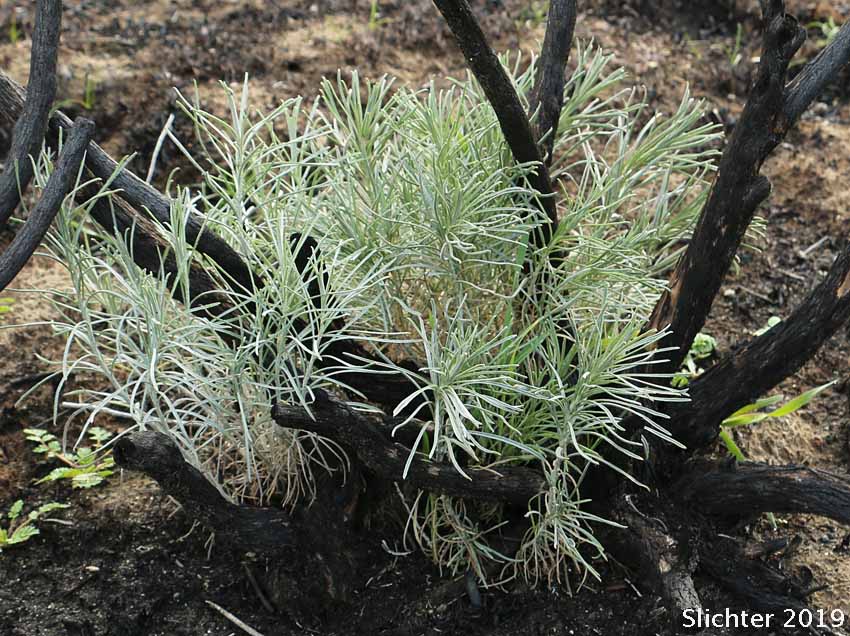
Gray rabbitbrush resprouting new leaves and shoots at left following a summertime wildfire along the lower Deschutes River.......January 4, 2019. The photo at right shows some of the last blooming flowerheads of gray rabbitbrush as seen on rocky slopes above the Crawford Oaks Trailhead, Columbia Hills Historical State Park.........November 16, 2019.
 -
- 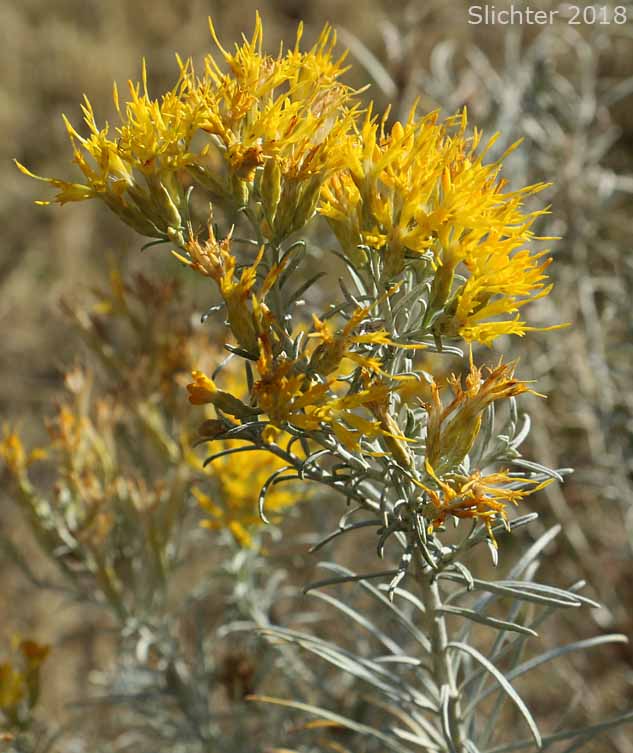
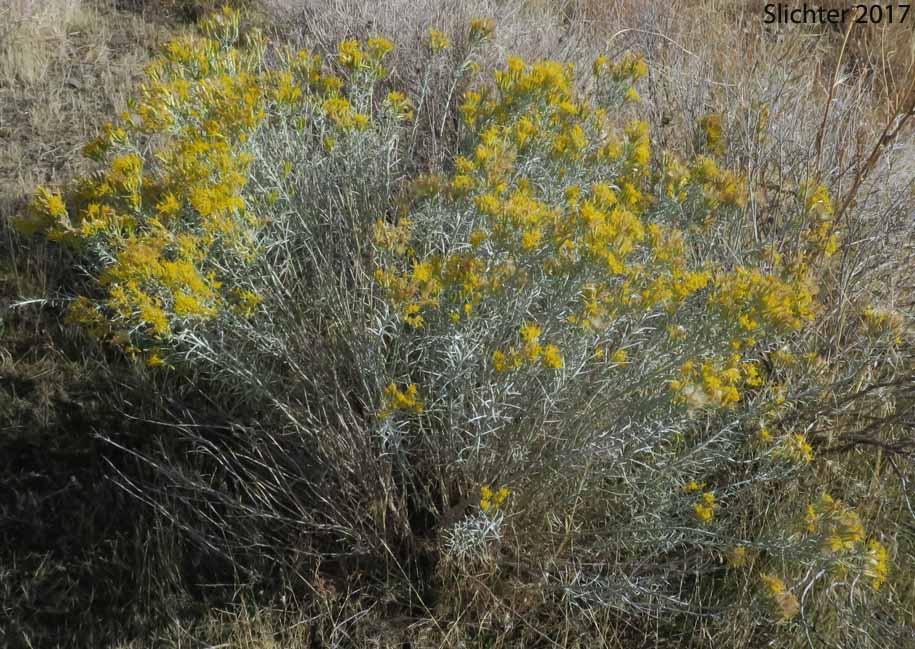
The photo at left shows gray rabbitbrush blooming nicely on rocky slopes above the Crawford Oaks Trailhead, Columbia Hills State Park..........October 16, 2017.
The photo at right shows gray rabbitbrush blooming above the Crawford Oaks Trailhead, Columbia Hills State Park..........October 14, 2018.

One of many gray rabbitbrush still in bloom along trails along the lower Deschutes River about 2 miles south of the Columbia River.....November 20, 2020.
 -
- 
 -
- 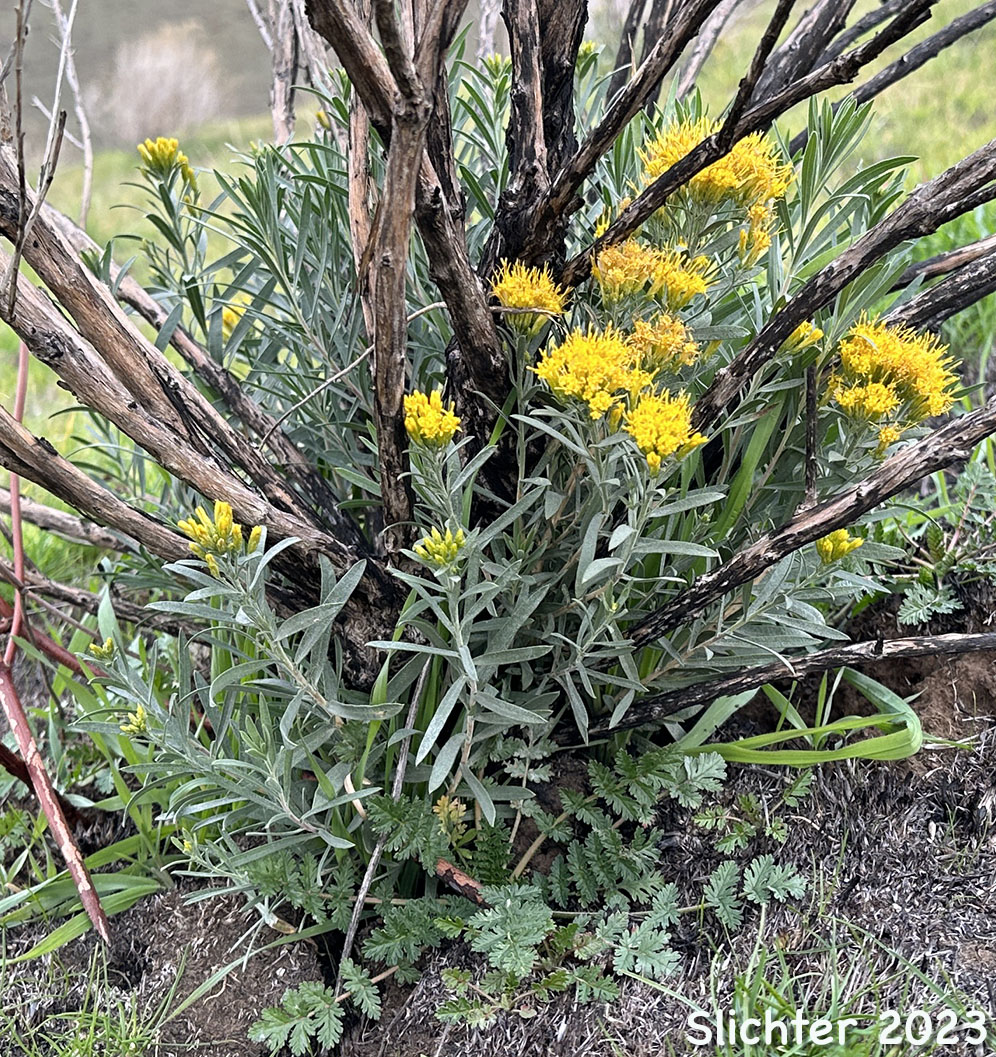
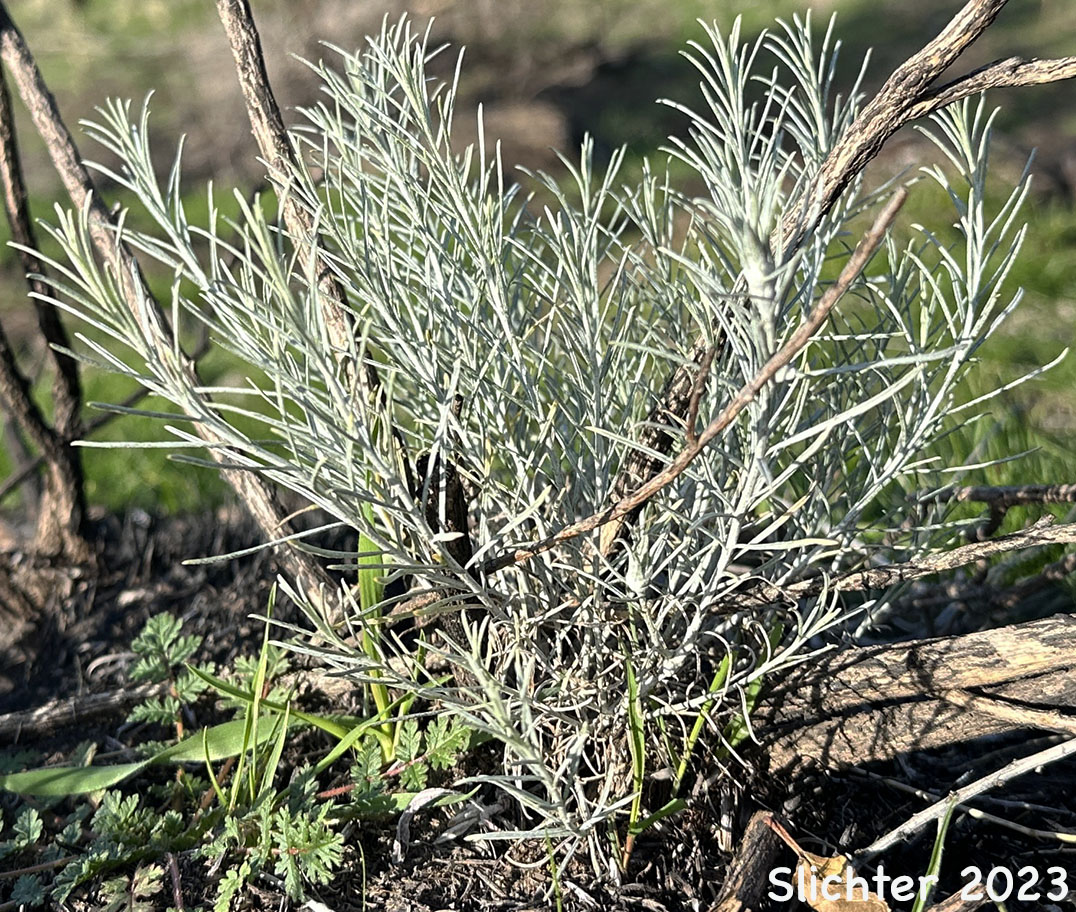
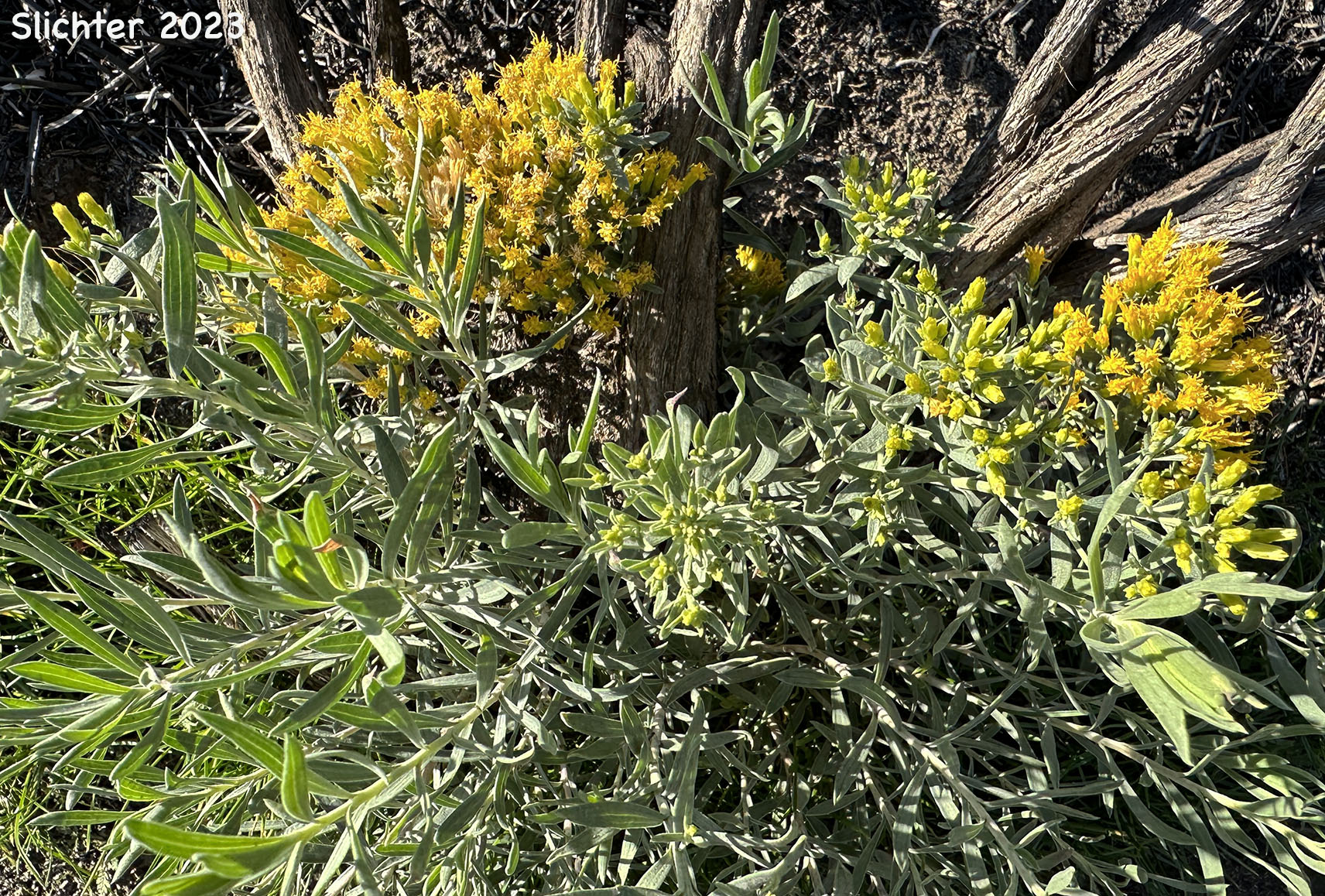
Images showing recovery of wildfire damaged gray rabbitbrush along the Riverview Trail (2 upper images) and Ferry Springs Trail (2 lower images) at the Deschutes River State Recreation Area.......November 21, 2023. The fire occurred in early July 2023.
Paul Slichter