[Sanicles and Snake Roots: The Genus Sanicula in the Columbia River
Gorge of Oregon and Washington]
Pacific Sanicle, Pacific Snakeroot, Western Snakeroot
Sanicula crassicaulis var. crassicaulis
Synonyms: Sanicula crassicaulis, Sanicula menziesii
 -
- 
The photo at left shows a close-up of the leathery green leaf of
western snake root as seen in leaf litter beneath the Oregon white oaks at Catherine
Creek, Columbia River Gorge.......April 9, 2006.
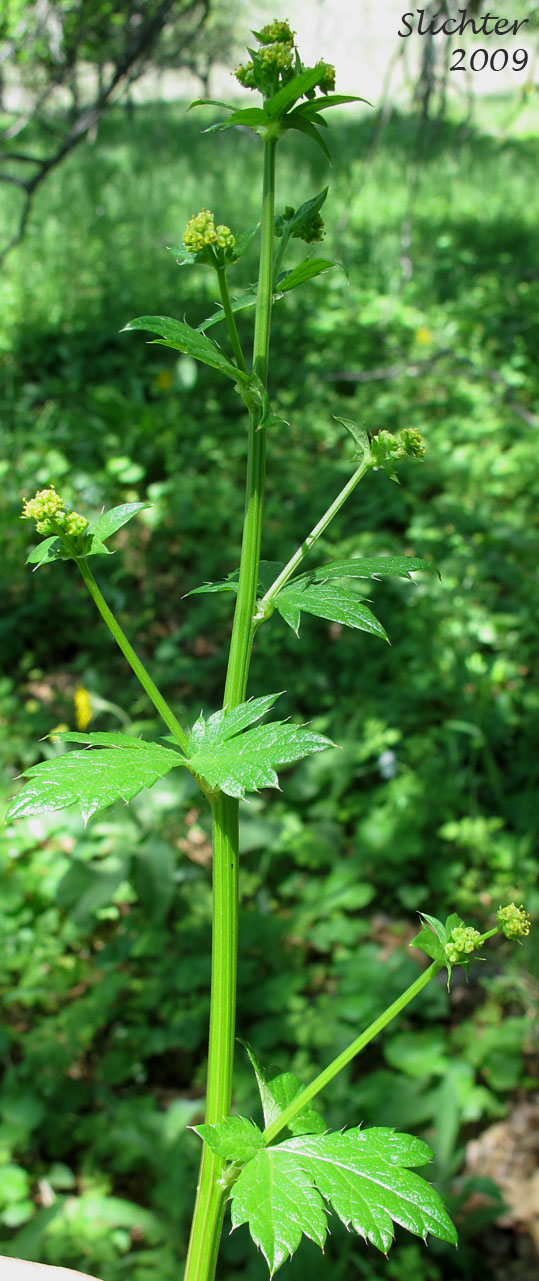
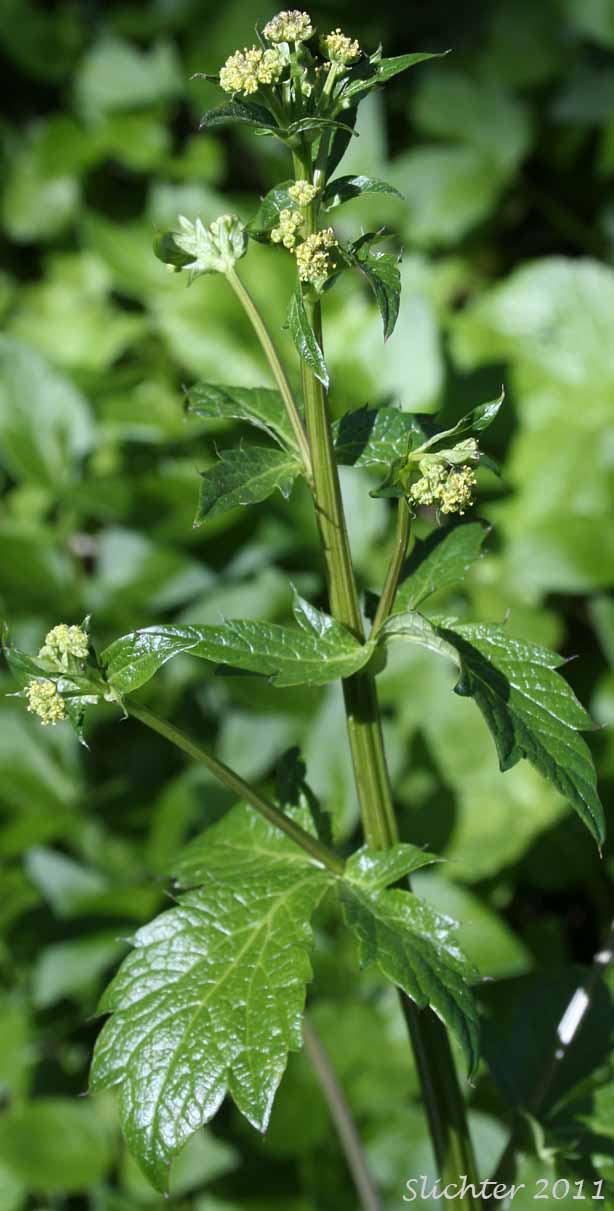
The photo at right shows the stem leaves and inflorescence of Pacific sanicle as seen in oak woods above the Klickitat River in the Klickitat State Wildlife Area of south-central Washington.........May 24, 2009.
Characteristics:
Western snake root is a perennial wildflower with a single stem
arising from 25-120 cm high from a taproot. The thick stems range from simple
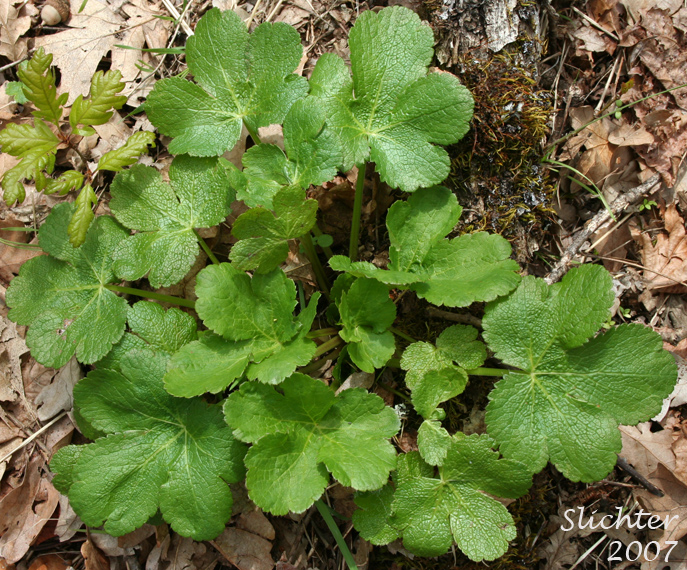
to branchedand are glabrous. The basal leaves are long petioled with the blade
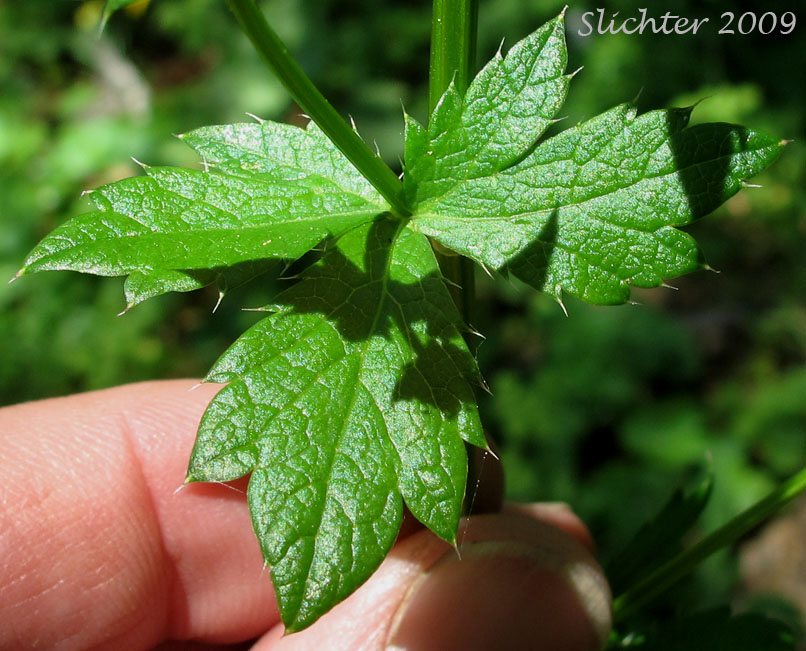
orbicular in outline with 3 shallow to deep lobes. The lobes are toothed along
the edge, with the teeth each tipped with a bristle. The stem leaves are alternate
with the lower leaves well developed and petiolate and the upper leaves reduced
in size, sessile and more deeply incised. The blades range from 3-13 cm long
and 2-18 cm wide.
The inflorescence is a cluster of several umbellets borne on
several short, irregular and thin rays. The bracts at the base of the primary
umbel are leaflike. The individual umbellets are 3-10 flowered and subtended
by several lanceolate bractlets.The subsessile flowers are yellow or sometimes
more or less purplish in color. The fruits are subglobose and covered with stout,
hooked prickles. The individual fruits range from 2-5 mm long and 2-4 mm wide.
The leaves and flowers of western snake root would make a nice
ground cover in a dryland open forest.
Habitat:
Western snake root may be found in moist to dry, lightly wooded
slopes and flatlands from low elevation to moderate elevation in the foothills.
Range:
Western snake root may be found from southern British Columbia
south along the west side of the Cascade Mts to California and eastward into
the Columbia River Gorge where it extends as far east as Klickitat County in
south-central Washington.
In the Columbia River Gorge it may be found between the elevations
of 100'-2200' from east of Washougal, WA eastward to the Klickitat River.
 -
- 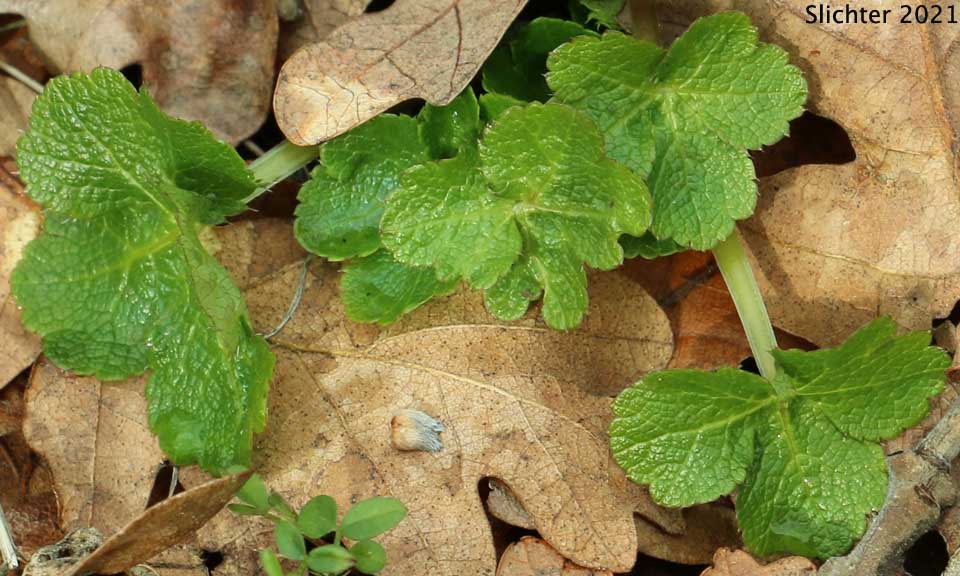
The photo above shows a cluster of basal leaves of western snake root as seen at Catherine Creek in the Columbia River Gorge.........April 14, 2007. The photo at right shows the basal leaves of western snakeroot emerging from the ground at Catherine Creek, Columbia River Gorge.....February 9, 2021.
 -
- 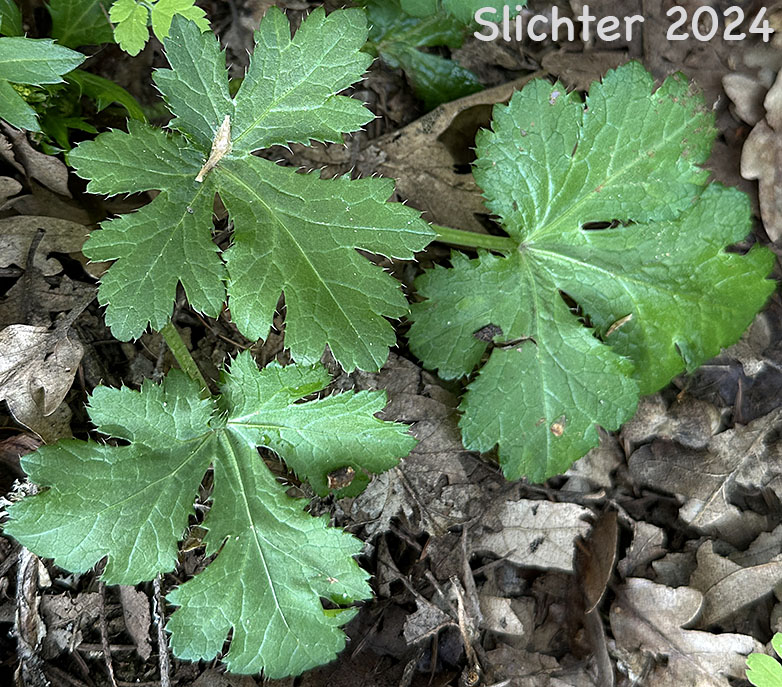
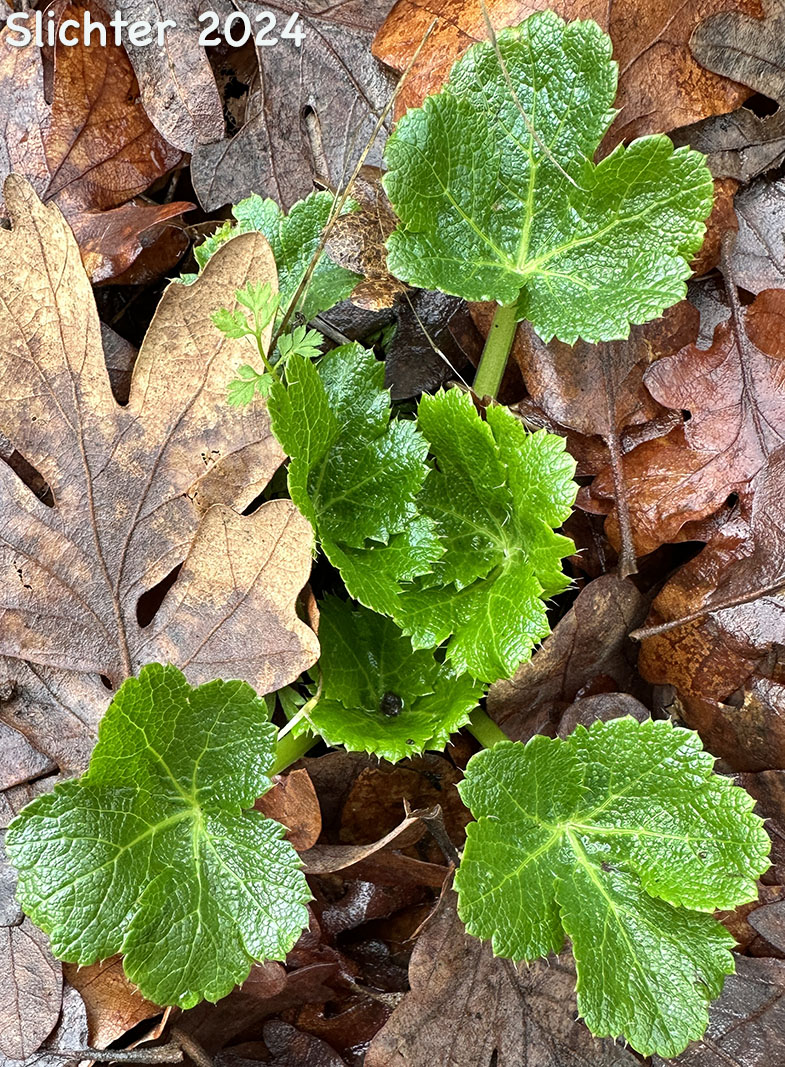
Upper stem leaves of Pacific sanicle as seen at left in oak woods above the Klickitat River in the Klickitat State Wildlife Area of south-central Washington.........May 24, 2009. The photo at right shows the basal leaves of Pacific sanicle as seen in oak woodlands along the Weldon Wagon Road Trail, Klickitat County, WA......April 28, 2024.
 -
- 
A close-up of the upper stem leaves and inflorescence of Pacific sanicle as seen at left at a shaded spring under oaks on western Tracy Hill, Catherine Creek........May 20, 2011.
The photo at right shows the basal leaves of Pacific sanicle emerging from under the oak leaves along the paved trail at Catherine Creek......January 5, 2024.
 -
- 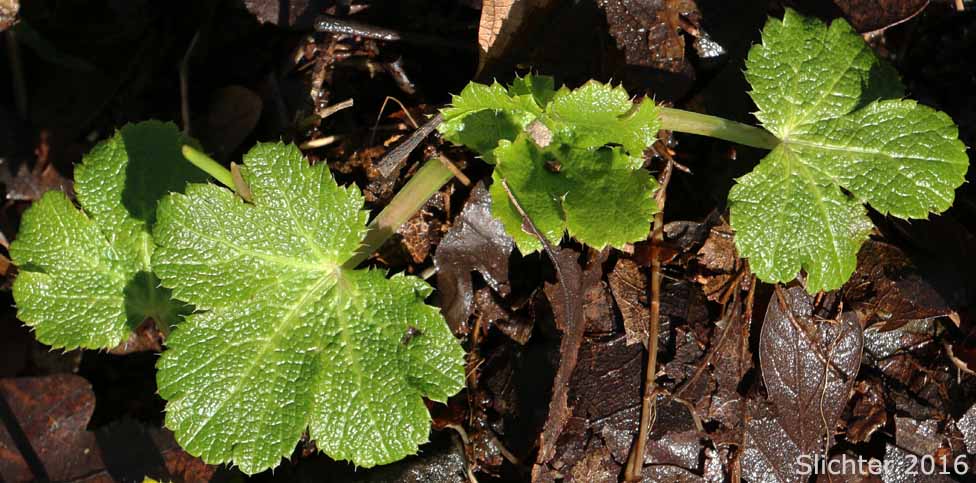
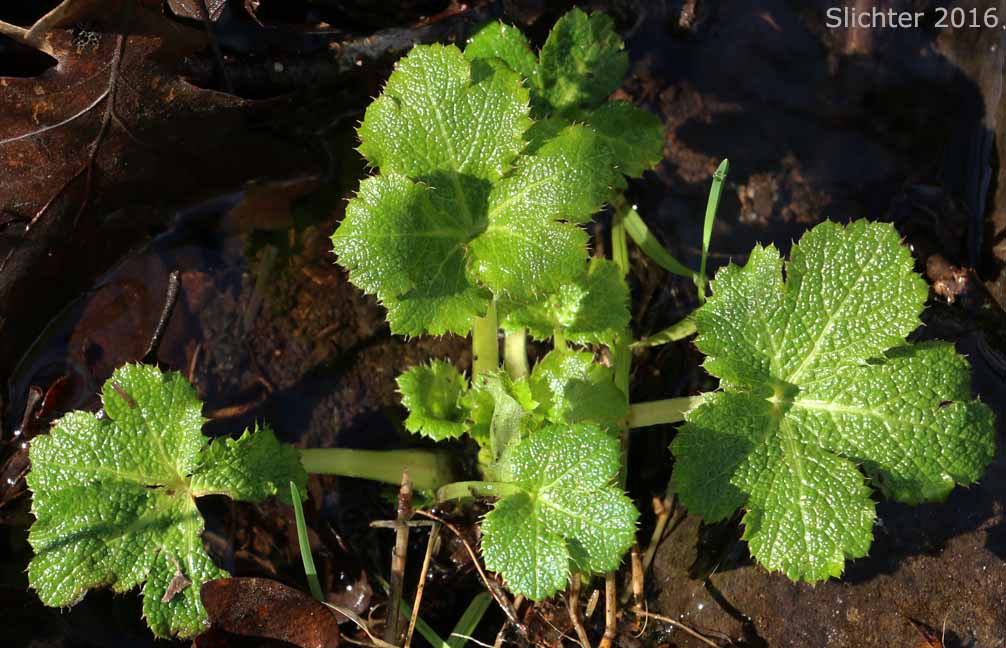
Newly arisen foliage of Pacific sanicle as seen in a spring under Oregon white oaks at Catherine Creek, Columbia River Gorge..........January 31, 2016.
Paul Slichter