[Larkspurs: The Genus Delphinium in the Columbia River
Gorge of Oregon and Washington]
Two-lobe Larkspur, Upland Larkspur
Delphinium nuttallianum
Synonyms: Delphinium bicolor, Delphinium decorum ssp. tracyi, Delphinium lineapetalum, Delphinium nelsonii, Delphinium nuttallianum var. fulvum, Delphinium nuttallianum var. levicaule, Delphinium nuttallianum var. lineapetalum, Delphinium nuttallianum var. nuttallianum, Delphinium pauciflorum, Delphinium sonnei
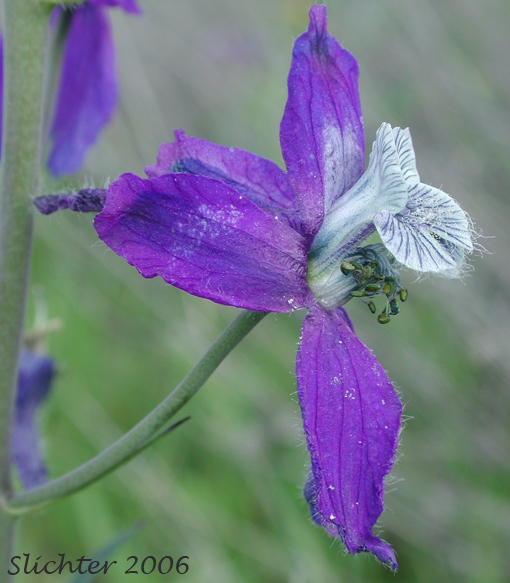
The photo above shows a close-up of the flower of upland larkspur
as taken at Memaloose in the central Columbia River Gorge.
Photographed on April 24, 2006.
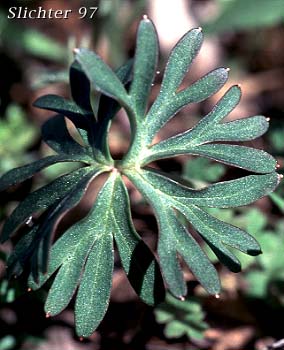 Leaf of the upland larkspur (Delphinium nuttallianum) at right.
Characteristics:
Upland larkspur is an attractive perennial wildflower which
usually is seen with one stem covered with variable herbage (varying from smooth
surfaced to glandular or covered with soft, spreading hairs). The stem is not
hollow and it varies in height from 15-40 cm. The leaves are mostly basal or
found low on the stems. The petioles are longer than the diameter of the blades
and individual leaf blades are 2-4 times parted or lobed into linear or oblong-lanceolate
segments from 1.5-5 mm wide. The blades of the basal leaves measure from 2-6
cm wide. The upper leaves are smaller and have fewer leaf segments.
The inflorescence is a simple to compound raceme of 3-15 flowers.
The pedicels of the lower flowers are usually several times longer than the
flowers and they are spreading-ascending. The sepals vary from whitish to pale
gray-blue and the more usual deep bluish-purple. The lowest 2 sepals range from
17-25 mm long while the lateral pair of sepals are the widest. The spur measures
from 13-20 mm long. The lower petals are nearly white and faintly to deeply
purplish lined, or they may be yellowish or brownish with a purplish tinge.
The blade of the lower petal measures from 3-4 mm long and is deeply notched.
The upper petals are bluish-tinged.
Habitat:
Upland larkspur may be found on well drained, gravelly soils
in dry grasslands, among sagebrush, and in open ponderosa pine forests.
Range:
Upland larkspur is found from southwest British Columbia south
along the eastern slopes of the Cascade Mts. to northern California, and eastward
to Alberta, and south to Arizona. It is one of the more common larkspurs across
the inland Pacific Northwest.
In the Columbia River Gorge it may be found between the elevations
of 100'-4200' from Stevenson,WA east to Biggs, OR.
 -
- 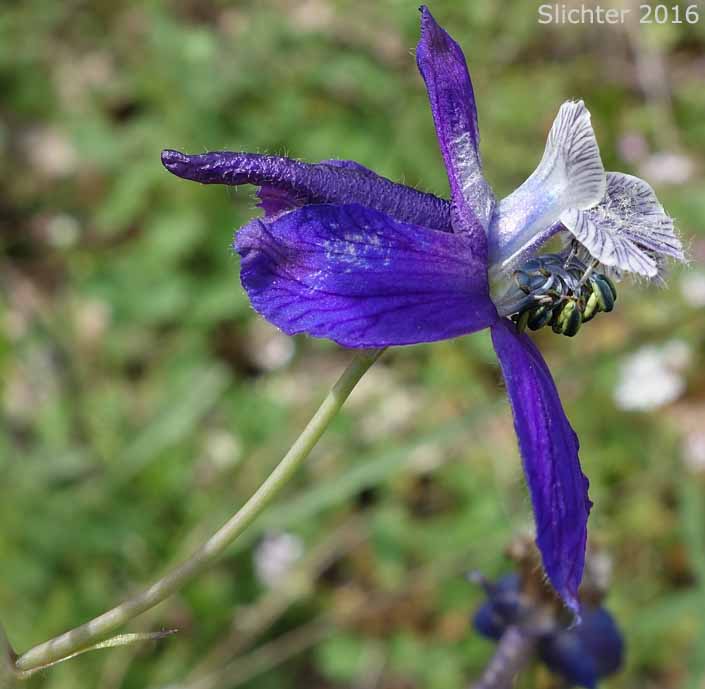
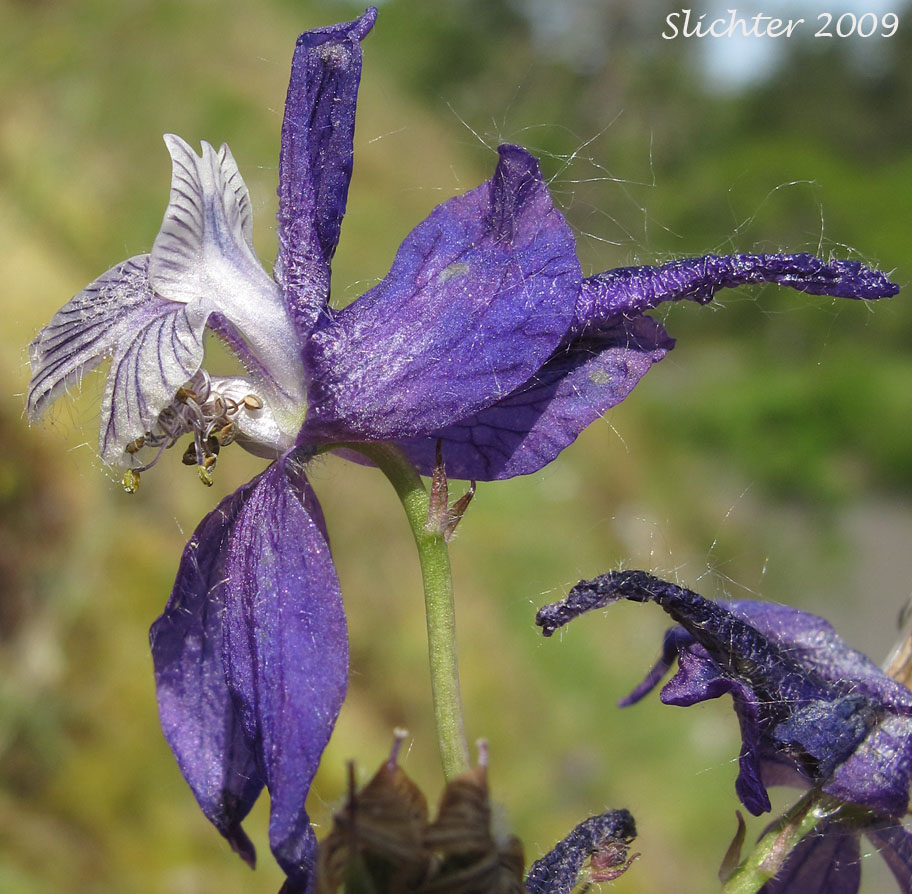
Close-up (left) of the flower of upland larkspur as seen at Catherine Creek in the Columbia River Gorge...........May 10, 2009. Note that the spreading sepals are dark blue while the central petals are white with bluish venation. In other words, with larkspurs, what we would normally think are petals are really sepals. The photo at right shows a flower of upland larkspur as seen at Rowena Dell between Memaloose and Tom McCall Nature Preserve..........April 5, 2016.
 -
- 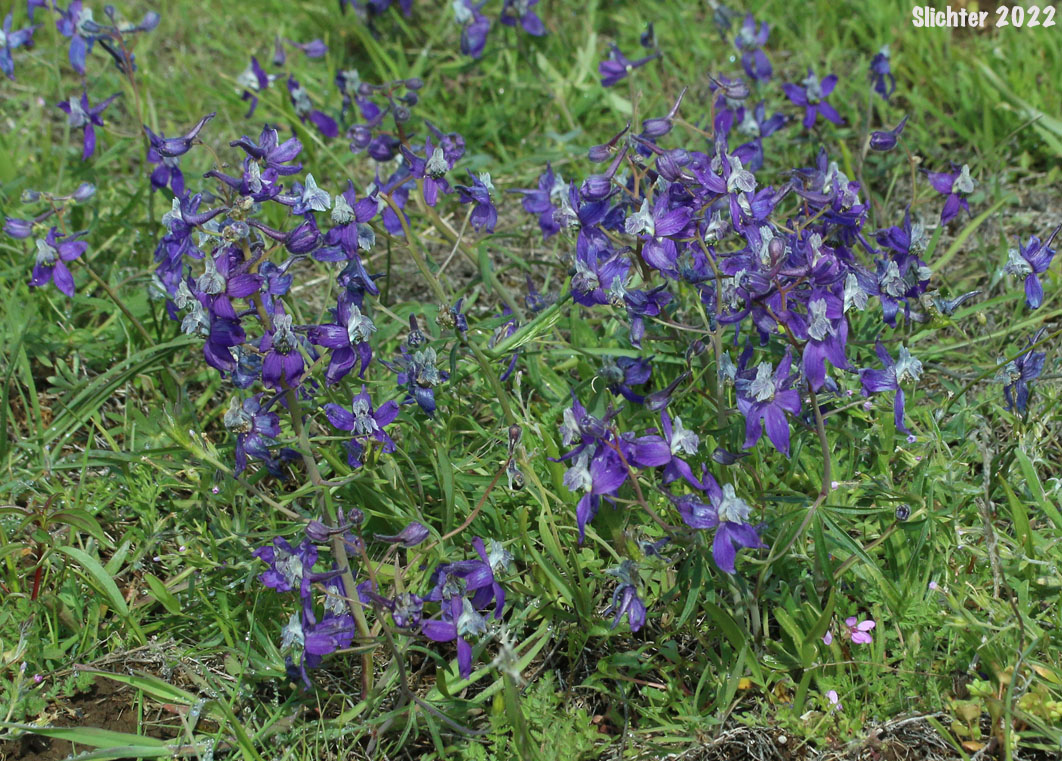
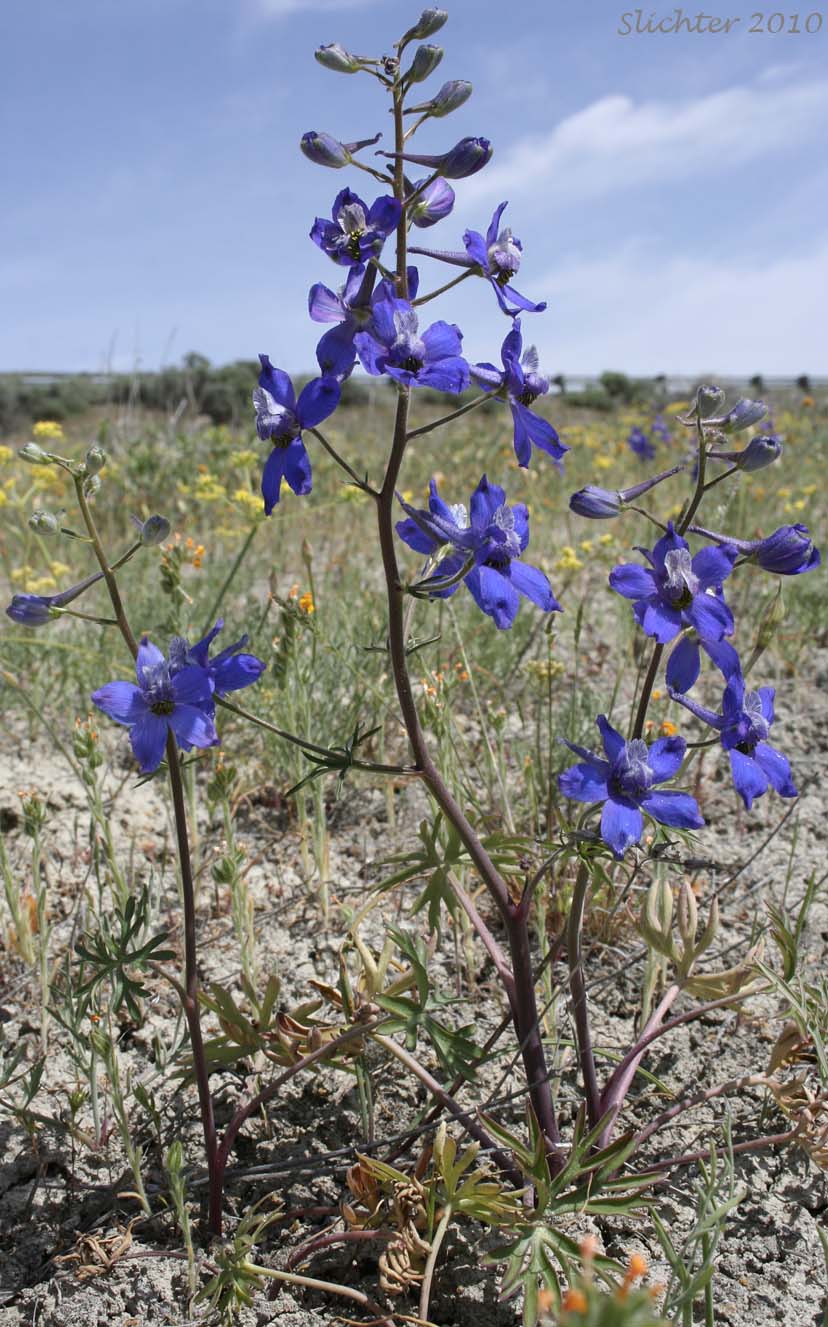
Several upland larkspurs blooming at left along Washington Highway SR 14 in the eastern Columbia River Gorge near Roosevelt, WA............April 18, 2010. The photo at right shows a mass of upland larkspurs in bloom in vernally moist prairie between Marsh Cutoff and Dell Roads, about half a mile west of Rowena Creek, Columbia River Gorge.......April 17, 2022.
 -
- 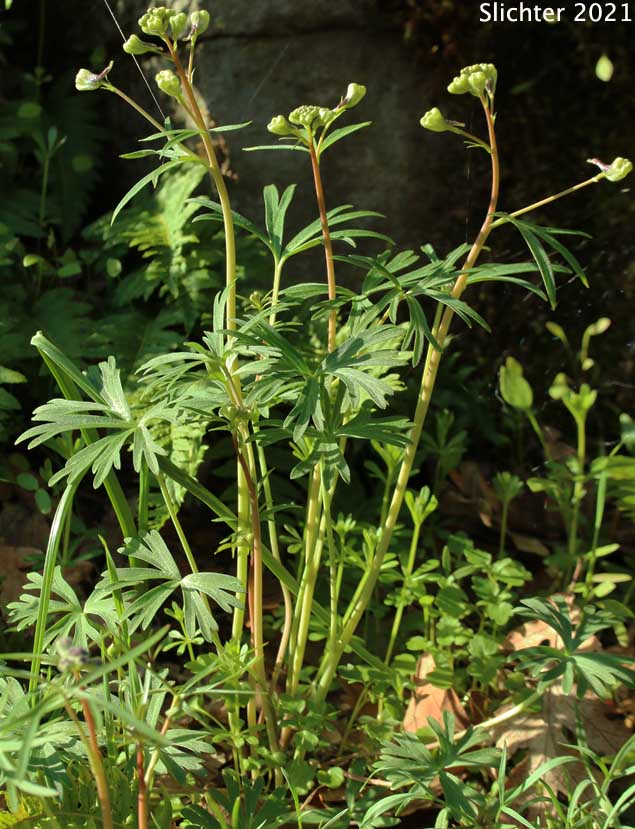
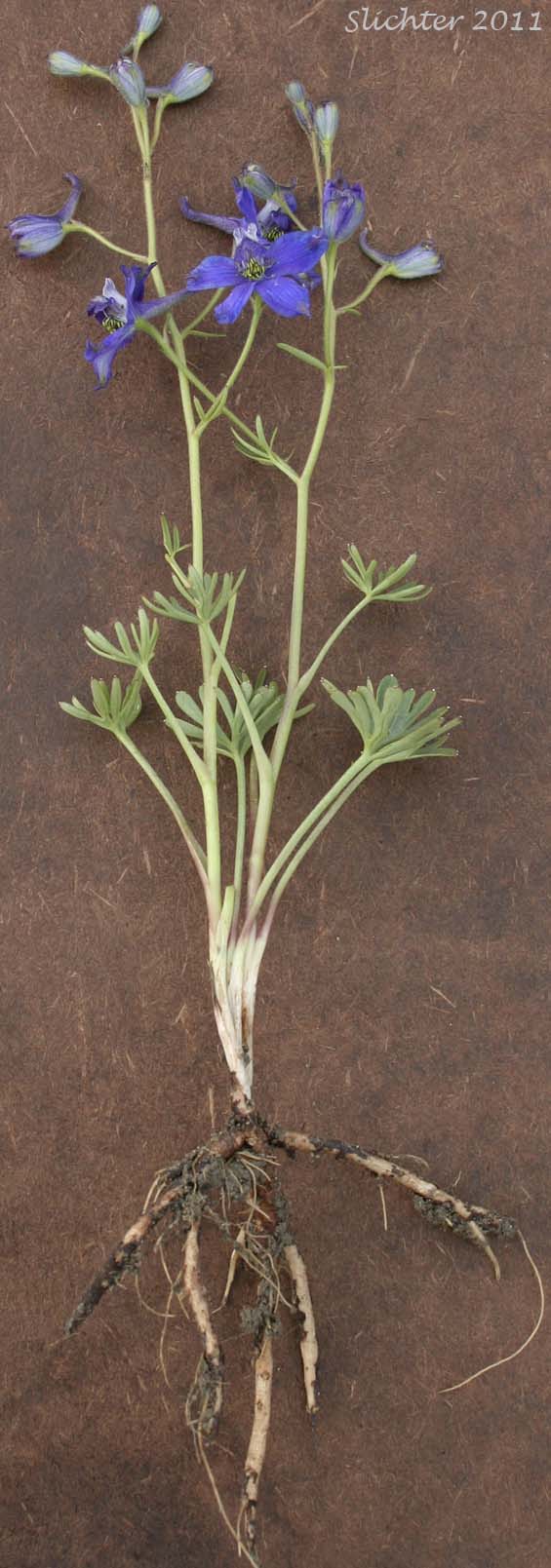
A photo at left showing the inflorescence, leaves and root structure of upland larkspur as seen near Sundale at T3N R20E S20 in south-central Klickitat County, WA...........April 20, 2011. The stems of this species are not hollow and the roots are fibrous, freely branched, and firmly attached to the stem. This plant speciman was collected for the WTU Herbarium by Dr. David Giblin. The photo at right shows upland larkspur with numerous flower buds as seen on a high mossy bank along Catherine Creek, Columbia River Gorge.....March 17, 2021.
 -
-  -
-  -
- 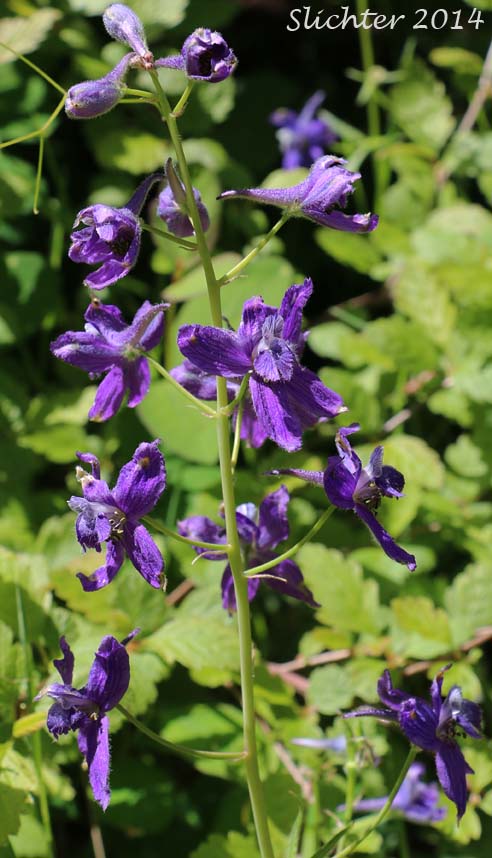
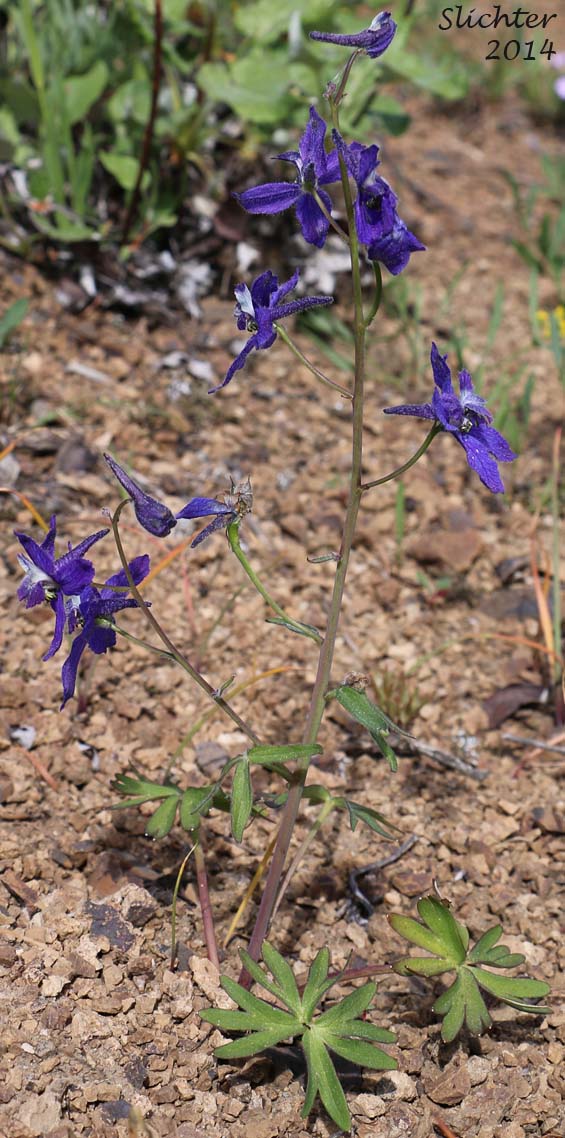
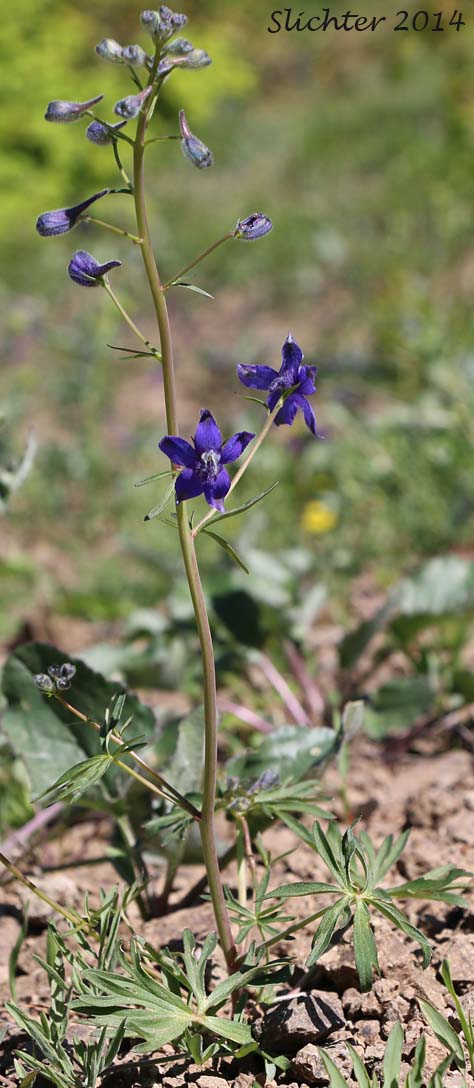
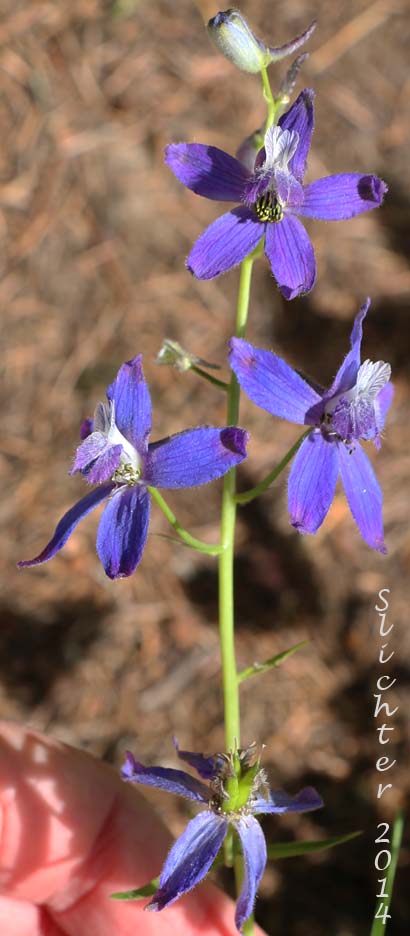
What appears to be upland larkspur as seen atop Grassy Knoll, Gifford Pinchot National Forest..........June 3, 2014.
 -
-  -
-  -
- 
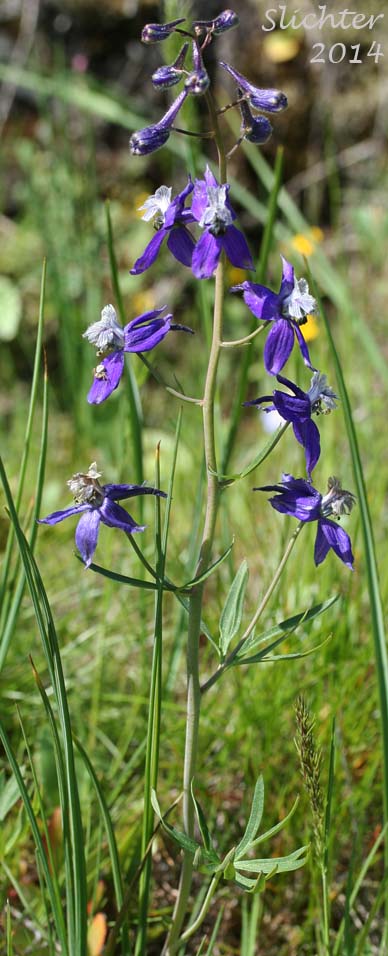
Upland larkspur blooming at Catherine Creek, Columbia River Gorge in the photo at left...........April 8, 2014.
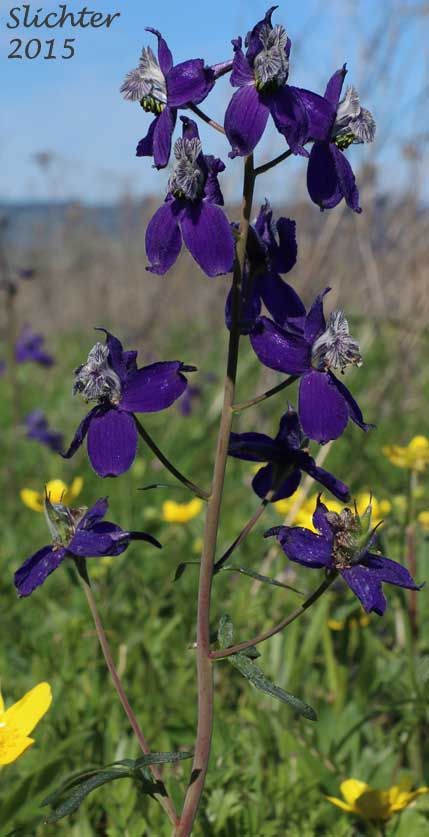
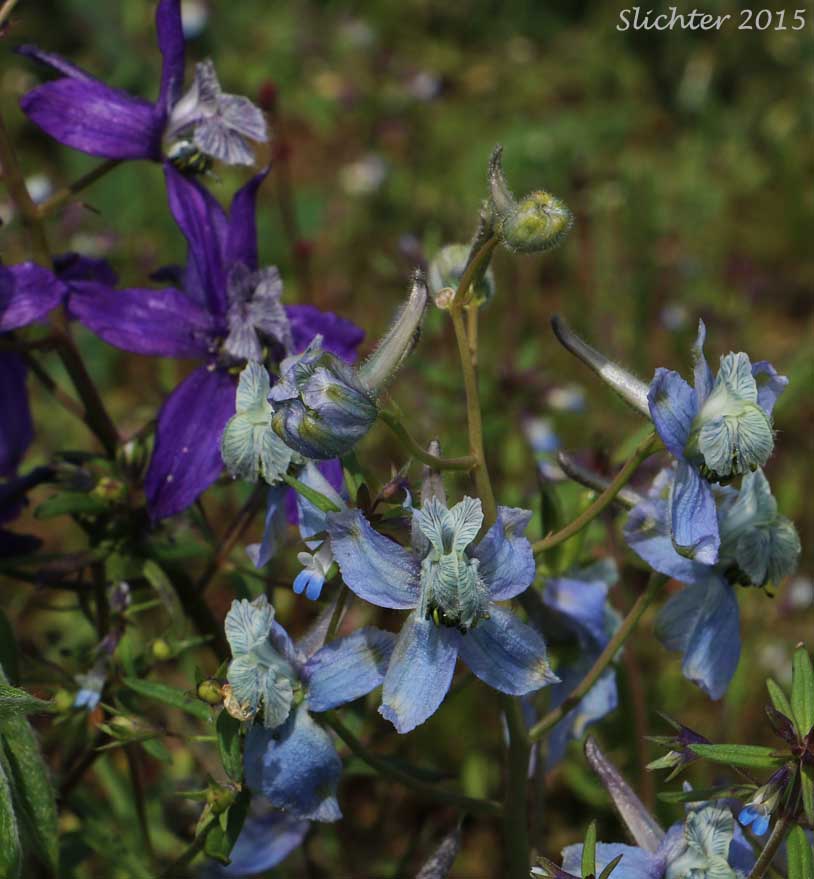
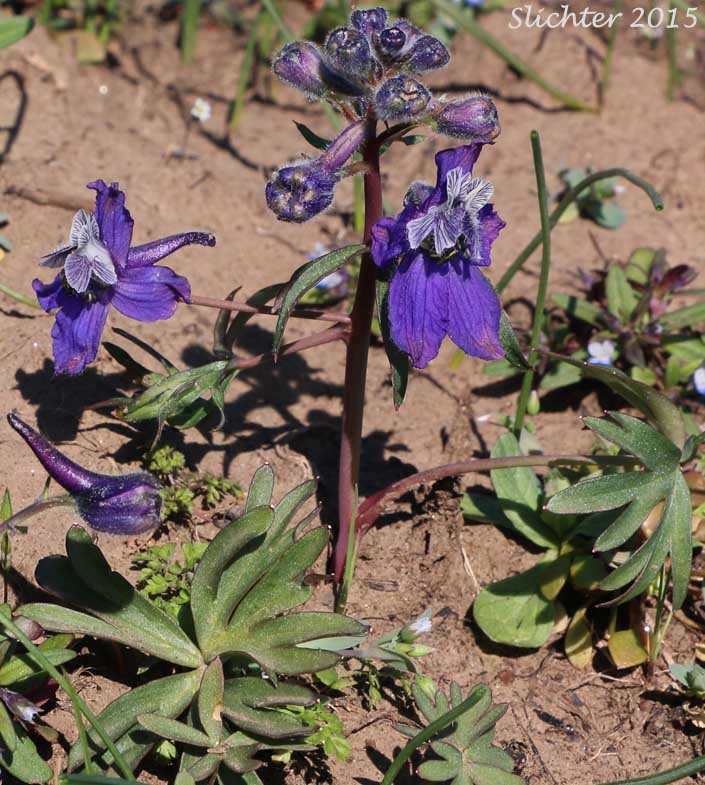
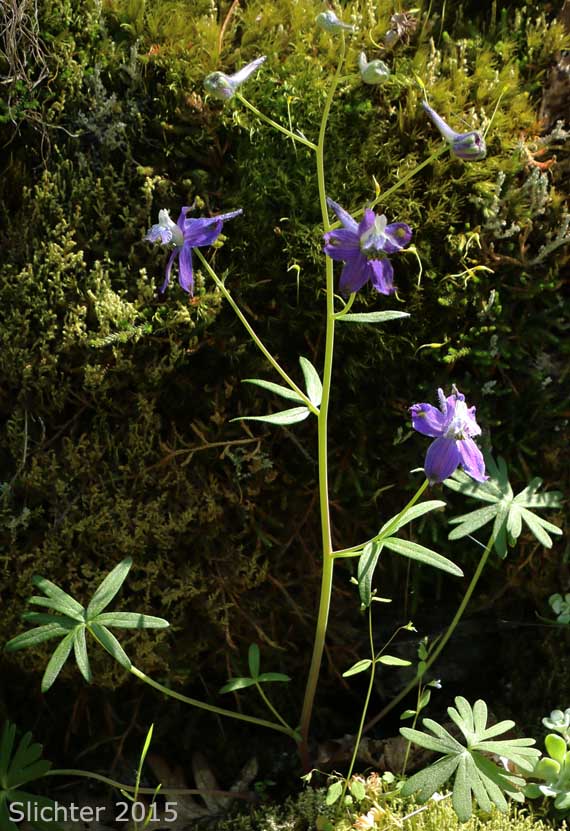
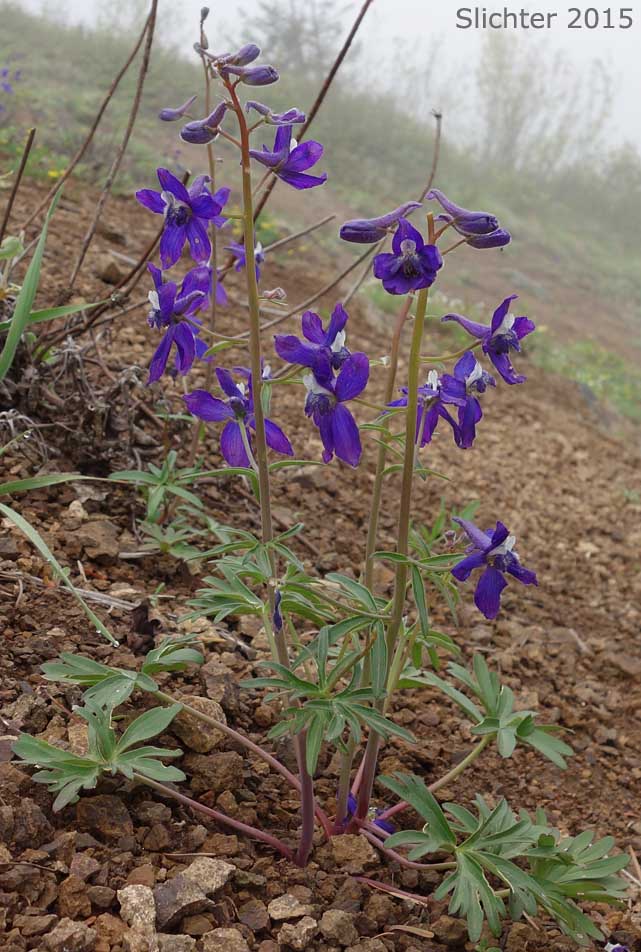
Upland larkspur blooming along the Memaloose Trail east of Mosier, Oregon.........March 27, 2015 (center left). The photo at center right shows a mix of purple-blue and light blue flowered upland larkspurs from the southeastern slopes of Sevenmile Hill several miles northwest of The Dalles...........March 30, 2015. Light blue-flowered forms are very unusual in the Columbia River Gorge. The photo at right shows upland larkspur blooming above the Wasco County Rock Quarry on USFS lands on the southeast corner of Sevenmile Hill, several miles northwest of The Dalles, Oregon.
 -
- 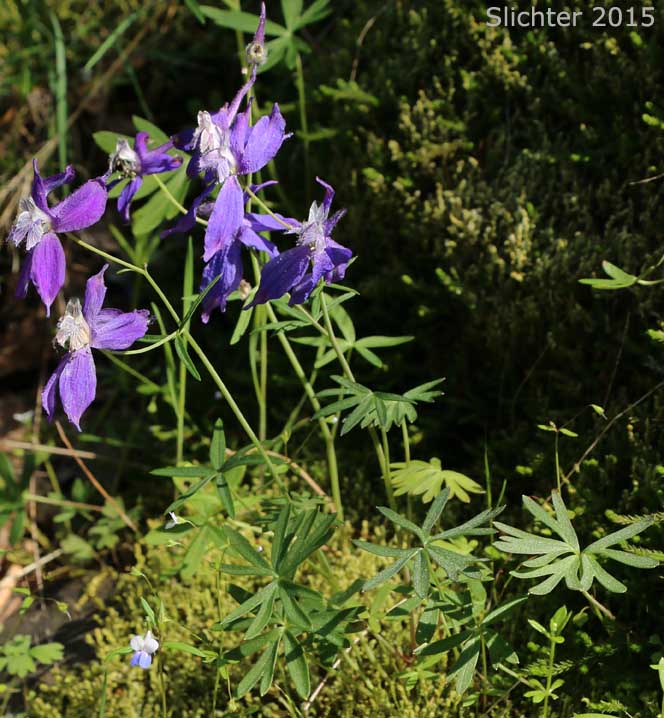
Upland larkspur as seen along the trail to the top of Mitchell Point, several miles west of Hood River, Oregon..........April 19, 2015.
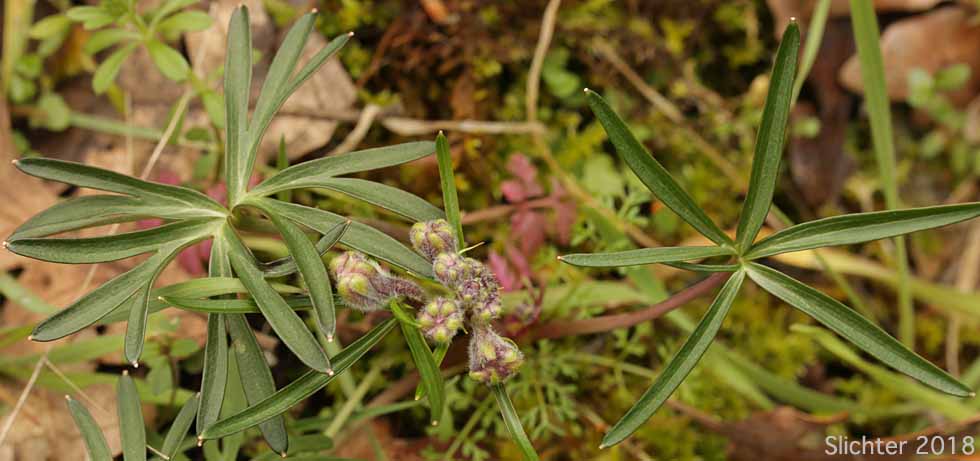
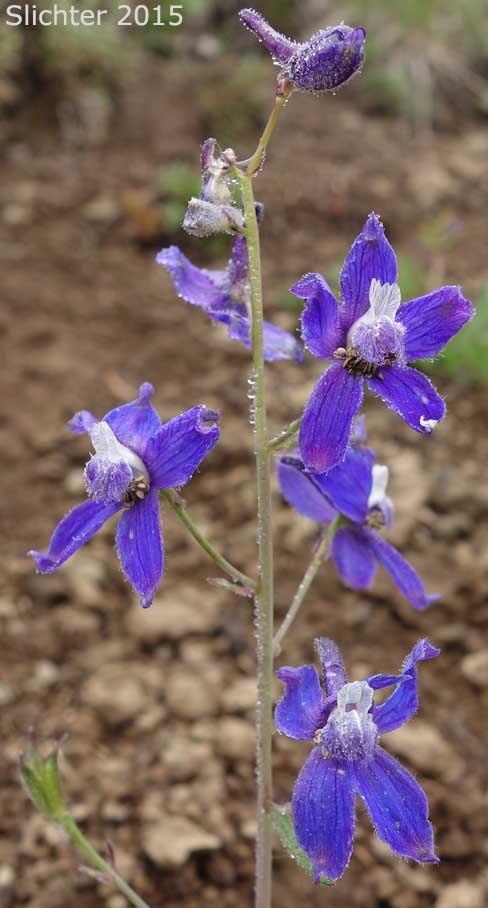
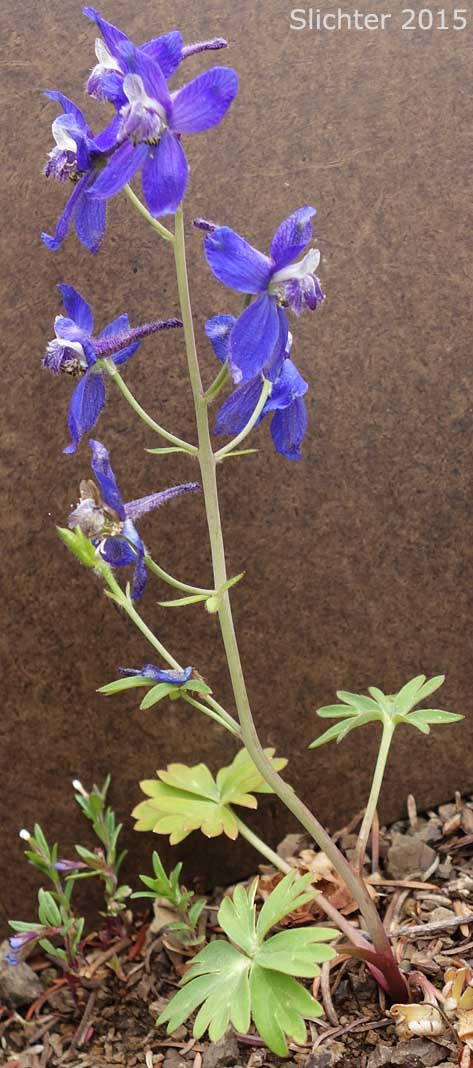
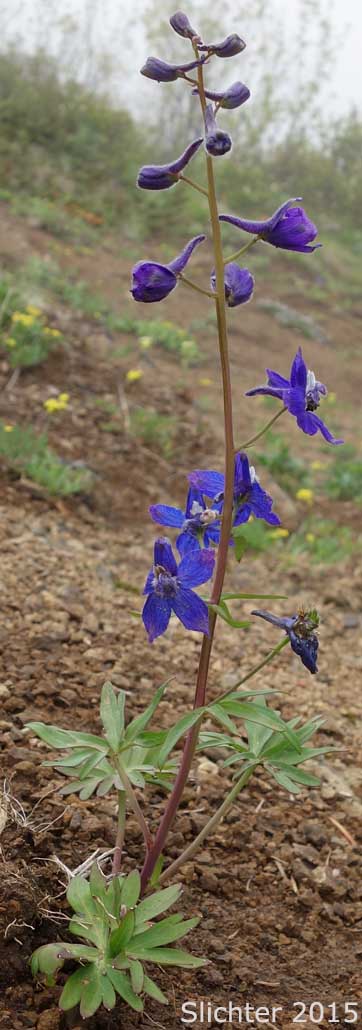
Upland larkspur showing the leaves and flower buds as seen at Catherine Creek, Columbia River Gorge.......February 27, 2018.
 -
-  -
-  -
- 
 -
-  -
-  -
- 
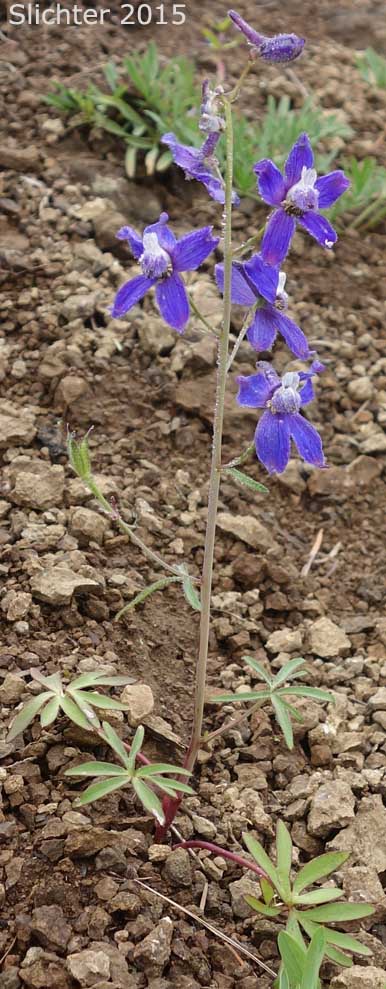
What is probably upland larkspur as seen on the slopes of Grassy Knoll, Gifford Pinchot National Forest...........May 15, 2015.
 -
- 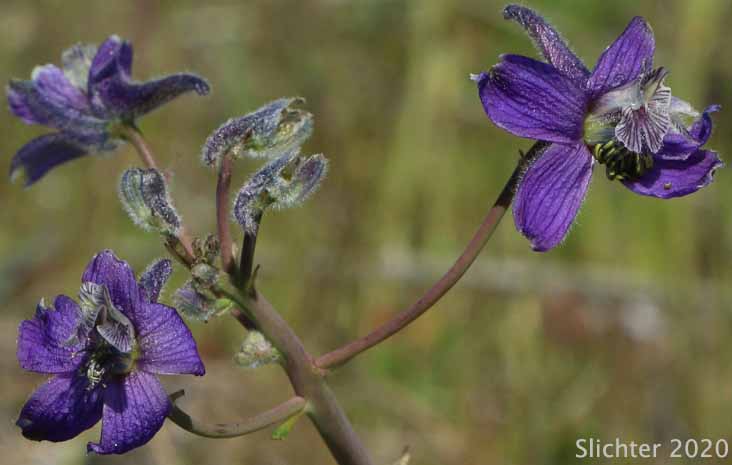
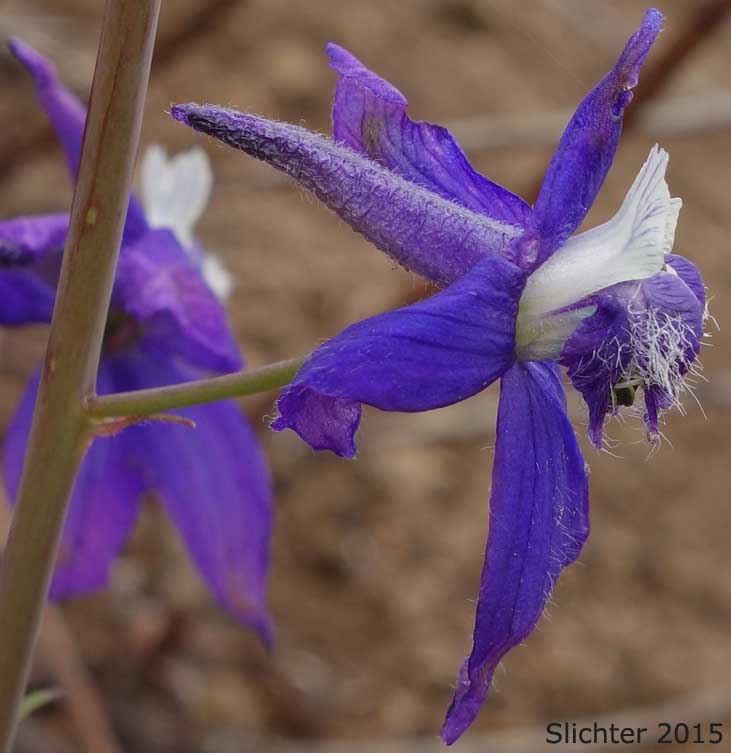
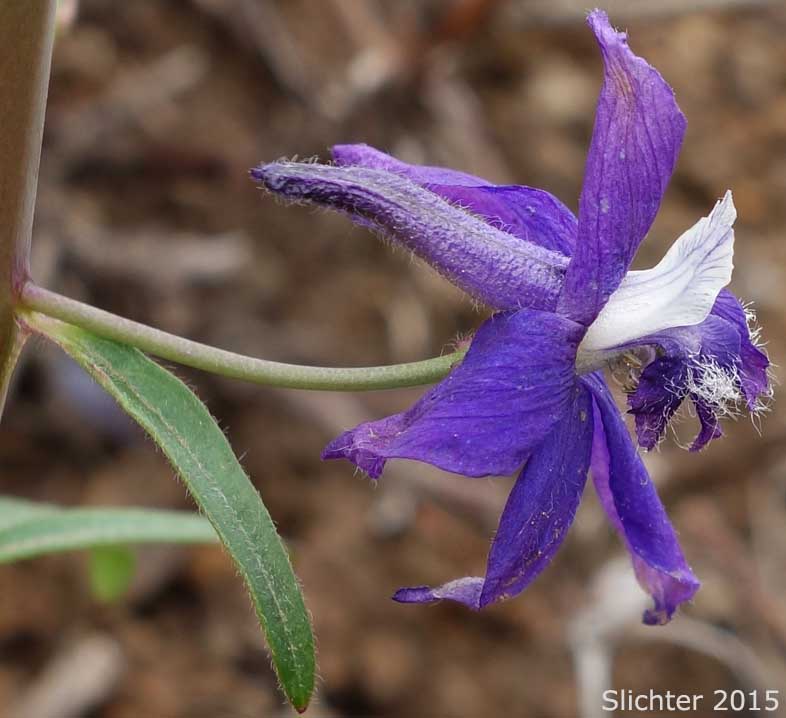
The photo at left shows a close-up side view
of the flower of upland larkspur as seen at Catherine Creek, Columbia River
Gorge........April 9, 2006. Note the long pedicel, which is much longer
than the spur, and the spreading to reflexed (purplish) sepals and smaller whitish
petals which are penciled with purplish stripes. The photo at right shows upland larkspur atop Mill Creek Ridge, Wasco County, WA.....March 17, 2020.
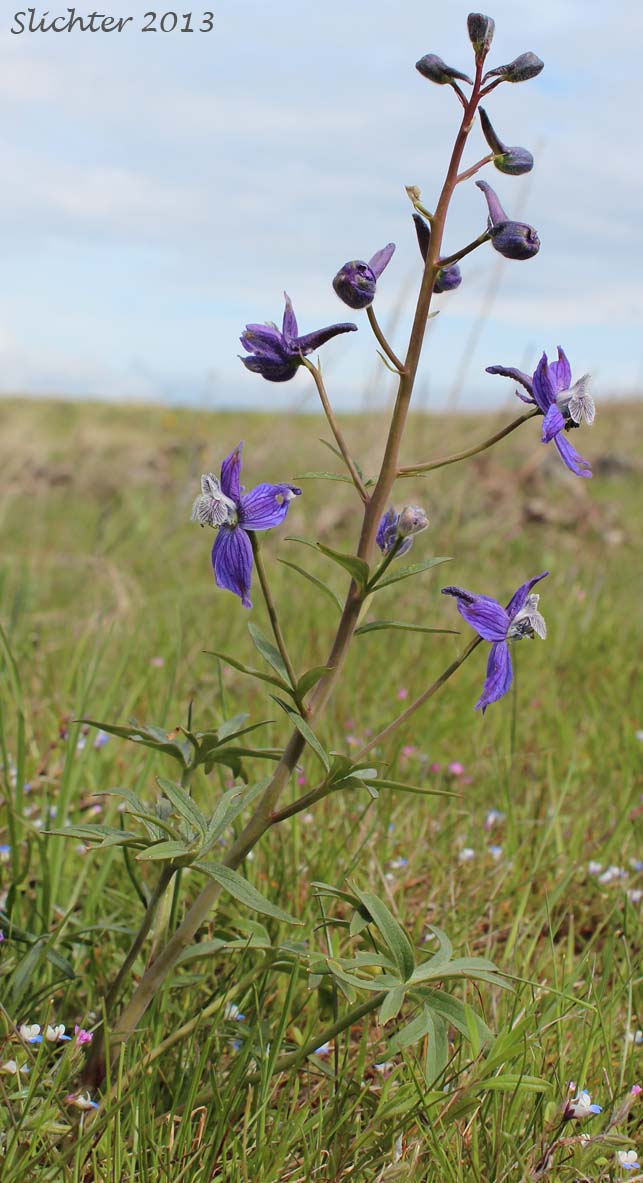 -
- 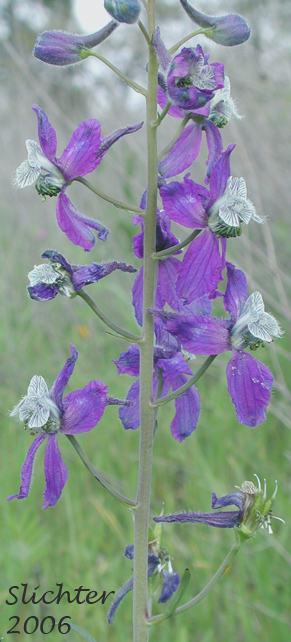
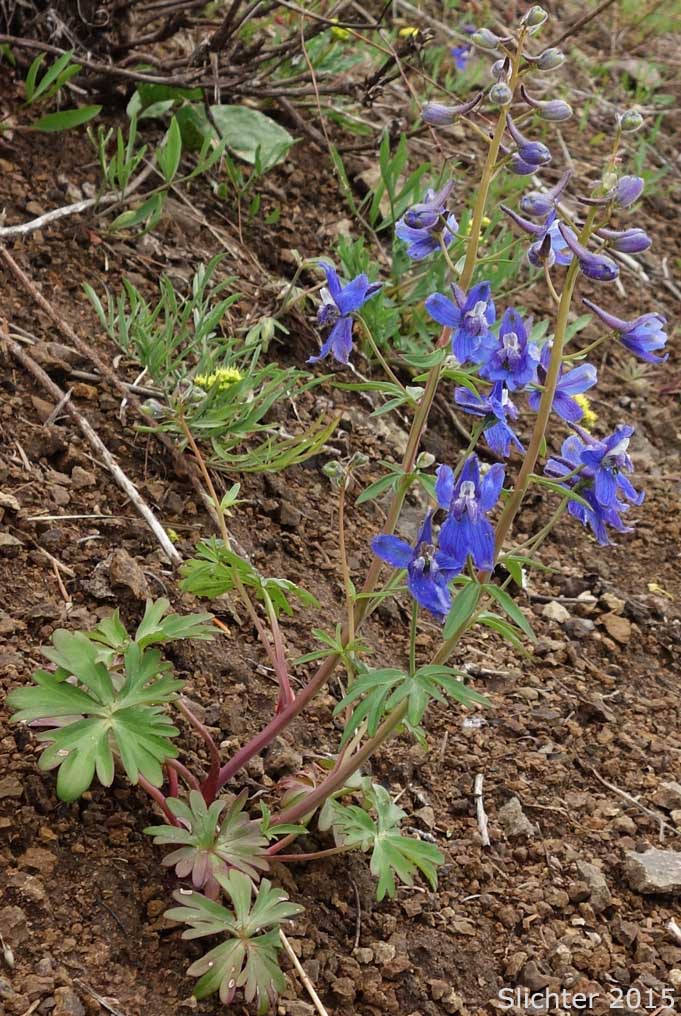
Upland larkspur as seen at left at the Four Sisters (Columbia Land Trust) near The Dalles, Oregon..........March 28, 2013. The photo above shows a raceme of flowers of upland larkspur as seen at Memaloose Overlook, east
of Mosier, OR.....April 24, 2006.
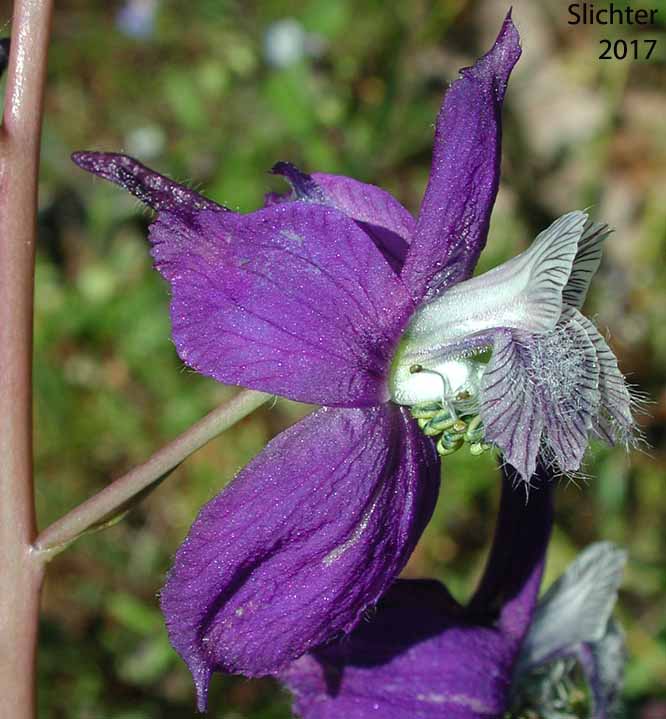
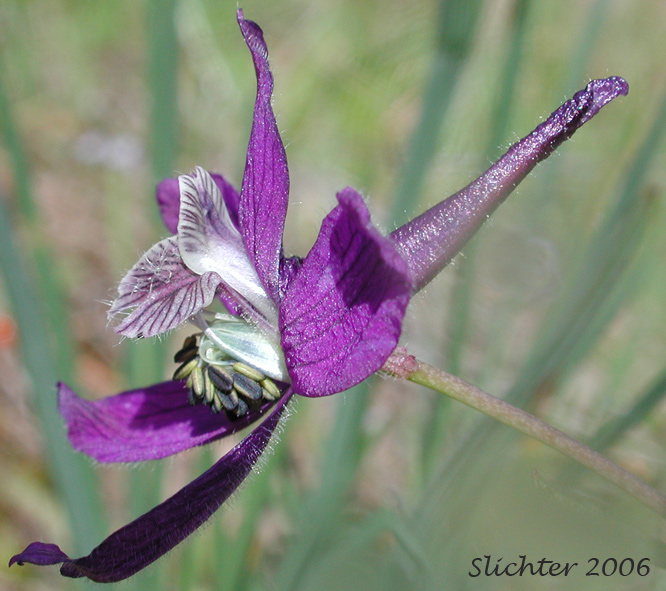
A close-up image of a flower of upland larkspur as seen along the Memaloose Trail, east
of Mosier, OR.....April 21, 2017.
 -
- 
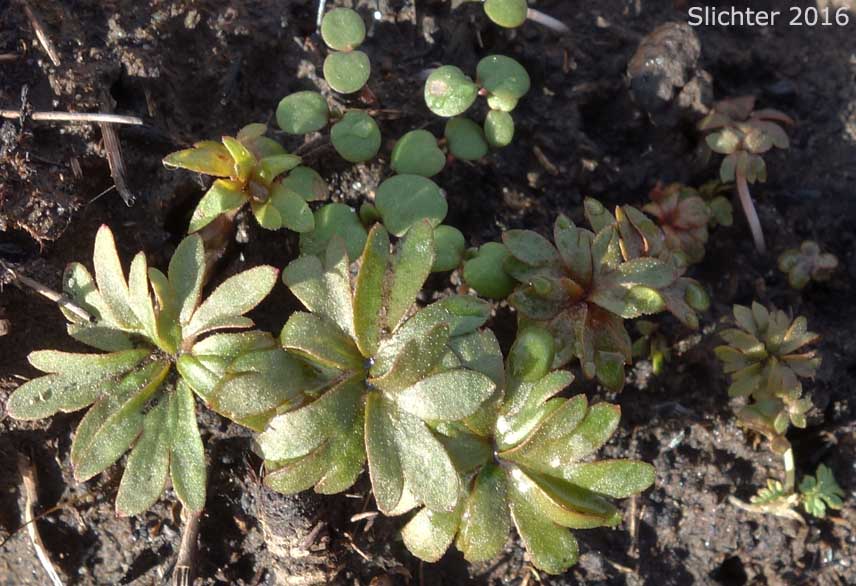
Very early 'spring' leaves at left of upland larkspur as seen on slopes above the Crawford Oaks trailhead, Columbia Hills State Park.........January 15, 2016.
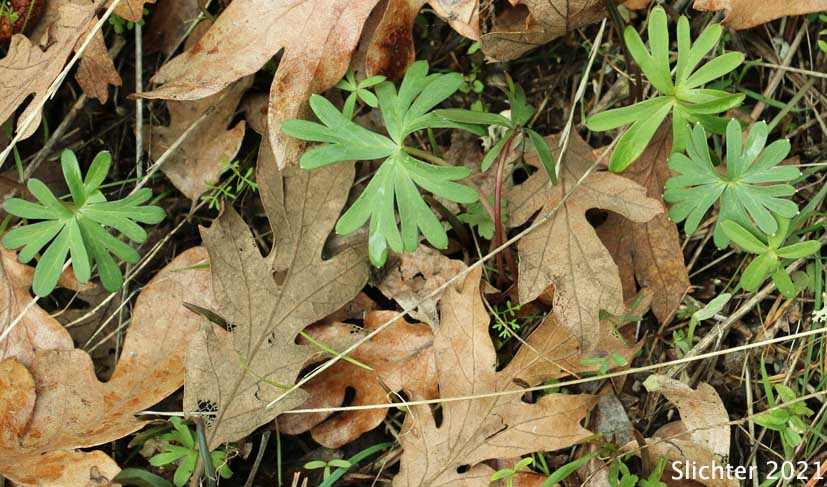
The photo at right shows the basal leaves of upland larkspur as seen at Catherine Creek State Park, Columbia River Gorge......February 9, 2021.
Paul Slichter