[Onions: The Genus Allium in the Columbia River Gorge of Oregon and Washington]
Nevius' Garlic, Nevius' Onion
Allium nevii
Synonym: Allium douglasii var. nevii
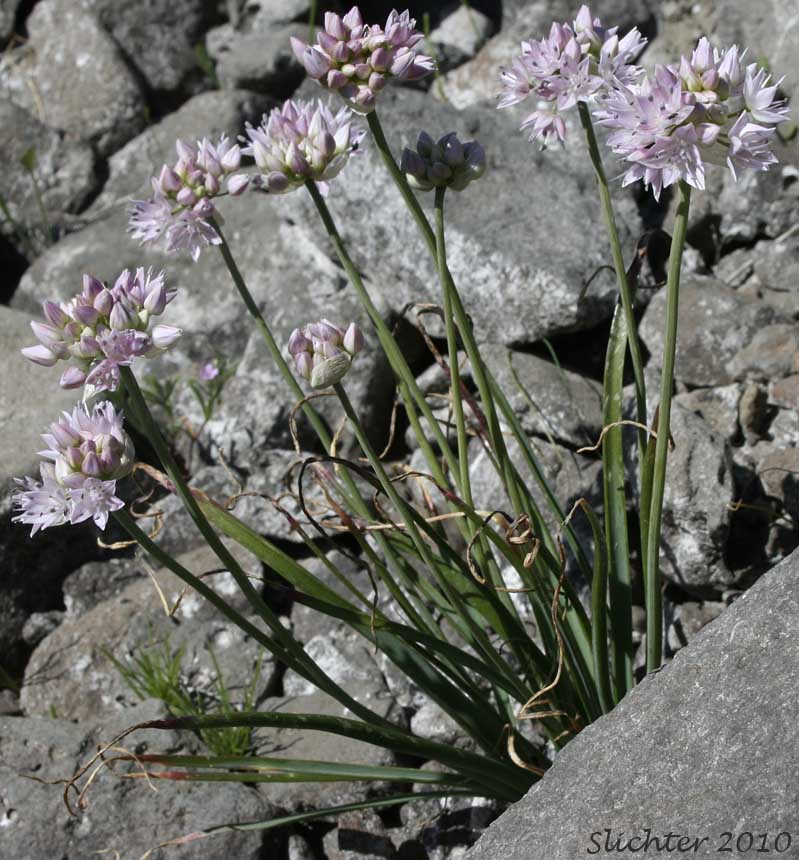
Nevius' onion growing in the drying streambed of Swale Creek about one mile west of Harms Road, Klickitat County, WA..............May 8, 2010.
Characteristics:
Nevius' onion is an attractive wildflower with 2 basal leaves
and a single leafless scape giving rise to a cluster of flowers at its tip.
The stem is usually held higher than the leaves. The leaves are either convex
in cross section and 2-8 mm wide or strongly flattened and up to 15 mm wide.
The leaves usually persist until flowering. The scape is usually 2o-30 cm high.
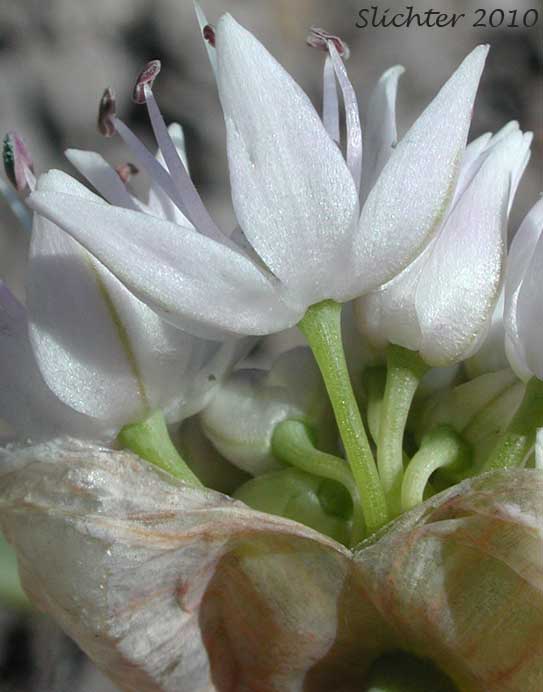
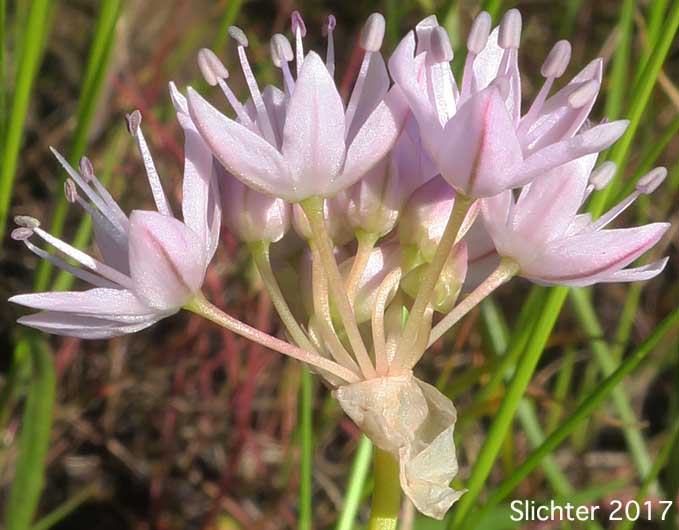
Two or three broadly ovate bracts with short-pointed tips subtend
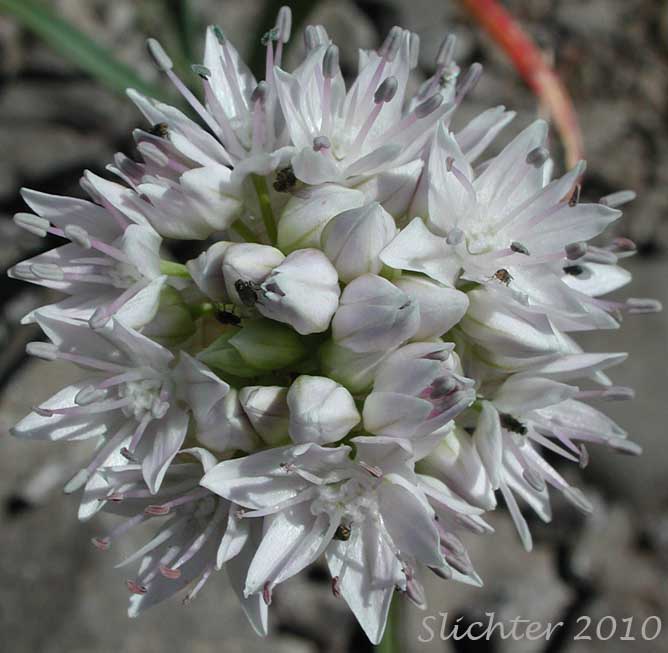
the umbel. The bracts are 5-7 nerved. The umbel is several to many-flowered
with individual flowers on thin pedicels which are 2-3 times longer than the
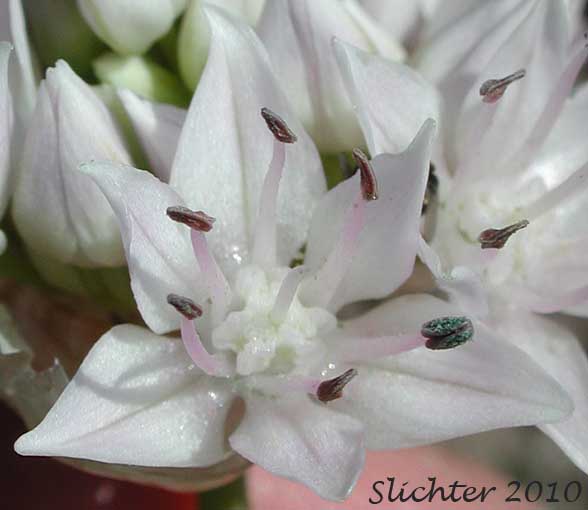
tepals. The 6 tepals range from 6-10 mm long and are narrowly lanceolate with
pointed tips. The coloration is pink or rarely white. The midribs of the tepals
are prominent. The stamens are as long as or longer than the perianth with oblong,
obtuse, or acute anthers.
Habitat:
Grasslands, sagebrush desert, and ponderosa pine forests in
shallow, winter wet soils.
Range:
Nevius' onion is found wholly east of the Cascade Mountains,
from Kittitas County, WA south to northern Oregon.
In the Columbia River Gorge it may be found at elevations of
200'-2300' from the Major Creek plateau east to the Columbia Hills north of
the Dallesport, WA.
 -
-  -
-  -
- 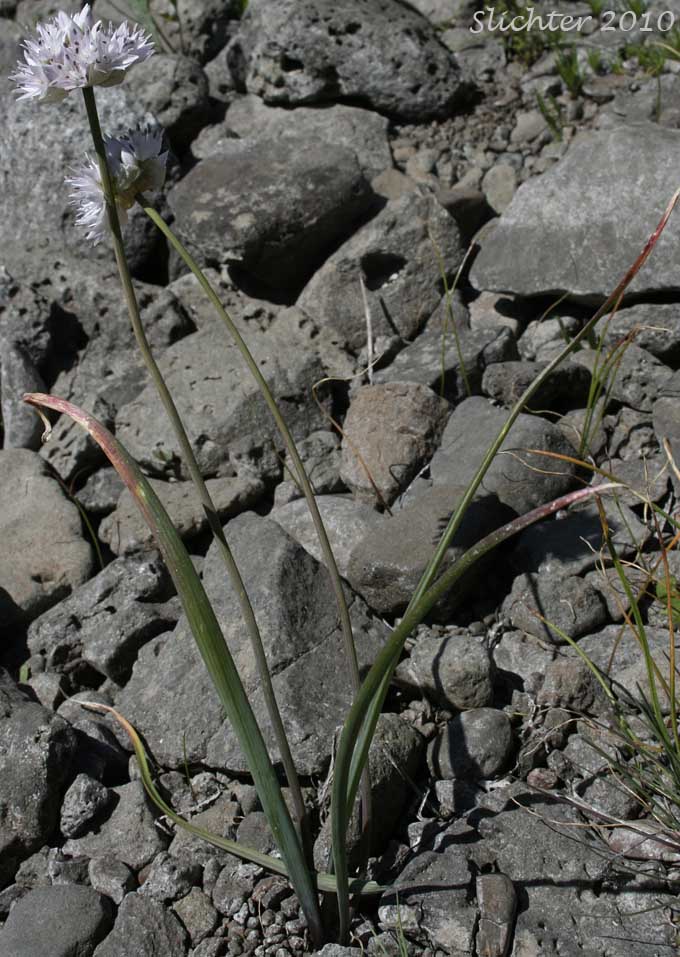
Additional close-up photos of Nevius' onion growing in the drying streambed of Swale Creek about one mile west of Harms Road, Klickitat County, WA..............May 8, 2010.
 -
- 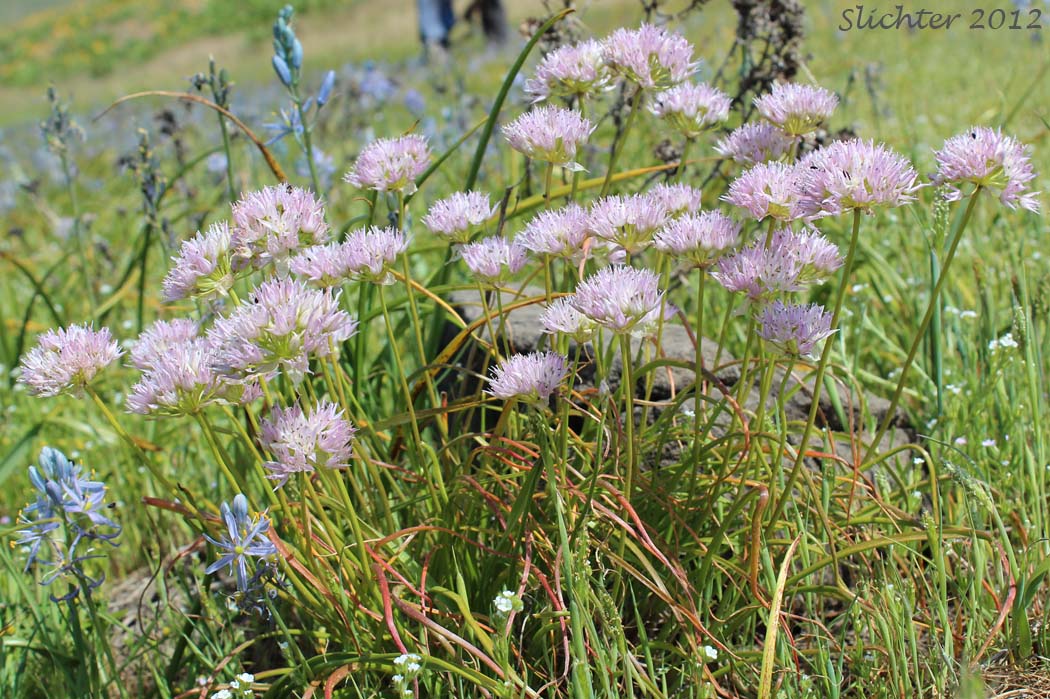
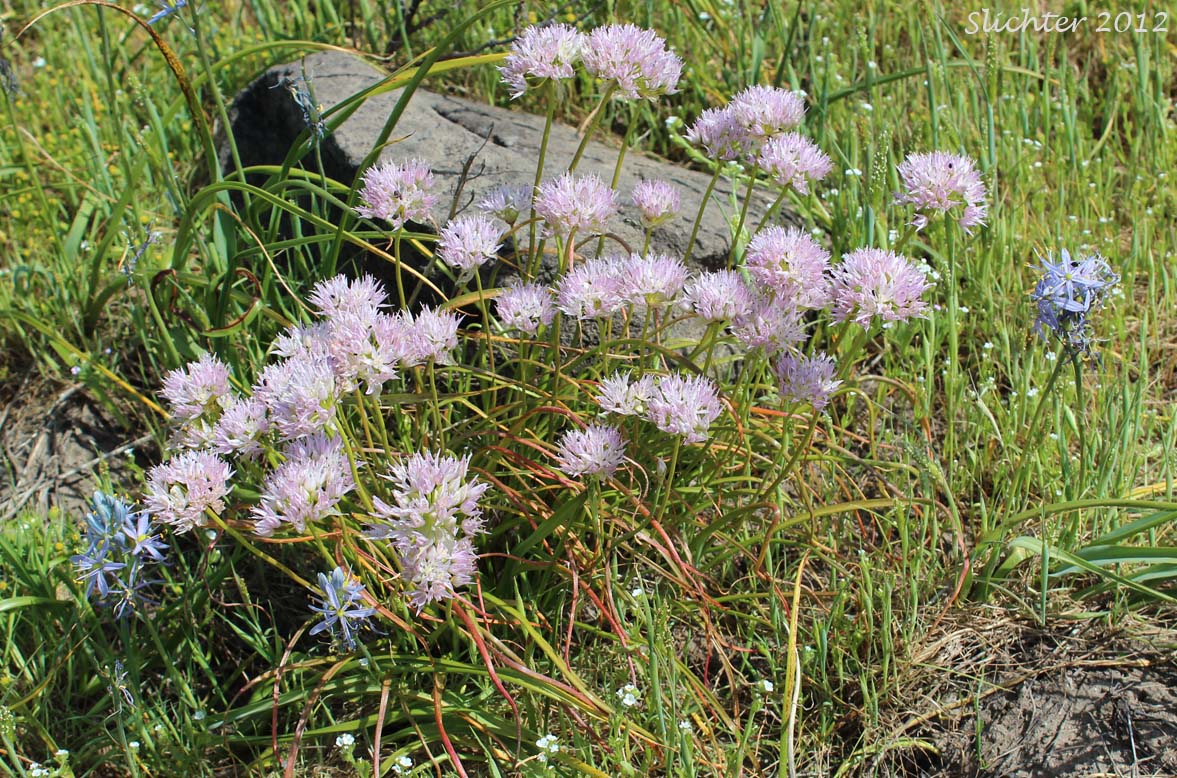
Nevius' onion blooming at the edge of a vernal pool (with common camas, Camassia quamash) to the northwest of The Dalles, Oregon...........May 14, 2012.
 -
- 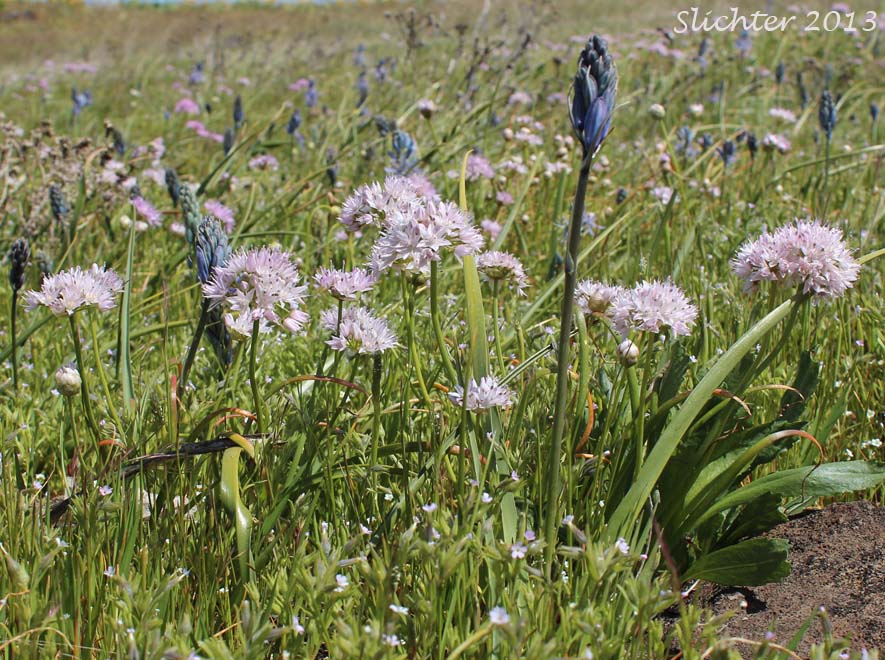

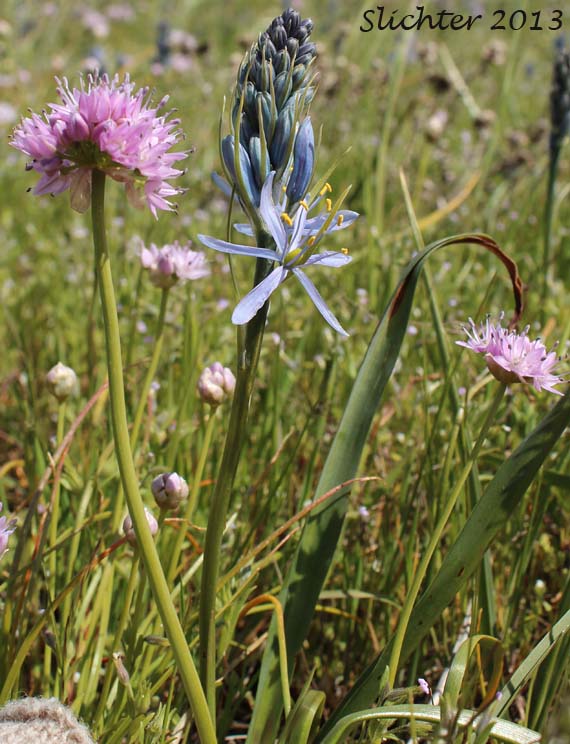
Nevius' onion blooming with common camas (Camassia quamash var. quamash) as seen at the Four Sisters to the northwest of The Dalles, Oregon..........April 21, 2013.
 -
-  -
- 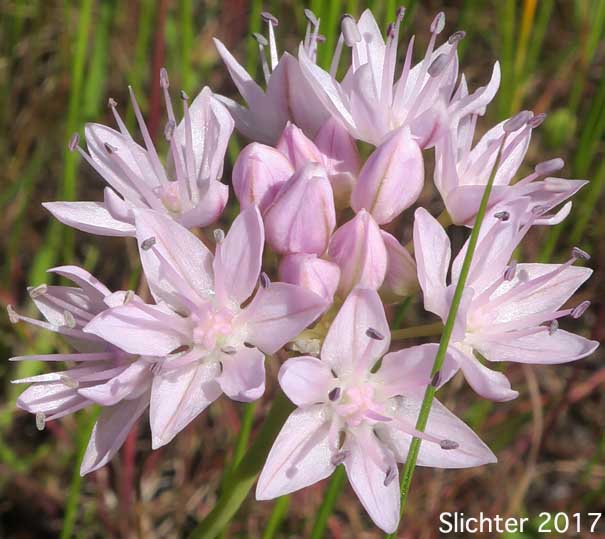
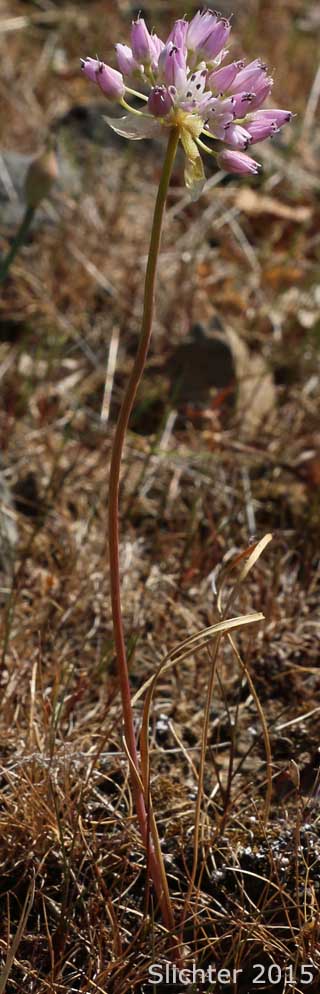
Nevius' onion blooming at left in a moist swale on the west side of Canyon Creek, Klickitat Wildlife Area, Klickitat County, Washington..........May 3, 2015. The photos at center and at right show close-up views of the inflorescence of Nevius' onion as seen blooming in a moist swale between Little Bowaman and Canyon Creeks, Klickitat Wildlife Area, Klickitat County, Washington..........May 17, 2017.
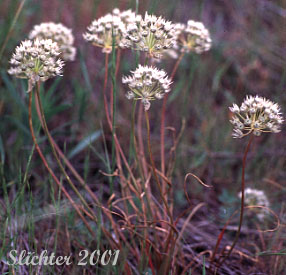
Douglas' onion from the Columbia Hills ............June 1, 1997.
Paul Slichter