[The Iris Family in the Columbia River Gorge of Oregon and Washington]
Douglas' Grasswidow, Grass Widow, Satin-flower
Olsynium douglasii var. douglasii
Synonym: Sisyrinchium douglasii var. douglasii
 -
- 
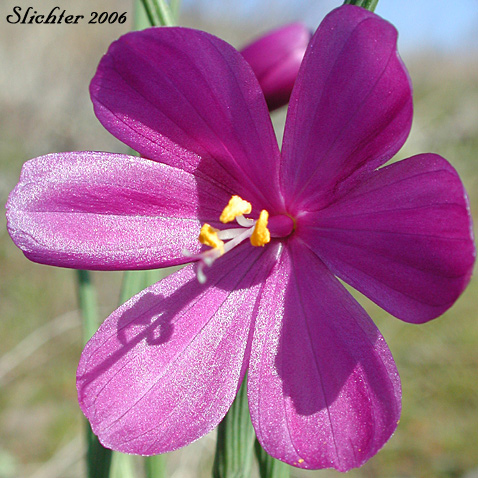
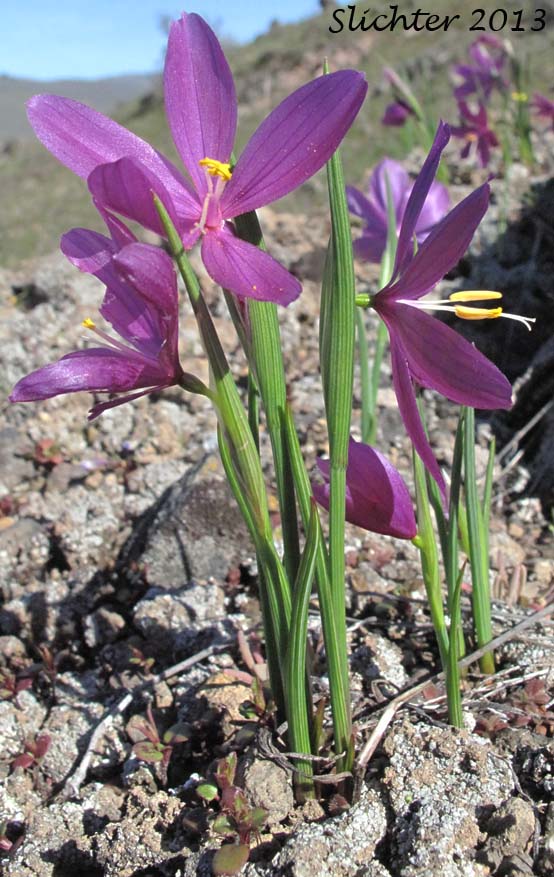
Grass Widow: Olsynium douglasii. Note the filament tube,
which is narrow at its base, which distinguishes this species from Olsynium
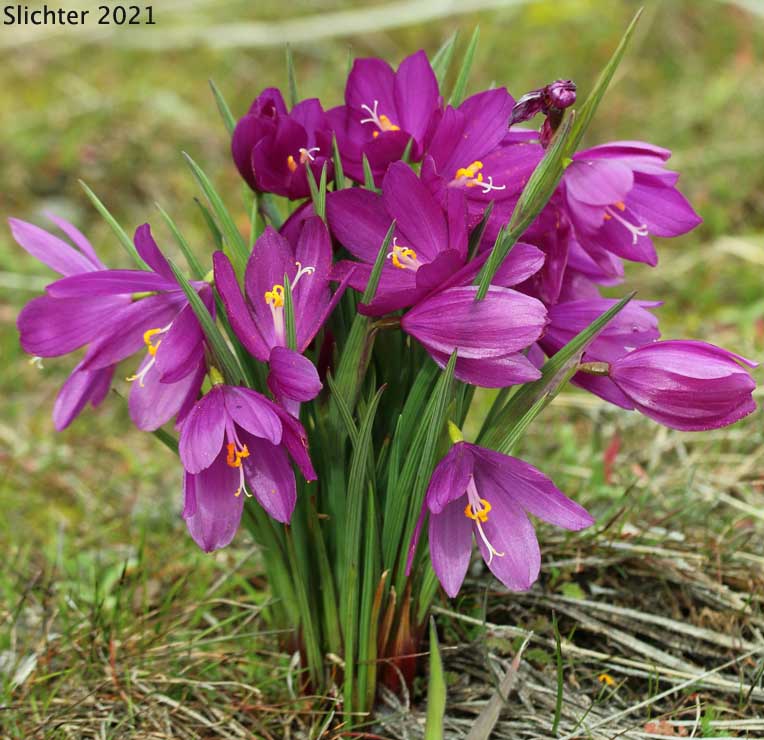
inflatum. The photo at right shows a nice cluster of grass widows observed on grassy slopes on the south-facing slopes of Sevenmile Hill, near The Dalles, OR.....March 4, 2021.
Characteristics:
The USDA Plants Database now recognizes this plant as Olsynium
douglasii. Grass widows are beautiful early spring wildflowers to 12 inches
tall. The stems arise singly or in small clusters, somewhat flattened in cross-section,
and bearing several simple, parallel-veined leaves. The leaves are as tall as
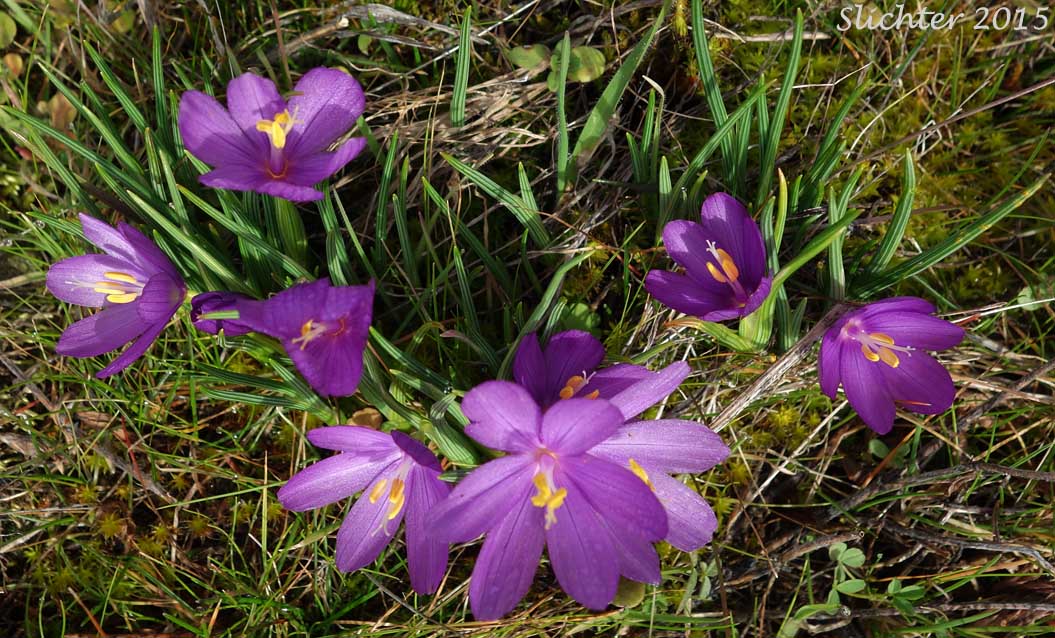
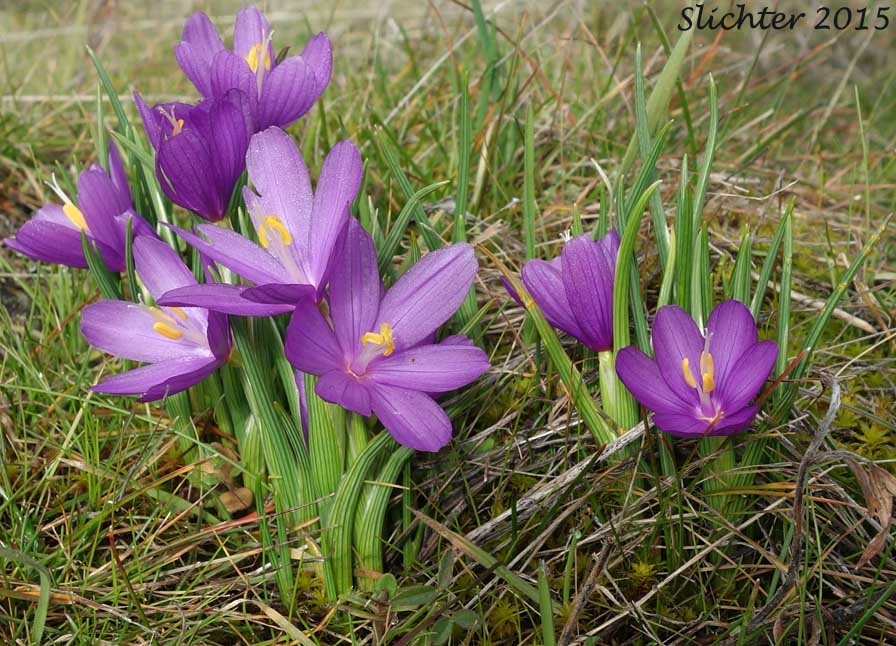
the stem, or often shorter. The one to three flowers are deep purplish-red to occasionally
white or white with purplish stripes. The six tepals are regular (same shape),
expanding to greater than the diameter of a quarter. They are rounded at the
tip. This differs from the variety inflatum, which has pointed tips to
the tepals. The 3 yellow tipped stamens are shorter than the elongated style,
which is 3-pronged at the tip. The filament tube is only slightly enlarged above
the base. This differs from its cousin, Olsynium inflatum,
which has an enlarged filament tube near the base and pointed tips to the petals.
Sisyrinchium douglasii var. douglasii was discovered
near Celilo Falls in 1826 by David Douglas, for which the plant is named.
Habitat:
Dry open areas which are seasonally wet during the early spring.
Range:
On the eastern slopes of the Cascades from northern Kittitas
County, WA south to Wasco County, OR, and through the Willamette Valley west
of the Cascades to northern California and northwards to the San Juan Islands
and Vancouver Island.
In the Columbia River Gorge, it may be found between 100'-3000'
from about Bonneville to the east end of the gorge.
 -
-  -
- 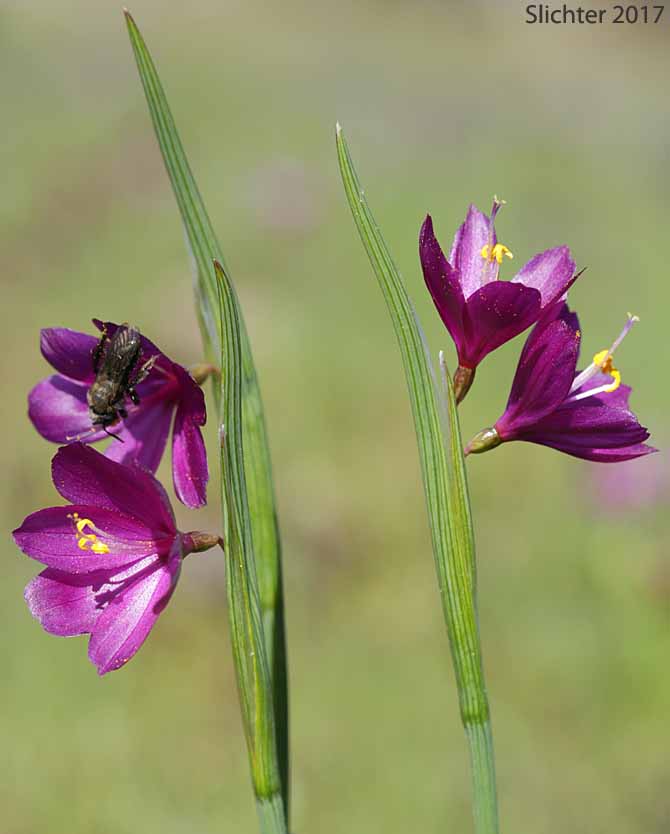
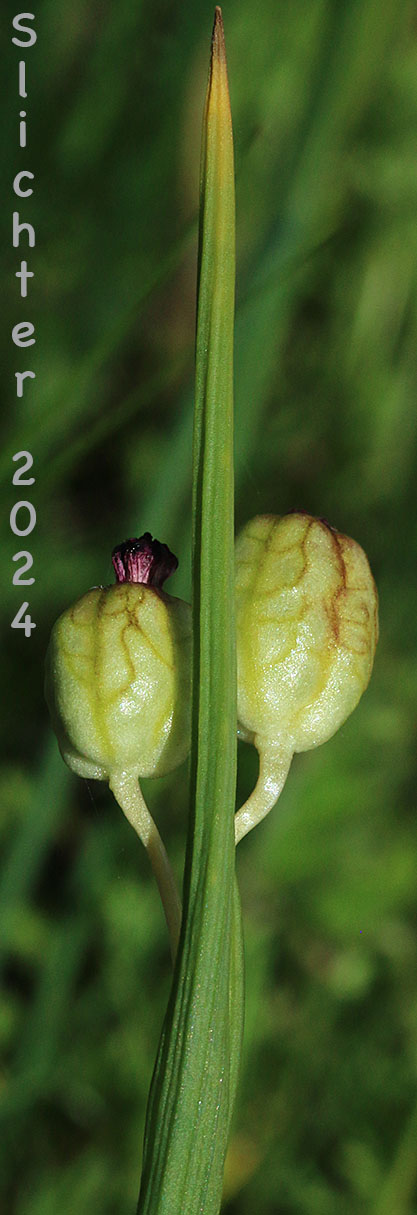
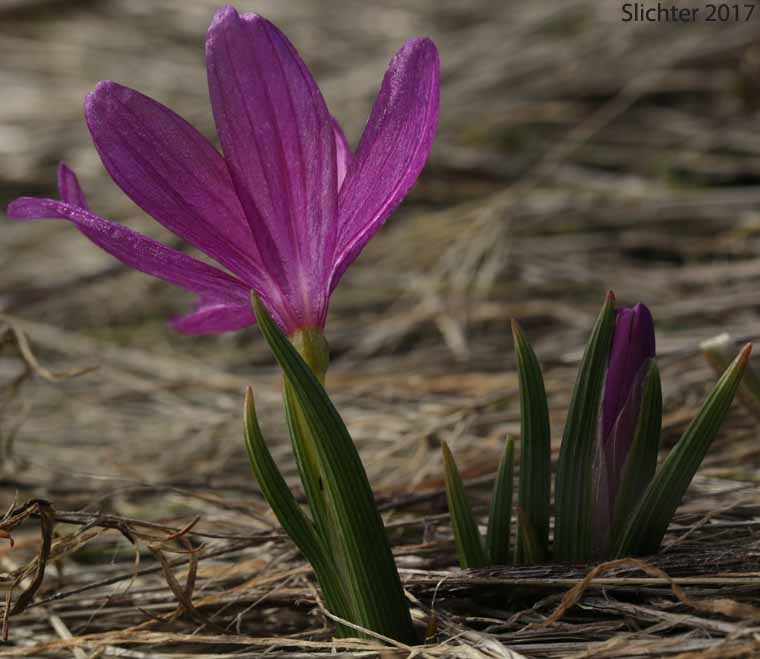
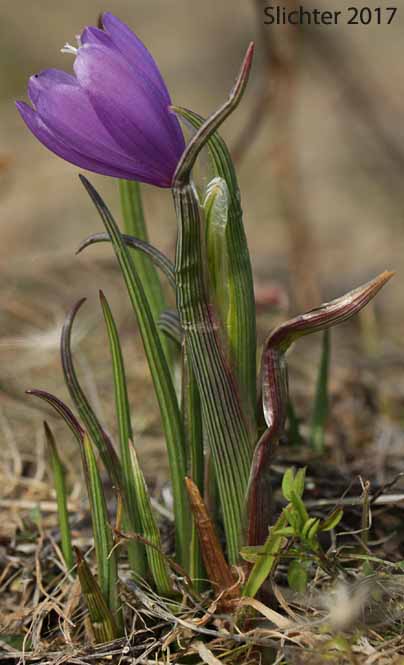
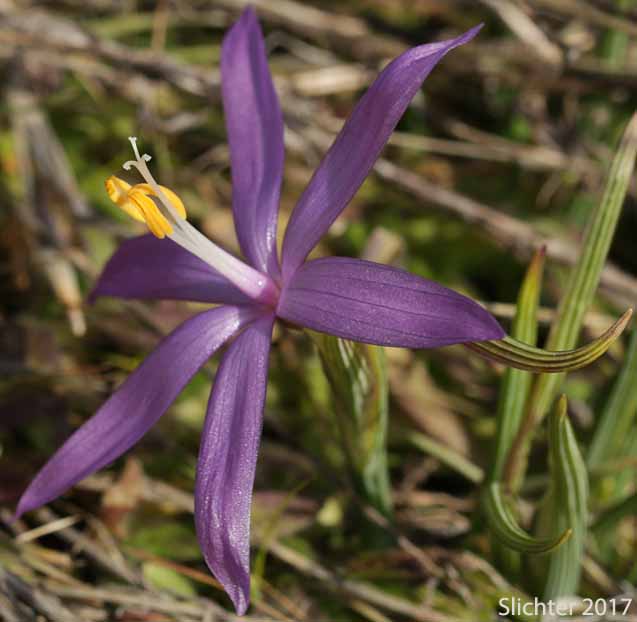
Douglas' grasswidows blooming near the Klickitat Breaks, Klickitat Wildlife Area.......April 2, 2017 (at left and right). The center image shows maturing fruits of Douglas' grasswidows as seen along the Weldon Wagon Road Trail about one mile uphill from the trailhead.
 -
- 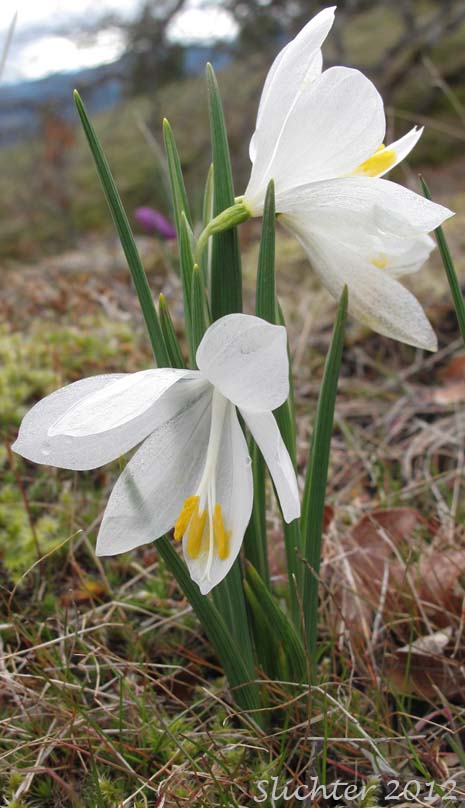
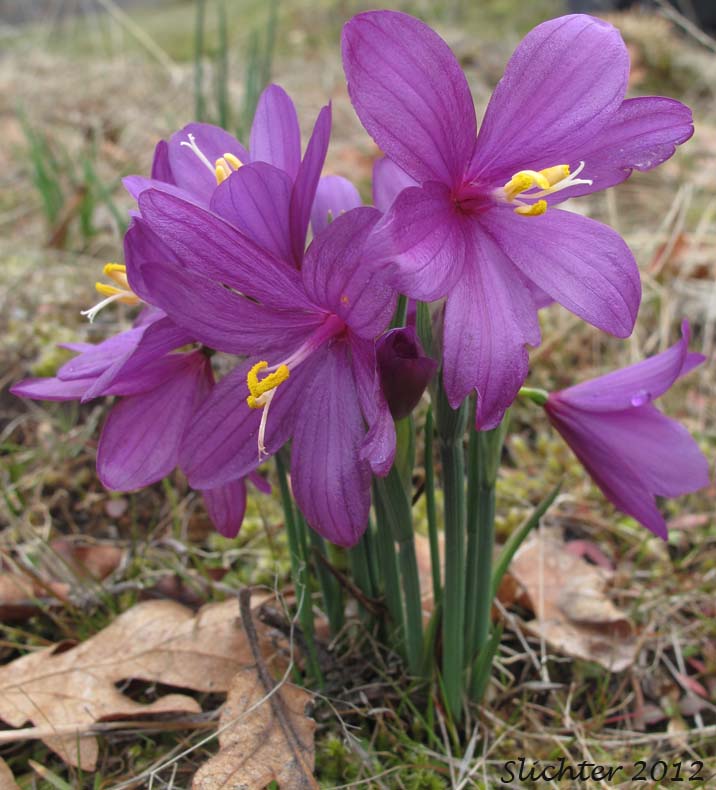
The "normal" violet-flowered form of grass widow with one which lacks pigment in the tepals several feet away as seen at Catherine Creek in the central Columbia River Gorge................March 3, 2012.
 -
- 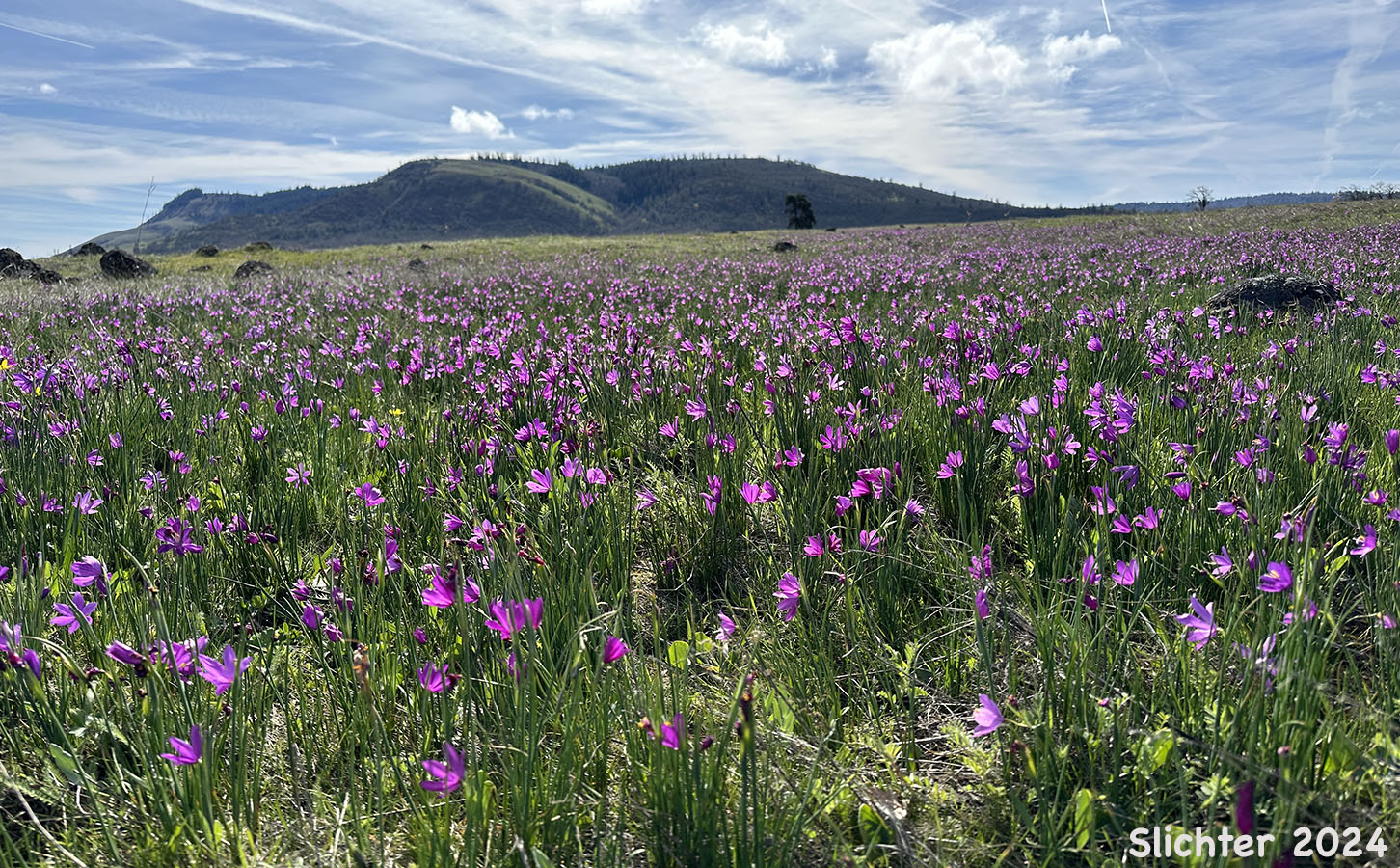
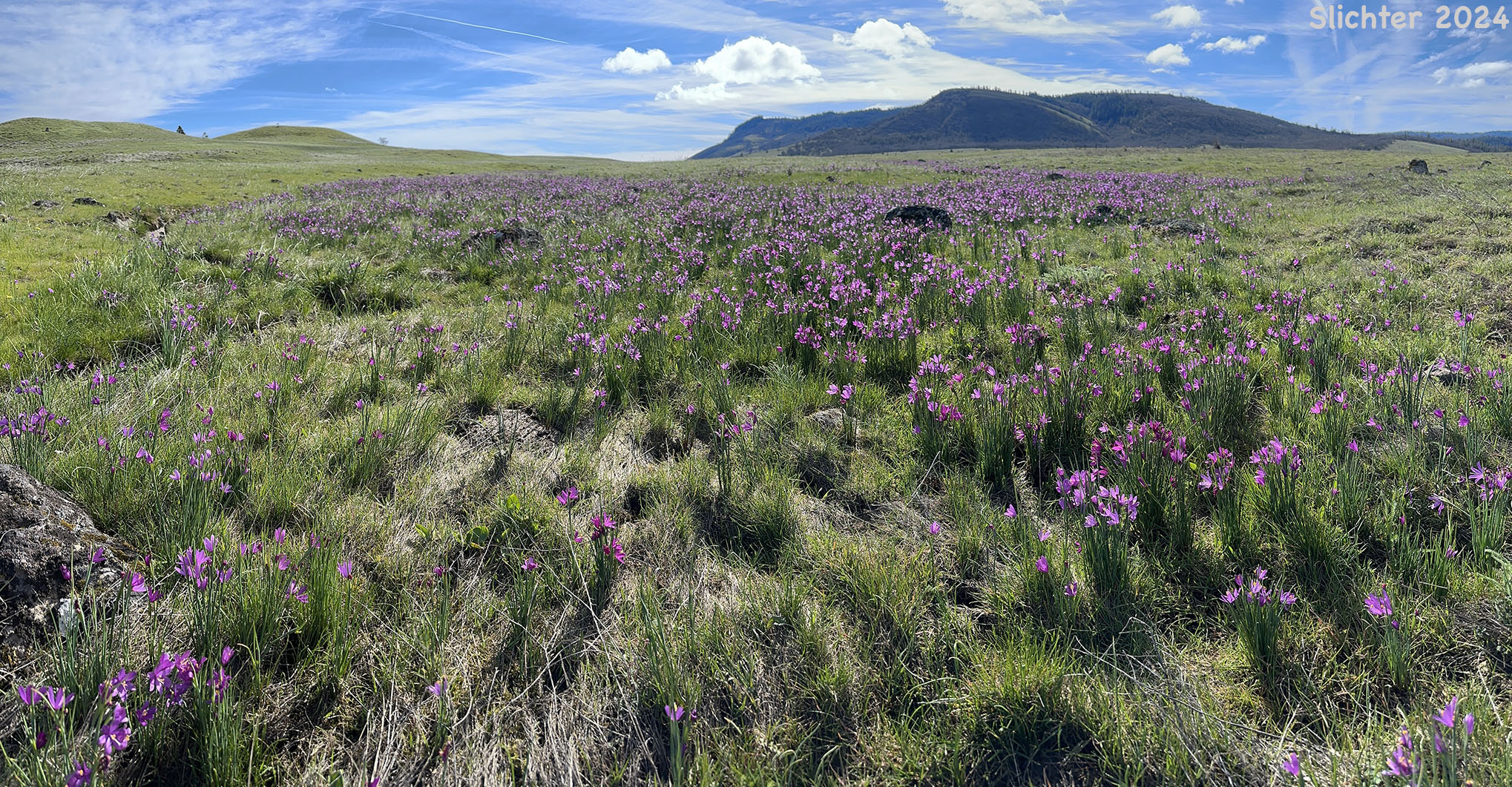
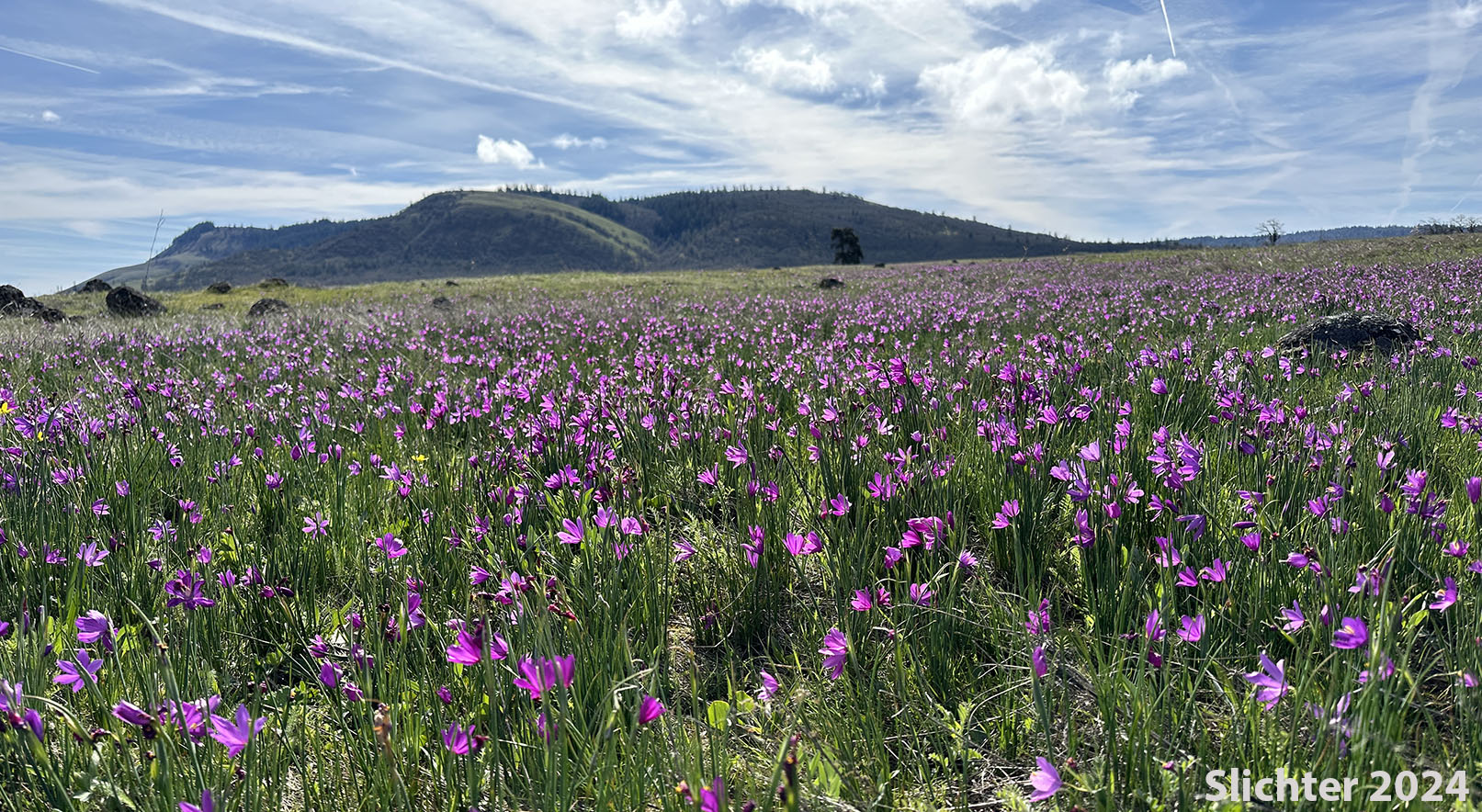
Douglas' grasswidows blooming in the Memaloose area of the Columbia River Gorge......March 20, 2024.
 -
- 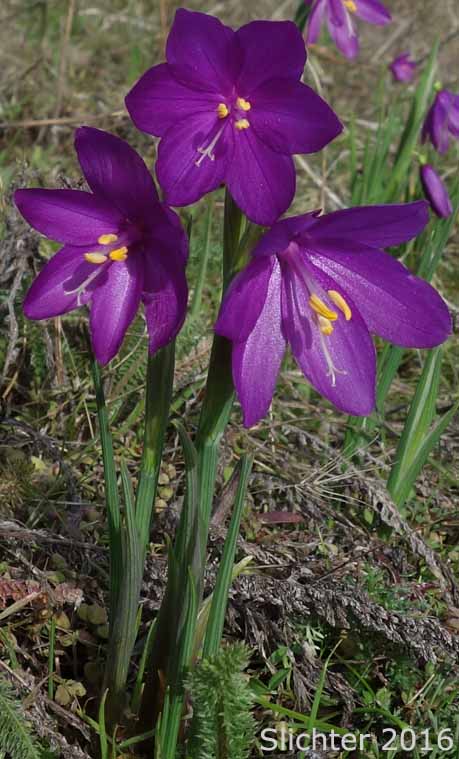
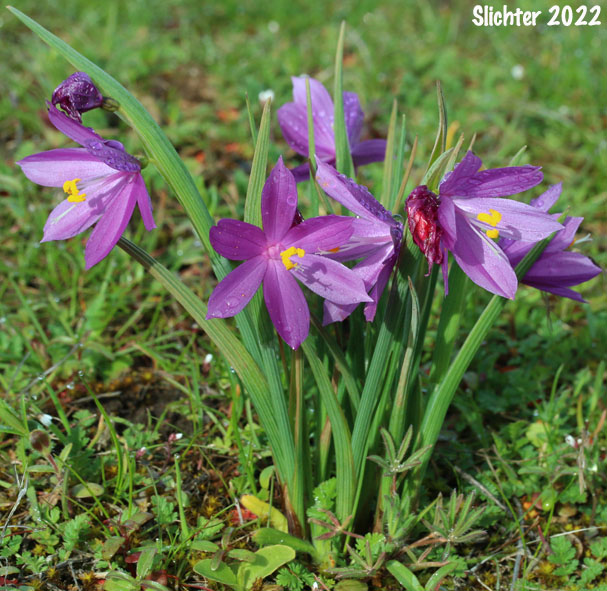
The photo at left shows a close-up of a grass widow as seen on grassy slopes above Washington SR 14 at the east end of Doug's Beach in the mid-Columbia River Gorge...........February 15, 2007. Note again the narrow filament tube, especially at its base, which is a key identifying characteristic of this species. The photo at right shows a cluster of grass widows on the south-facing slopes of Sevenmile Hill on USFS lands just east of the Wasco County rock quarry.........February 15, 2016.
 -
-  -
- 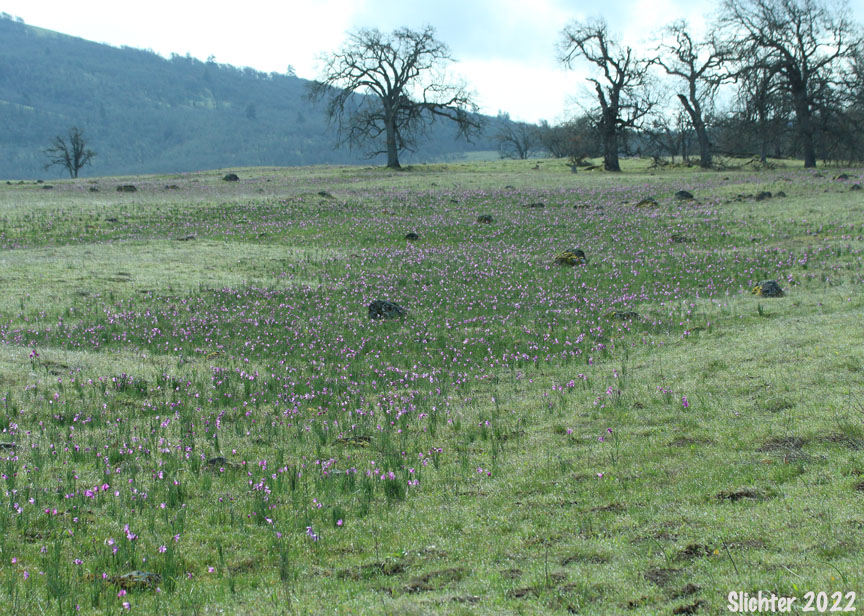
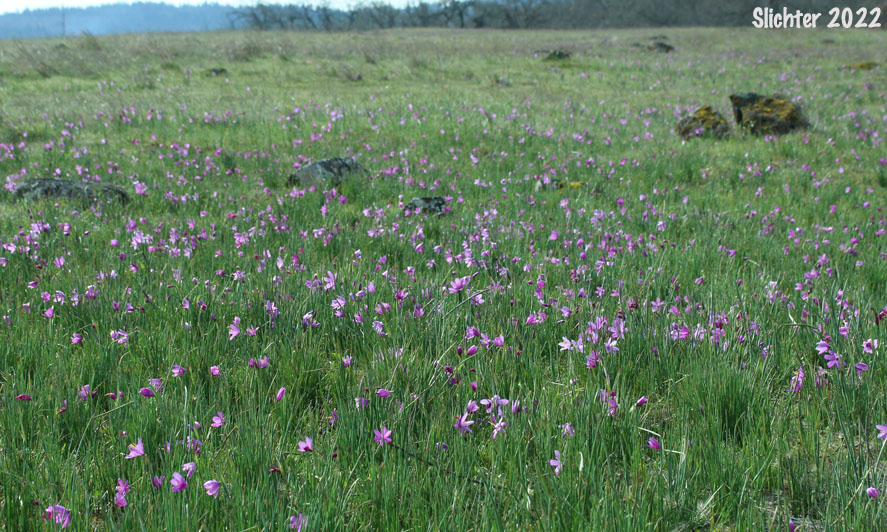
Grass widows nearing peak bloom in vernally moist grasslands between Rowena and Memaloose, Columbia River Gorge.....March 18, 2022.
 -
-  -
- 
Grass widows beginning to bloom on the south-facing slopes of Sevenmile Hill on USFS lands just east of the Wasco County rock quarry.........March 2, 2017.
 -
- 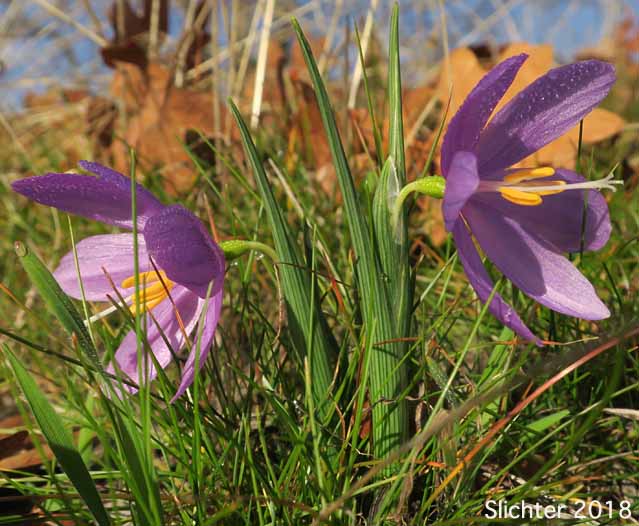
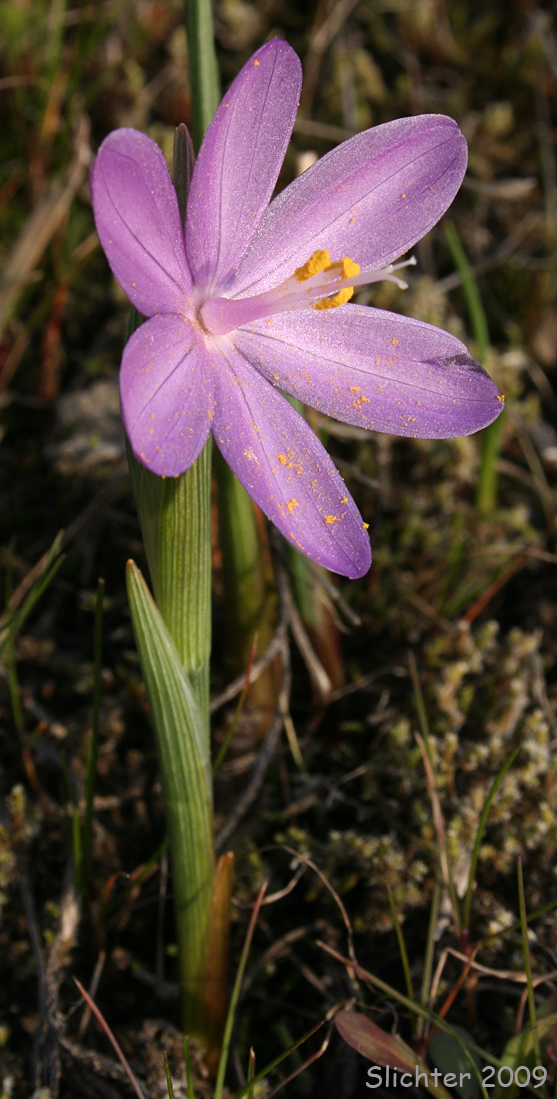
Grass widow in bloom at left along the lower trail at Catherine Creek........February 4, 2009. Bloom of this species at this location is still very sparse and probably won't peak until late February or early March. An early blooming grass widow at Catherine Creek, Columbia River Gorge.......January 13, 2018.
 -
- 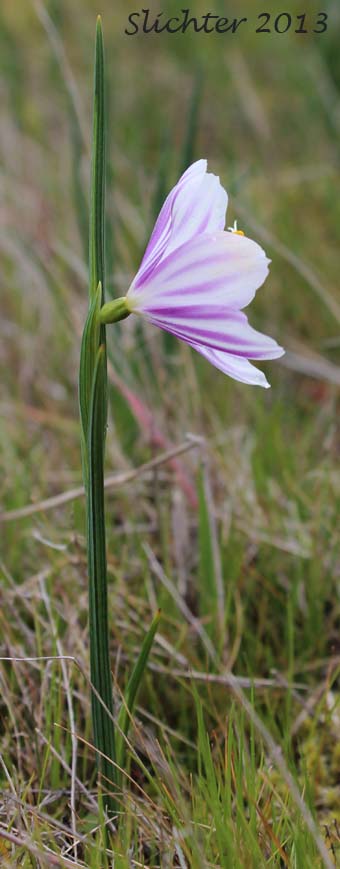
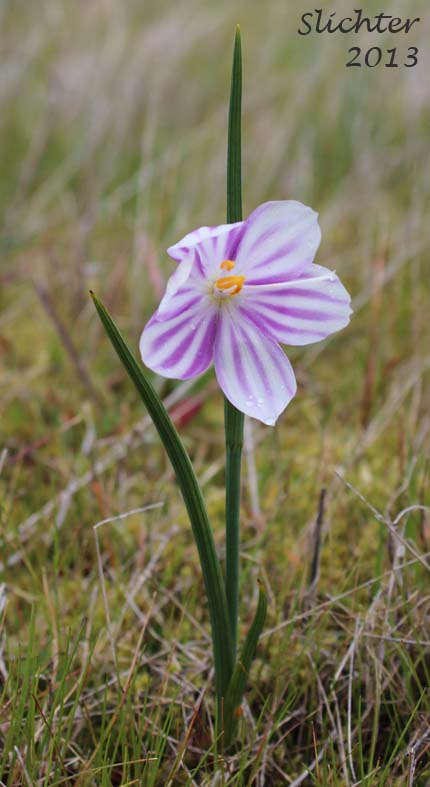
A wind blown, variegated-flower form of grass widow blooming high on benches above Washington Highway 14 above the Balfour Klickitat trailhead near Lyle, Washington...........March 16, 2013.
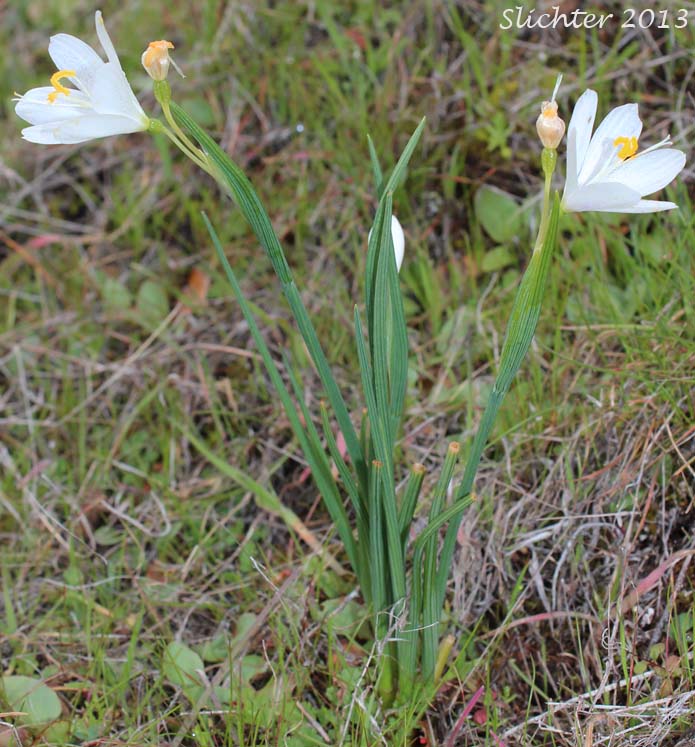
A white-flowered grass widow blooming on vernally moist benches (with shallow soils) above Washington Highway 14 east of Eightmile Creek in the Columbia Hills State Park...........March 2, 2013. There were also numerous purple and white striped individuals at this location too.
 -
- 
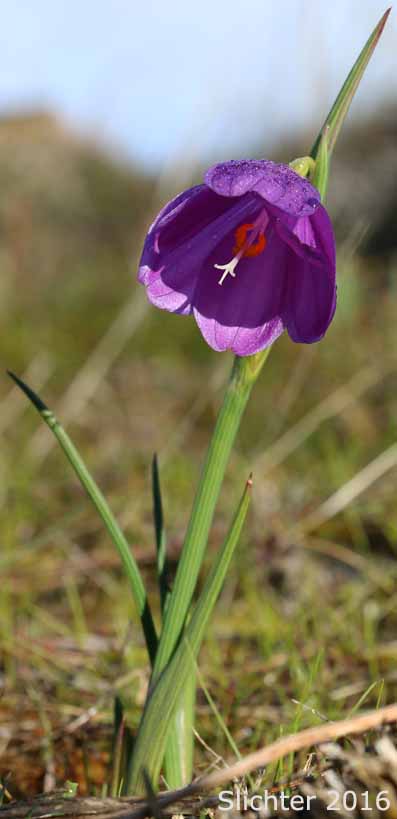
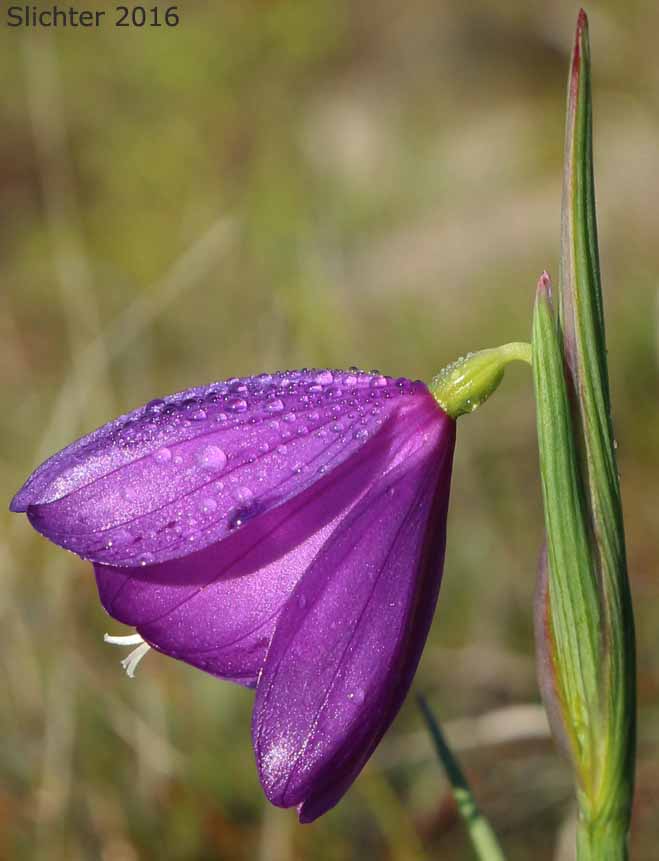
Early blooming douglas' grass widows as seen along the old Highway between the Coyote Wall trailhead and the Labyrinth, Columbia River Gorge..........January 25, 2015.
 -
-  -
- 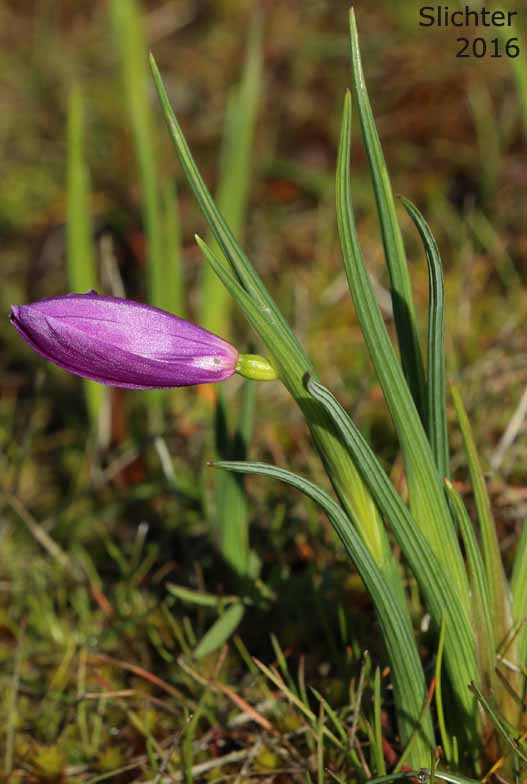
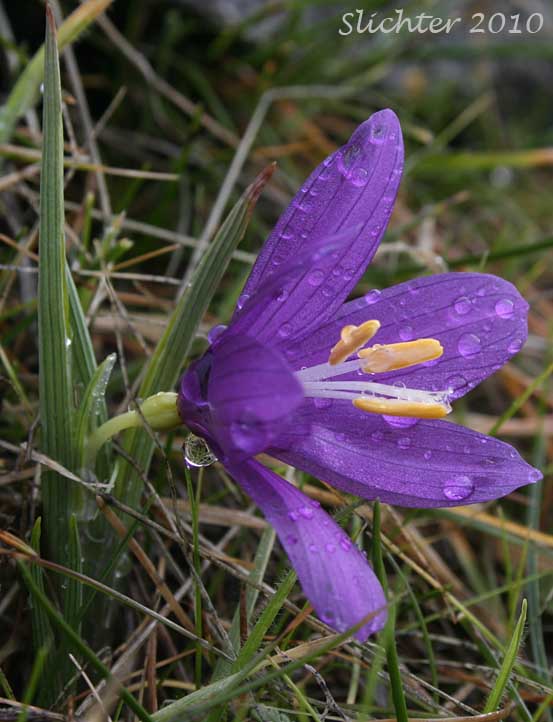
Early blooming douglas' grass widows blooming along the paved trail at Catherine Creek, Columbia River Gorge.........January 31, 2016.
 -
- 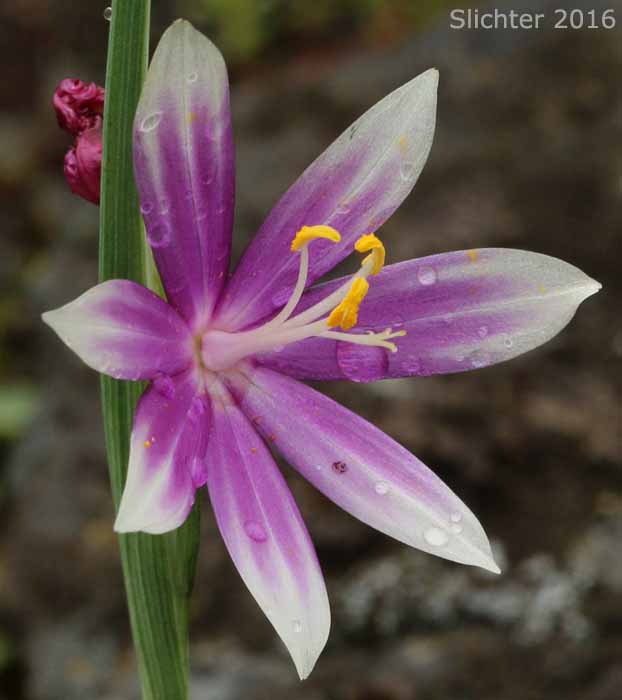
A very early blooming douglas' grasswidow seen (left) at Catherine Creek, Columbia River Gorge.............January 17, 2010. The photo at right shows a nicely striped grass widow as seen along Minor Creek in the Catherine Creek area.........March 11, 2016.
 -
- 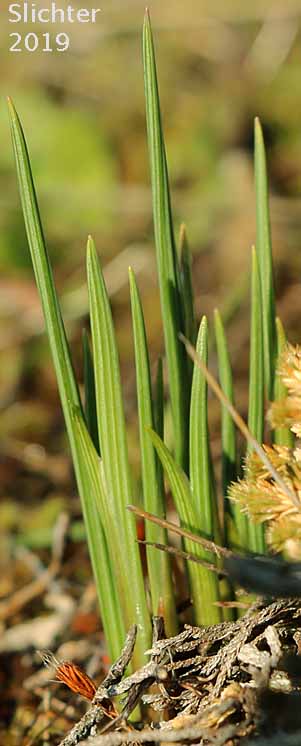
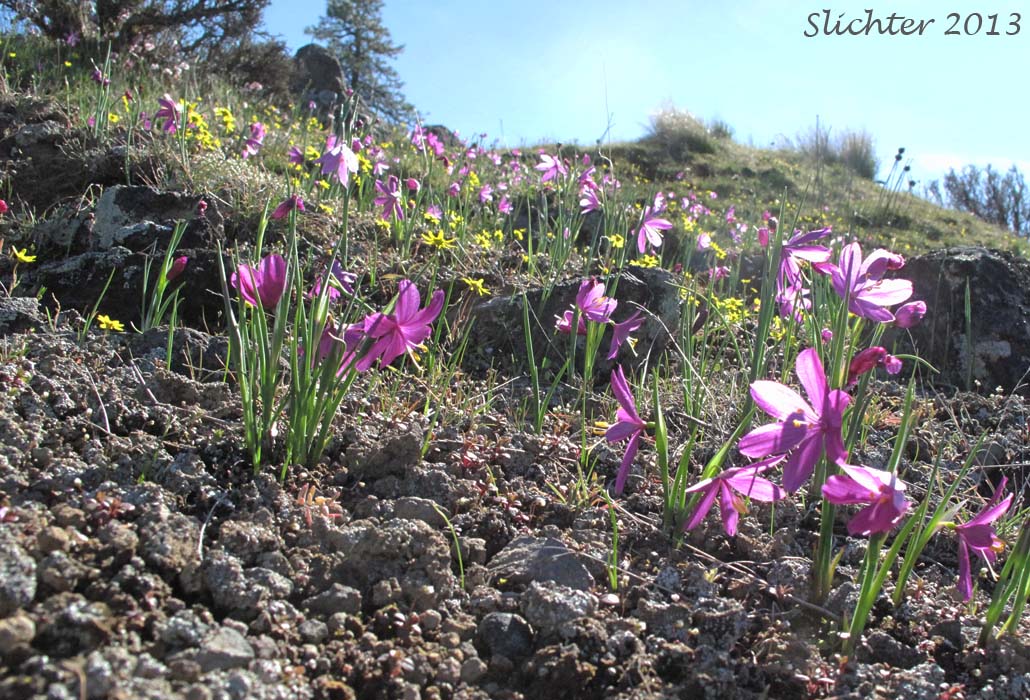
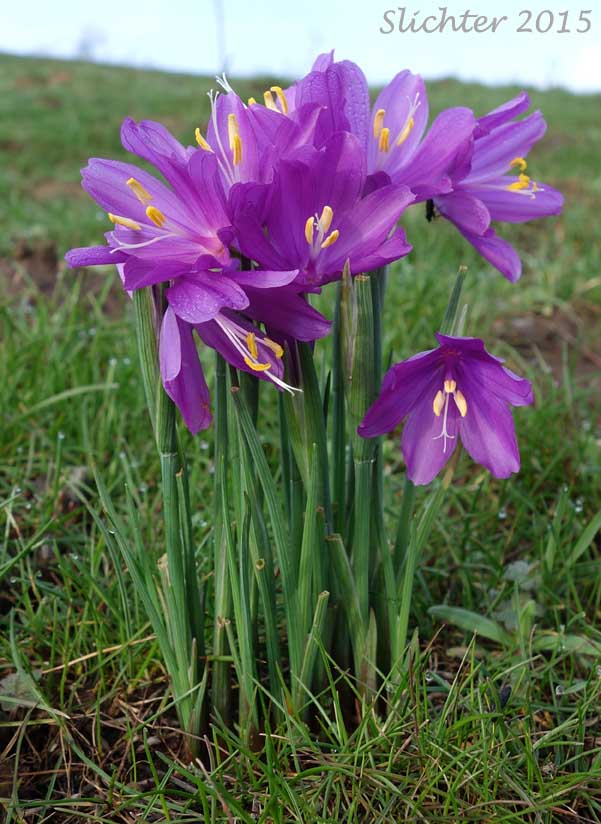
A nice, large cluster of grass widows blooming late in the season at left at Catherine Creek, Columbia River Gorge..........March 12, 2013. The first new leaves of grass widows observed along the paved trails at Catherine Creek, Columbia River Gorge......January 1, 2019.
 -
- 
Grass widows blooming with gold stars (Crocidium multicaule), scale pod (Idahoa scapigera) and spring whitlow-grass (Draba verna) at the crest of north-facing slopes on Chenoweth Table at the western outskirts of The Dalles, Oregon..........March 9, 2013.
 -
- 
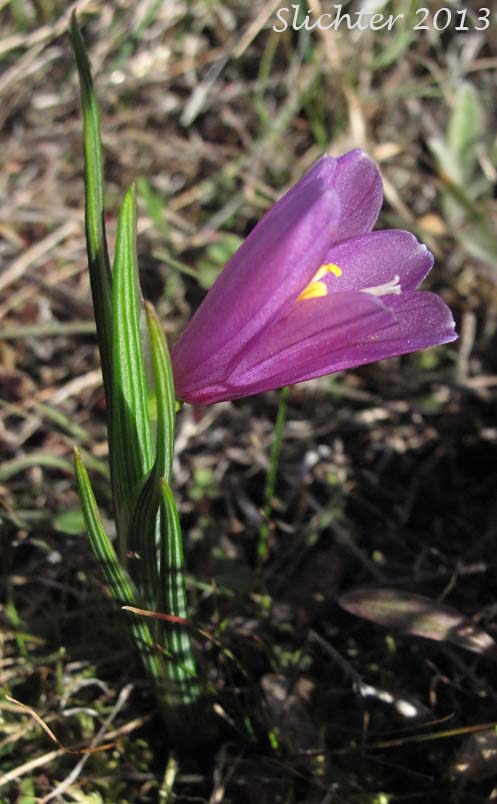
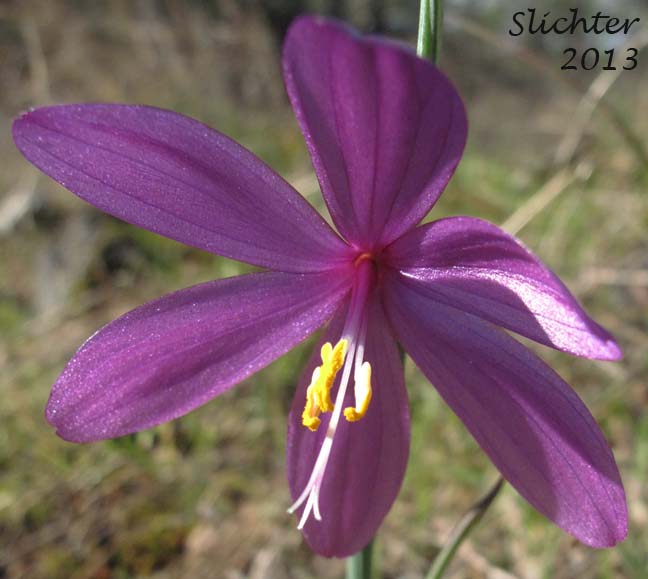
The photo at left shows a cluster of grass widows blooming on Sevenmile Hill several miles northwest of The Dalles, Oregon..........February 13, 2015. The photo at right shows a grass widow blooming on slopes above the east side of Canyon Creek, Klickitat Wildlife Area..........March 1, 2015.
 -
- 
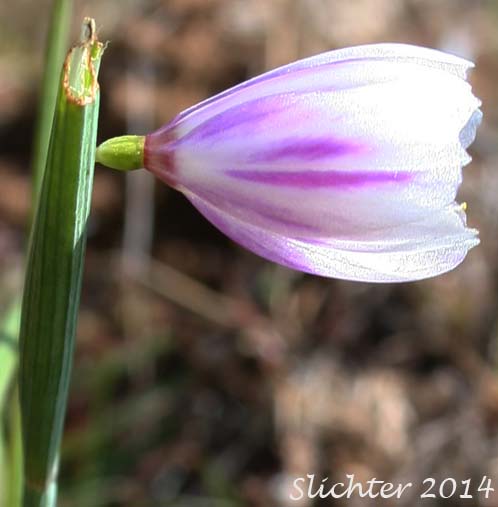
Early grass widows blooming near the Memaloose Trail east of Chatfield Hill, Columbia River Gorge National Scenic Area...........February 17, 2013.
 -
- 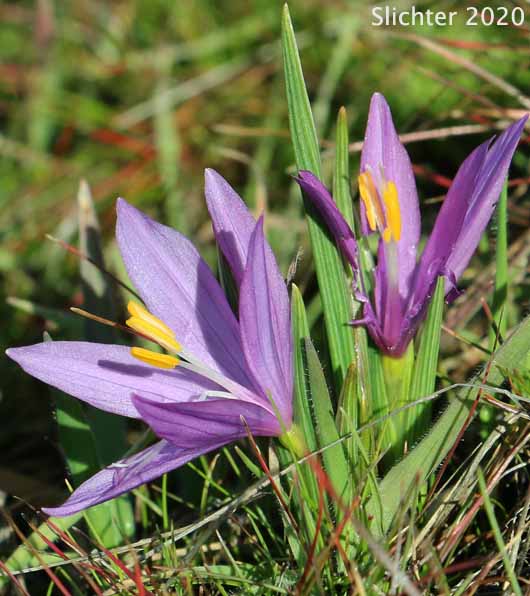
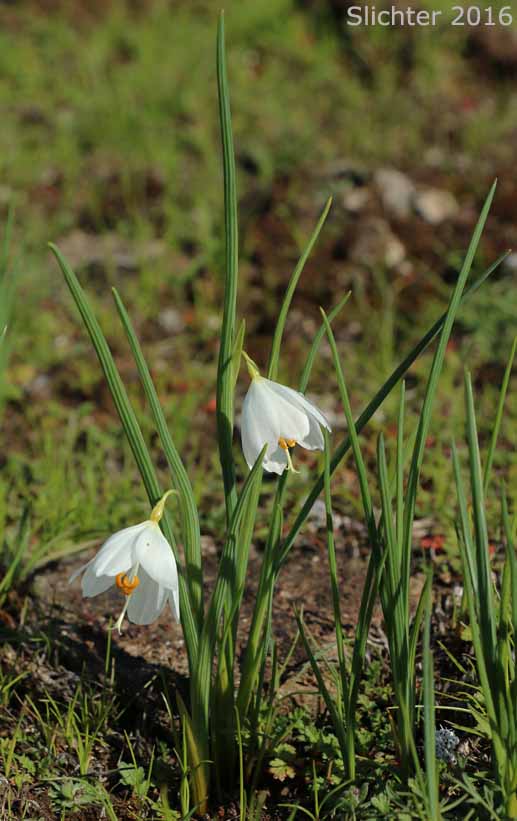
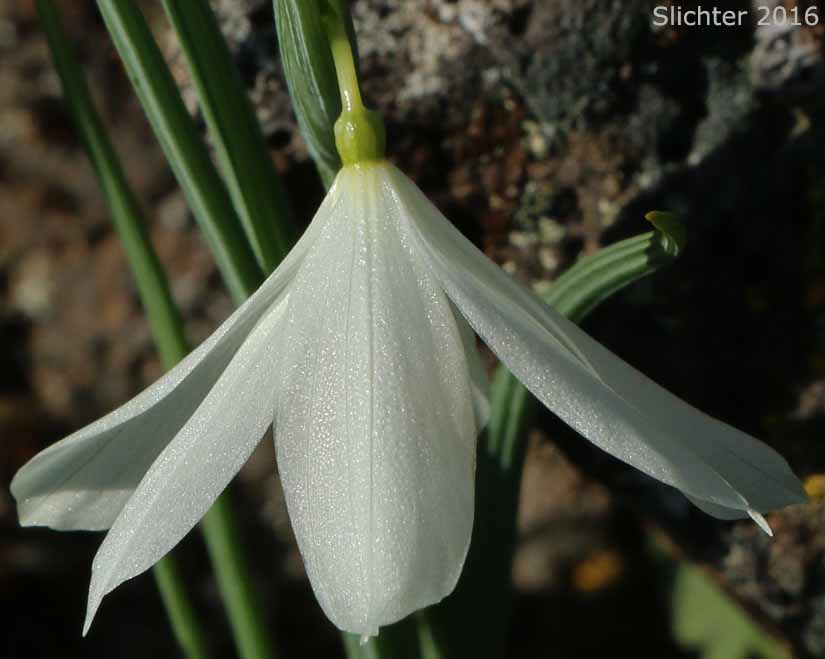
A variegated form of grass widows as seen at left along the west rim of Canyon Creek in the Klickitat Wildlife Area.........March 21, 2014. The photo at right shows one of severl early blooming grasswidows along the paved trails at Catherine Creek, Columbia River Gorge........January 3, 2021. The first grasswidows found this particular year were at this location on January 1st.
 -
- 
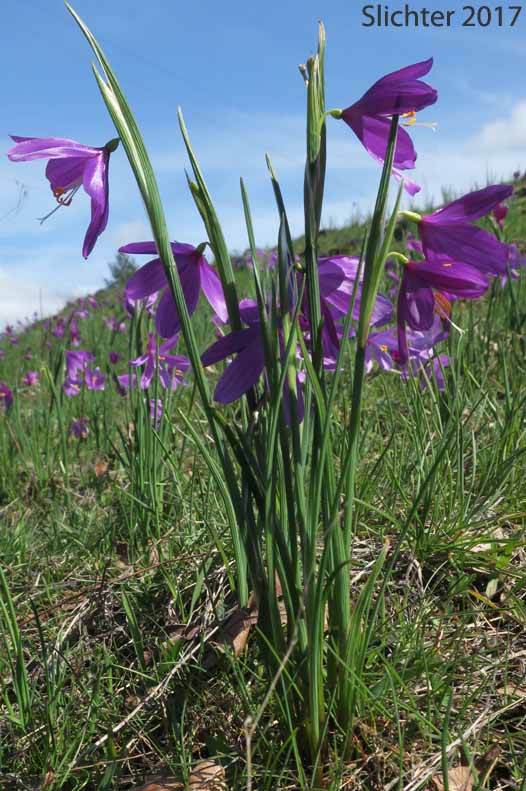
White-flowered grass widows blooming on vernally moist benches (with shallow soils) above Washington Highway 14 east of Eightmile Creek in the Columbia Hills State Park...........February 23, 2016. There were also numerous purple and white striped individuals at this location too.
 -
- 
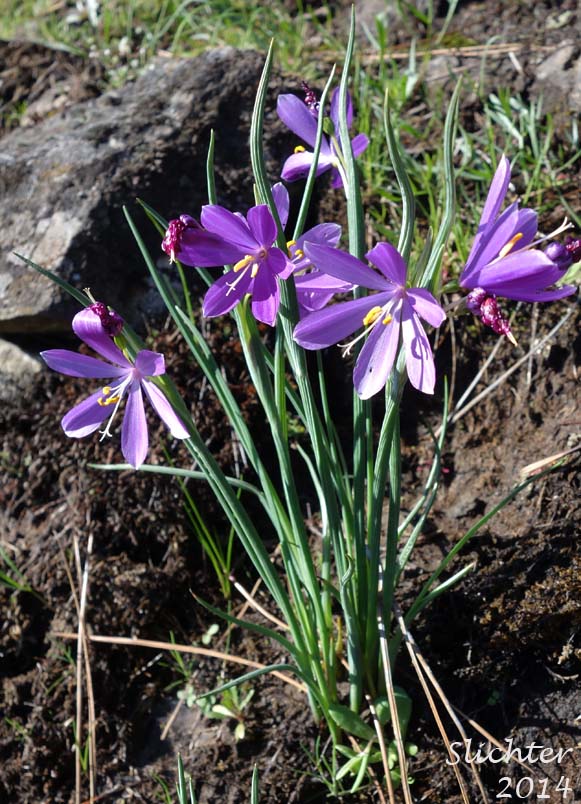
Douglas' grass widows blooming at Catherine Creek........March 23, 2017. Note the unusual light pink flowered plants at right!
 -
- 
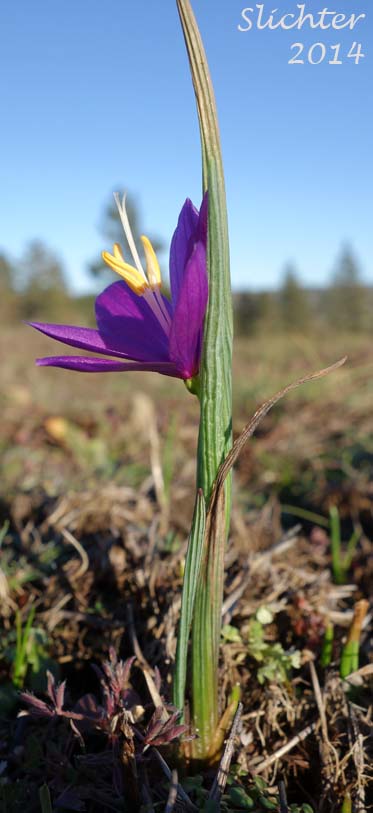
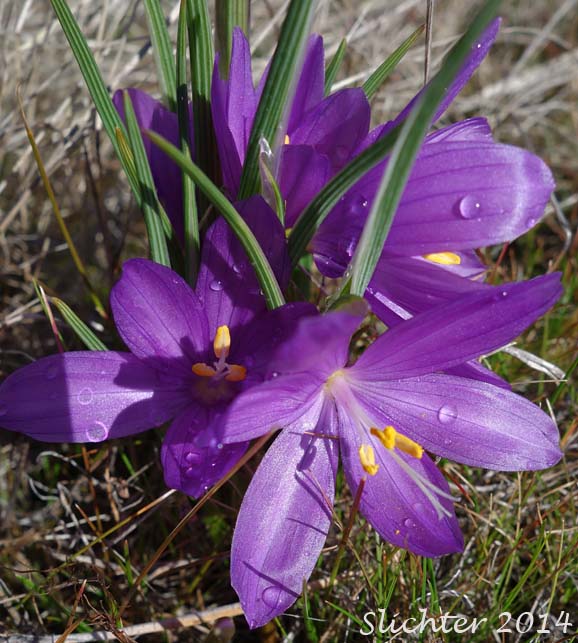
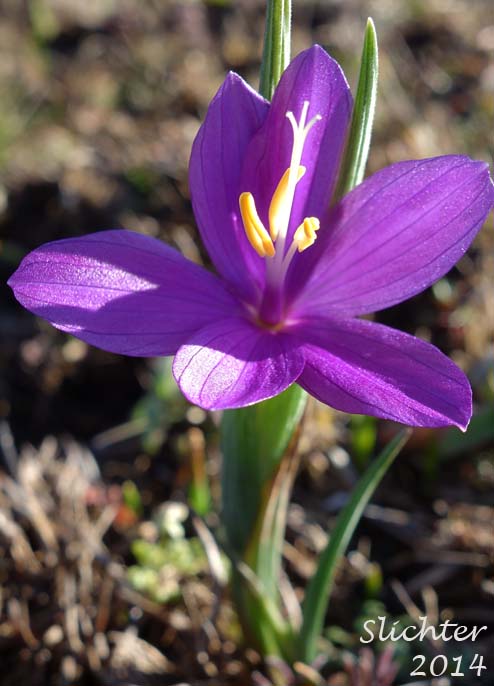
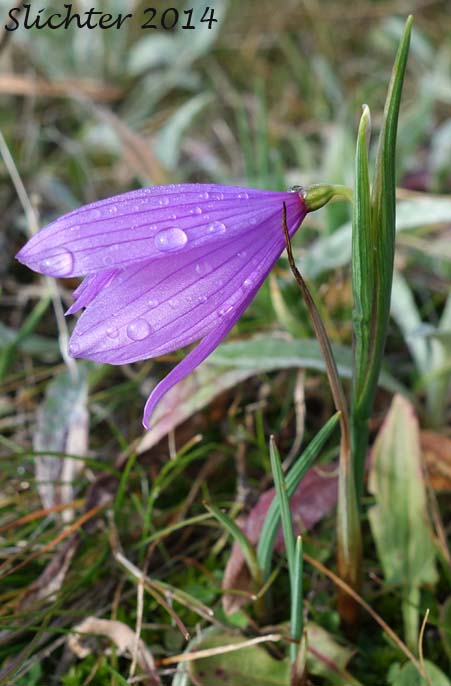
The photo at left shows some of the last grass widows blooming along the old Chatfield Road west of the Memaloose Rest Area (east bound) on Interstate 84, Columbia River Gorge..........March 23, 2014. The photo at right shows grass widows blooming at Catherine Creek, Columbia River Gorge..........March 12, 2014.
 -
-  -
-  -
- 
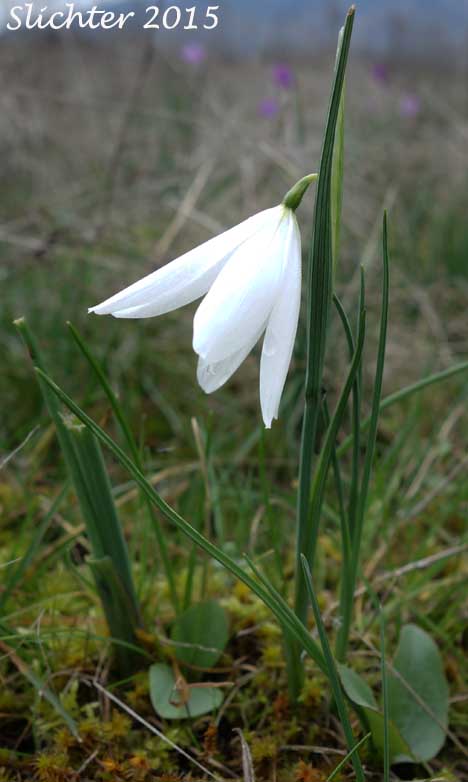
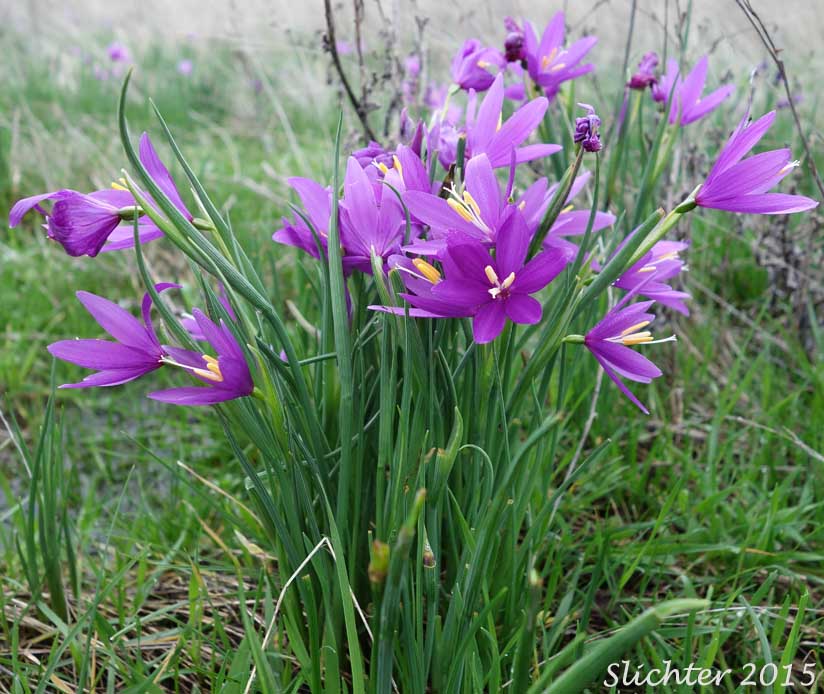
Early blooming Douglas' grass widows blooming along Minor Creek at the east side of Catherine Creek, Columbia River Gorge..........February 2, 2014.
 -
- 
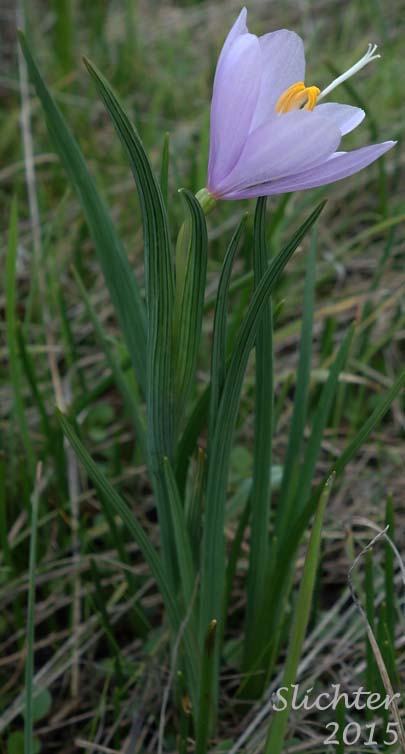
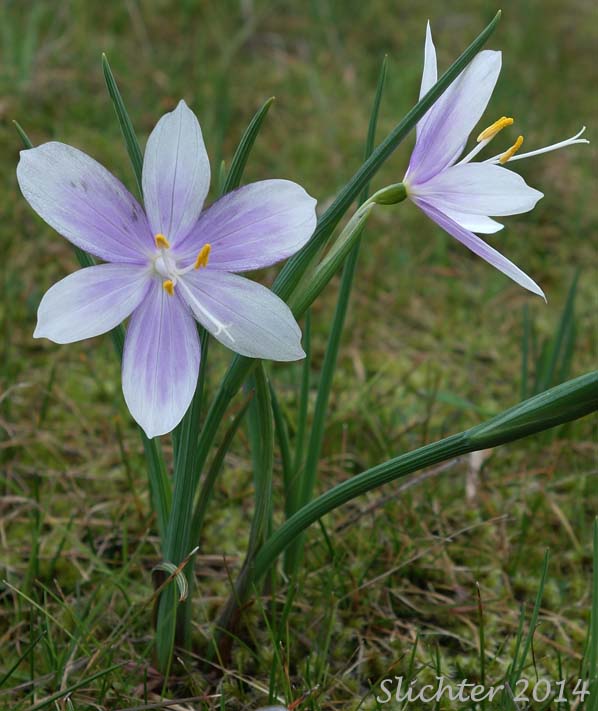
Douglas' grass widows blooming along the Memaloose Trail east of Marsh Cutoff Road, Columbia River Gorge.........February 11, 2015.
 -
-  -
- 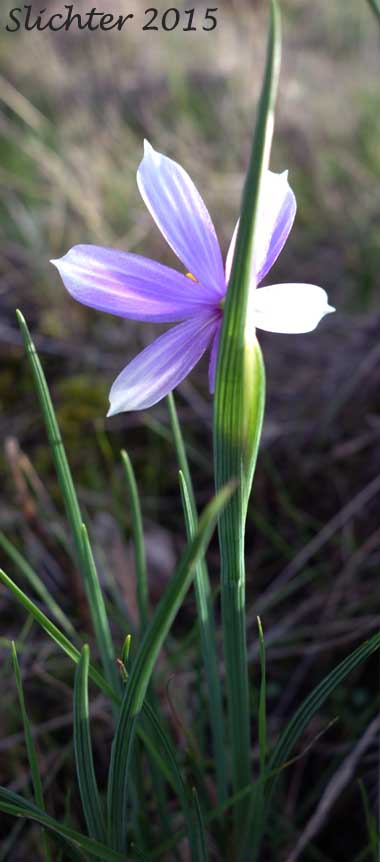
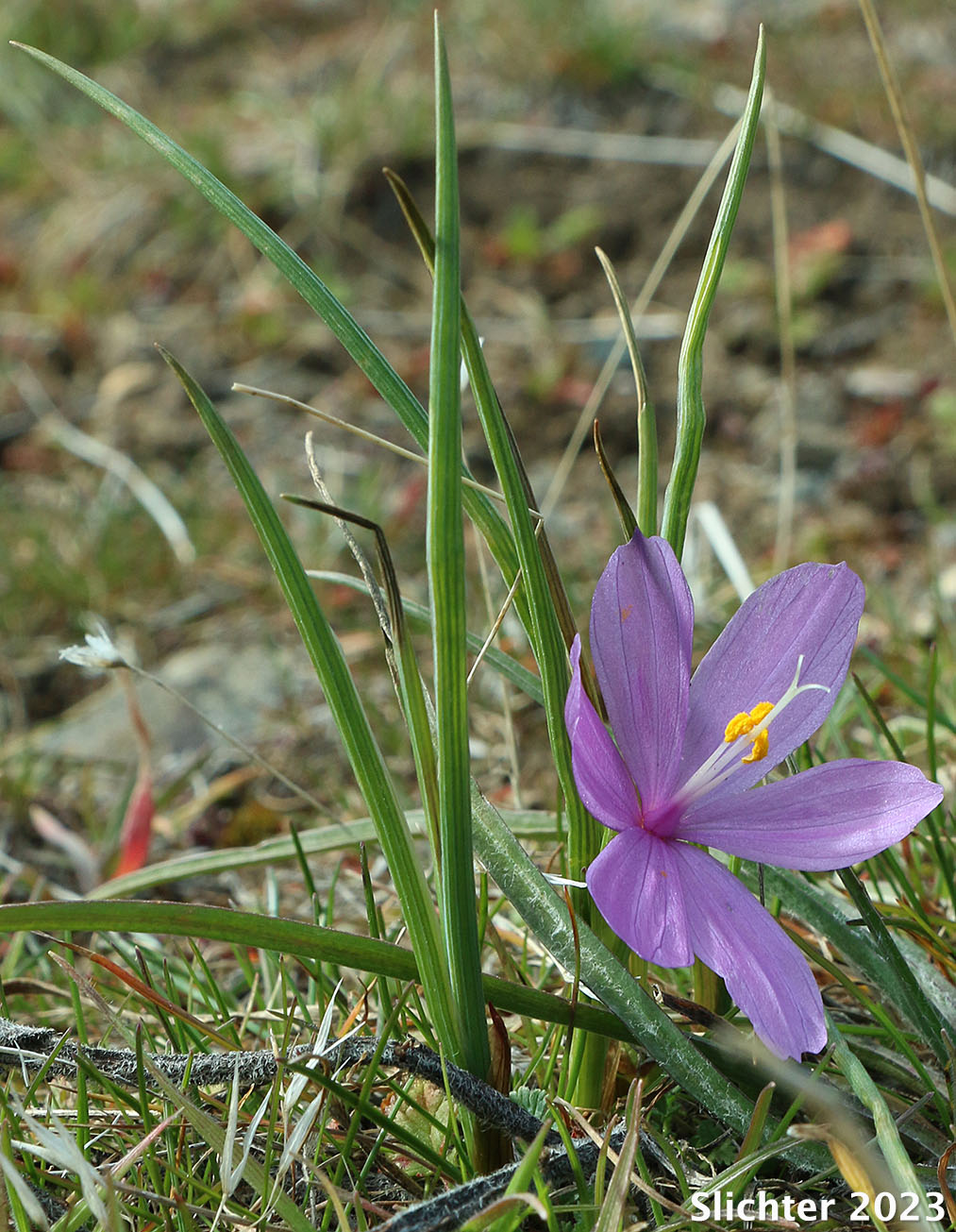
Douglas' grass widows blooming at Catherine Creek, Columbia River Gorge..........February 7, 2015.
 -
- 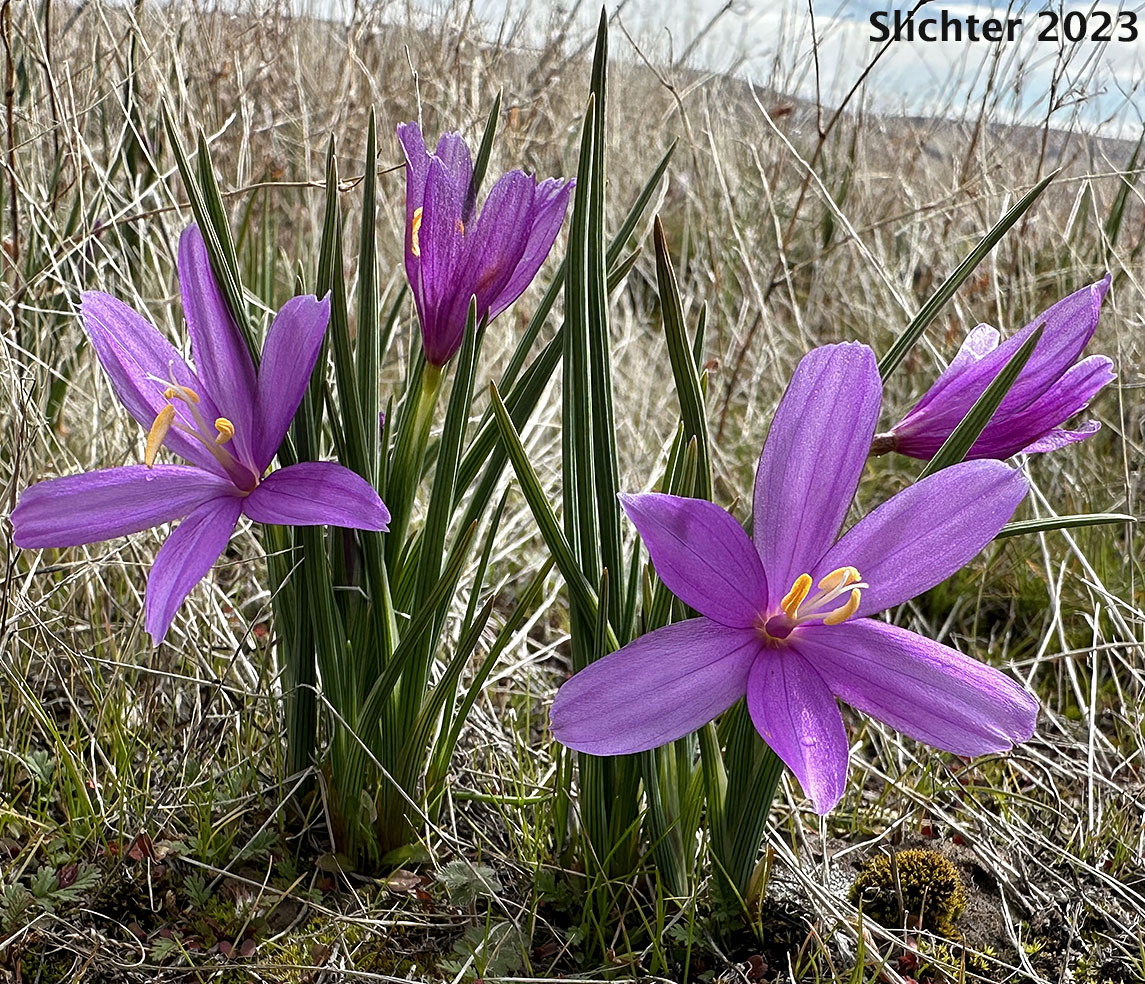
Douglas grass widows blooming along the Military Road Trail at Columbia Hills Historical State Park, Columbia River Gorge......March 6, 2023.
Paul Slichter