[Buckwheats: The Genus Eriogonum in the Columbia River
Gorge of Oregon and Washington]
Snow Buckwheat
Eriogonum niveum
Synonyms: Erigonum niveum var. decumbens, Eriogonum niveum var. niveum
 -
- 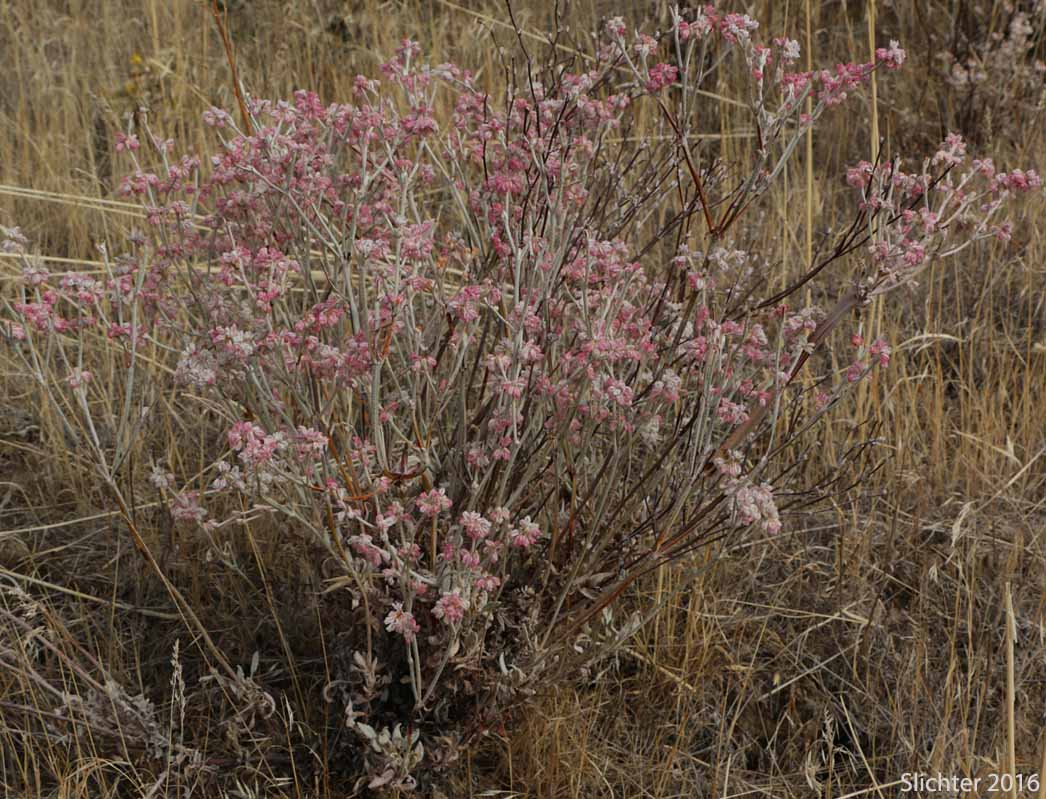
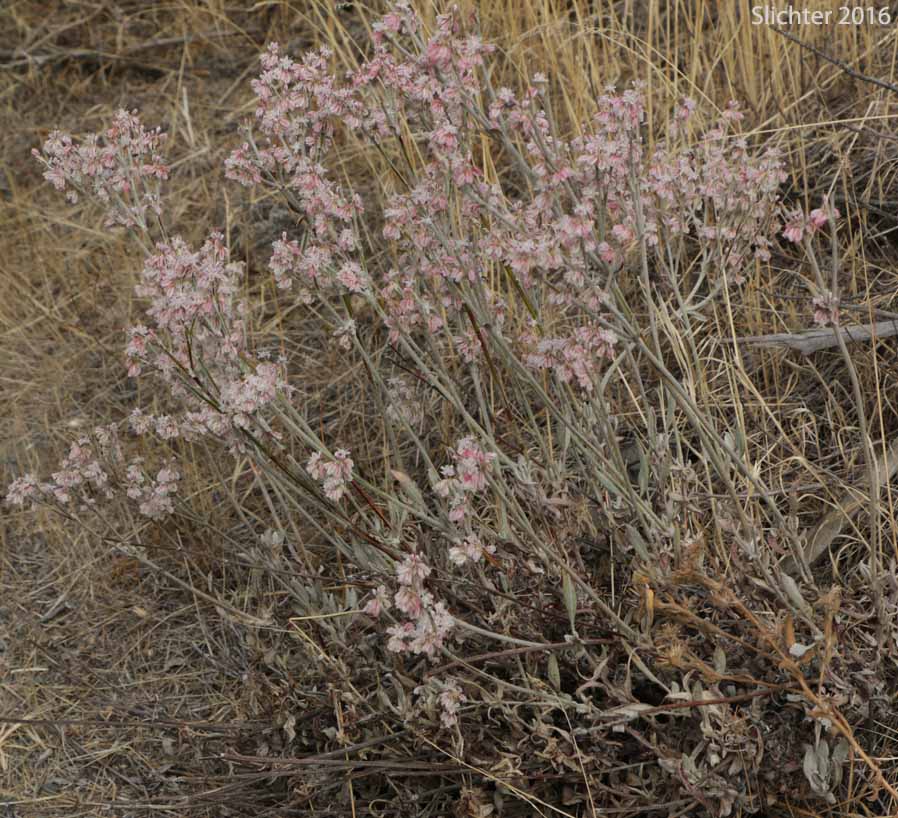
Snow buckwheat as seen along the trail to Ferry Springs on the east bank of the Deschutes River, Deschutes River State Recreation Area..........October 6, 2016.
 Characteristics:
Snow buckwheat is a variable perennial with prostrate stems,
and thus mat forming, or with erect stems up to 80 cm tall. The basal leaves
are tufted, 1.5-6 cm long with the blades elliptic to oblong-ovate or lanceolate
in shape, with the petioles at least as long as the blades. Both leaf surfaces
are tomentose or white-grayish haired.
The inflorescence is cymose, twice- to thrice-branched, with
2 or 3 leafy bracts at many of the joints or nodes. The flowers are cream or
pink in color and about 3-4 mm long. They occur in small clusters at any point
where the stems branch, or where there are pairs of bracts on the stems.
Habitat:
Snow buckwheat is found on sandy soils of the sagebrush desert
or in open ponderosa pine forests.
Range:
Snow Buckwheat is found east of the Cascade Mts. from southern
British Columbia south to central Oregon, and east to west-central Idaho.
In the Columbia River Gorge, it may be found east of The Dalles,
OR at an elevation of about 200'.
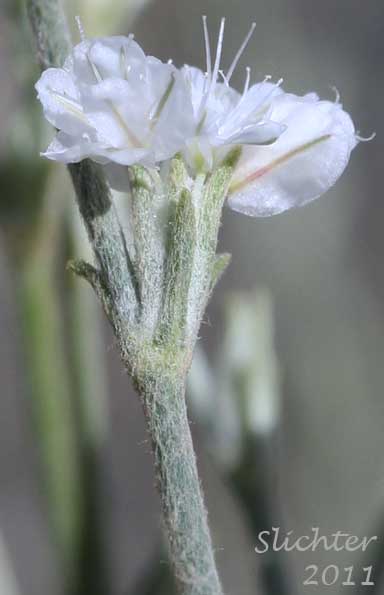
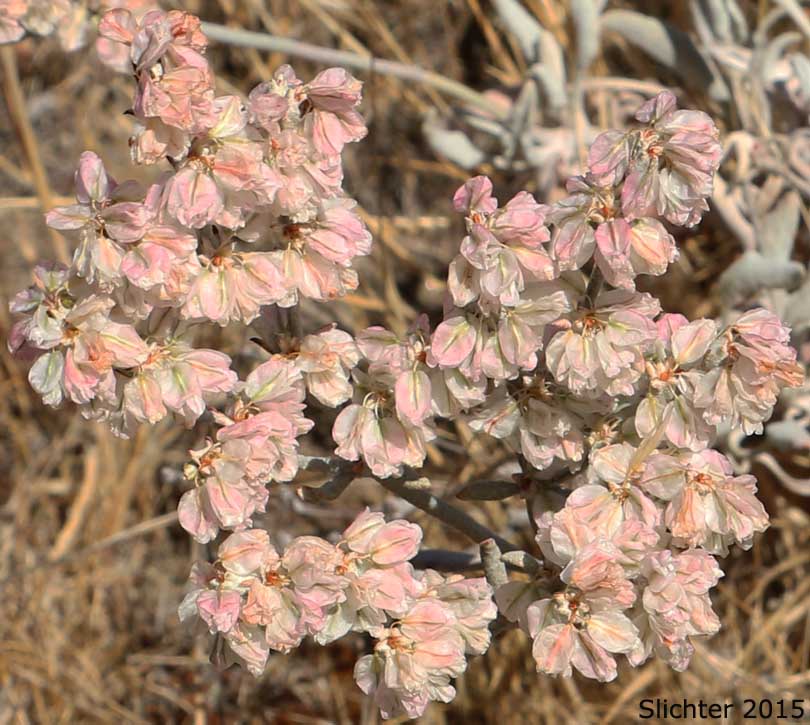
A close-up sideview of the flowers of snow buckwheat as seen in sandy and gravelly soils along Interstate 84 about one-half mile west of Celilo, OR................July 27, 2011.
 -
- 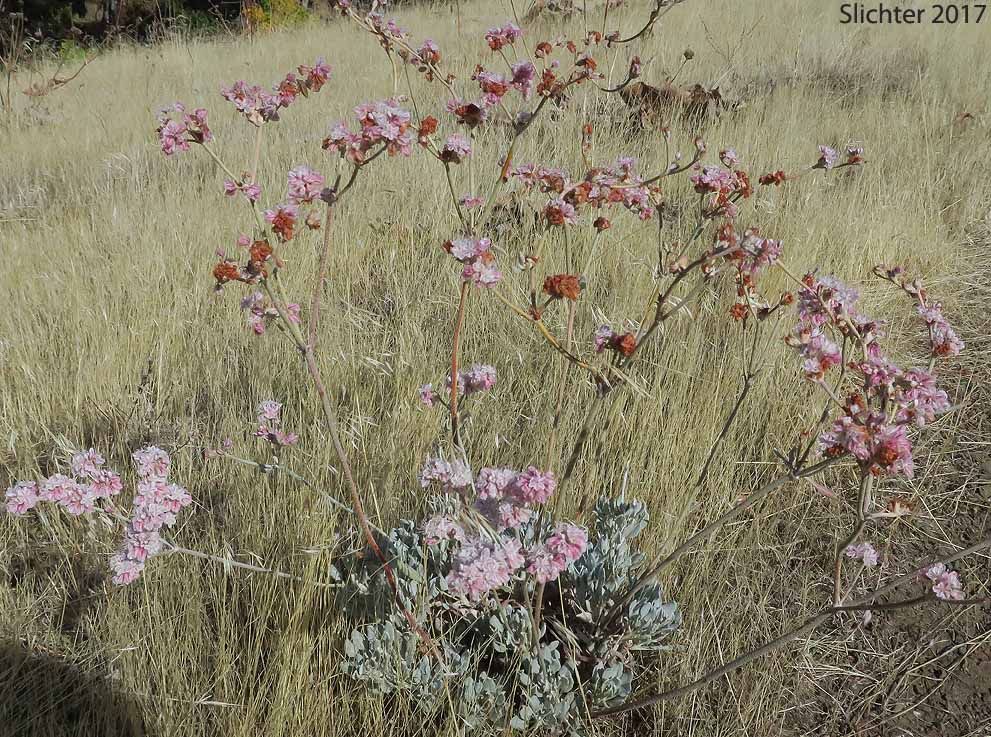
Snow buckwheat in bloom on slopes above and slightly to the east of the waterfall above the Crawford Oaks Trailhead, Columbia Hills State Park.......October 16, 2017. At first glance, this may look like the similar Eriogonum strictum, but it has a basal rosette of leaves (no stem leaves), while this plant has leafy lower stems with a few scattered leaves or leafy bracts upwards into the inflorescence.
 -
- 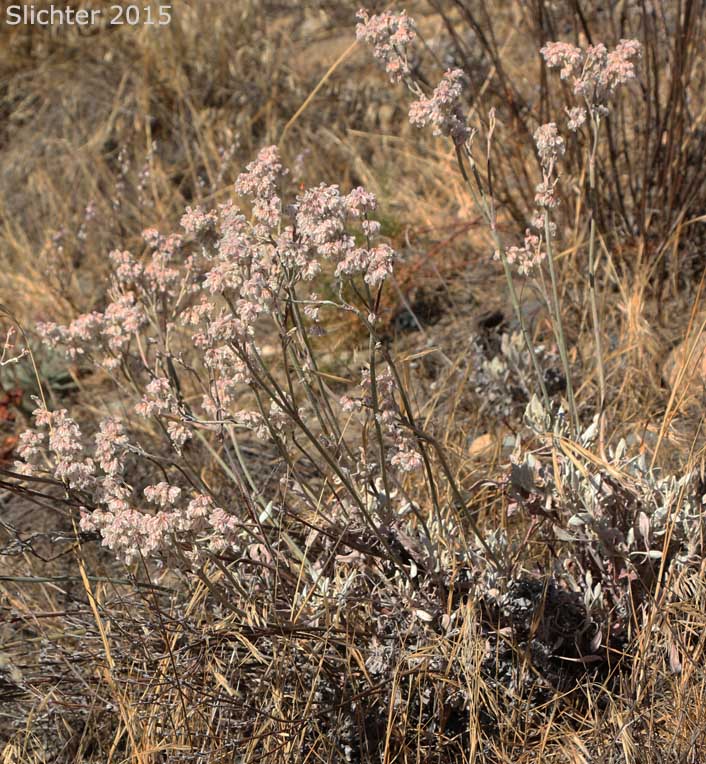
Snow buckwheat blooming on sandy and gravelly soils along Washington Highway 14 a couple miles west of Sand Springs Canyon.........October 12, 2015.
 -
- 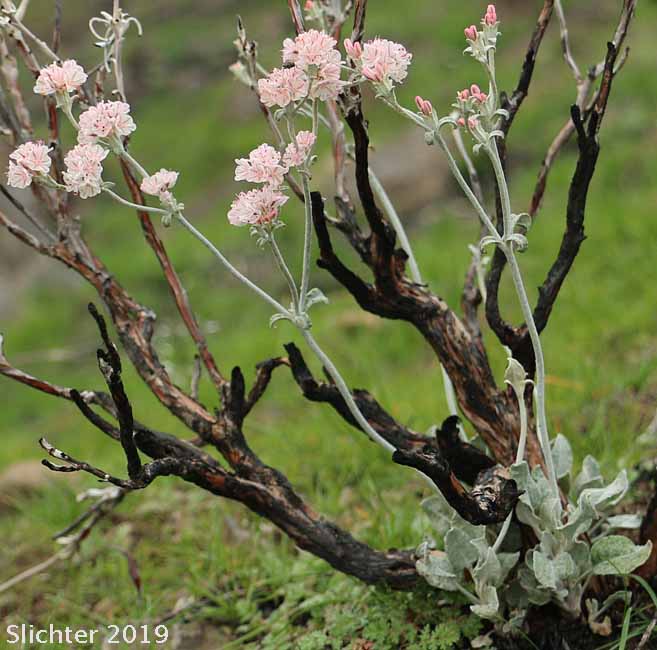
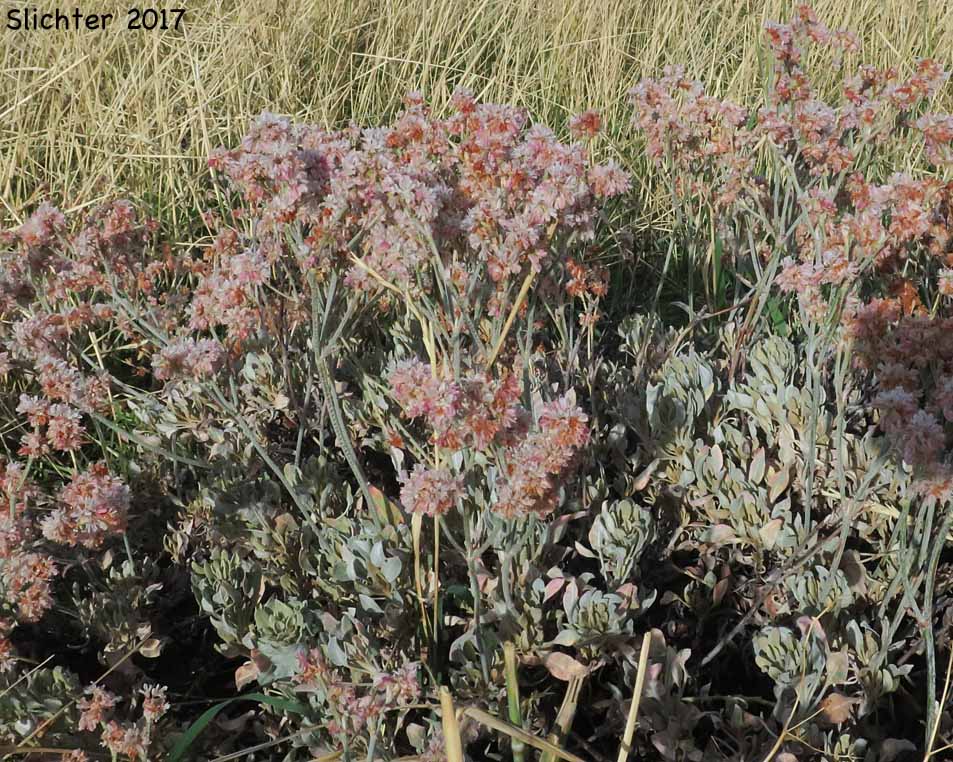
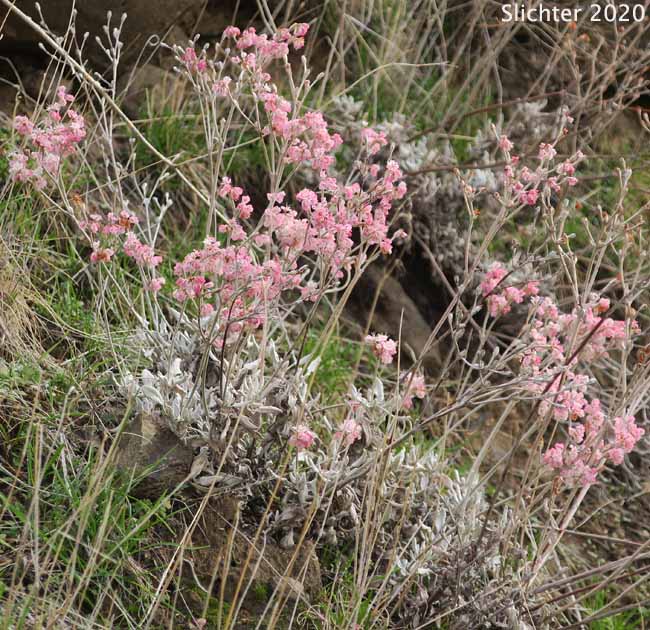
Snow buckwheat blooming at left along the Mosier Plateau Trail just east of Mosier, OR..........October 6, 2017. The photo at right shows a late-blooming snow buckwheat along trails along the lower Deschutes River......January 4, 2019.
 -
- 
Snow buckwheat still in bloom, but fading, as seen along trails along the lower eastern bank of the Deschutes River about 2 miles upstream from the Columbia River.....November 20, 2020. The photo at right shows the leafy stems which help identify this from Eriogonum strictum.
 -
- 
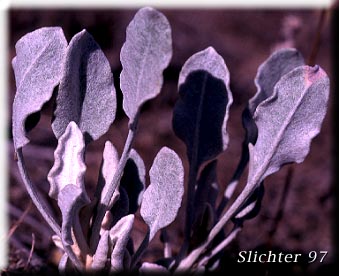
The photo at left shows snow buckwheat as seen on ice age flood sandbars above the Little Spokane River to the north of Spokane, WA..........August 27, 2007. The photo at right shows the leaves of snow buckwheat as seen on slopes above the Crawford Oaks Trailhead, Columbia Hills Historical State Park.....October 31, 2020.
 -
- 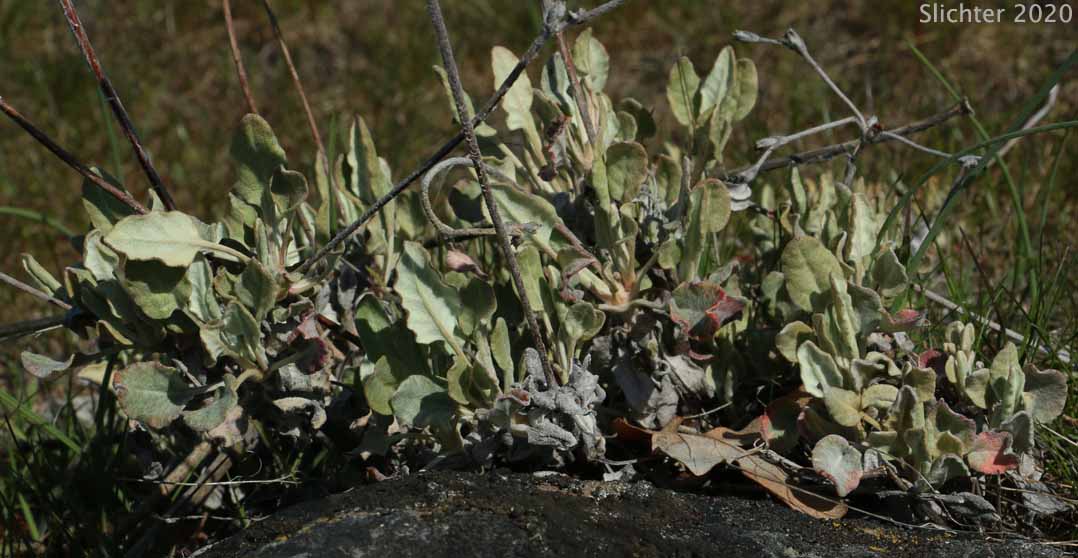
Photo at left of the basal leaves of Eriogonum niveum north
of Spokane, along the Little Spokane River, mid August, 1997. The photo at right shows a cluster of the lower leaves of snow buckwheat as seen atop Mill Creek Ridge, Wasco County, OR......March 17, 2020.
Paul Slichter