John Day Fossil Beds National Monument
Leader: National Monument Staff
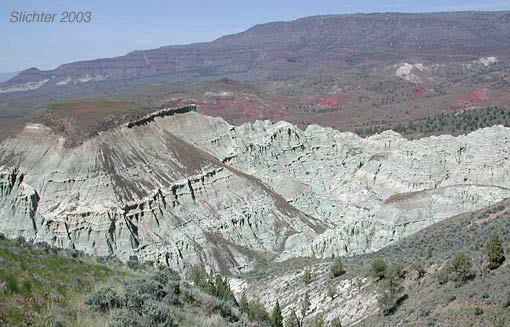
Join one (possibly two) staff members of the John Day Fossil Beds National Monument for a 3 mile loop (600 feet elevation gain) overlooking the Blue Basin. The Blue Basin has healthy native plant communities, each adapted to the soil types, aspects, topography, and availability of water. A prescribed fire was conducted in 2002 to restore the natural process of fire to the landscape. We will look down into the basin and view the John Day River along with exposed fossil beds from the Tertiary Period, a time when mammals and flowering plants were undergoing dramatic changes. We will see native plants, shrubs and grasses, among them, mountain mahogany, Idaho fescue, Thurber's needlegrass, purple clover and various milkvetches and lupines. We will explore both the plant life and also learn more about the geology and paleontology that makes the monument what it is. Bring plenty of water and sunscreen. Temperatures could reach 100 degrees or more!
After lunch we will drive a few miles to Deer Gulch for a cooler afternoon walk. Deer Gulch is near Goose Rock on Highway 19. This hike allows us to travel up a canyon through several geologic periods while viewing the native plants and animals associated with each. At Deer Gulch we will see Columbia hawthorne, shadscale, and hackberry along with the common herbaceous plants noted above and a varied assortment of forbs and grasses unique to the seeps and paleosols scattered up the canyon. This is a hike that the public rarely is offered and you could add to the parks plant list as you help identify some of the uncommon plants.
May 23, 2003: Blue Basin Overlook & Islands in Time Trails