[Balsamroots: The Genus Balsamorhiza East of the Cascade Mountains of Oregon and Washington]
Carey's Balsamroot
Balsamorhiza careyana
Synonyms: Balsamorhiza careyana var. careyana, Balsamorhiza careyana var. intermedia
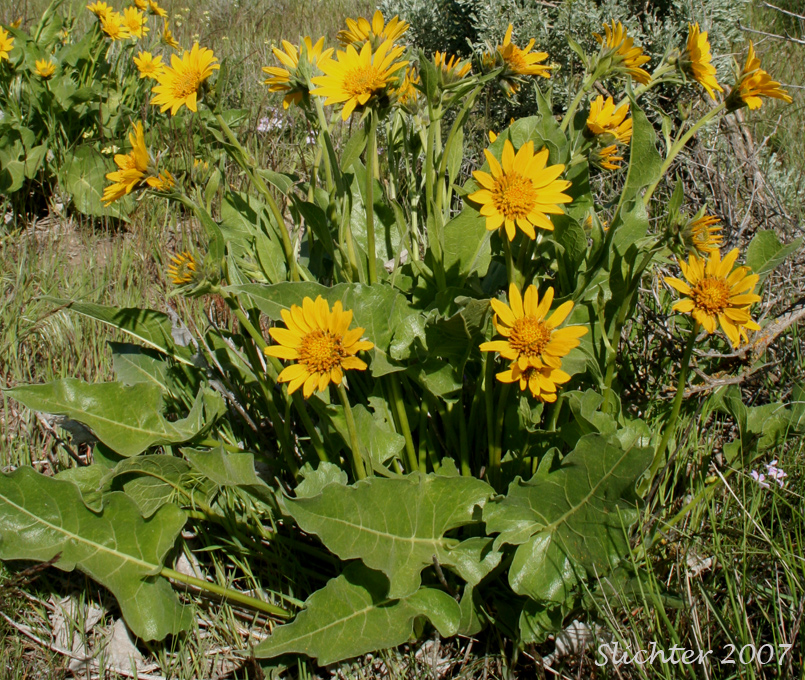
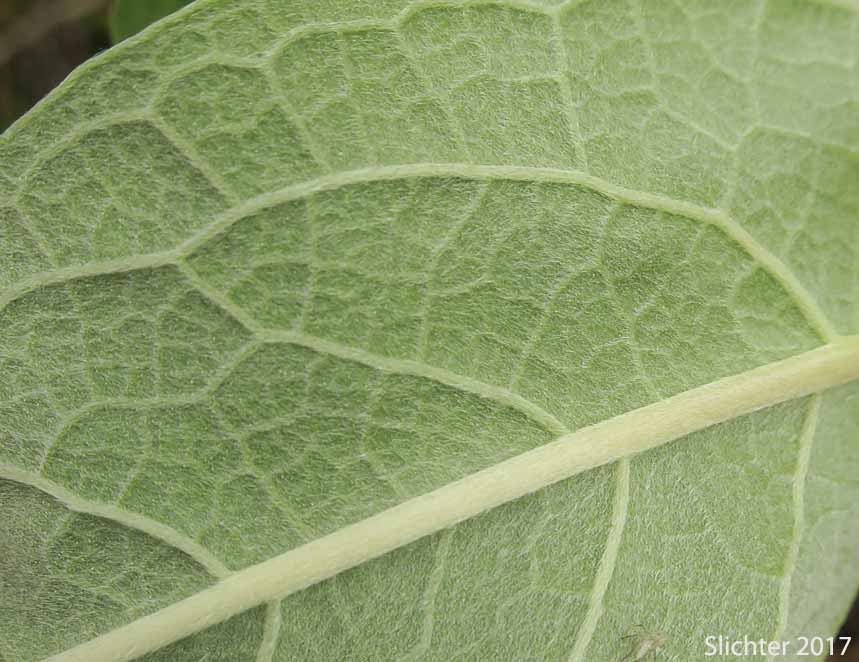
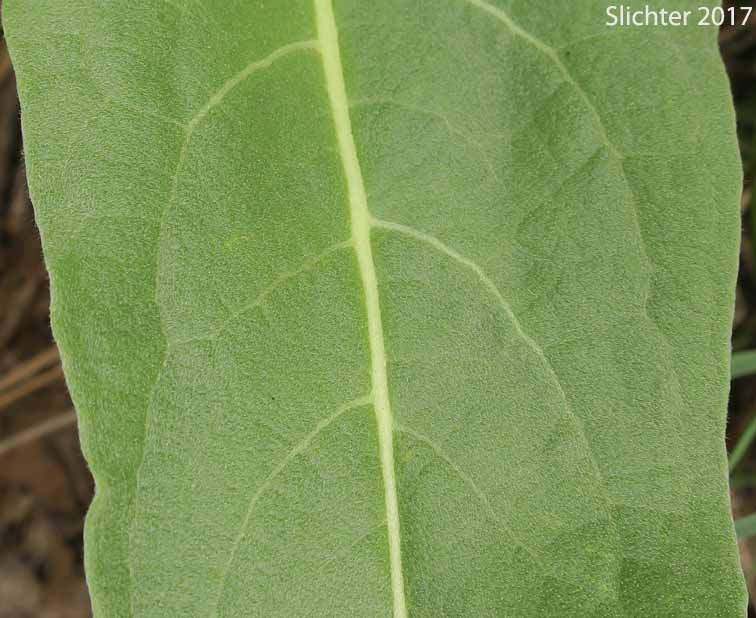
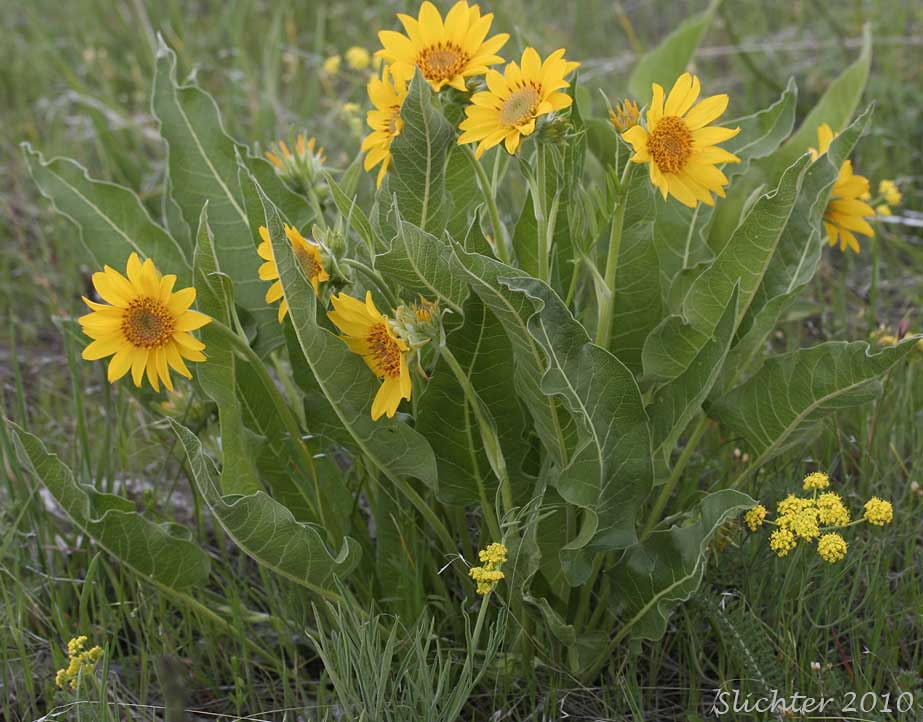
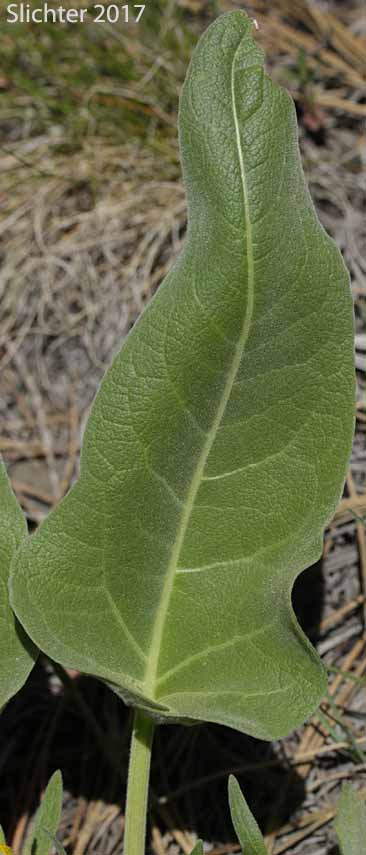
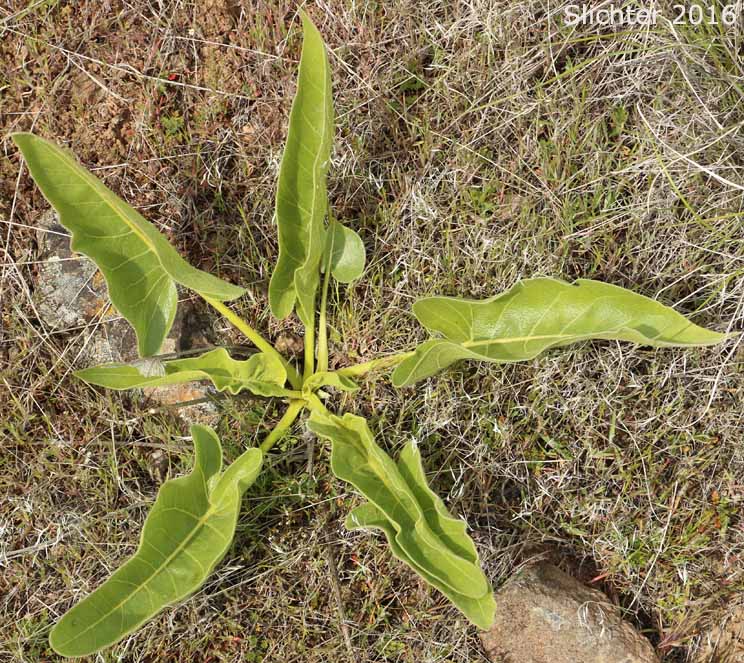
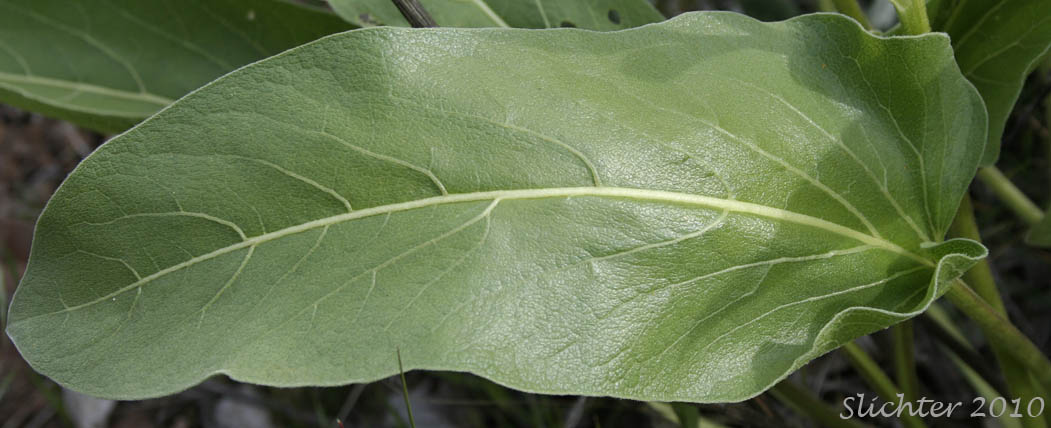
The photo above shows Carey's balsamroot as seen in the Horse Heaven Hills near Benton City, WA.........April 28, 2006. Note the shiny green surface to the leaves with creamy main veins of this species.
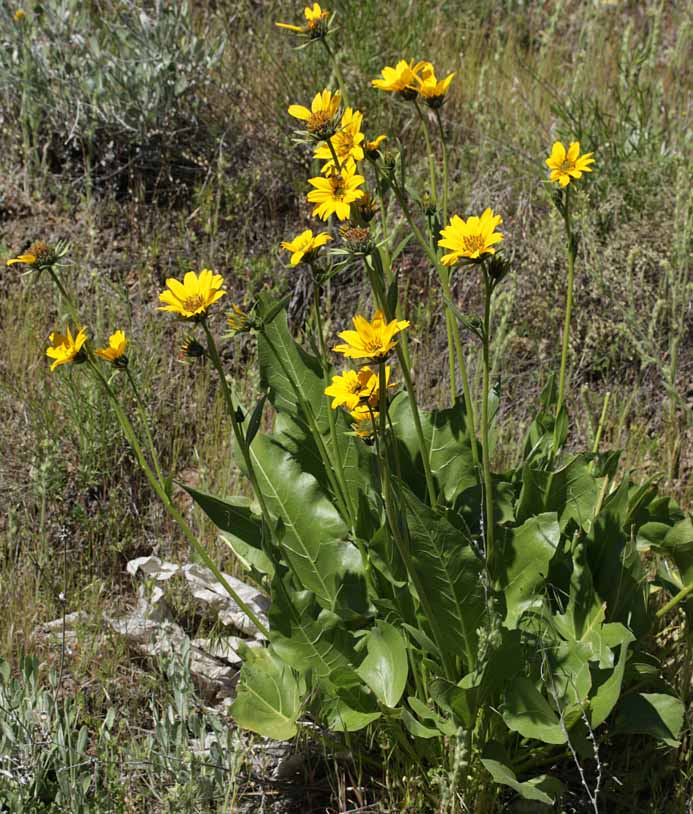
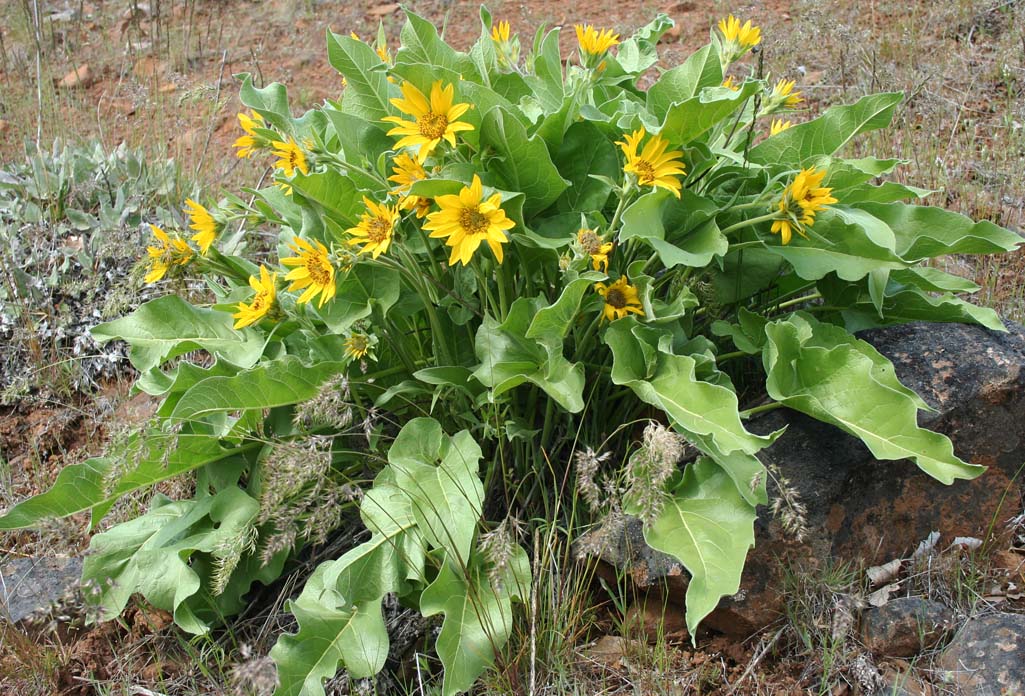
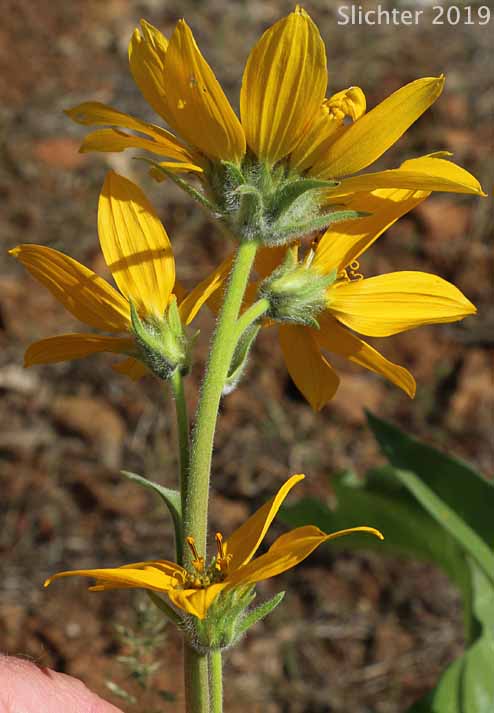
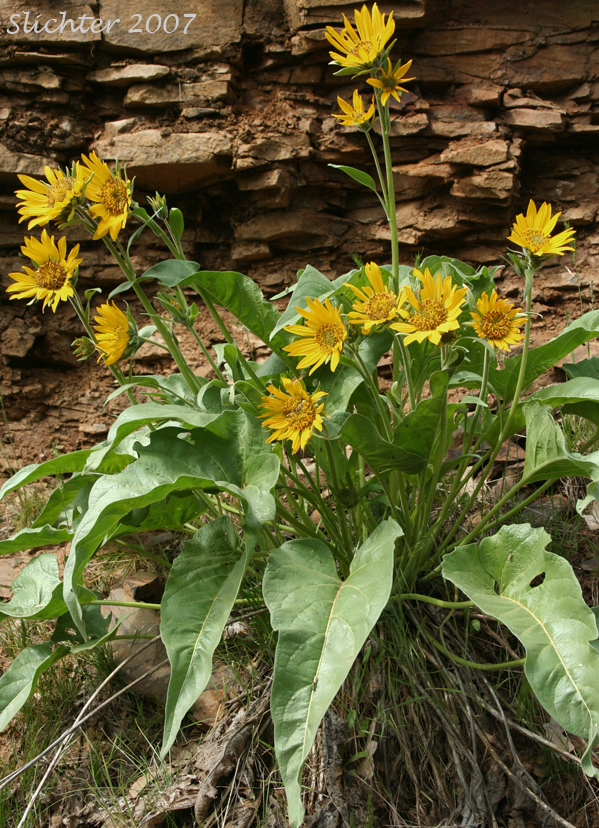
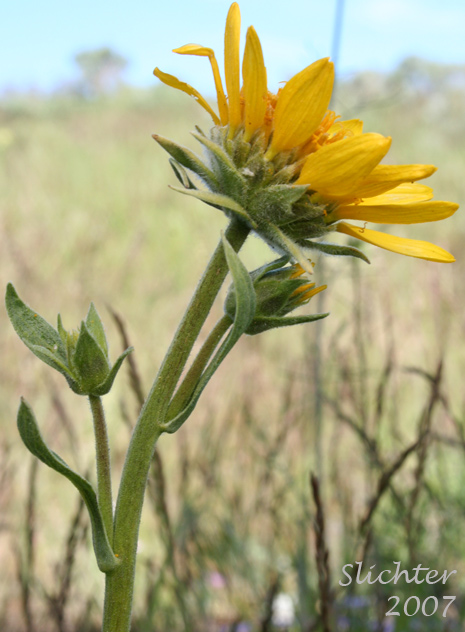 The photo at right shows the upper stem and multiple flower heads characteristic of Carey's Balsamroot as seen in the Horse Heaven Hills near Benton City, WA.........April 28, 2006.
Characteristics:
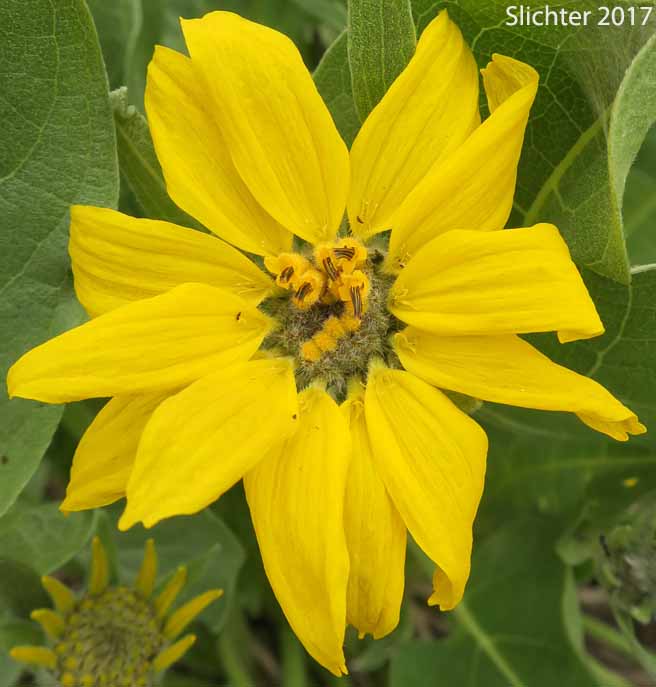
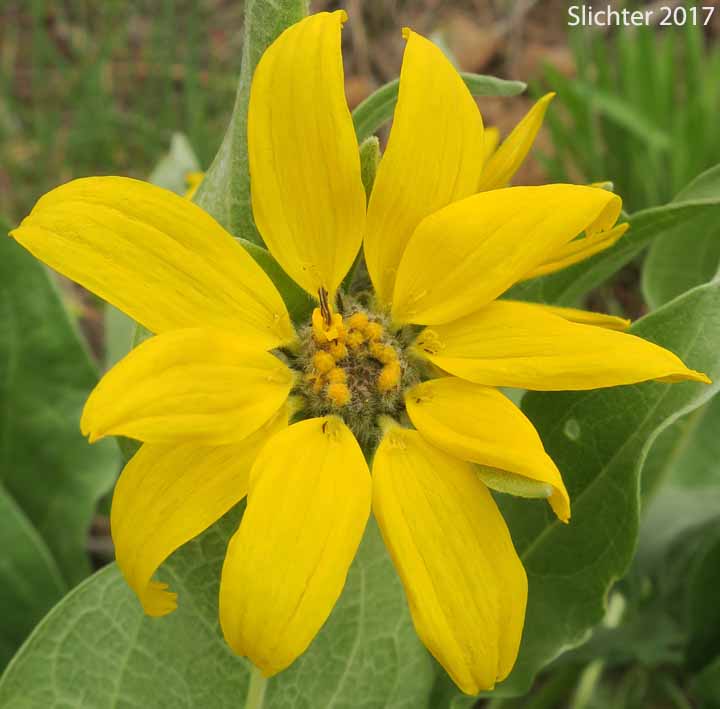
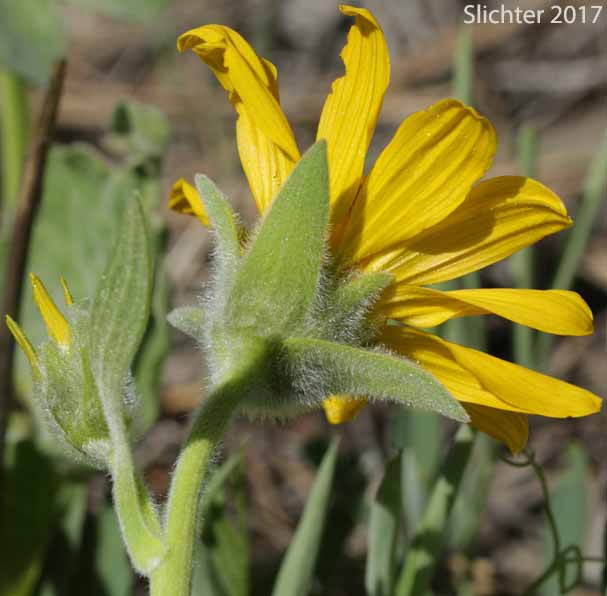
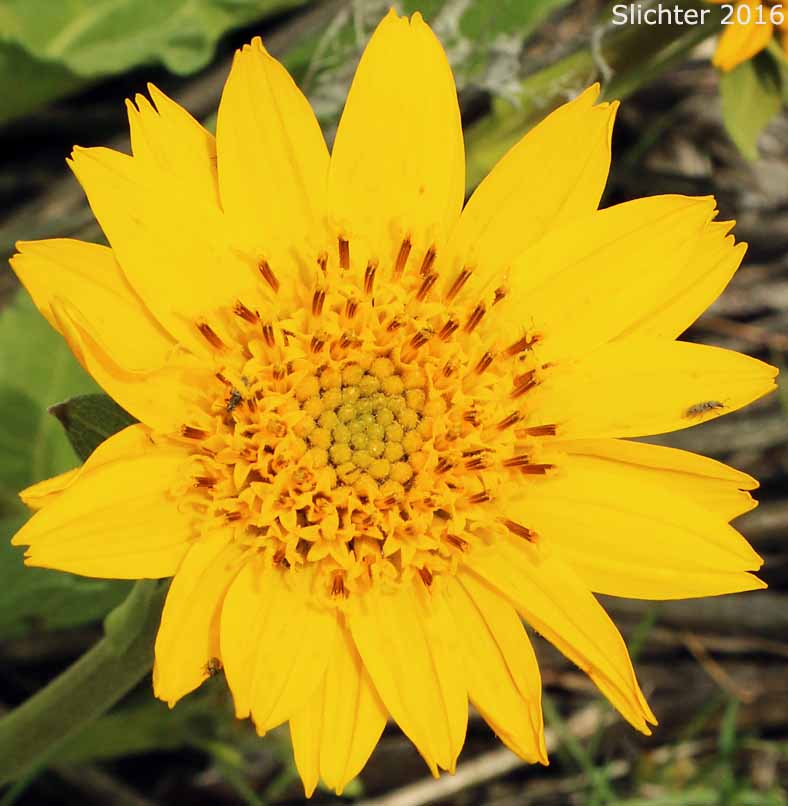
The large, flat flower heads of Carey's balsamroot have a 2.5 cm wide yellowish
central disk surrounded by 8 or 13 yellow ray flowers. The ray flowers persist
on the flower head after bloom. Flower heads may be solitary to several per
leafless stem, with the terminal head larger on variety intermedia. Variety
intermedia may also have up to 21 rays. The leaves are up to 30 cm long
and up to 15 cm wide. The blades are heart-shaped to triangular-hastate. Plants
range from 20 to 100 cm high and the herbage ranges from smooth to glandular.
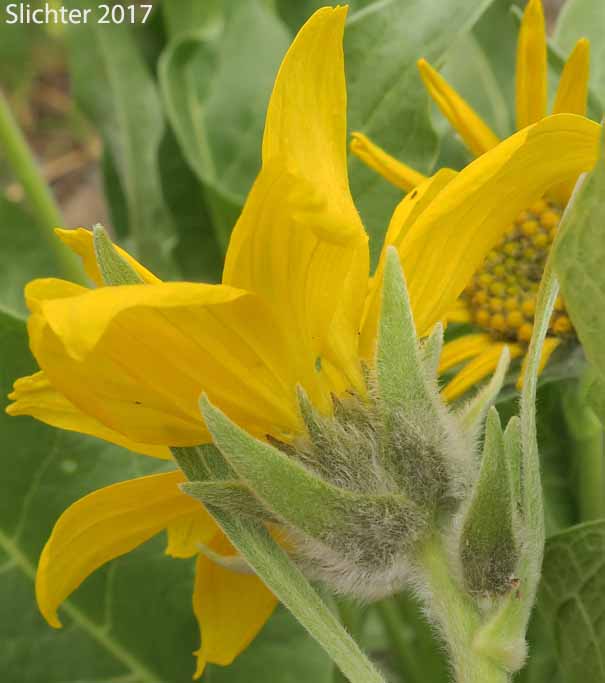
One to five flower heads are found atop the stems. The involucre ranges from
2-2.5 cm high with the stiff bracts very gradually narrowed from the base to
the tip. The rays generally measure 1.5 to 2 cm long, shorter than those of
the two similar balsamroots listed below. Carey's balsamroot flowers from March
into June.
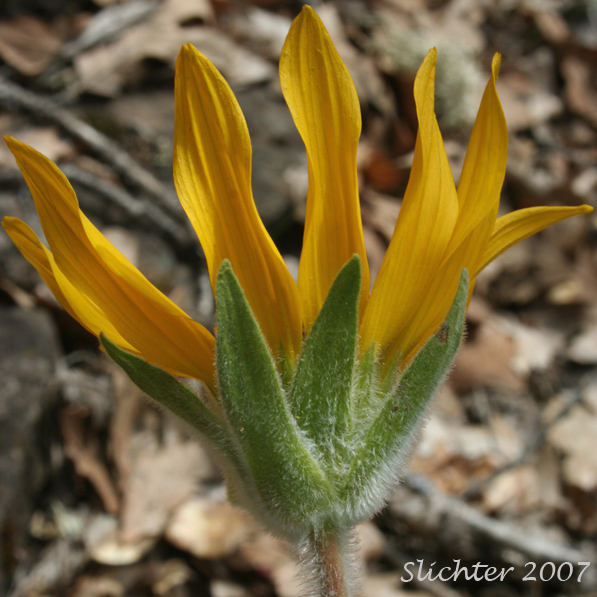
Carey's balsamroot is significantly less hairy than Balsamorhiza
sagittata, with the leaves being a bright green. The involucre is also
only slightly haired or woolly in contrast to the woolly involucre of B.
sagittata.
Although similar to Balsamorhiza deltoidea,
Carey's balsamroot keeps the dry papery rays after flowering has completed while
this trait does not appear in the former species (these two species do approach
each other in the mid Columbia River Gorge, but hybridization evidently does
not occur).
Habitat:
Carey's balsamroot is found in dry open habitats from the lowlands extending
well up into the mountains.. It has a preference for the deeper soils on sloping
ground rather than the rocky hilltops.
Range:
Carey's balsamroot may be found entirely east of the Cascade Mountains from
south-central British Columbia through central Washington into north-central
Oregon.

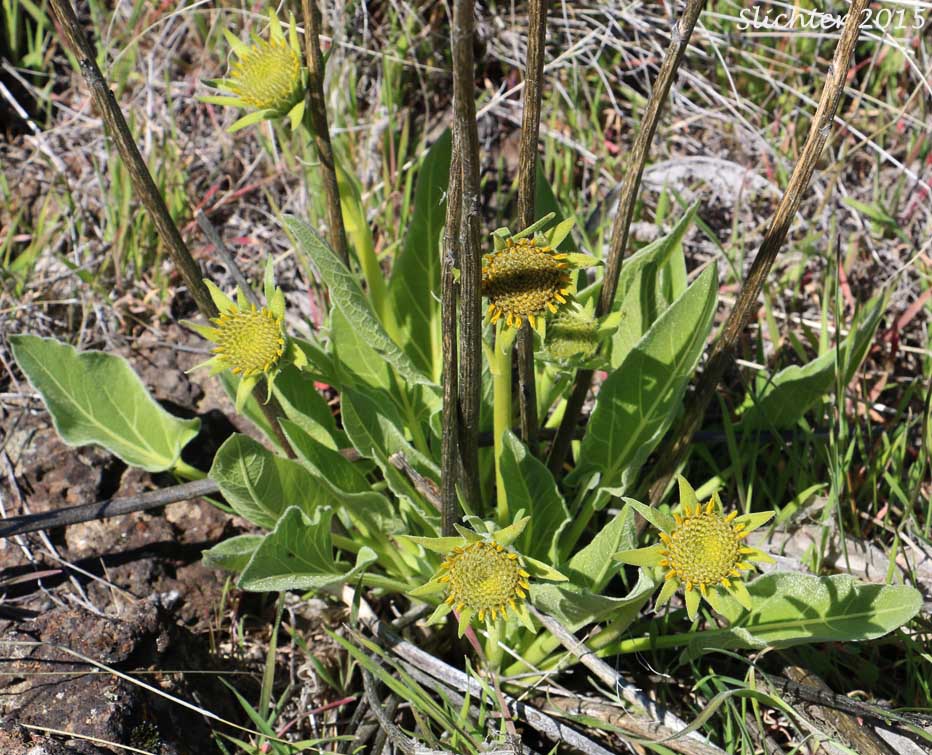
Close-up of the tardily deciduous rays stuck to an achenes near the time the seed will be ripe. Seen at the Lake Lenore Wildlife Managment Area north of Soap Lake, Washington........2, 2013.
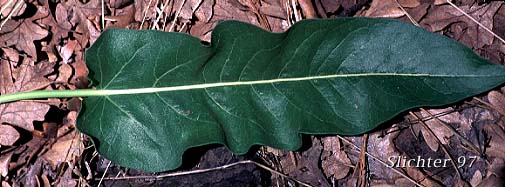
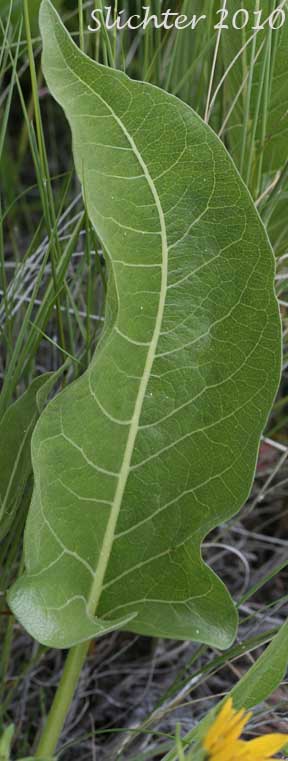
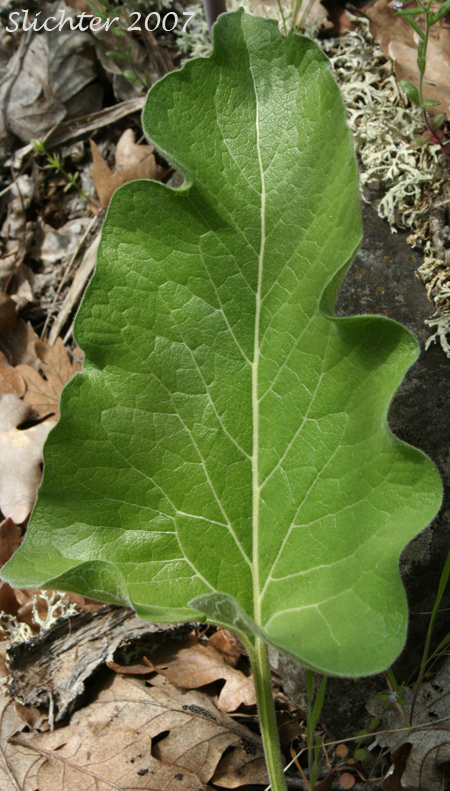
Leaf of Carey's Balsamroot along Highway 97 in Yakima Indian Reservation......5/10/97.
 -
-  -
- 
 -
-
 -
- 
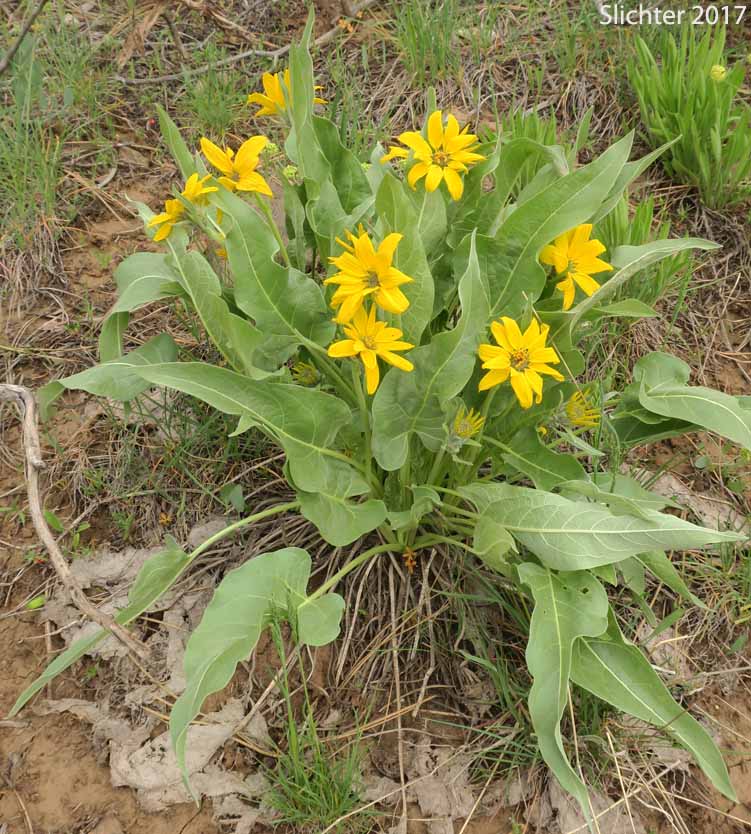
Carey's balsamroot as seen along FS Road 4040 north of Lame Dog Creek, Ochoco National Forest.........May 11, 2017.
 -
- 
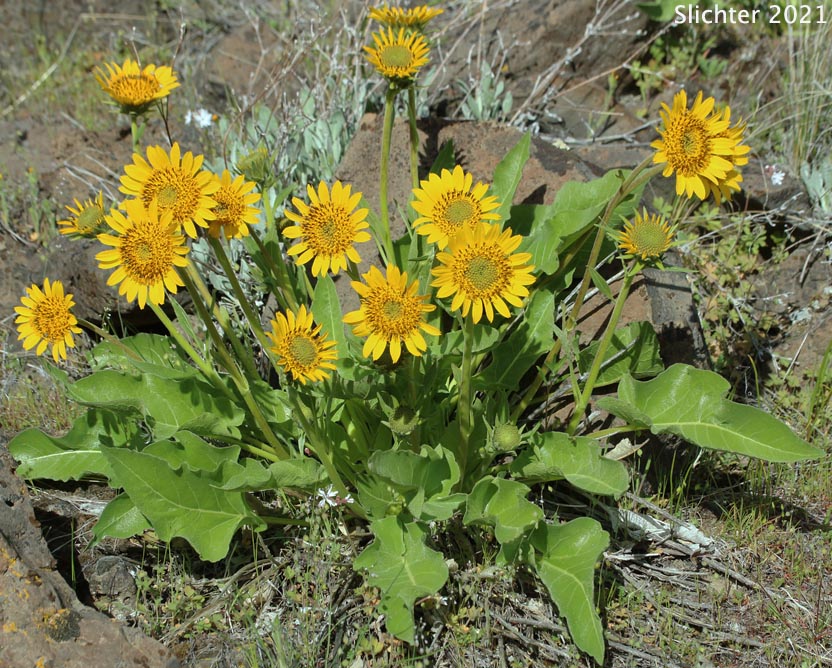
Carey's balsamroot blooming along the Hard Stone Trail, Cottonwood Canyon and adjacent BLM lands......March 25, 2021.
 -
- 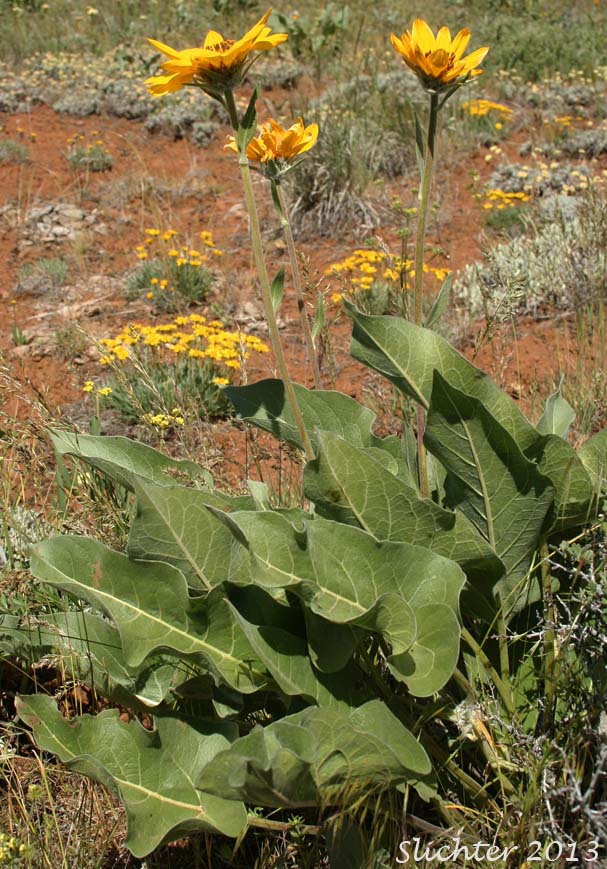
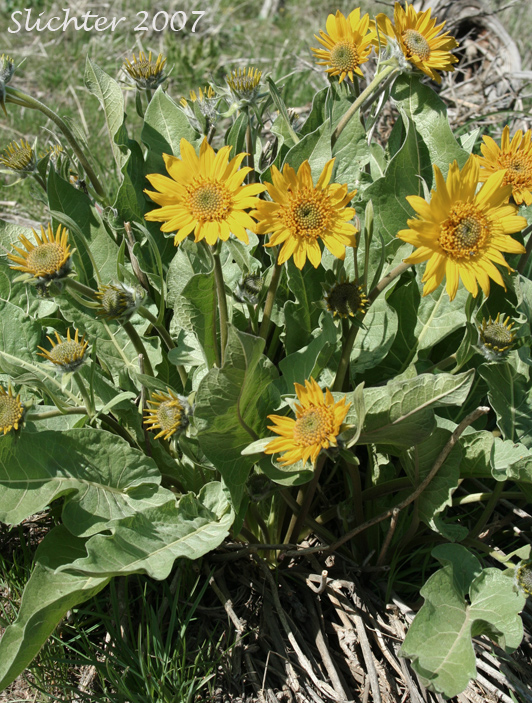
The photo at left shows Carey's balsamroot as seen along Cowiche Mill Road about 10 miles west of Yakima, WA...........March 28, 2007. Carey's balsamroot as seen right along Reecer Creek Road just inside the Wenatchee National Forest boundary.........June 3, 2013.
 -
- 
Carey's balsamroot as seen along Oregon Highway 218 about one mile east of a pass between Antelope, OR and Clarno, OR........May 15, 2010.
 -
- 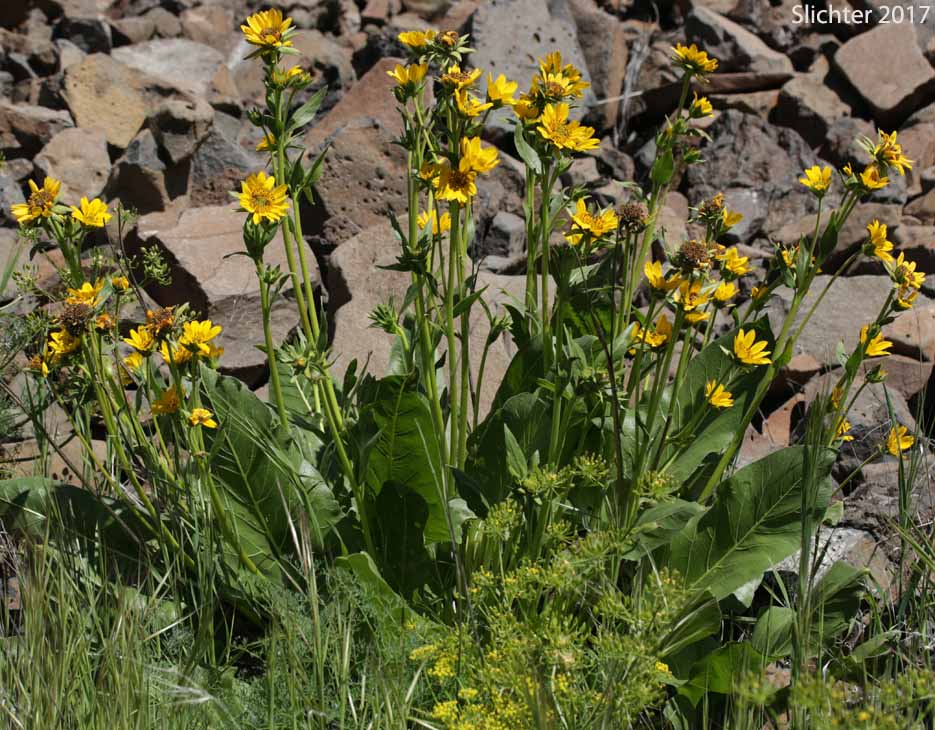
Carey's balsamroot as seen along the Hard Stone Trail along the west bank of the John Day River, Cottonwood Canyon State Park.........May 3, 2017.
 -
-  -
- 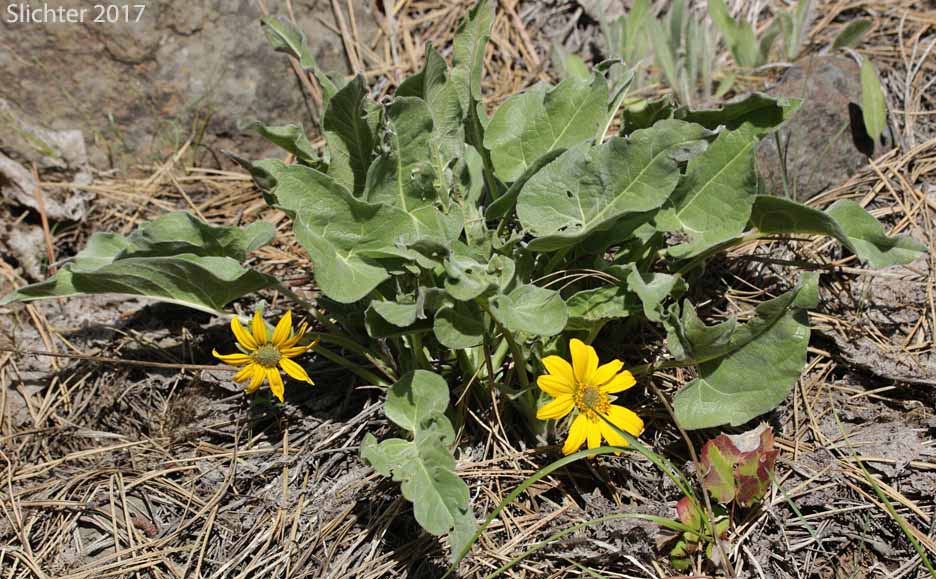
Carey's balsamroot as seen along Forest Road 22 about 0.3 miles west of the junction with Forest Road 22-400, Ochoco National Forest.........May 10, 2017.
 -
- 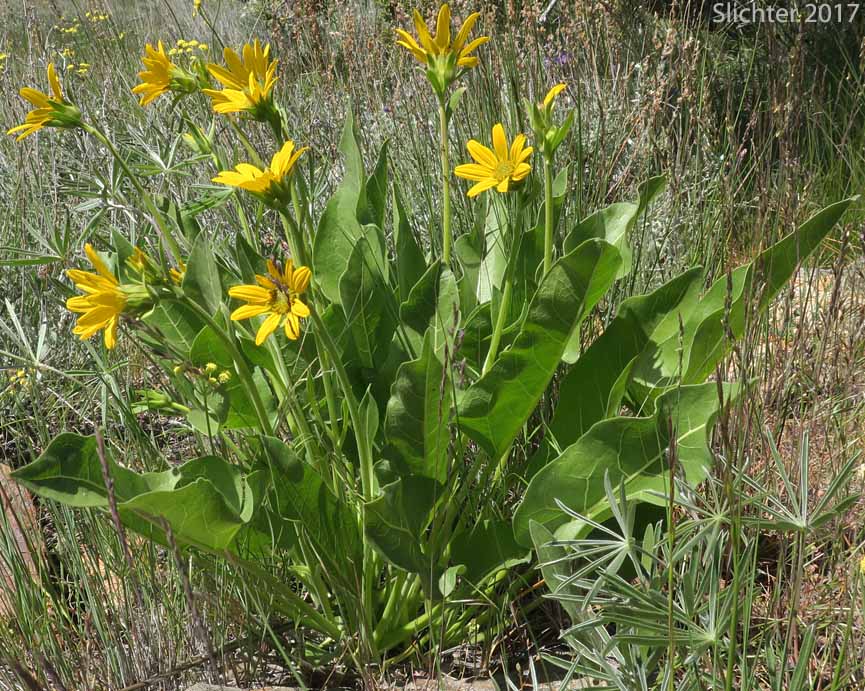
Carey's balsamroot as seen (left) at Brooks Memorial State Park near Satus Pass, Washington..........May 11, 2014. The photo at right shows Carey's balsamroot blooming along the Gray Butte Trail #852, Crooked River National Grassland..........May 20, 2017.
 -
- 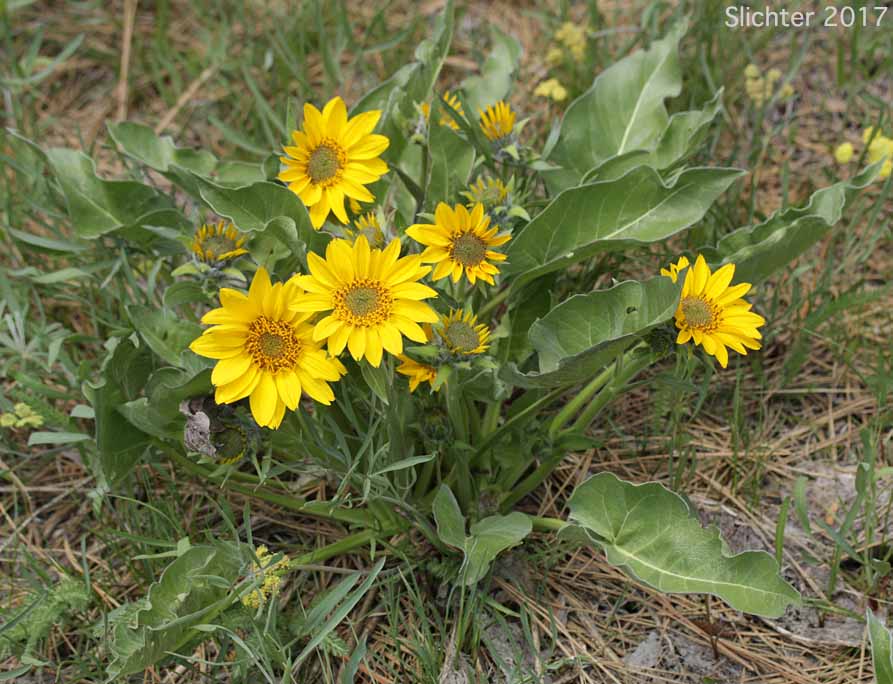
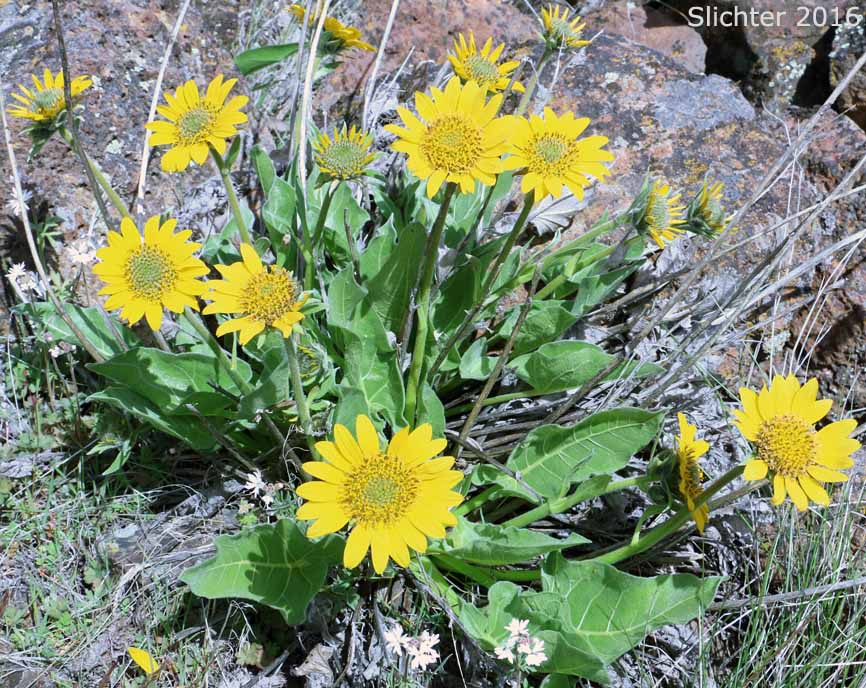
Carey's balsamroot beginning to bloom at left high on the slopes directly northwest of the Cottonwood Canyon State Park campground........February 22, 2015. The photo at right shows Carey's balsamroot blooming atop Bickleton Ridge in the Bickleton Ridge Unit of the Klickitat Wildlife Area.........May 7, 2017.
 -
-  -
- 
Carey's balsamroot beginning to bloom high on the slopes directly northwest of the Cottonwood Canyon State Park campground........February 22, 2015.
 -
- 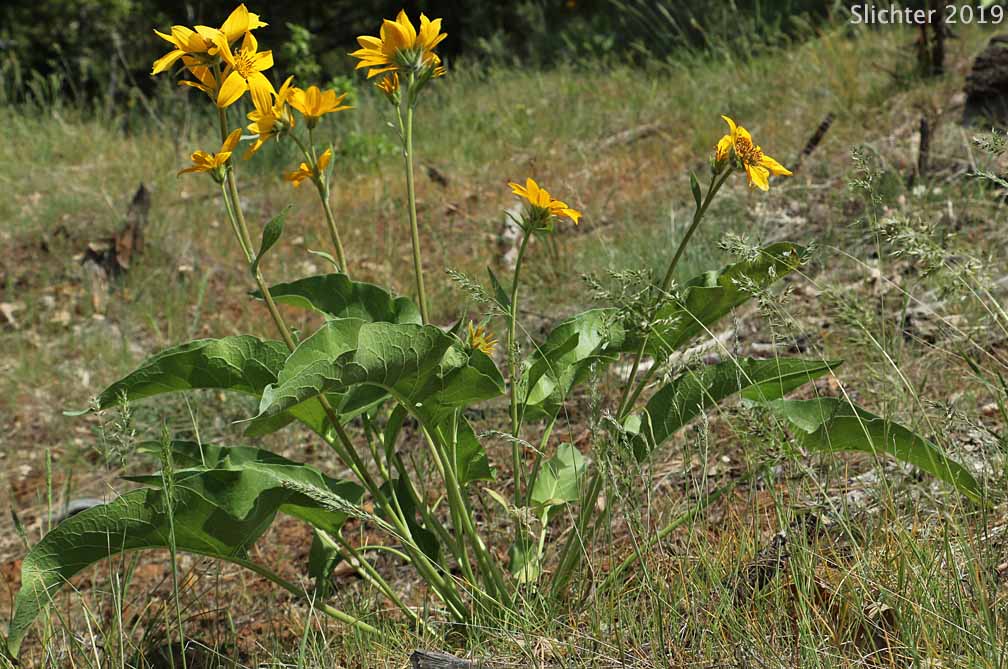
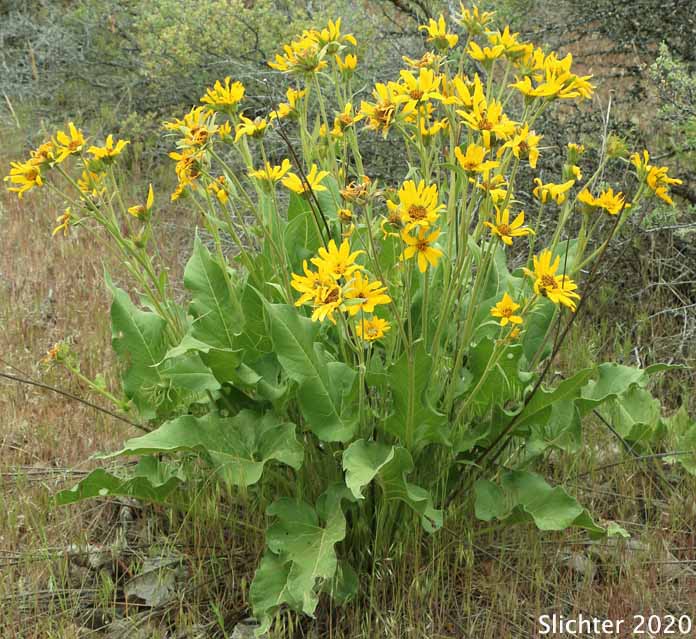
Carey's balsamroot in bloom in oak woodlands and on open balds at Brooks Memorial State Park off US 97 near Satus Pass.......May 13, 2019.
 -
- 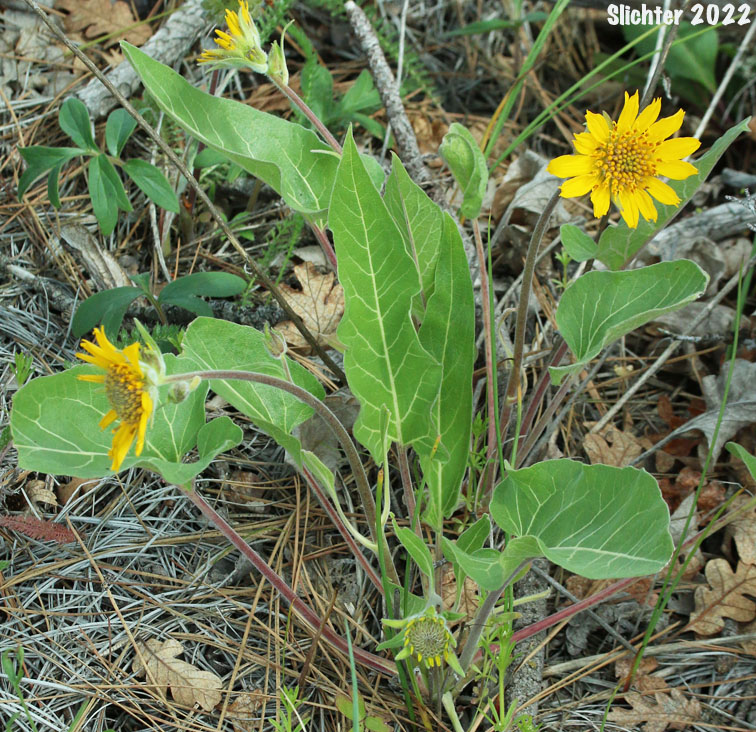
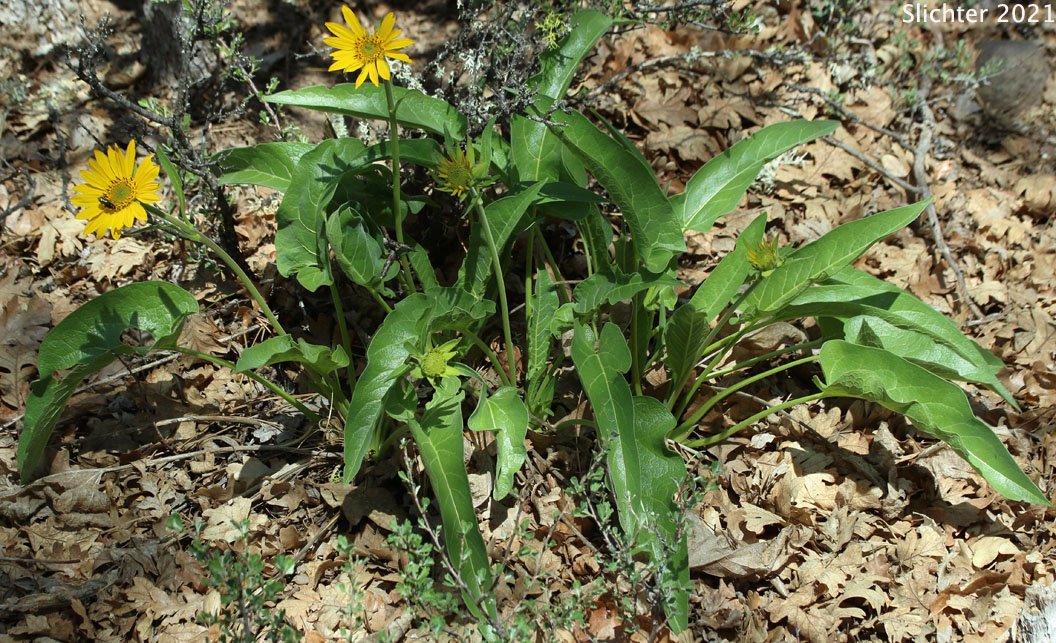
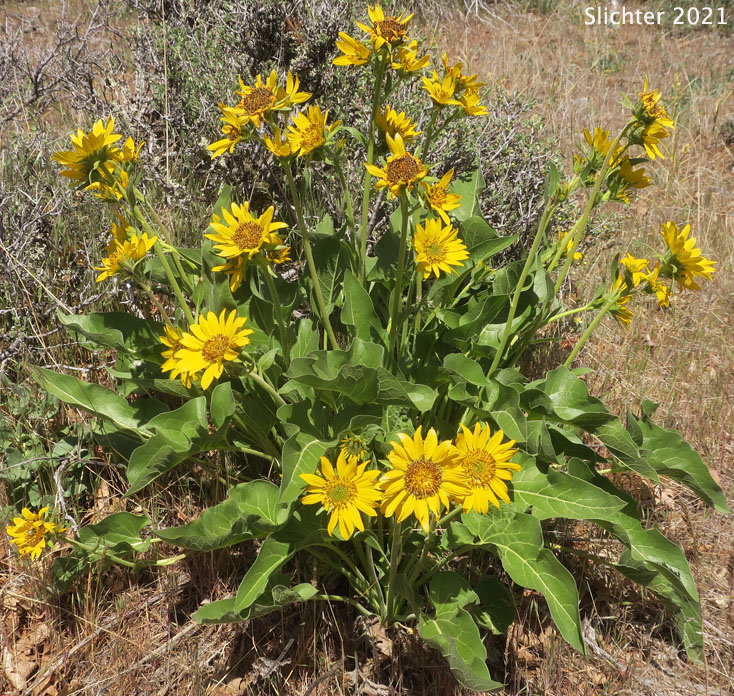
Carey's balsamroot observed at left on the east-facing slopes of Box Canyon, Simcoe Mountains Unit of the Klickitat Wildlife Area.......June 5, 2020. The photo at right shows what appears to be Carey's balsamroot observed about one mile north of Tumwater Butte, Simcoe Mountains Unit of the Klickitat Wildlife Area.....May 22, 2022.
 -
- 
 -
- 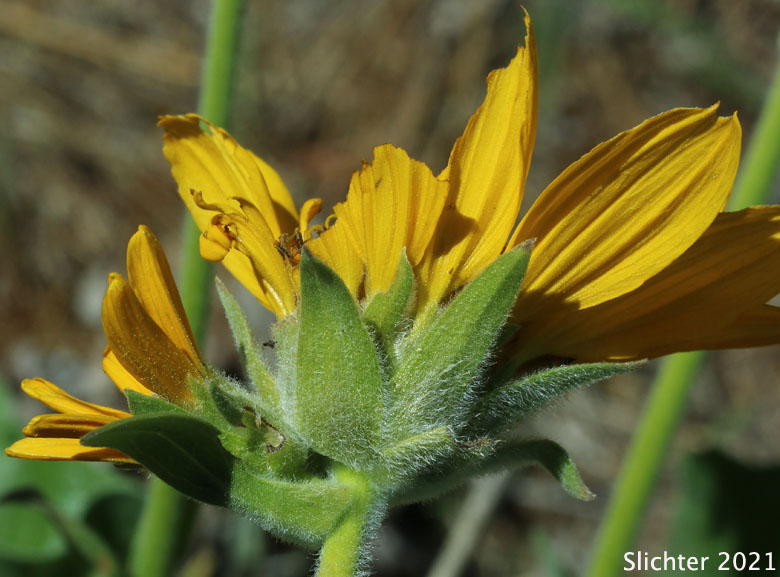
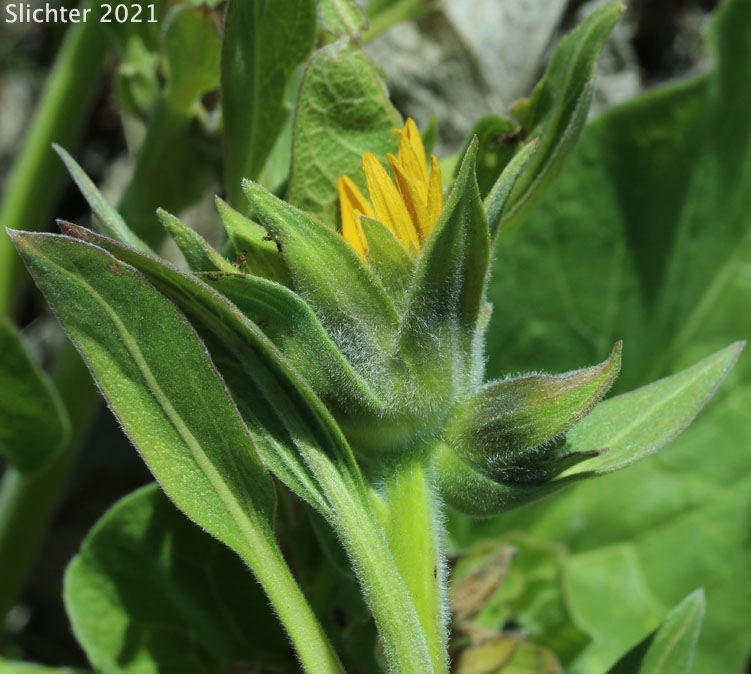
Carey's balsamroot blooming at Brooks Memorial State Park, north of Goldendale, WA.....May 4, 2021.
 -
- 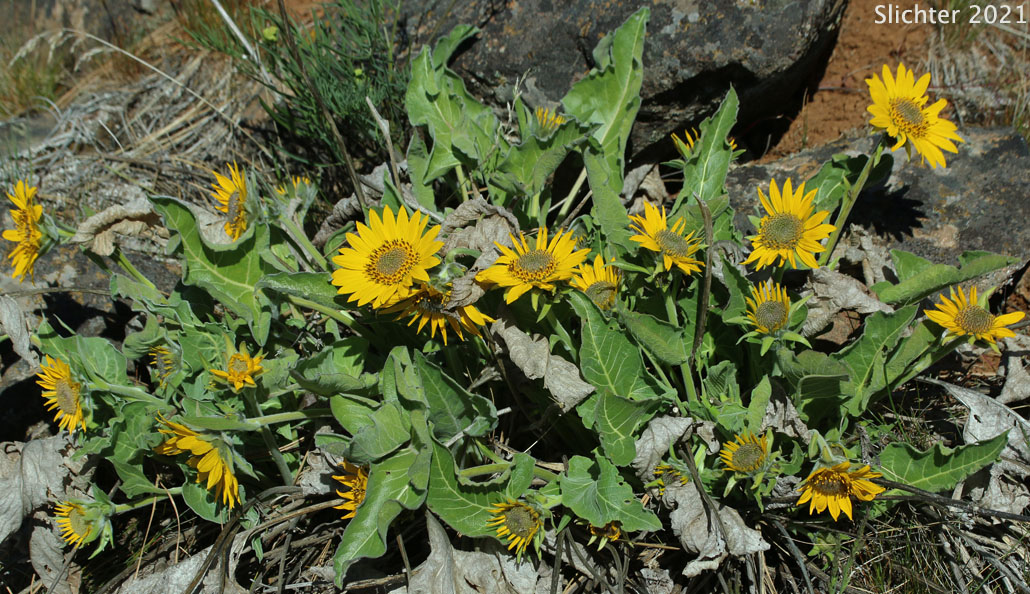
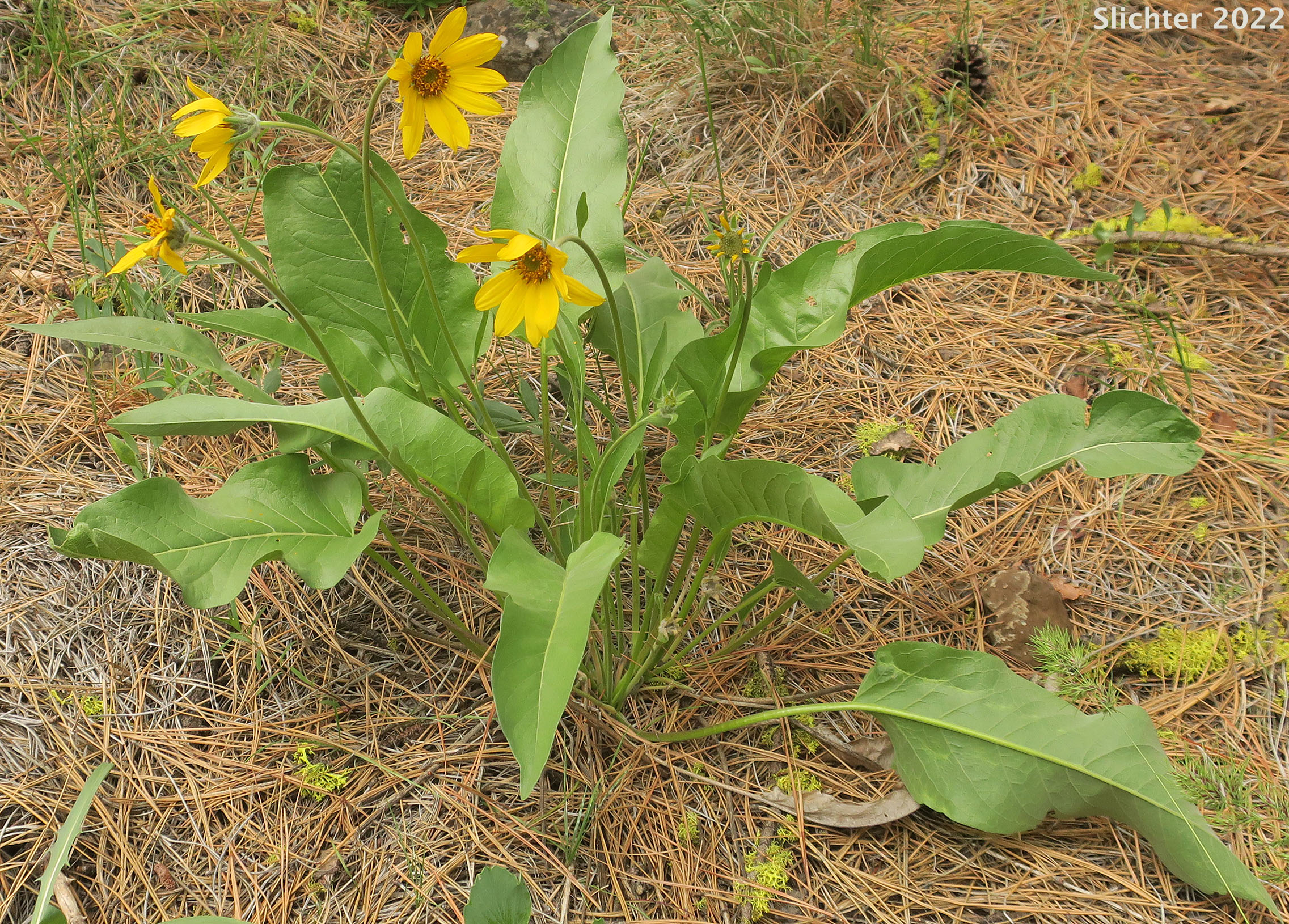
Carey's balsamroot blooming south of Box Canyon Road near the southern boundary for the Simcoe Mountains Unit, Klickitat Wildlife Area......April 15, 2021.
 -
- 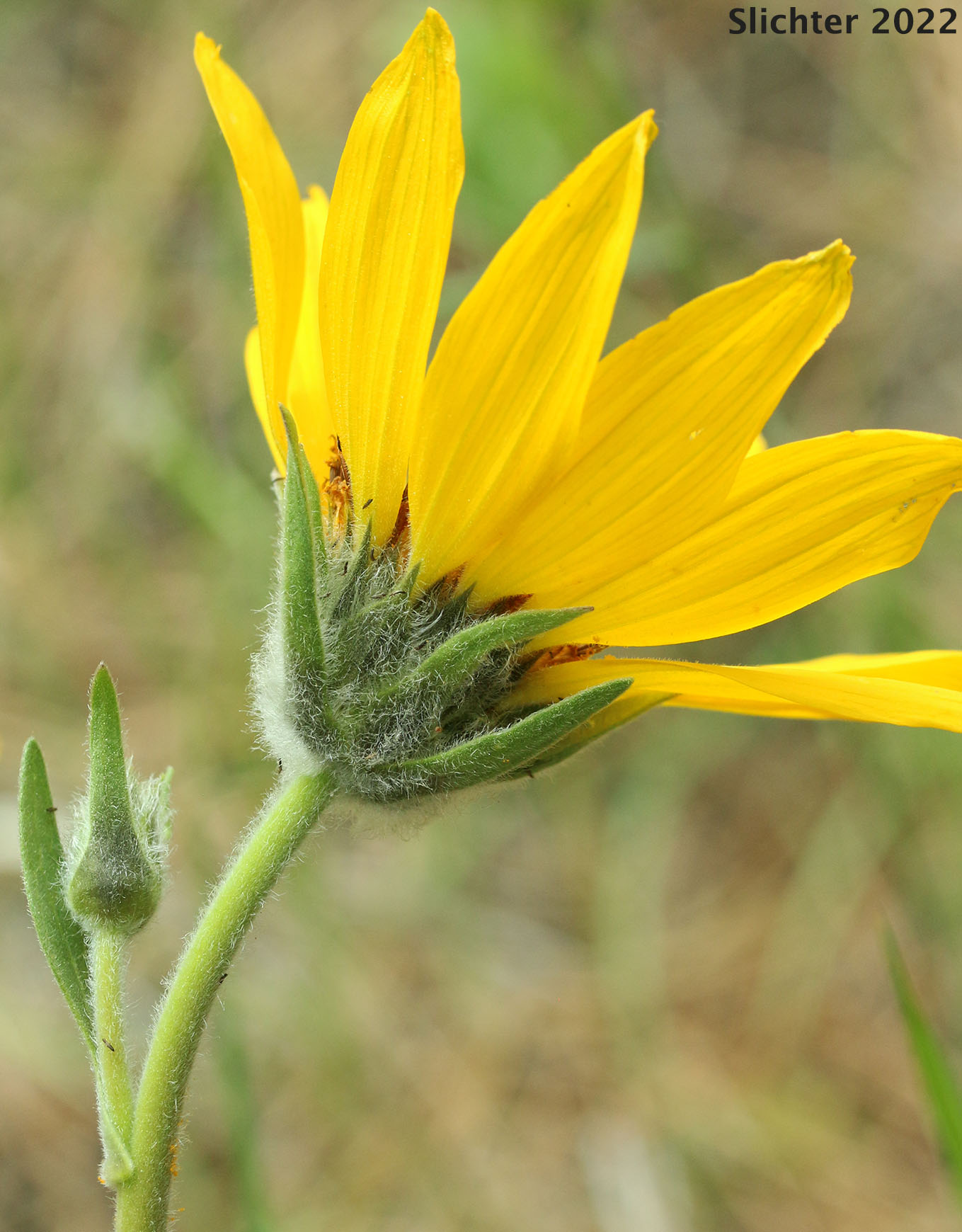
Carey's balsamroot observed above Dry Creek about one mile up from Wenas Creek, DNR lands in Yakima County, WA.....May 29, 2022.
 -
- 
Carey's Balsamroot from the Rattlesnake Hills northeast of Toppenish, WA....5/10/97.
Paul Slichter
 -
-  -
- 
 -
- 
 -
-  -
- 