[Prairie Stars & Woodland Stars: The Genus Lithophragma East
of the Cascade Mts. of Oregon and Washington]
Smooth Fringecup, Smooth Prairie Star, Bulblet Prairie Star, Bulbous Woodland-star, Bulbiferous Prairie-star
Lithophragma glabrum
Synonyms: Lithophragma bulbifera, Lithophragma glabra
 -
- 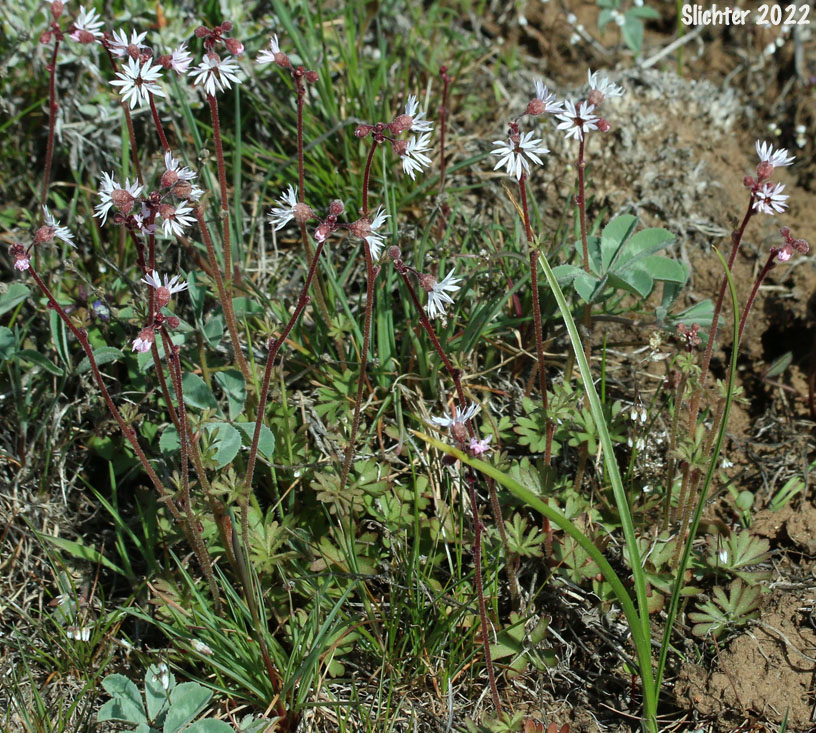
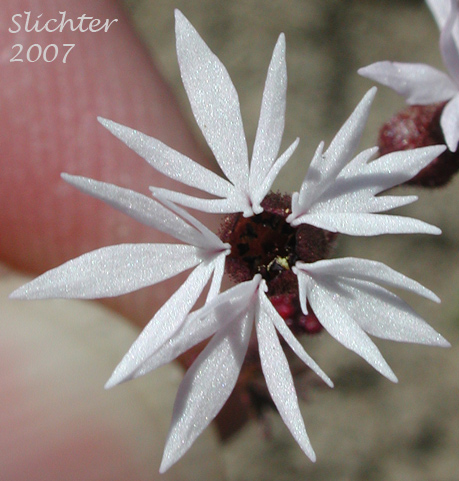
The photo at left shows the flower of bulblet prairie star as seen from from the sagebrush steppe at Upper Cowiche Canyon, a BLM site at the western outskirts of Yakima, WA.........March 28, 2007. Note the deeply cut petals. The photo at right shows bulblet prairie star on BLM lands along Box Canyon Road about three-quarters of a mile east of the gated trailhead at the end of the driveable road, north-central Klickitat County, WA......April 1, 2022.
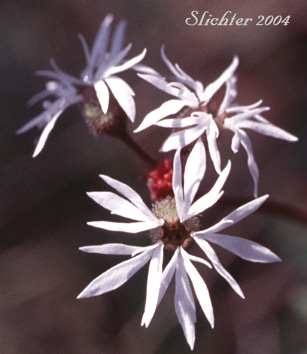 The
photo at right shows a close-up of the flowers of bulblet praire star as seen
at Wasco Butte in the Columbia River Gorge.........April 1999.
The
photo at right shows a close-up of the flowers of bulblet praire star as seen
at Wasco Butte in the Columbia River Gorge.........April 1999.
Characteristics:
This species is now considered as part
of the genus Lithophragma glabrum.
Also known as rock star or fringecup, bulblet prairie star is
an attractive perennial with stems arising 10-20 cm from a cluster of small
basal leaves. The herbage of stems and leaves is typically spreading glandular-hairy
but plants may also be glabrous (See the photo below.). When present, the gland
tips are often purplish. The stems and inflorescence are often reddish-purple
in color. The basal leaves are cleft to the base into 3-5 wedge-shaped segments
which are each individually lobed. The basal leaves are typically divided to
or very near their base, and they are smooth-surfaced to very lightly haired.
The 2-5 stem leaves are similar to the basal leaves, but reduced in size. They
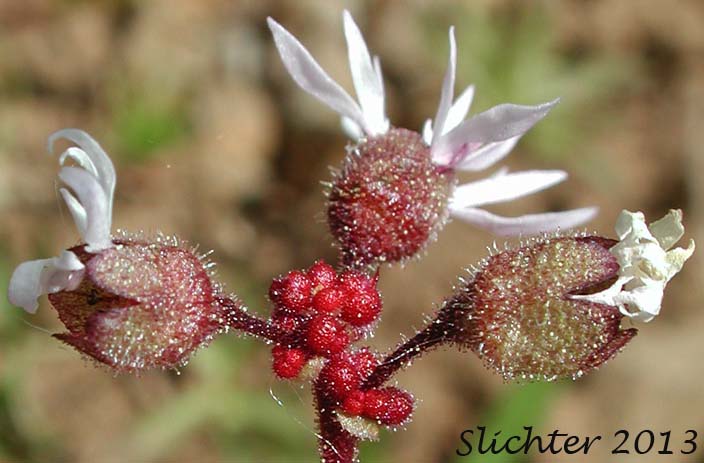
may bear several small reddish-purple bulblets within their axils.
The inflorescence is elongate and usually compound with the
lower flowers often replaced by bulblets. The flowers bear 5 white to pinkish-tinged
petals. The blades of the petals are cuneate-obovate in outline and usually
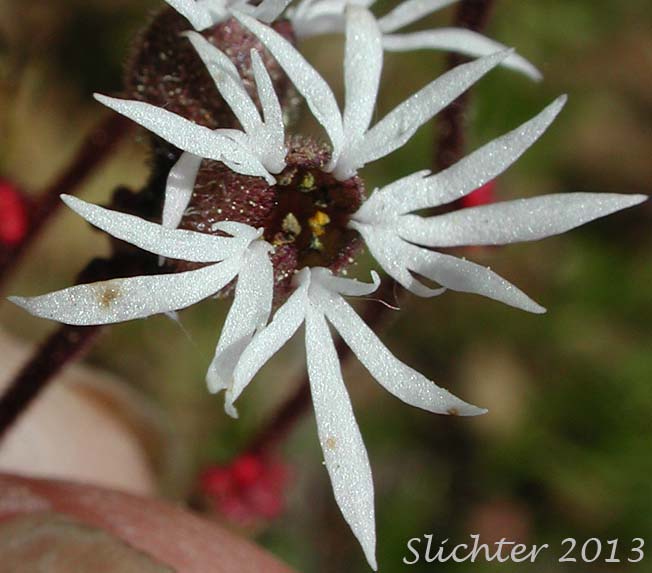
less than 8 mm long. The petals are 3-5 cleft, with each division further divided,
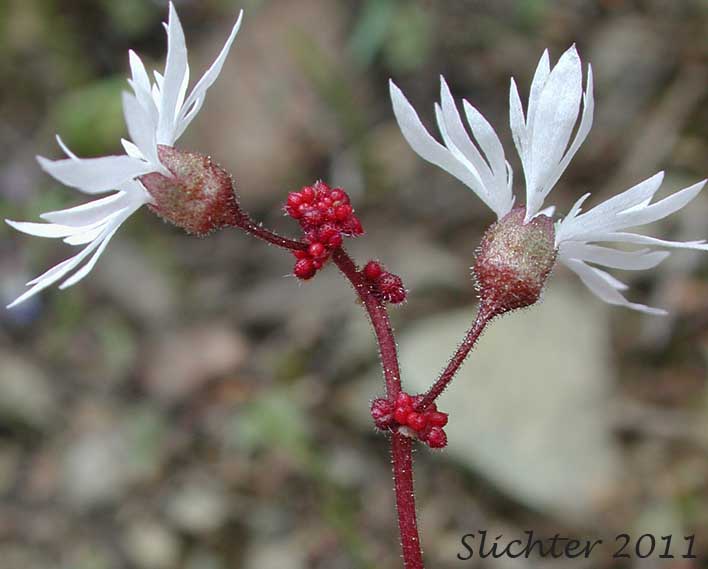
often deeply, giving the petals a tattered look (See the photos on this page.).
The calyx is cup-like, or broadly rounded at the base, and from 2.5-3.5 mm long
in flower.
Habitat:
Bulblet prairie star may be found on open, grassy to sagebrush covered slopes,
and among ponderosa pine and Douglas fir in open forests.
Range:
Bulblet prairie star may be found from southern British Columbia
south to the east of the Cascades to California. It may be found east to Alberta,
the Dakotas, and Colorado.
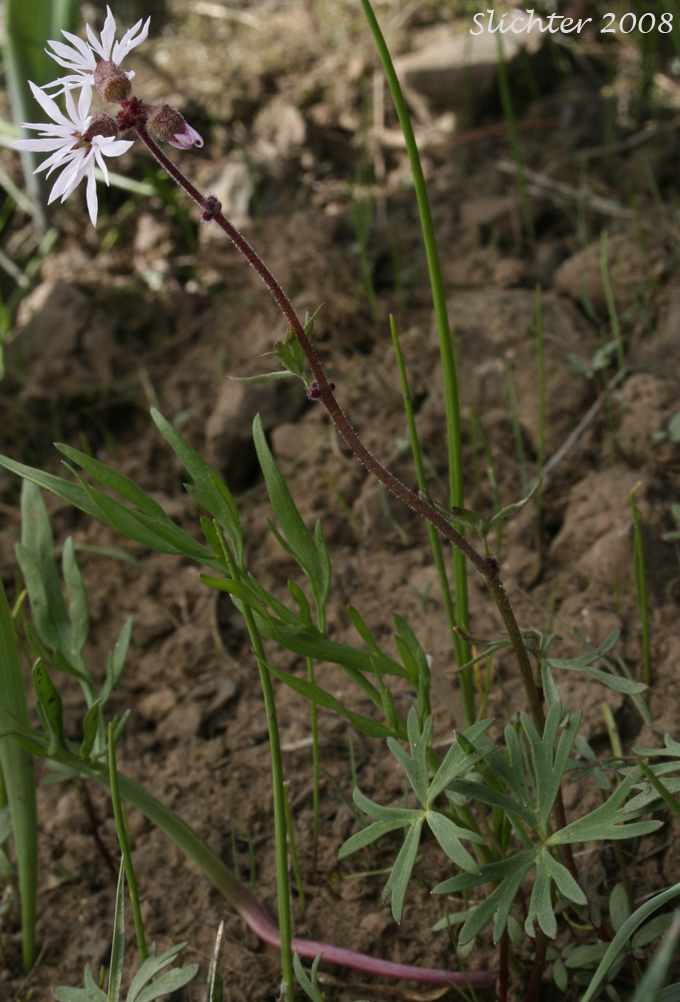
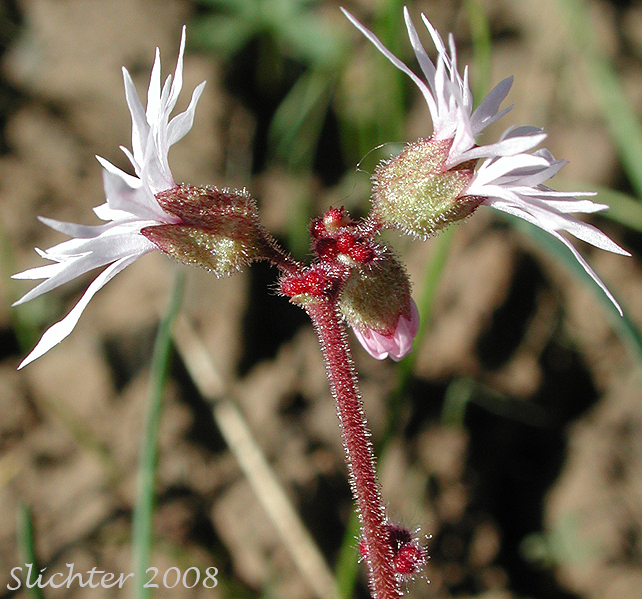
This photo shows a close-up of bulblet prairie star as seen on moist soils (where the snow has just melted) at Buckhorn Lookout on the western edge of the Imnaha Canyon in the Wallowa-Whitman National Forest.........June 27, 2008.
 -
-  -
- 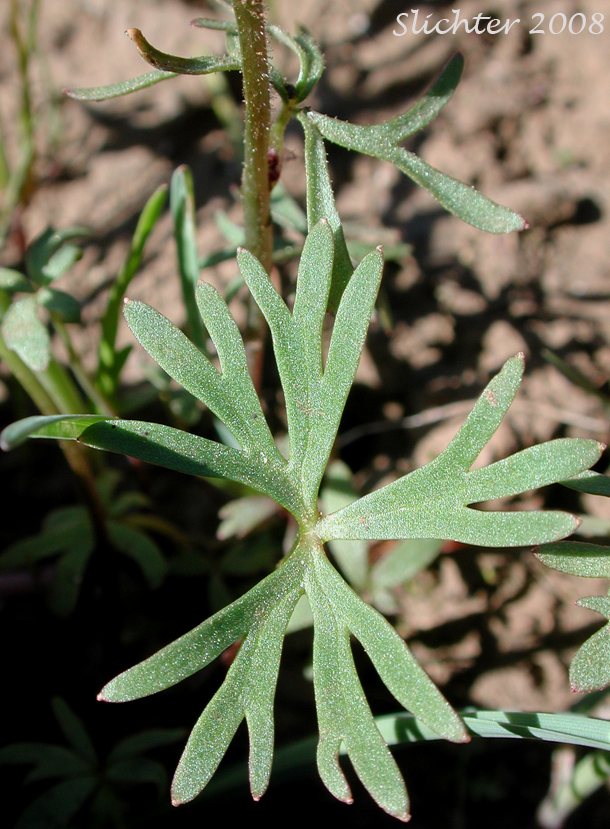
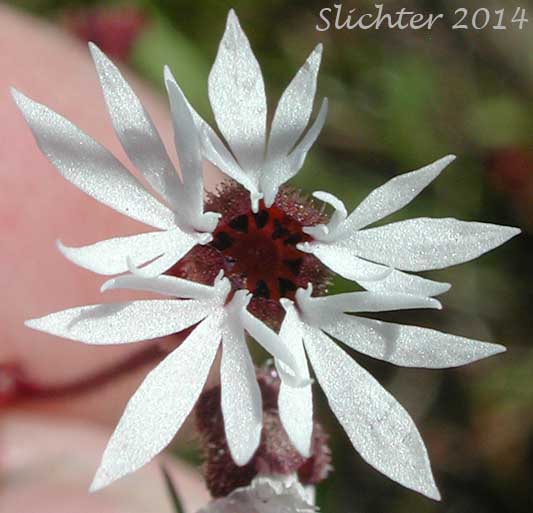
These 3 photos show close-up views of bulblet prairie star as seen on moist soils (where the snow has just melted) at Buckhorn Lookout on the western edge of the Imnaha Canyon in the Wallowa-Whitman National Forest..........June 27, 2008.
 -
-  -
- 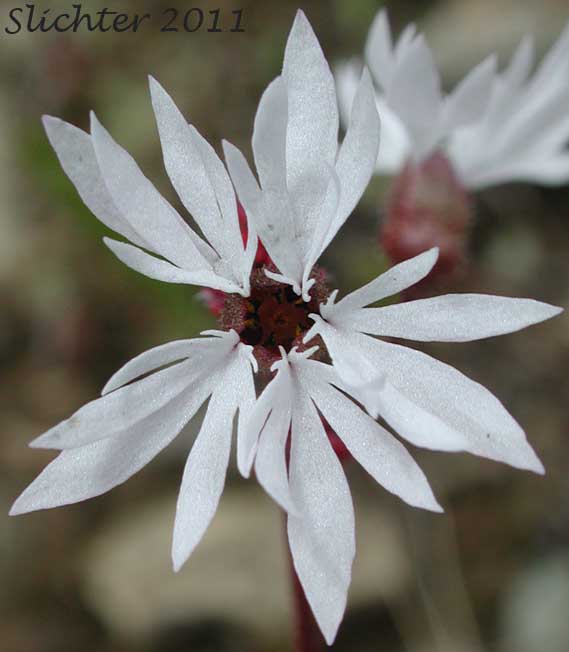
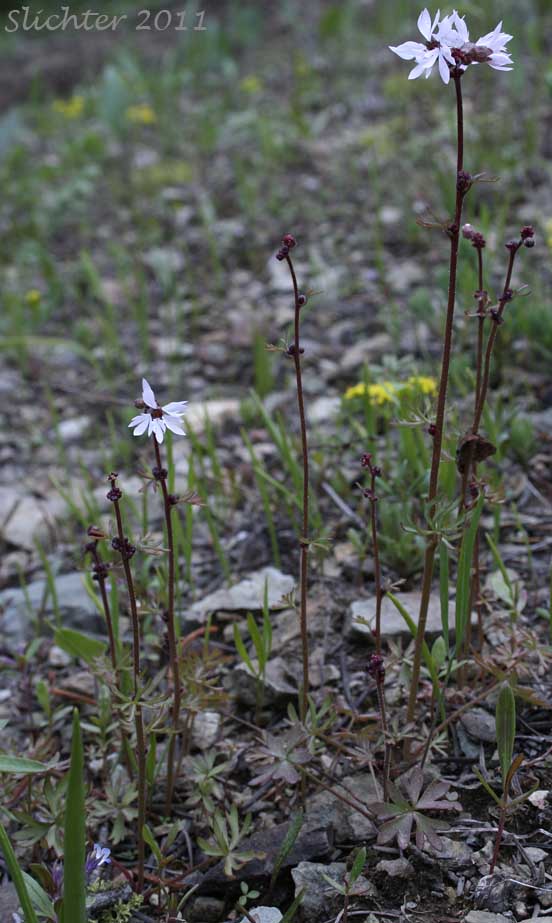
Examples of bulblet prairie star as seen along the Lookout Mountain Trail, Okanogan National Forest..........June 10, 2011.
 -
-  -
- 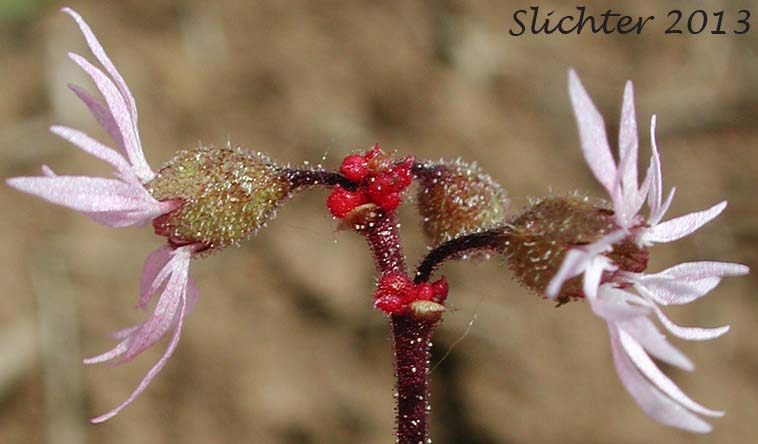
Bulblet prairie star as seen along Road 35 on Table Mountain, Wenatchee National Forest.........June 4, 2013.
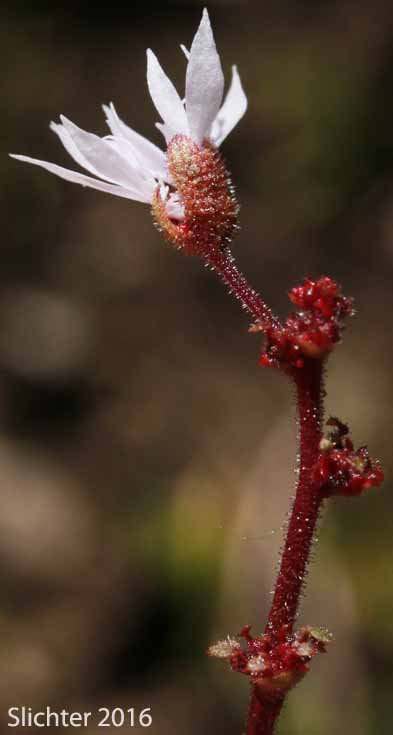 -
- 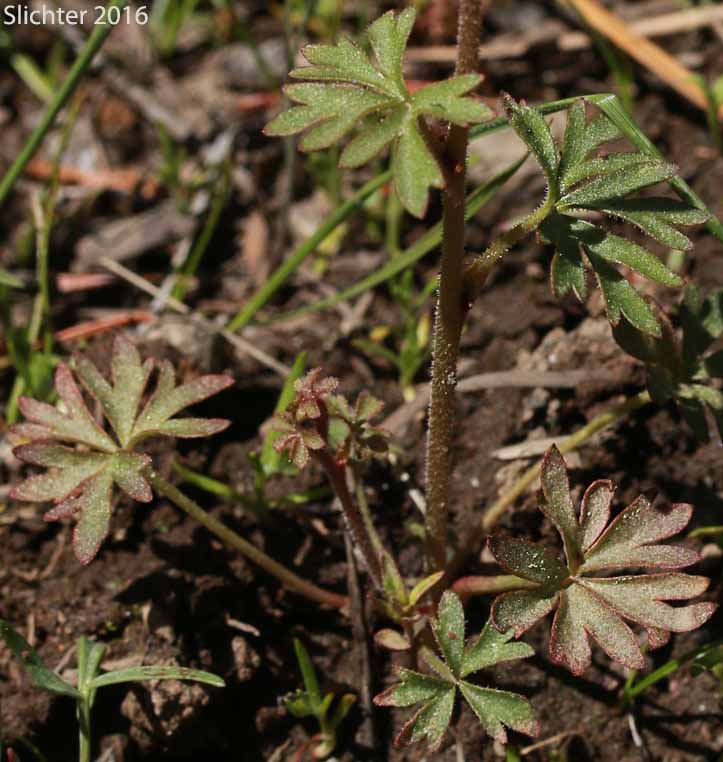 -
- 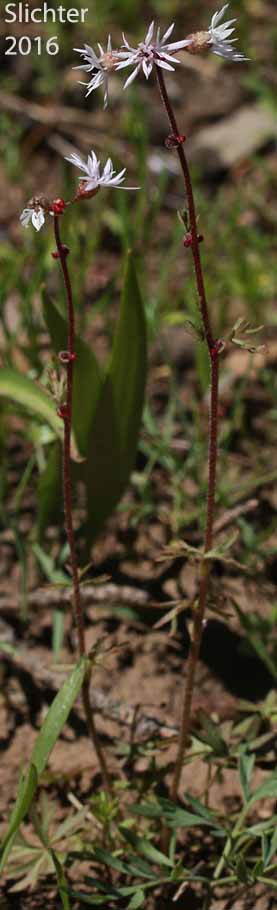
Bulblet prairie star as seen about one mile north of the south trailhead for the
Round Mountain South Trail #805, Ochoco National Forest.........May 28, 2016.
 -
- 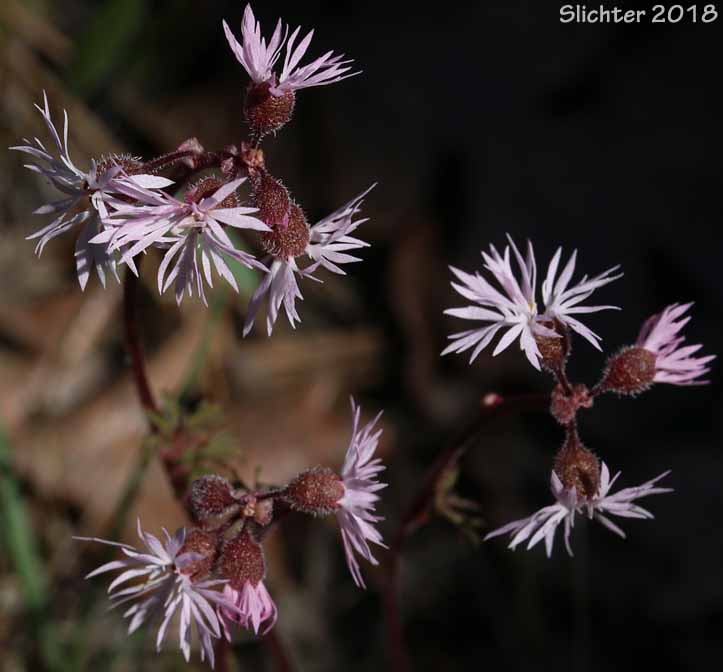
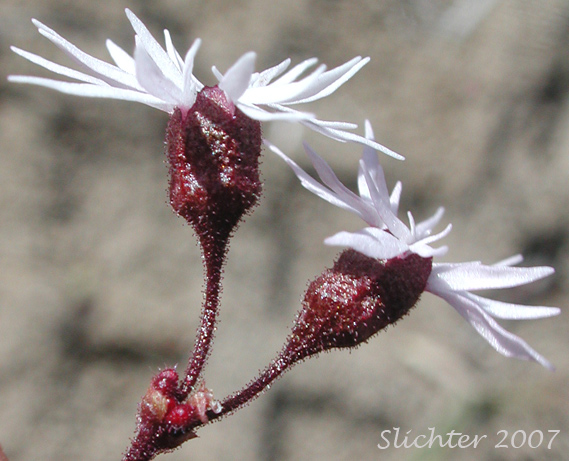
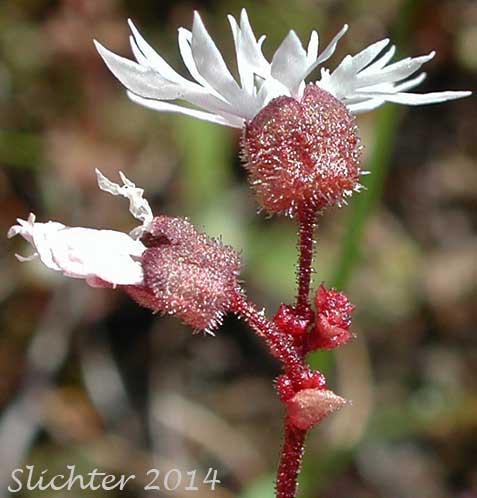
The photo at left shows a close-up sideview of the inflorescence of bulblet prairie star as seen from from the sagebrush steppe at Upper Cowiche Canyon, a BLM site at the western outskirts of Yakima, WA..........March 28, 2007. Note the numerous short, gland-tipped hairs as well as the bulblets at the base of both flowers. The photo at right shows bulblet prairie star as seen at the Simcoe Mountains Unit of the Klickitat Wildlife Area.......April 20, 2018.
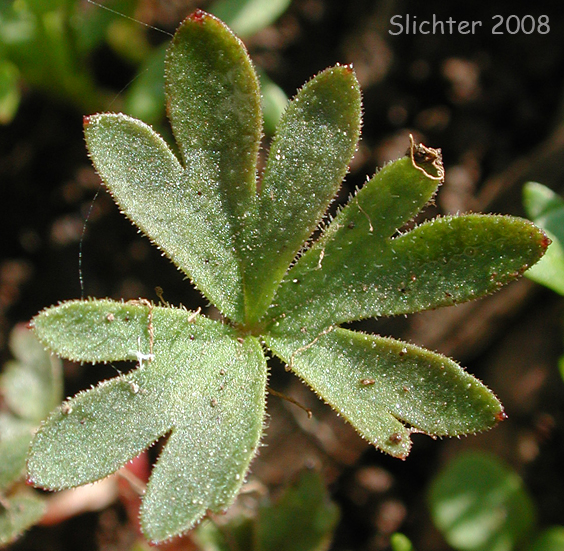
The photo above shows a close-up of a basal leaf of bulblet prairie star as seen on the ridge just west of Misery Campground in the Umatilla N.F. of southeastern Washington...........July 7, 2008. Note the numerous glands on the surface of the leaf.
 -
- 
Bulblet prairie star as seen around the edges of vernally moist pools at the junction of Miller Ranch Road and the Sprague Highway on a parcel of BLM land at the Fishtrap Lake Unit, eastern Washington...........April 28, 2014.
Paul Slichter