[Larkspurs: The Genus Delphinium East of the Cascade Mountains of Oregon and Washington]
Upland Larkspur, Two-lobe Larkspur
Delphinium nuttallianum
Synonyms: Delphinium bicolor, Delphinium decorum ssp. tracyi, Delphinium nelsonii, Delphinium nuttallianum var. fulvum, Delphinium nuttallianum var. levicaule, Delphinium nuttallianum var. nuttallianum, Delphinium pauciflorum, Delphinium sonnei
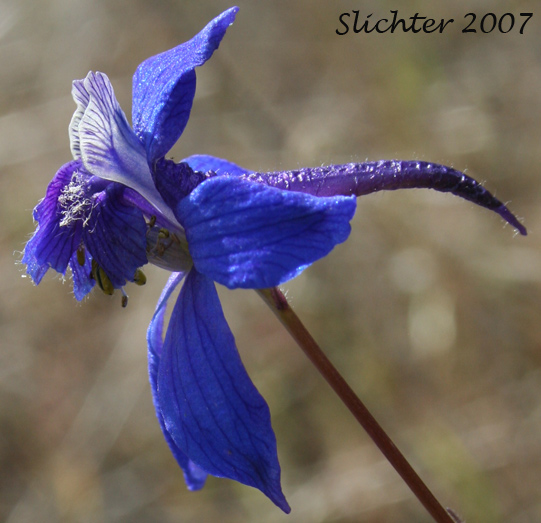
The photo above shows a close-up of the flower of upland larkspur. Note the
prominent cleft in the lower petals, and that the upper is whitish and lower
petals are blue on this individual with abundant purplish penciling.
Photographed on a basalt outcrop along Oregon Highway 219 east of Clarno, OR.........April 19, 2007.
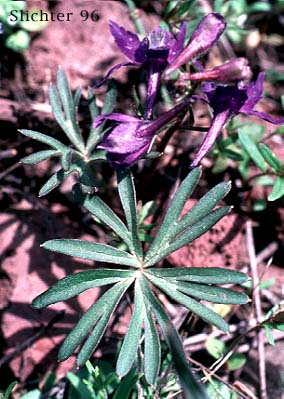 Photo at right represents
upland larkspur from Winter Ridge, Fremont N.F., Lake County, OR........late May,
1996. Note the thin leaf segments.
Photo at right represents
upland larkspur from Winter Ridge, Fremont N.F., Lake County, OR........late May,
1996. Note the thin leaf segments.
Characteristics:
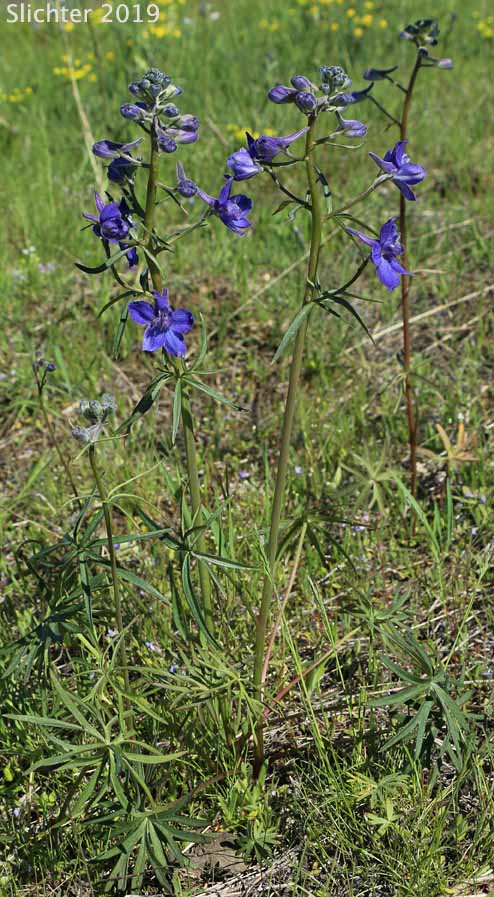
Upland larkspur is an attractive perennial wildflower suitable
for the early season rock garden. It usually has one erect, unbranched stem
from 12-40 cm high. The herbage of the stems is very variable, ranging from
hairless to covered with short, fine hairs, or occasionally longer hairs. Gland-tipped
hairs may occasionally be found. Only a few leaves are present, and these are
mainly basal or located low on the stems. The leaves are long petioled with
the larger blades measuring from 2-6 cm wide, the margins parted into numerous
linear or oblong-lanceolate segments. The bracts are leaf-like but linear.
The racemes are hirsute with from 3-15 flowers. The racemes
tend to appear loosely flowered. The flowers are nodding, and are dark- to purplish-blue.
Flowers that are purplish or lavender are occasionally seen. Individual sepals
are oblong-ovate with obtuse to acute tips. The lowest pair of sepals are typically
longest, measuring from 17-25 mm long. The lateral pair of sepals tend to be
the widest. The spur is long and straight, measuring from 10-20 mm long. The
smaller petals are variable in color, ranging from whitish with purplish penciling
to yellowish or bluish. The lower petals, which measure from 3-4 mm long are
deeply bilobed, with the cleft from 1/3-2/3 the length of the petal. They are
commonly lined with purple. The pedicels are thin and ascending. The fruits
are 10-22 mm long and glabrous to sparsely haired. This species blooms earlier
than most of the other larkspurs east of the Cascade Mts.
Habitat:
Upland larkspur is variable in its habitat. It is found from
moist upland meadows through open forests and even onto dry, sandy plains or
mixed in with sagebrush. One prerequisite seems to be that it needs well drained
soil.
Range:
Upland larkspur is found from southern British Columbia south
along the foothills of the Cascade Range into northern California, eastward
to Alberta, and south to Arizona.
 -
- 
 -
- 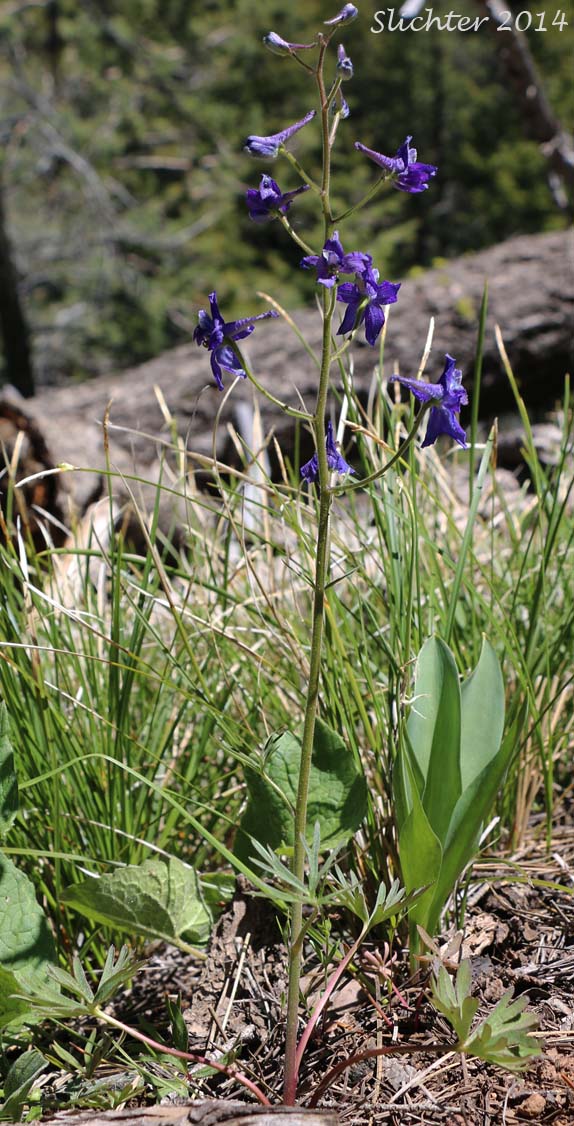
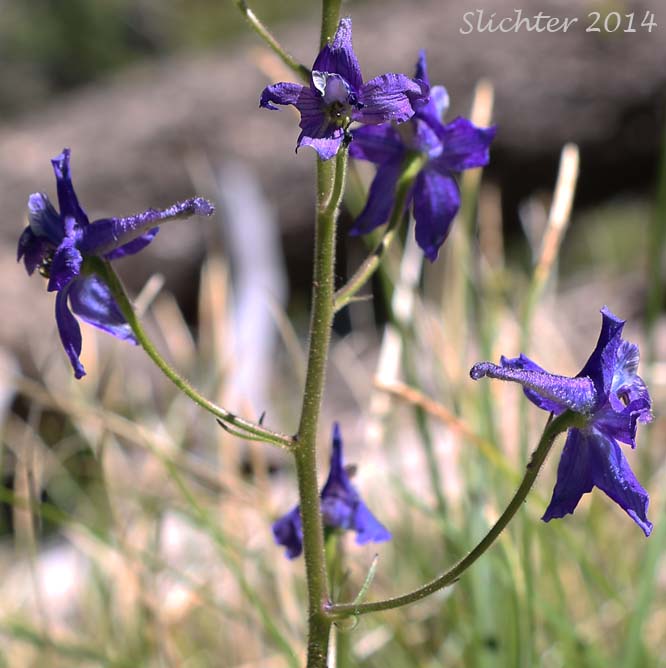
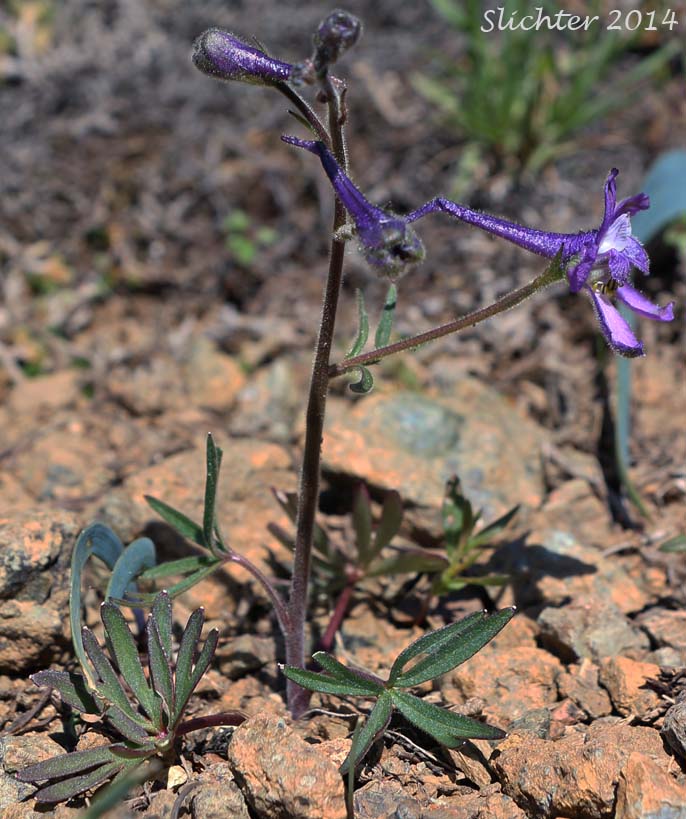
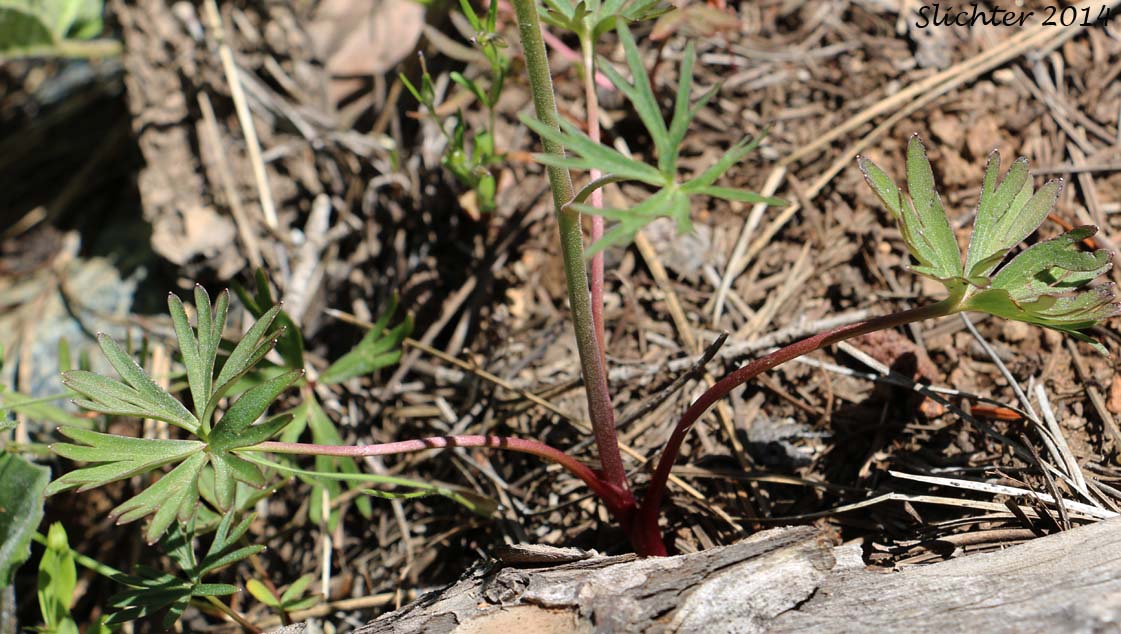
Upland larkspur as seen along the Canyon Mountain Trail, Strawberry Mountian Wilderness.........May 29, 2014.
 -
-  -
- 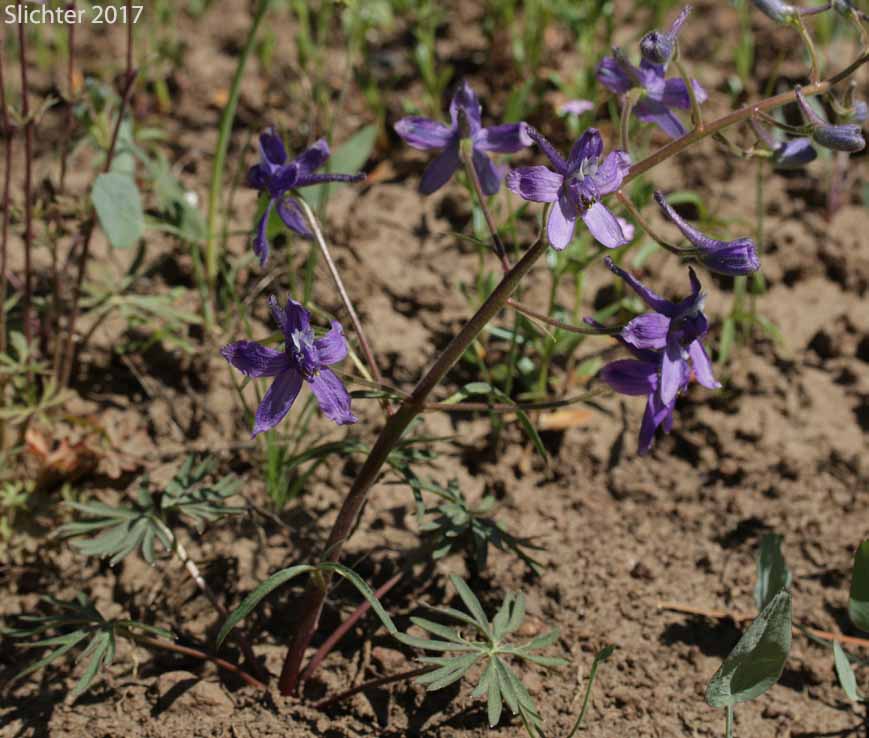
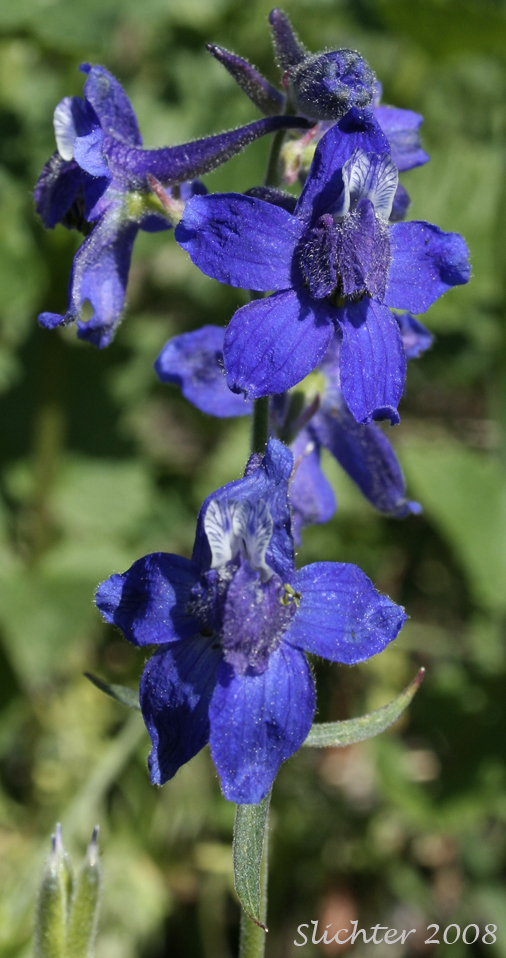
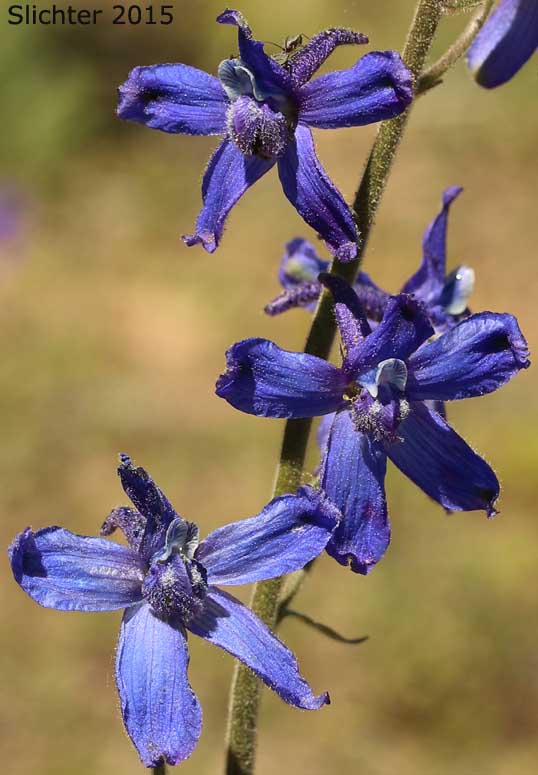
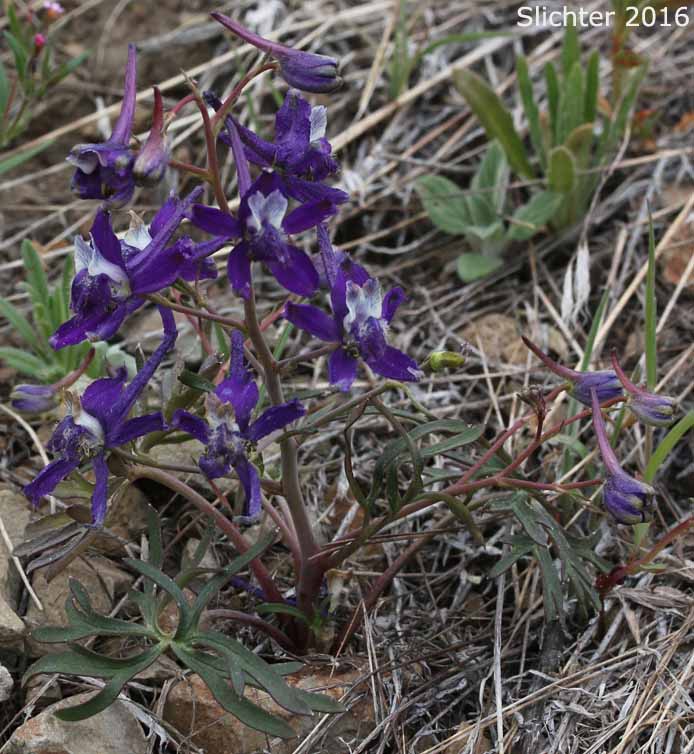
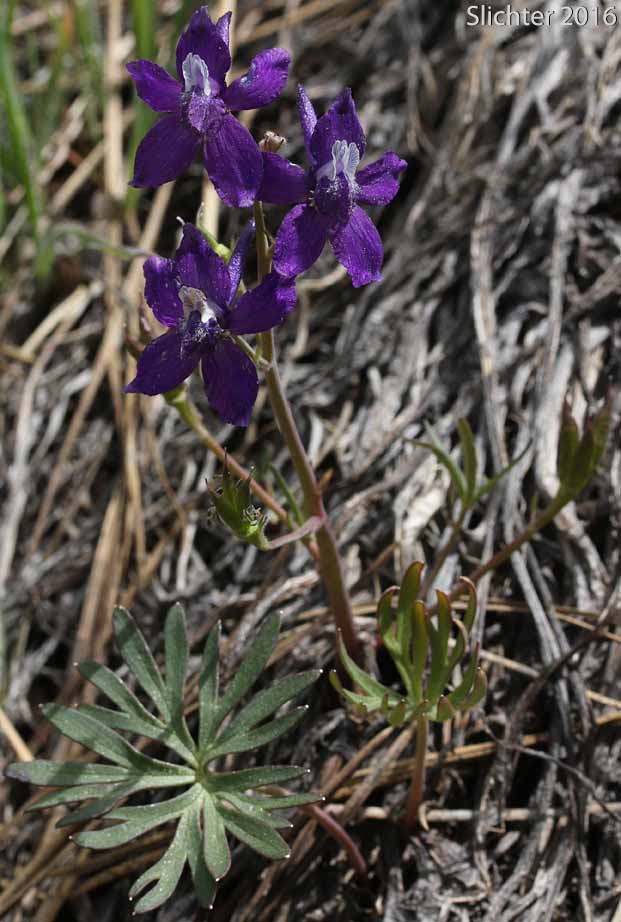
The photo at left shows a close-up of the inflorescence of upland larkspur as seen on moist soils (where the snow has just melted) at Buckhorn Lookout on the western edge of the Imnaha Canyon in the Wallowa-Whitman National Forest........June 27, 2008. The photo at center shows upland larkspur as seen along FS Road #2230 between Mount Pisgah and East Point, Ochoco National Forest.........June 13, 2015. The photo at right shows upland larkspur as seen in scablands along Forest Road 22 about 0.3 miles west of the junction with Forest Road 22-400, Ochoco National Forest.........May 10, 2017.
 -
-  -
- 
 -
-  -
- 
 -
-  -
- 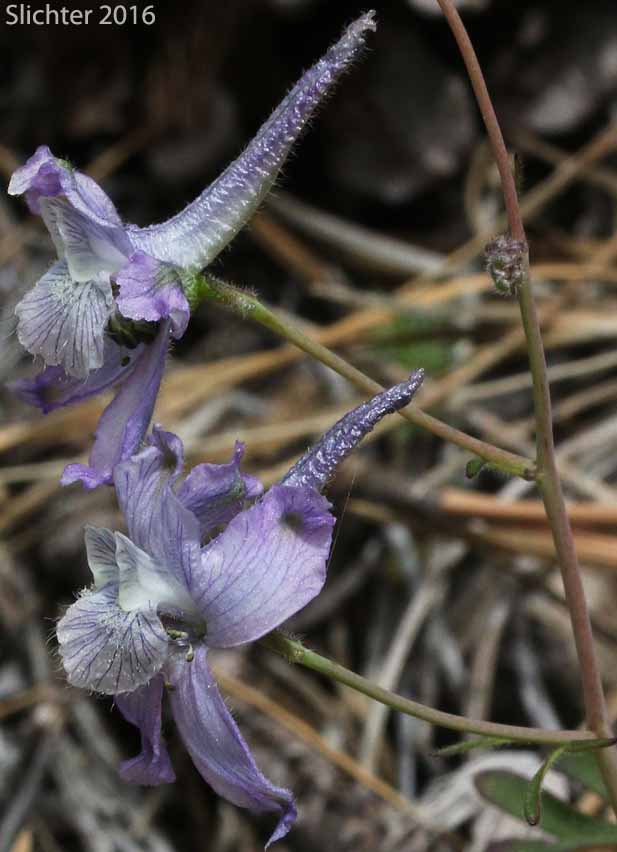
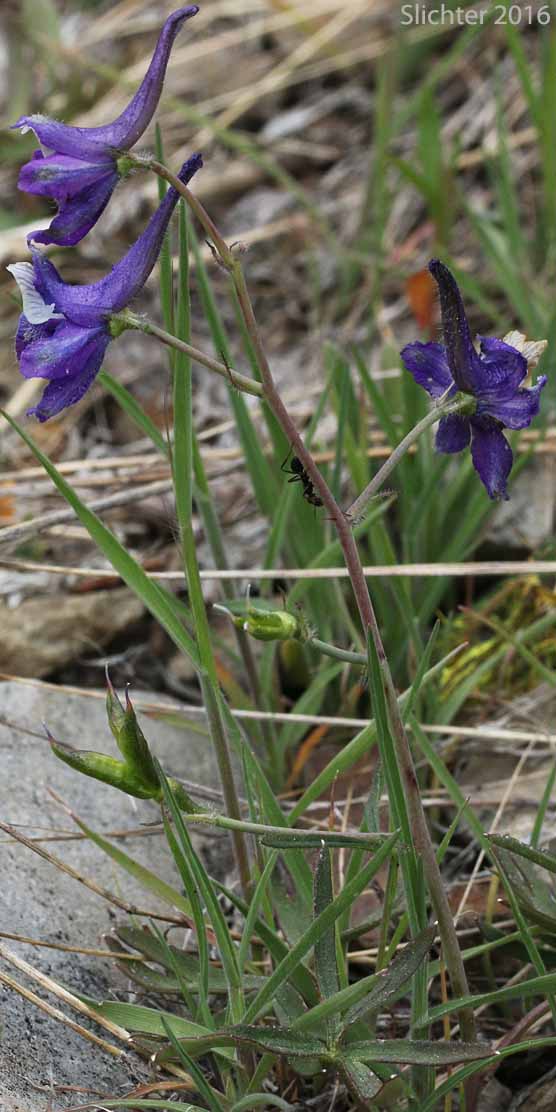
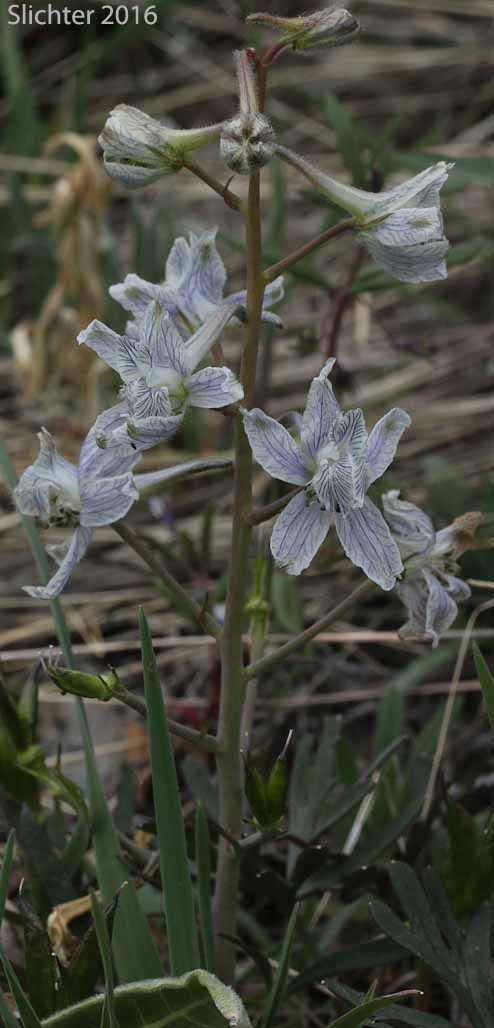
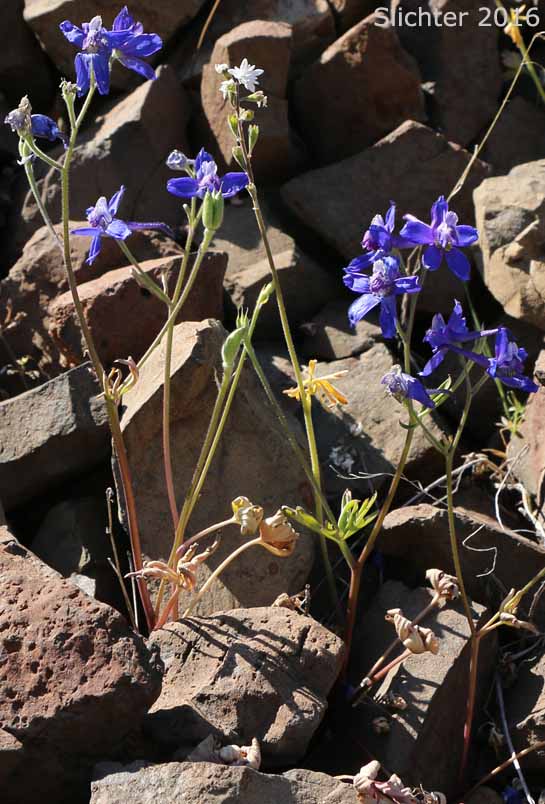
Both blue and pale-flowered forms of upland larkspur as seen along the Fremont National Recreation Trail #160 on the upper west side of Hager Mountain, Fremont National Forest.........May 19, 2016.
 -
-  -
- 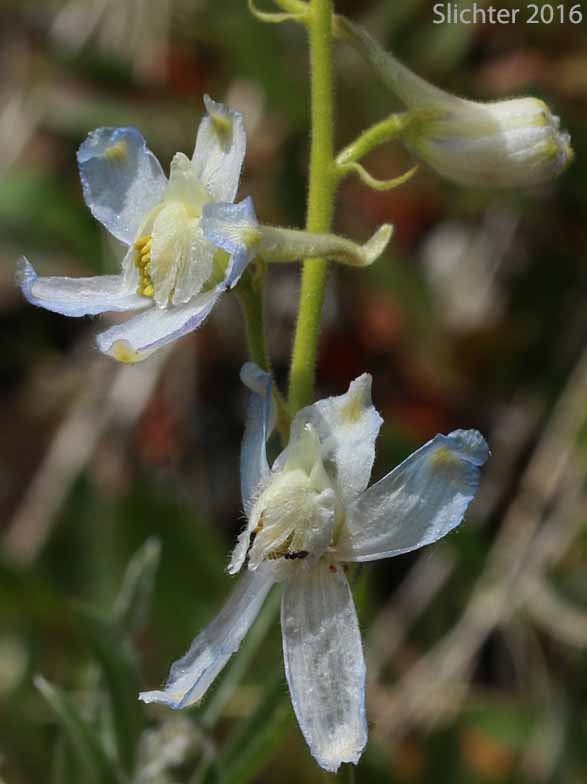
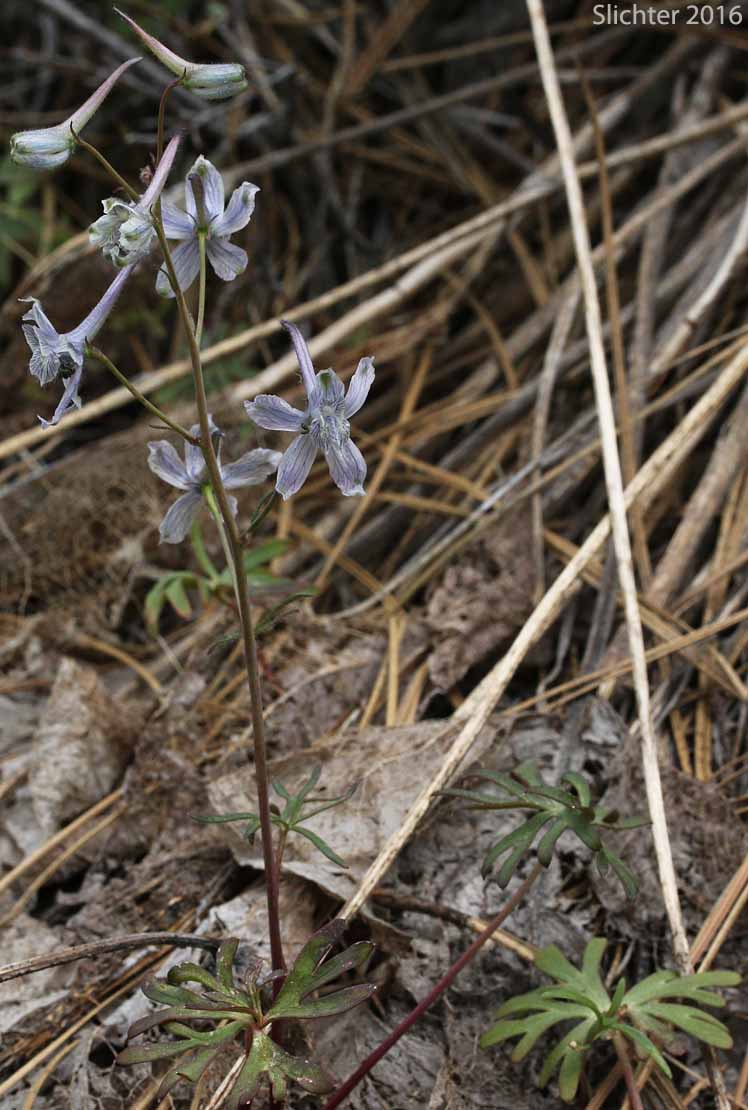
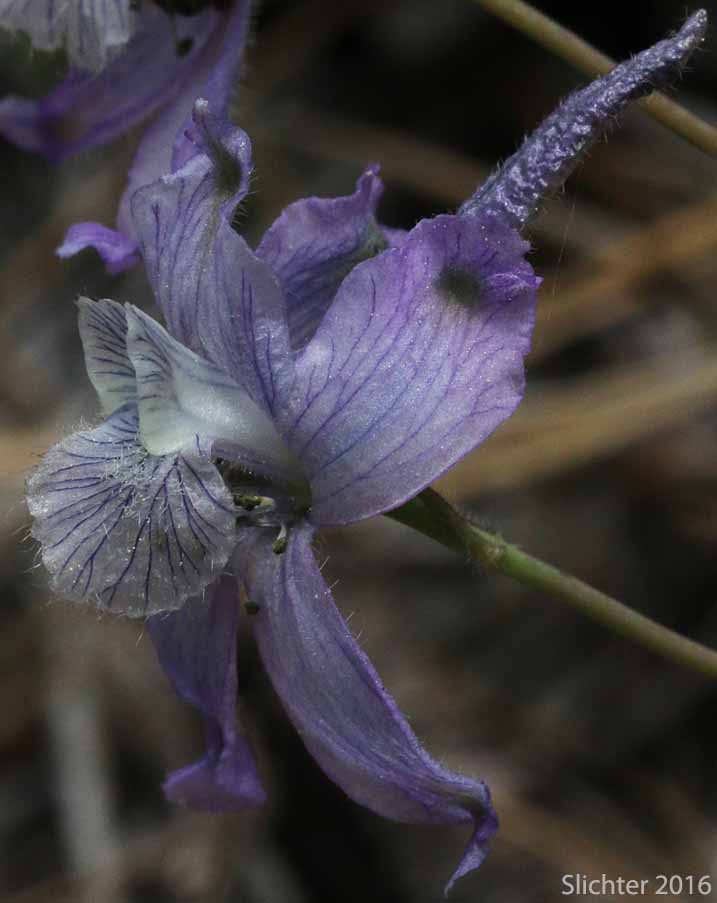
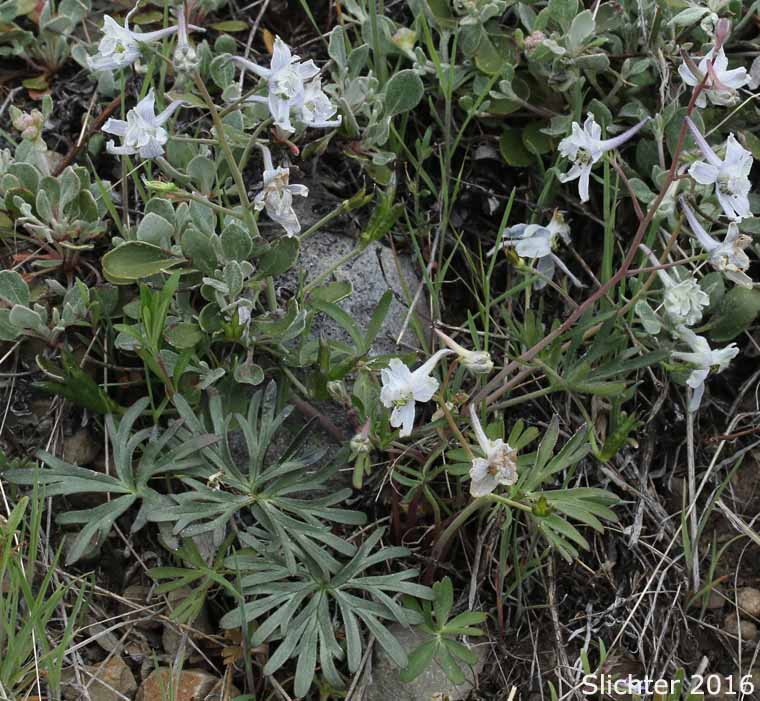
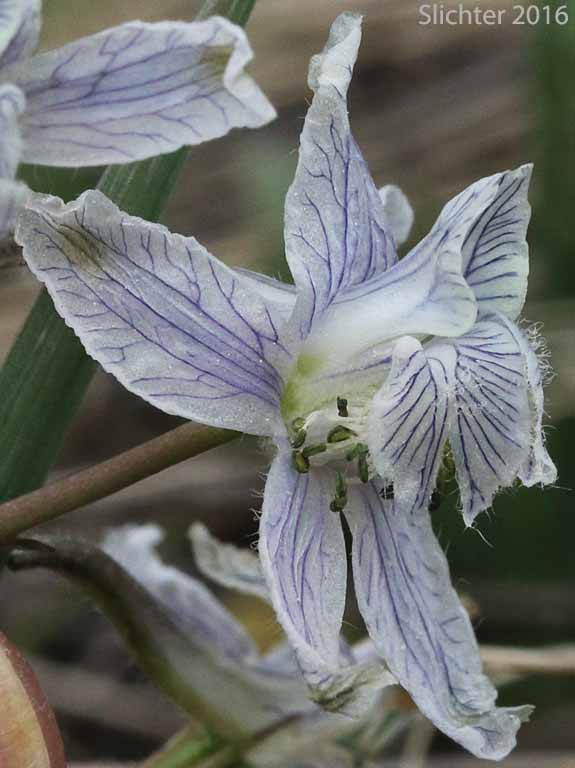
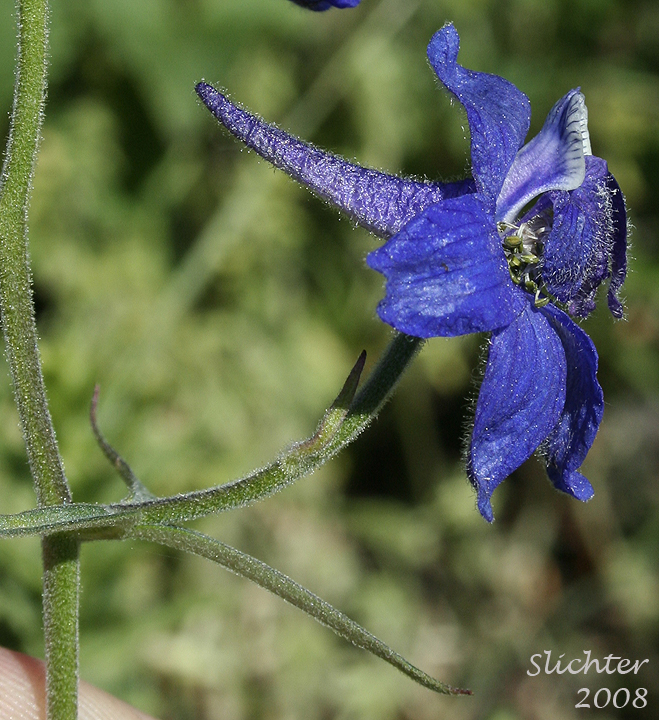
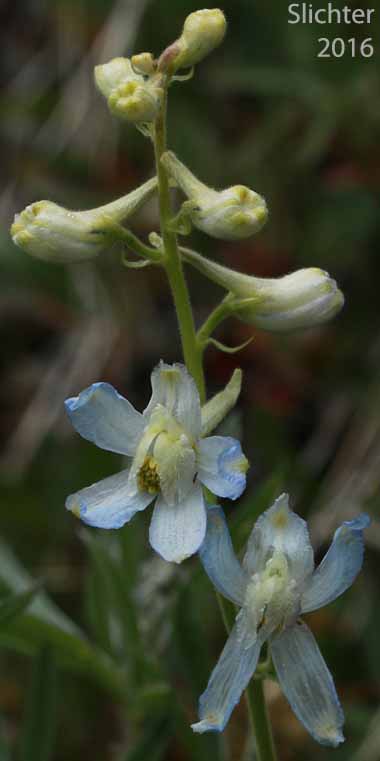
This photo at left showa close-up of the flower of upland larkspur as seen on moist soils (where the snow has just melted) at Buckhorn Lookout on the western edge of the Imnaha Canyon in the Wallowa-Whitman National Forest........June 27, 2008. The photos at center and at right show non-pigmented flowers of upland larkspur as seen along the upper mile of the Wapaloosie Mountain Trail #15 in the Kettle Range, Colville National Forest........June 23, 2016.
 -
- 
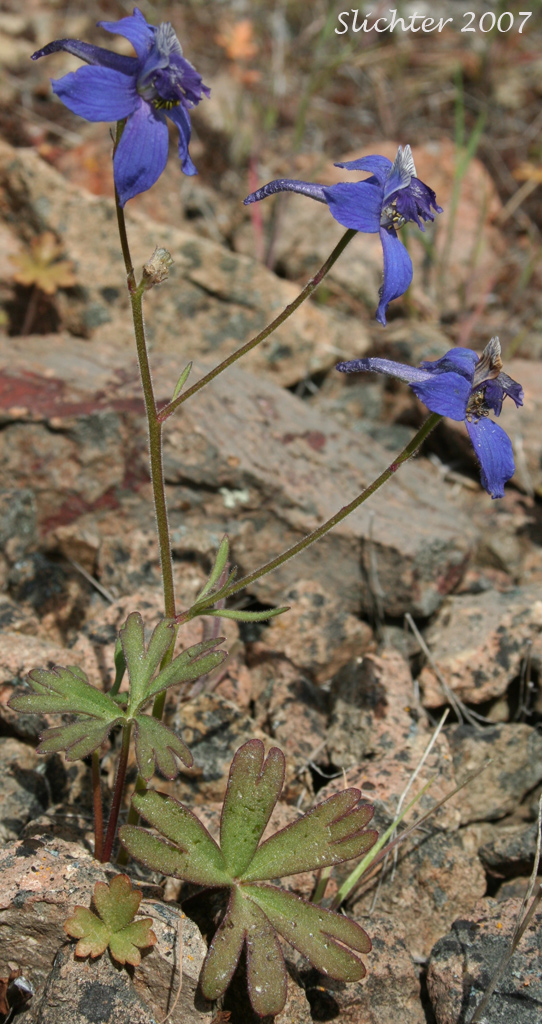
The photo at left shows upland larkspur as seen on a basalt outcrop along Oregon Highway 219 east of Clarno, OR..........April 19, 2007. The photo at right shows upland larkspur as seen on slopes above the eastern bank of the John Day River about two and one-half miles downstream of Oregon Highway 206 in Cottonwood Canyon State Park and adjacent BLM lands........April 9, 2016.
 -
- 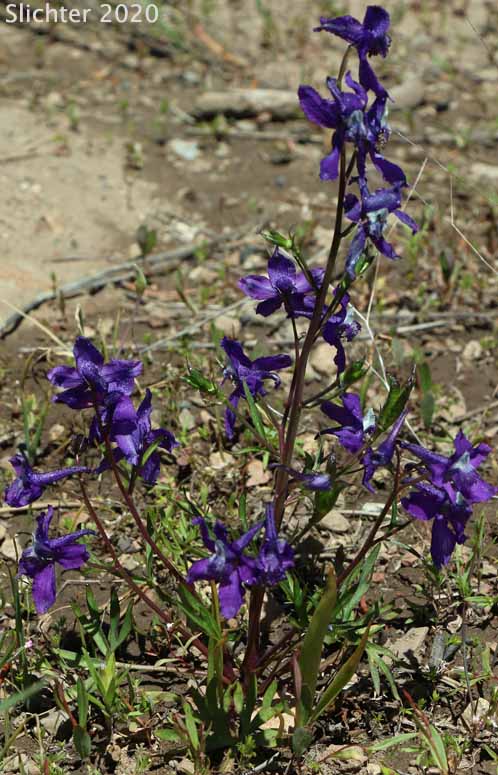
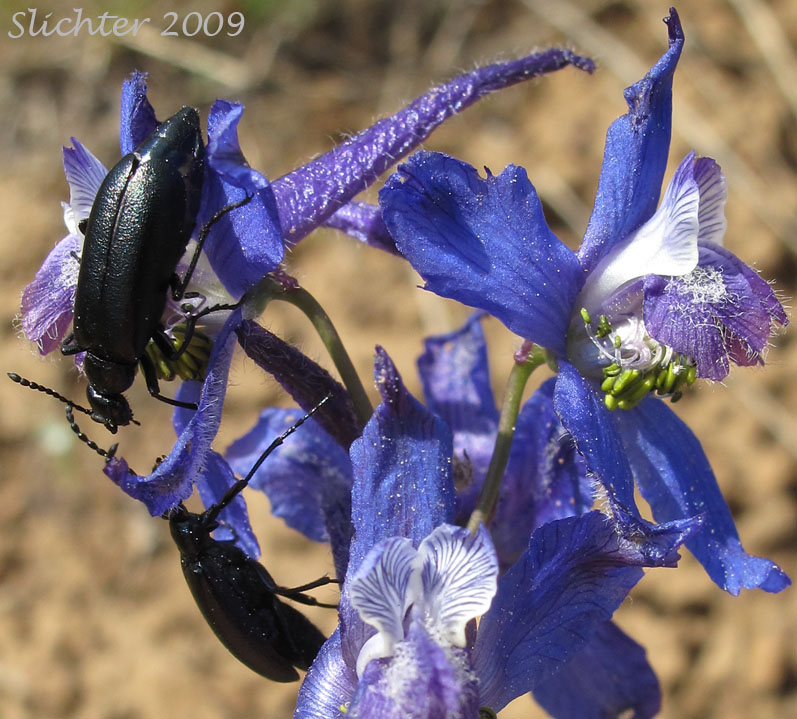
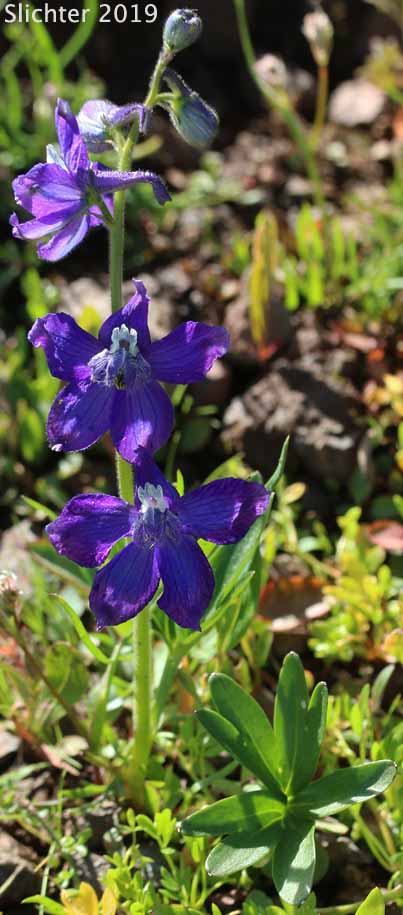
Upland larkspur flowers with visiting black beetles as seen at left along Reecer Creek Road, Wenatchee National Forest..........June 5, 2009. The photo at right shows upland larkspur in bloom along the Hanan Trail #142, Fremont-Winema National Forest......June 17, 2020.
 -
-  -
- 
 -
-  -
- 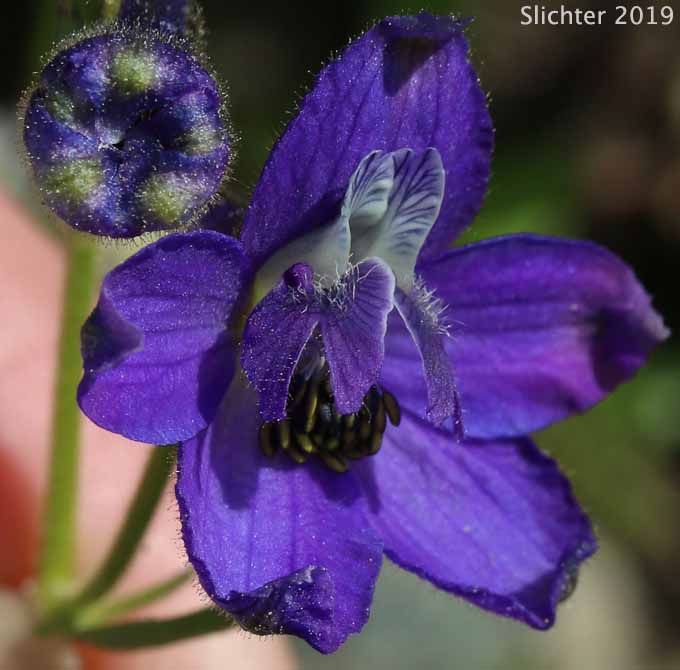
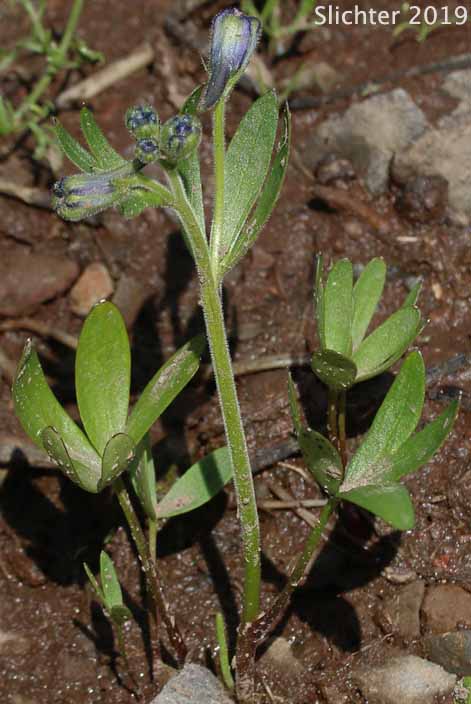
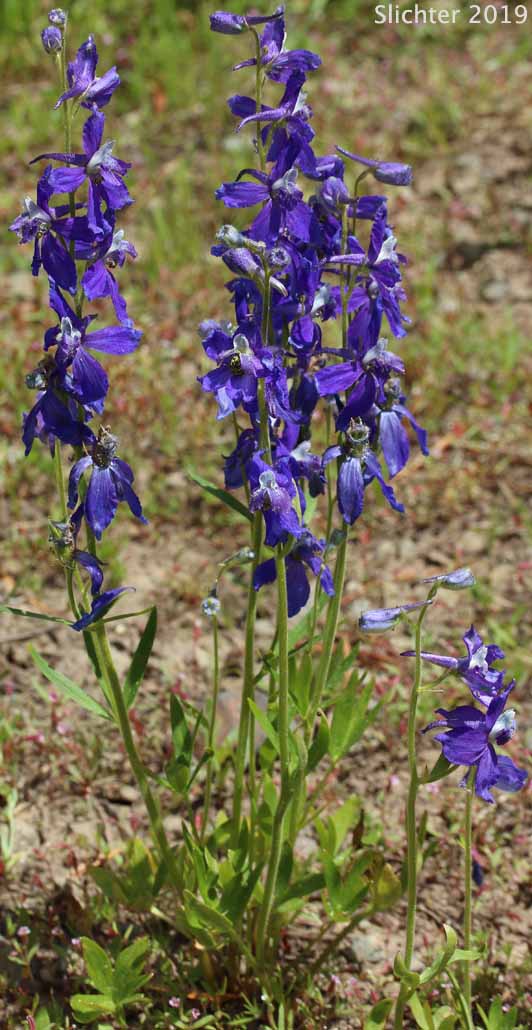
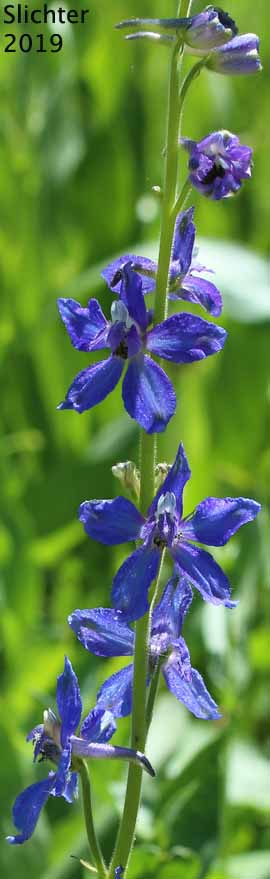
Upland larkspurs observed in bloom along the Deadman Canyon Trail #1869 about one-half mile north of the trailhead at Fish Lake Campground, Wallowa-Whitman National Forest.......July 18, 2019.
 -
- 
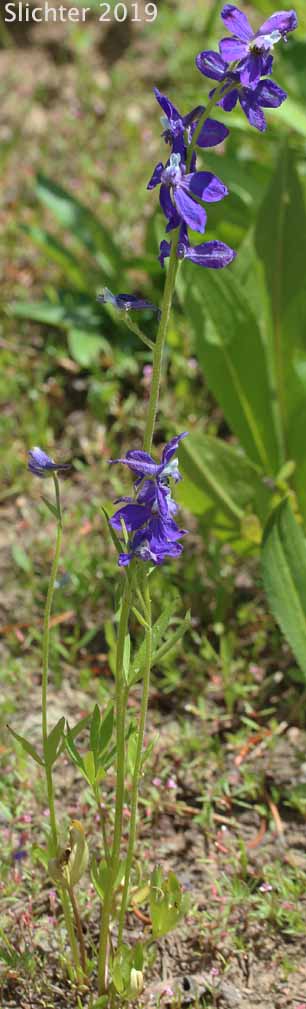
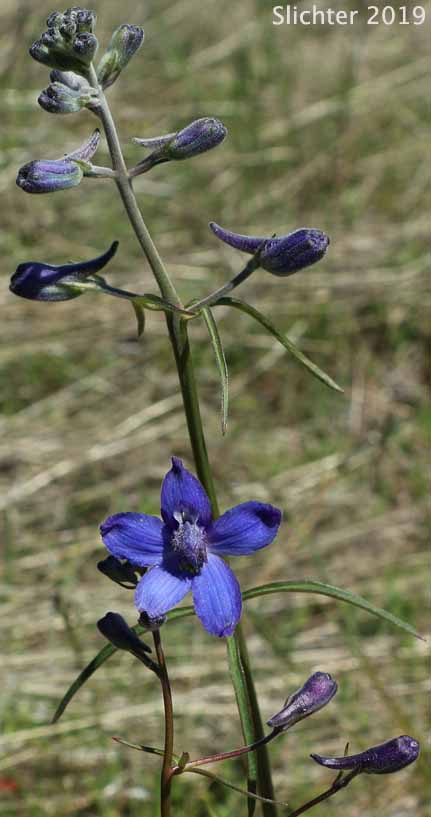
Upland larkspurs beginning to bloom along the northern loop of the Stubblefield Trail, Turnbull National Wildlife Refuge......May 8, 2019.
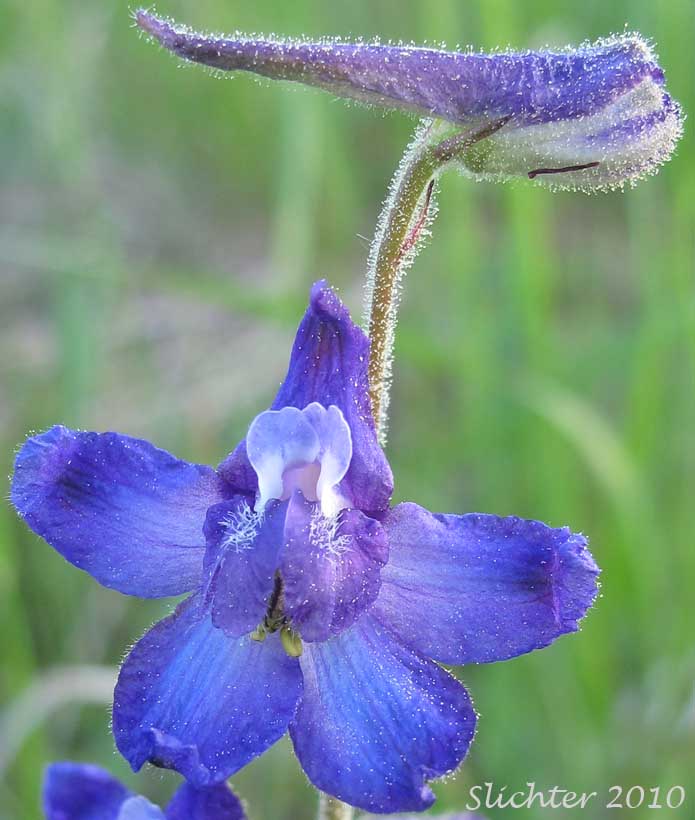
Close-up of the flower of upland larkspur as seen in meadows in Logan Valley just west of Big Creek Campground, Malheur National Forest.........July 1, 2010. Note the numerous gland-tipped hairs on the outer surface of the sepals of the flower in bud as well as on the pedicels.
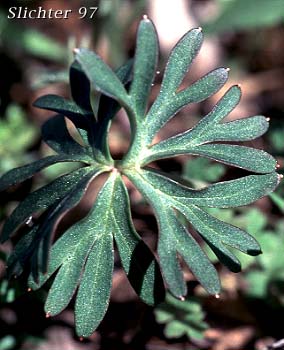
Basal or lower stem leaf of the upland larkspur.
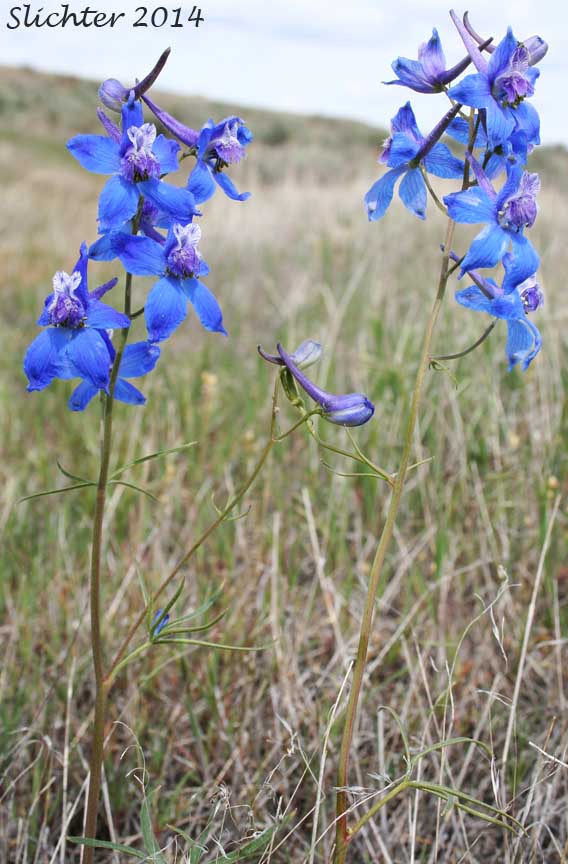 -
- 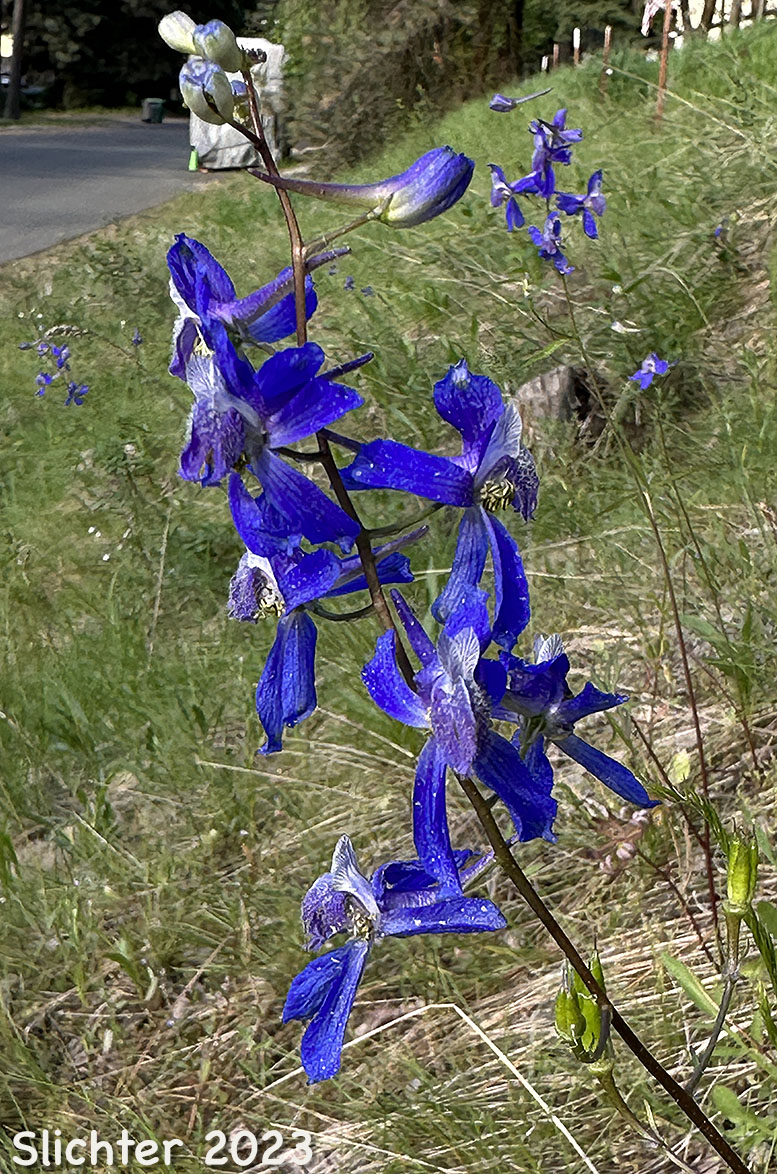
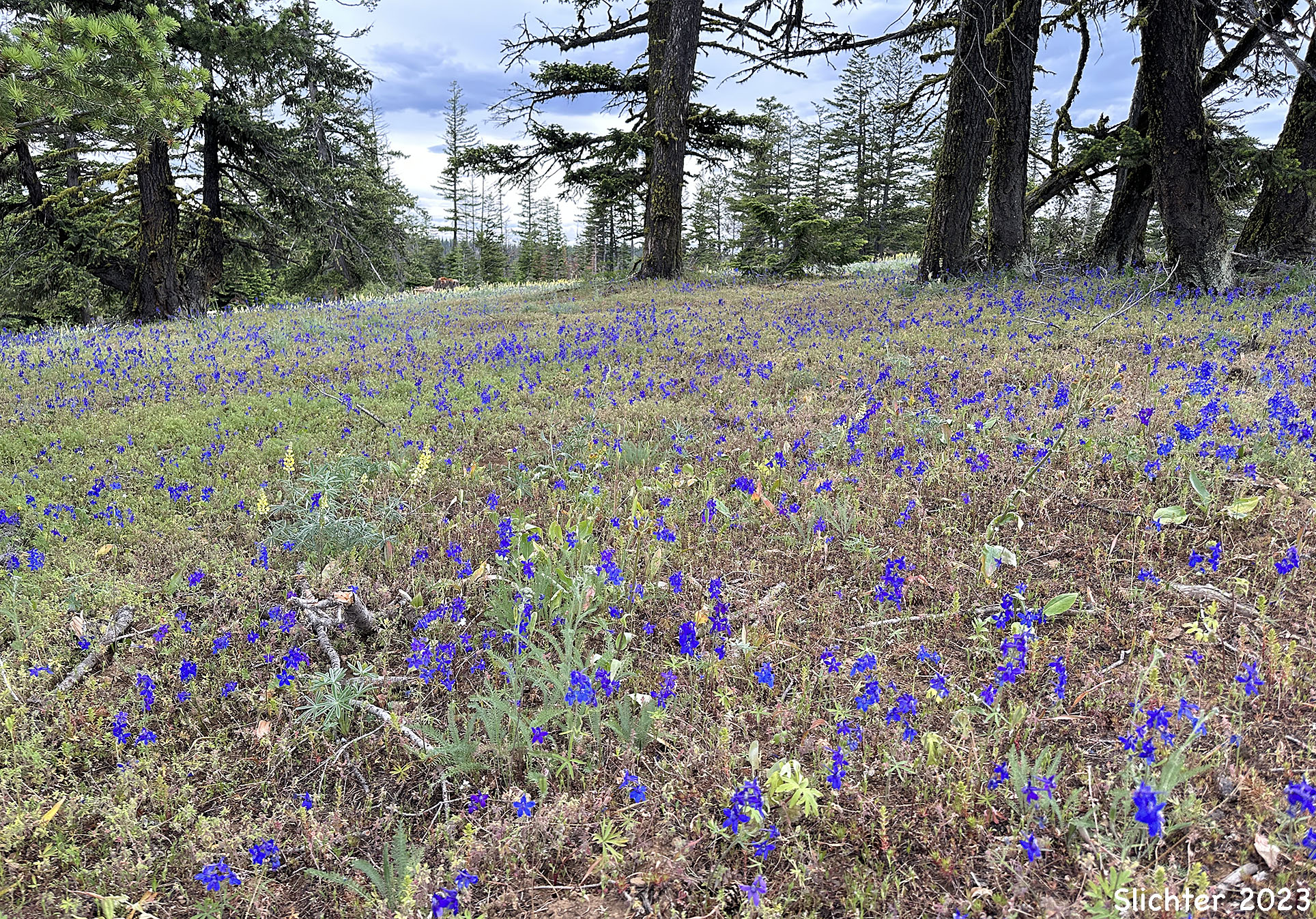
Upland larkspur blooming at left on weed-infested sand dunes atop the White Bluffs (north), Hanford Reach National Monument..........April 26, 2014. The photo at right shows the inflorescence of upland larkspur blooming on the roadside of N Anna J Drive between Regina Avenue and N Kathy Lane, Spokane County, WA.....May 25, 2023.
 -
- 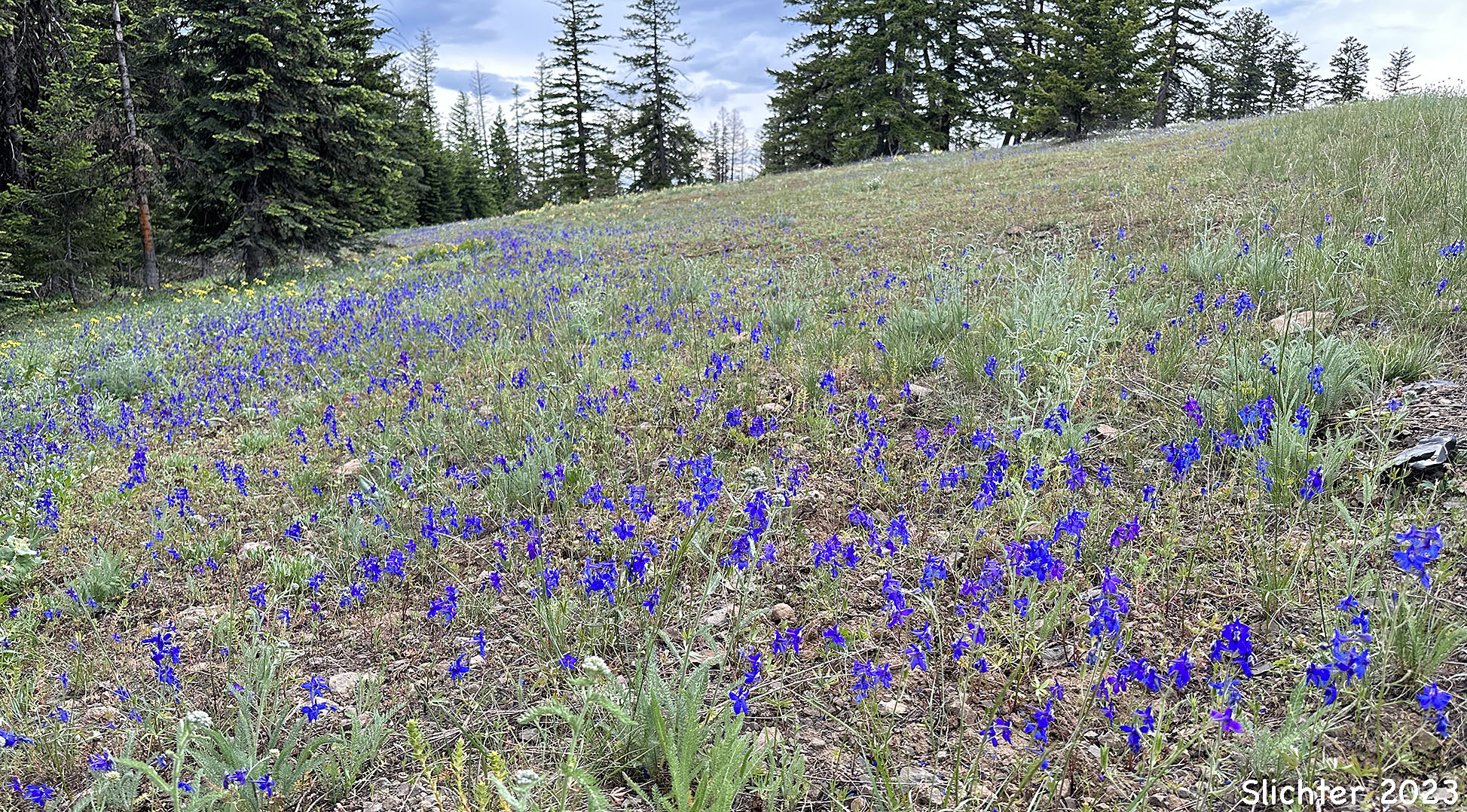
Habitat of upland larkspur as seen on balds along Forest Road 41 east of the junction with Forest Road 42, Umatilla National Forest.....June 17, 2023.
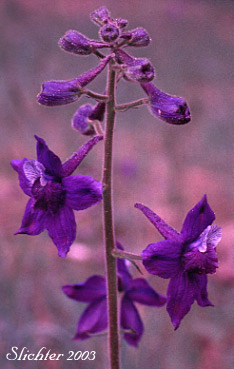
The photo above shows the open inflorescence of upland larkspur. Note that
these flowers have whitish upper petals and dark lower petals. Photographed
at Emmigrant Springs State Park, east of Pendleton, OR........May 30,
1999.
Paul Slichter