[Clematis and Virgin'sbowers: The Genus Clematis East of
the Cascade Mountains of Oregon and Washington.]
Douglas' Clematis, Hairy Clematis, Leather-flower, Sugarbowls, Sugar Bowls
Clematis hirsutissima var. hirsutissima
Synonym: Coriflora hirsutissima
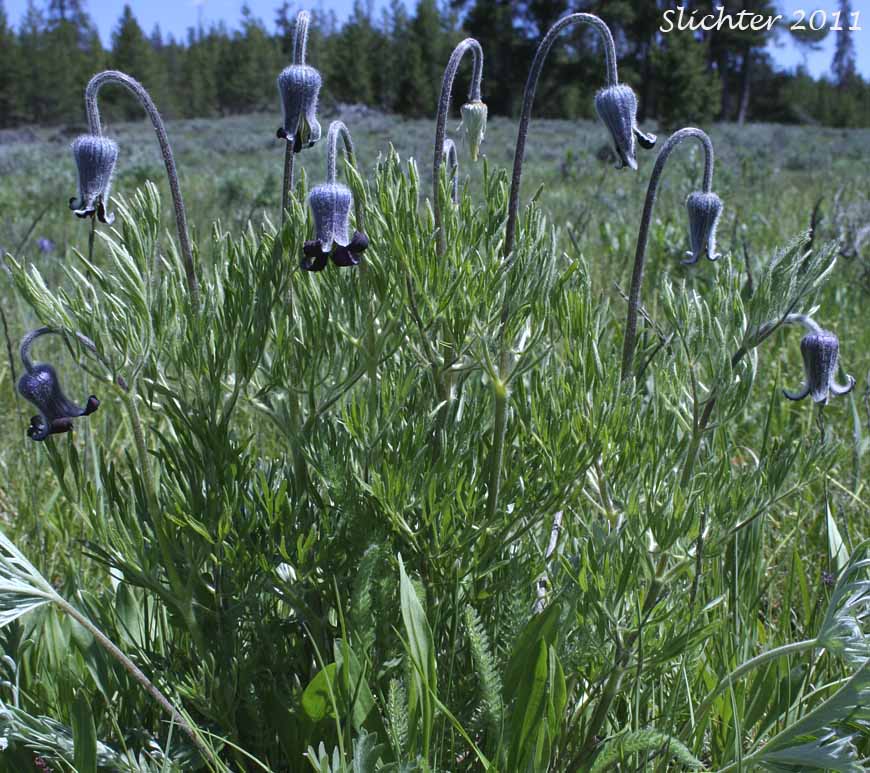
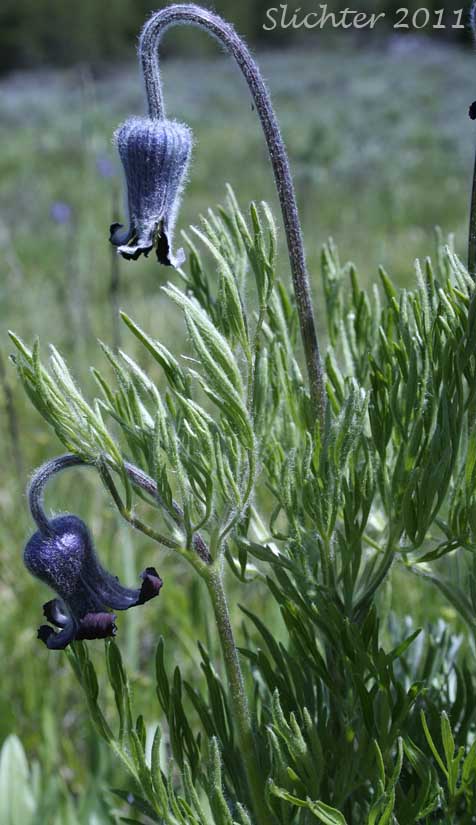
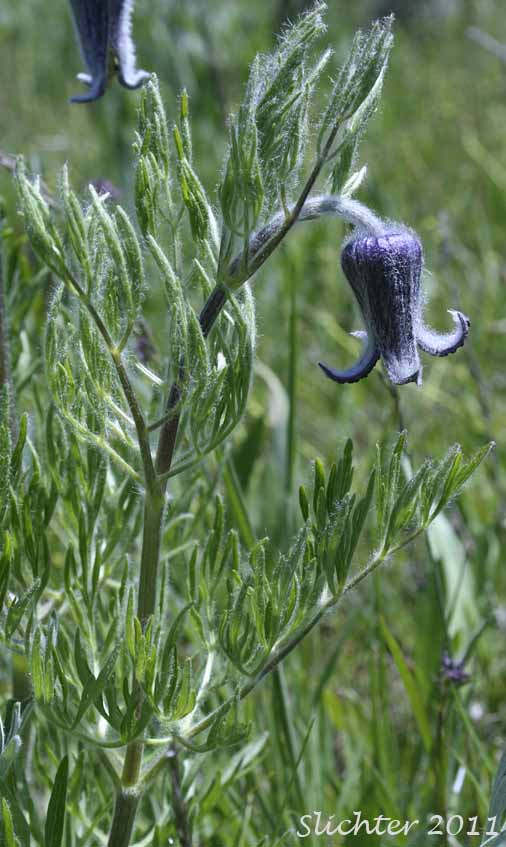
Sugar bowls as photographed at Summit Prairie, Malheur National Forest.......June 26, 2011.
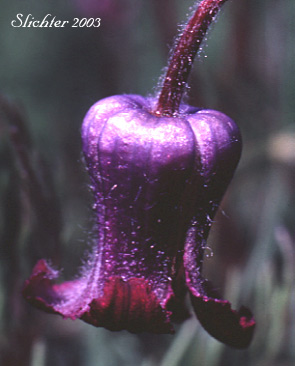 The
photo at right is a close-up of the calyx of sugar bowls. Note the numerous hairs
on the stem and outer surface of the sepals and the recurved tips. Photographed
at Grannyview along the road to Hat Point, Wallowa-Whitman National Forest........July
8, 1999.
The
photo at right is a close-up of the calyx of sugar bowls. Note the numerous hairs
on the stem and outer surface of the sepals and the recurved tips. Photographed
at Grannyview along the road to Hat Point, Wallowa-Whitman National Forest........July
8, 1999.
Characteristics:
Other names for sugar bowls include leather flower, vase vine,
vase flower, lion's beard and Douglas' clematis.
Sugar bowls is an attractive perennial wildflower with several
erect or spreading stems from 20-40 cm long. The stems are generally unbranched
and the herbage consists of woolly hairs. The leaves are in pairs with the lowest
pair small in size and entire to larger leaves on the middle and upper stem.
These are 2-4 times pinnately compound with the leaflets narrowly lanceolate
and up to 13 cm long.
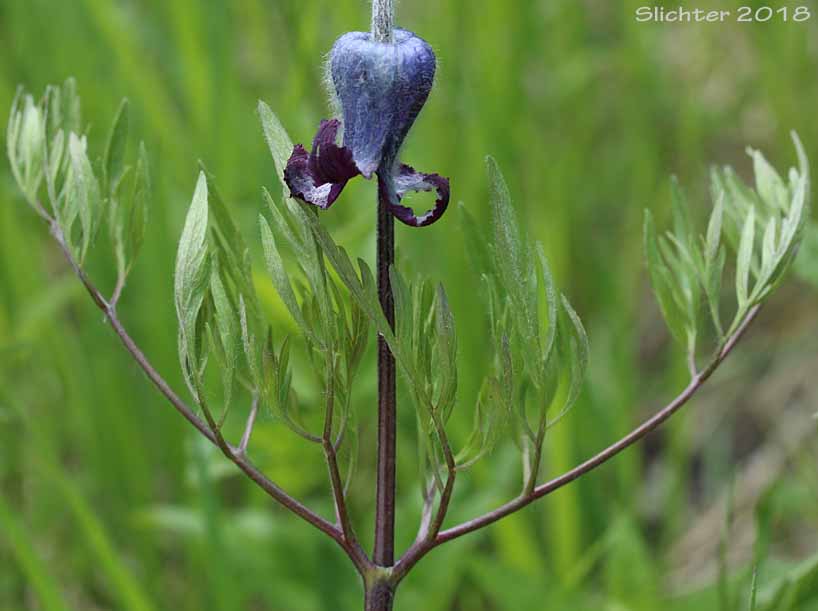
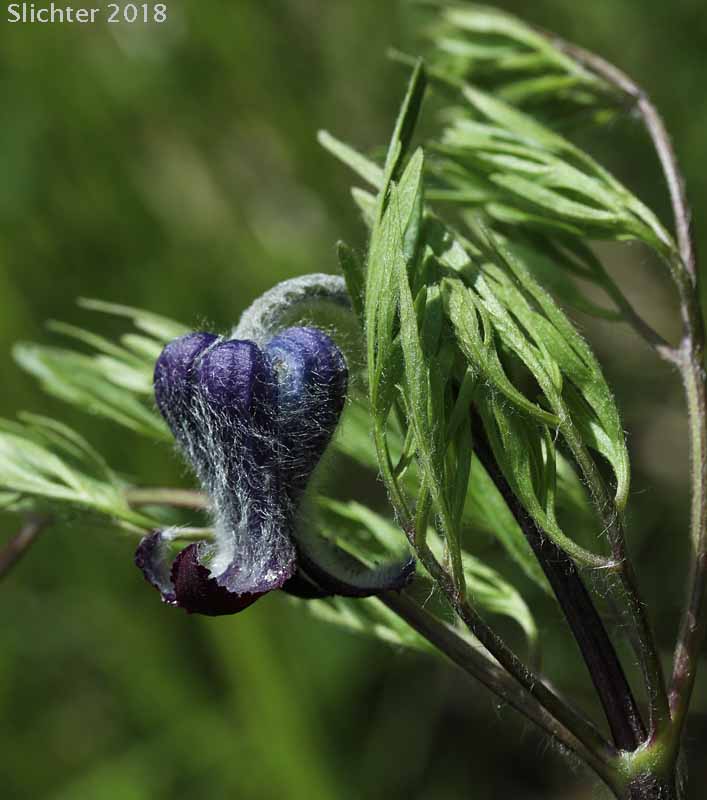
The flowers are perfect, nodding, with usually one at the end
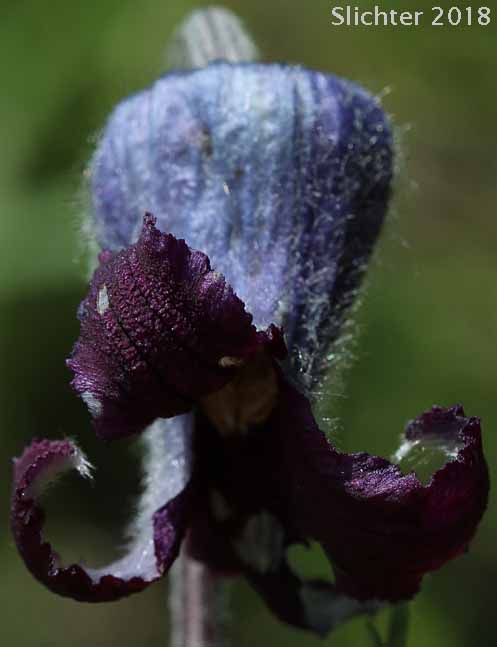
of each stem. The calyx is leathery (See photos.) and bell-shaped. The 4 individual
sepals are brownish-purple in color with recurved tips. Each measures 2-3 cm
long. The outer surfaces of the sepals are copiously hairy while the inner surface
is glabrous and more colorful.
Sugar bowls is an interesting wildflower suitable for gardens
and natural areas east of the Cascade crest.
Habitat:
Sugar bowls is a wildflower of grasslands, sagebrush plains
and ponderosa pine forests.
Range:
Sugar bowls may be found from south-central British Columbia
south across eastern Washington (as far west as Badger Mt. in Douglas County)
to central and eastern Oregon where it may be seen across the full extent of
the Blue Mts. It is found eastward to Montana and Wyoming.
 -
-  -
- 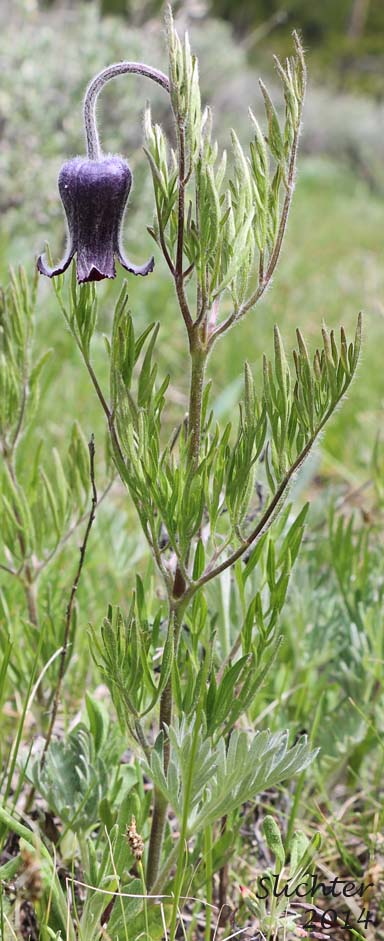
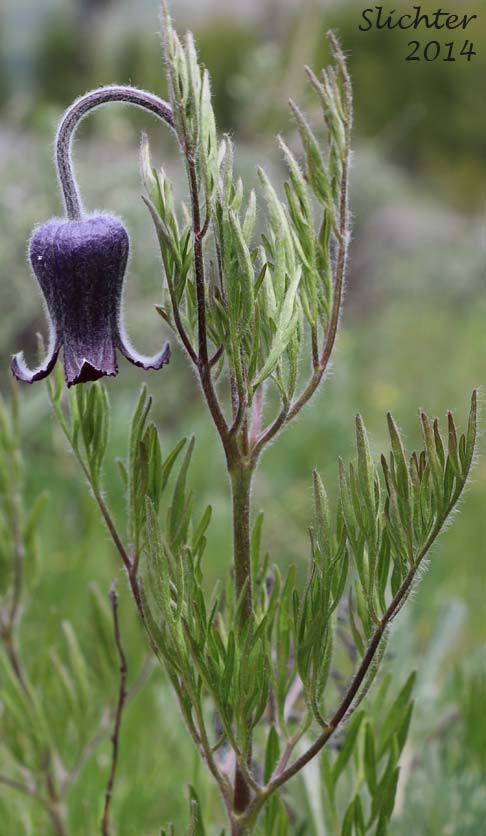
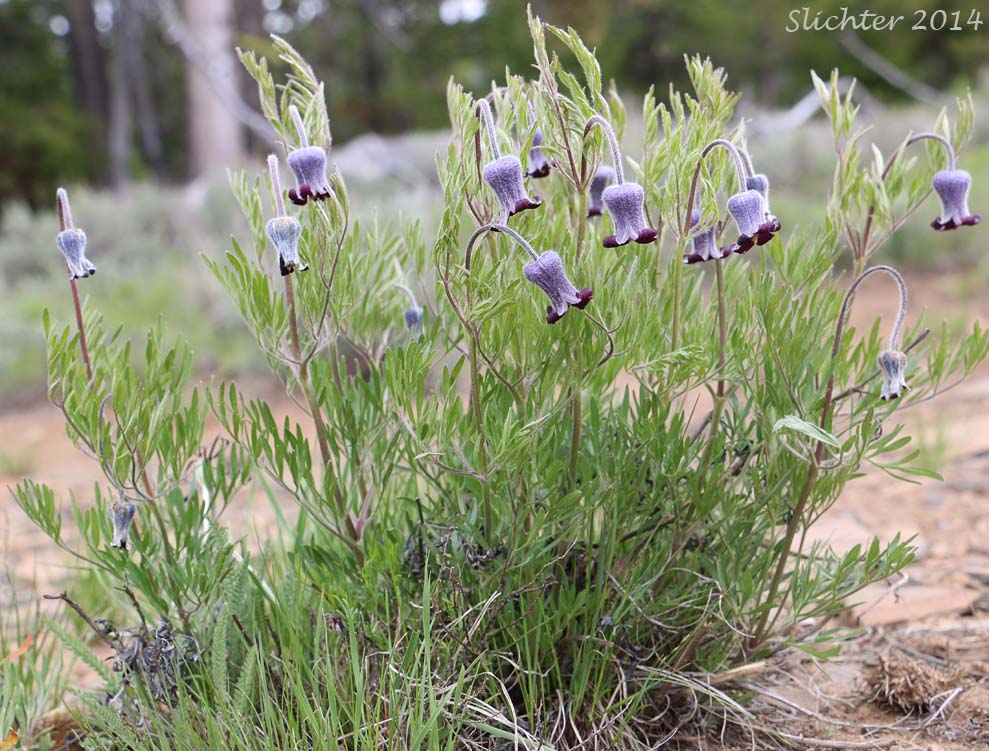
Sugar bowls as found in Summit Prairie, Malheur National Forest.........May 28, 2014.
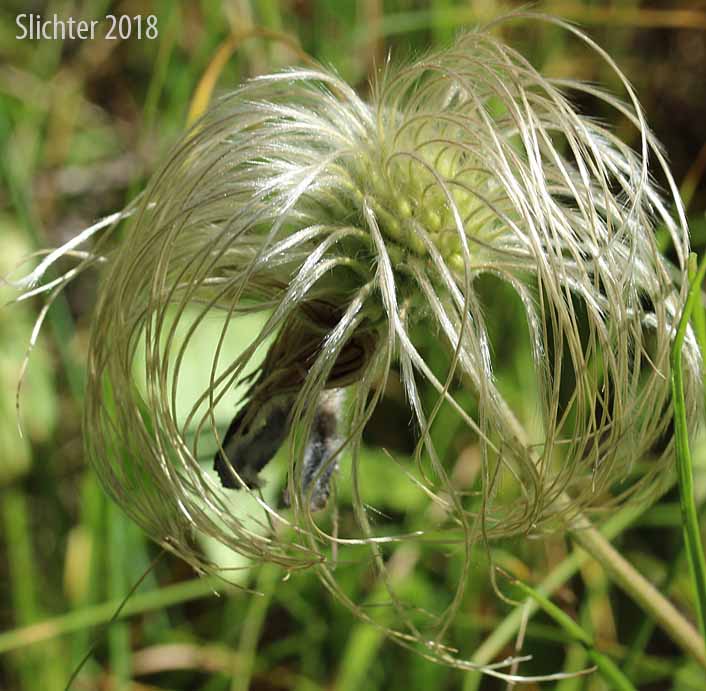
A seed head of sugarbowls nearing maturation as seen along the Tenderfoot Trail #1819 about a quarter of a mile east of the junction with the Wing Ridge Trail #1828, Eagle Cap Wilderness.......August 12, 2018.
 -
- 
 -
- 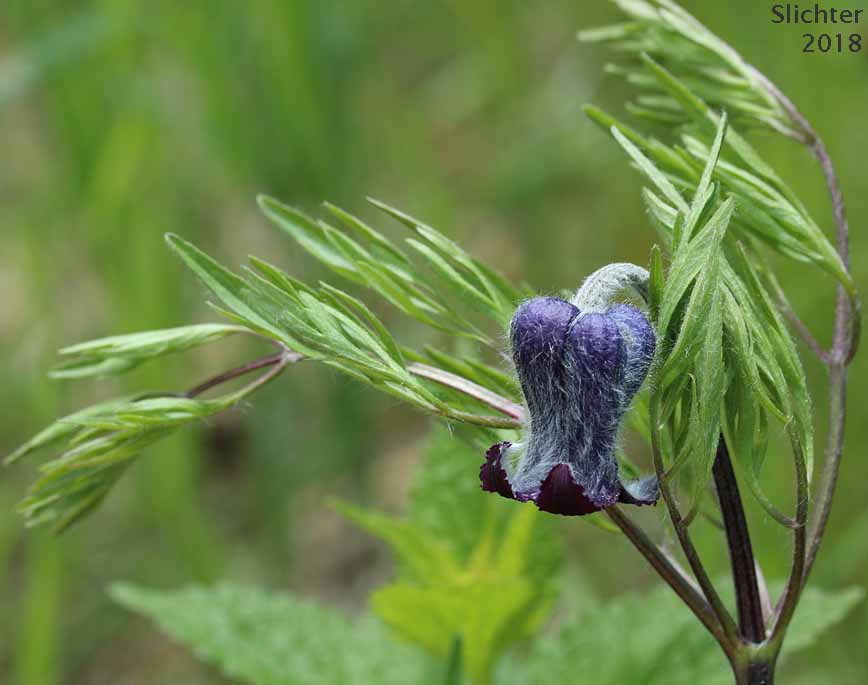
Sugarbowls in bloom along FS Road #3965 about one mile west of the Hells Canyon Overlook, Hells Canyon National Recreation Area......June 11, 2018.
 -
-  -
- 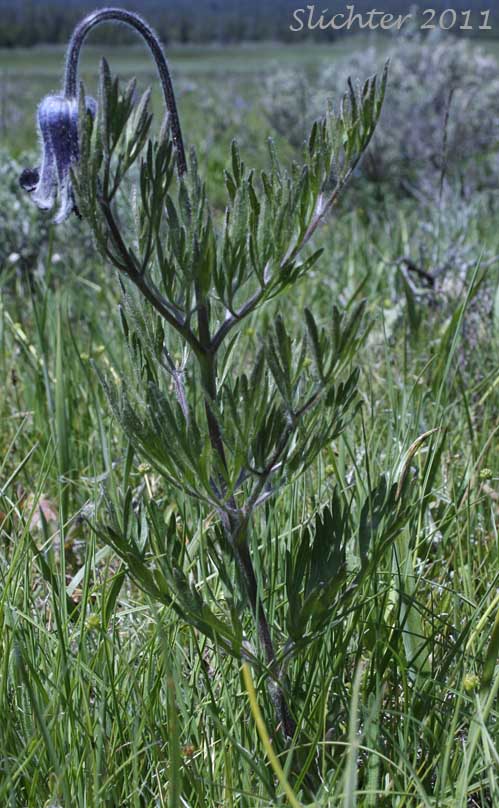
Sugar bowls as photographed at Summit Prairie, Malheur National Forest........June 26, 2011.
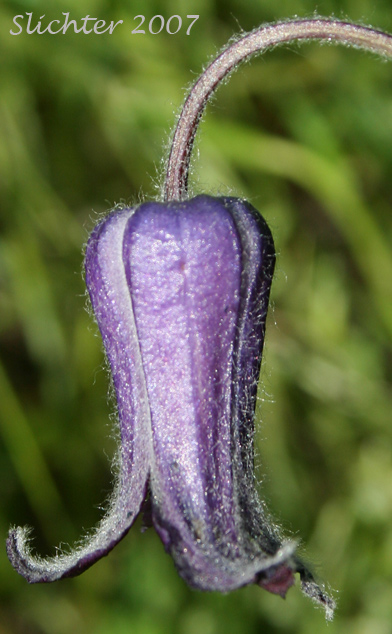
The photo above shows the pendant flower of sugar bowls. Photographed at Granny View in the Hells Canyon NRA........June 28, 2007. Note the numerous spreading hairs on the outside of the sepals.

Sugar bowls seen with its attractive, feathery seed heads as seen along Forest Service Road #1647, southeastern Logan Valley, Malheur National Forest.........August 3, 2011.
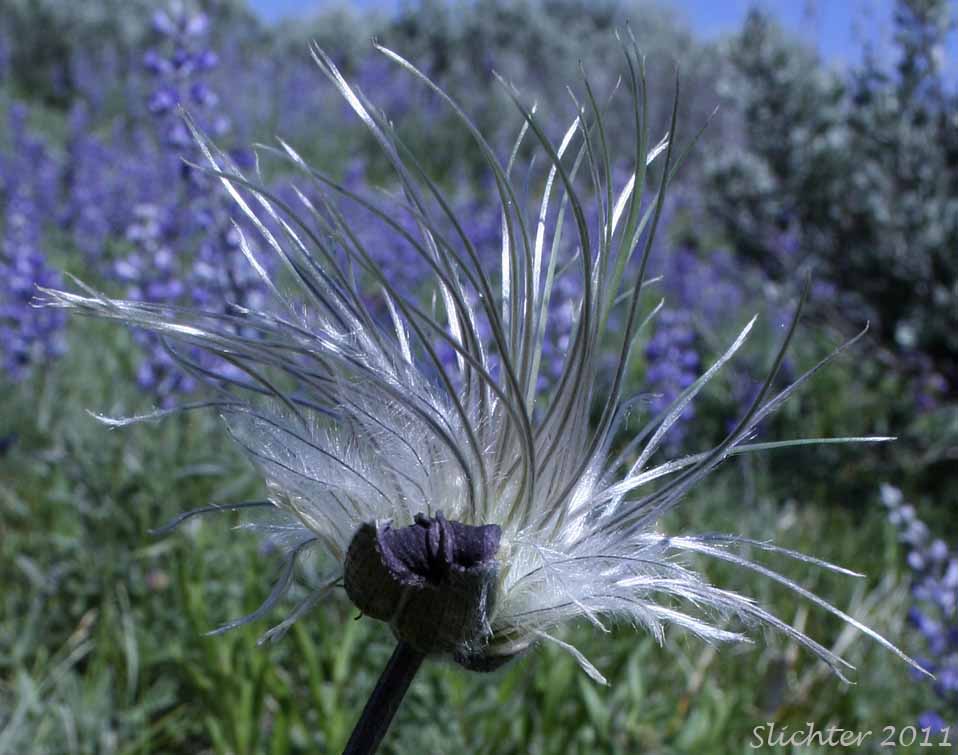
The seed head of plumed fruits of sugar bowls as seen near Table Rock, Monument Rock Wilderness.........August 3, 2011.
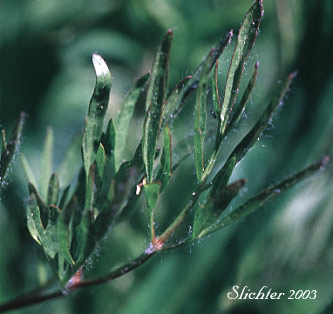
The photo above shows part of the leaf of sugar bowls. Note the
numerous narrowly lanceolate segments. Photographed at Granny View along the
road to Hat Point, Wallowa-Whitman National Forest........July 8, 1999.
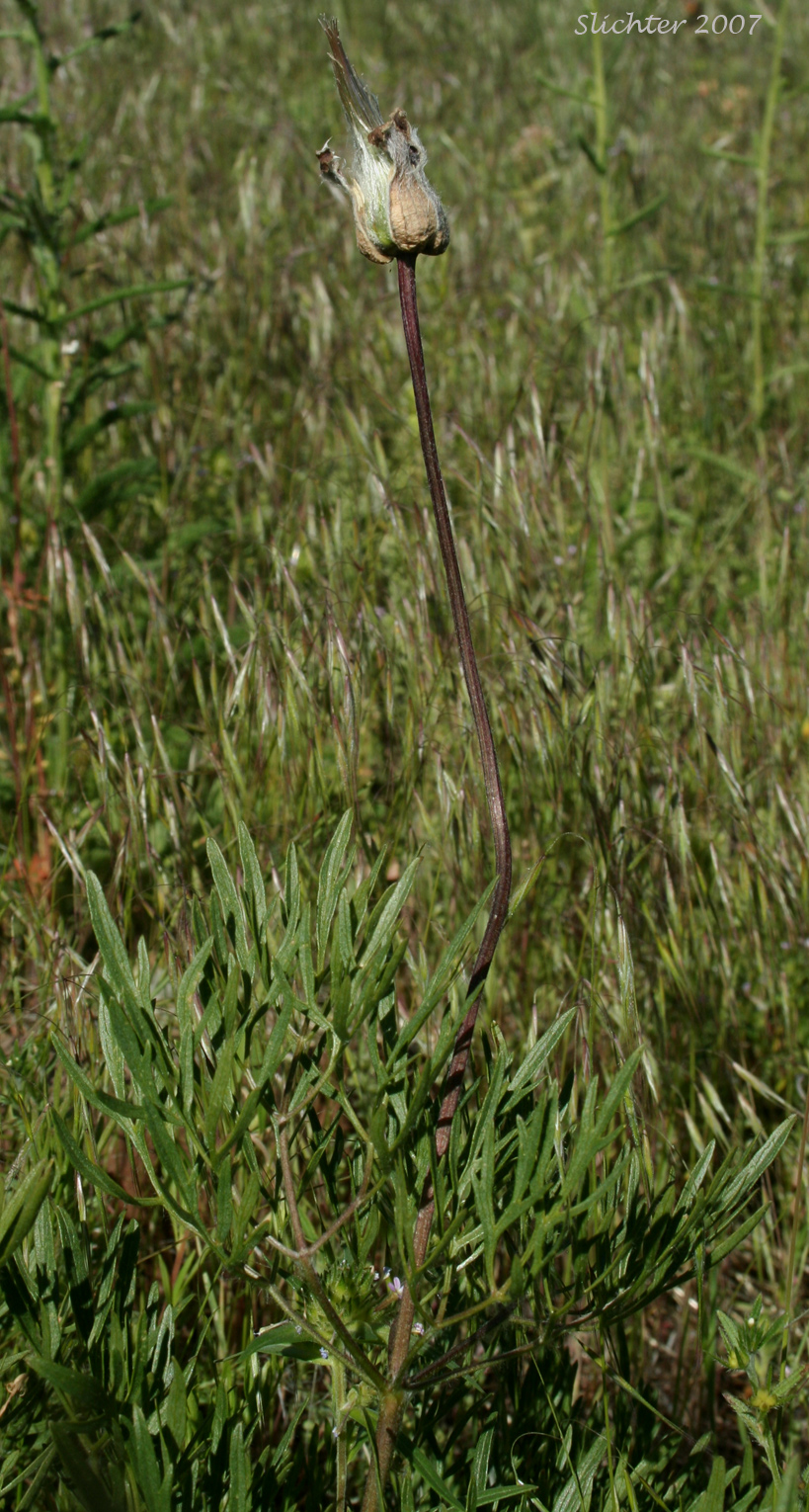
The photo above shows the dissected stem leaves of sugar bowls. Photographed at Granny View in the Hells Canyon NRA........June 28, 2007.
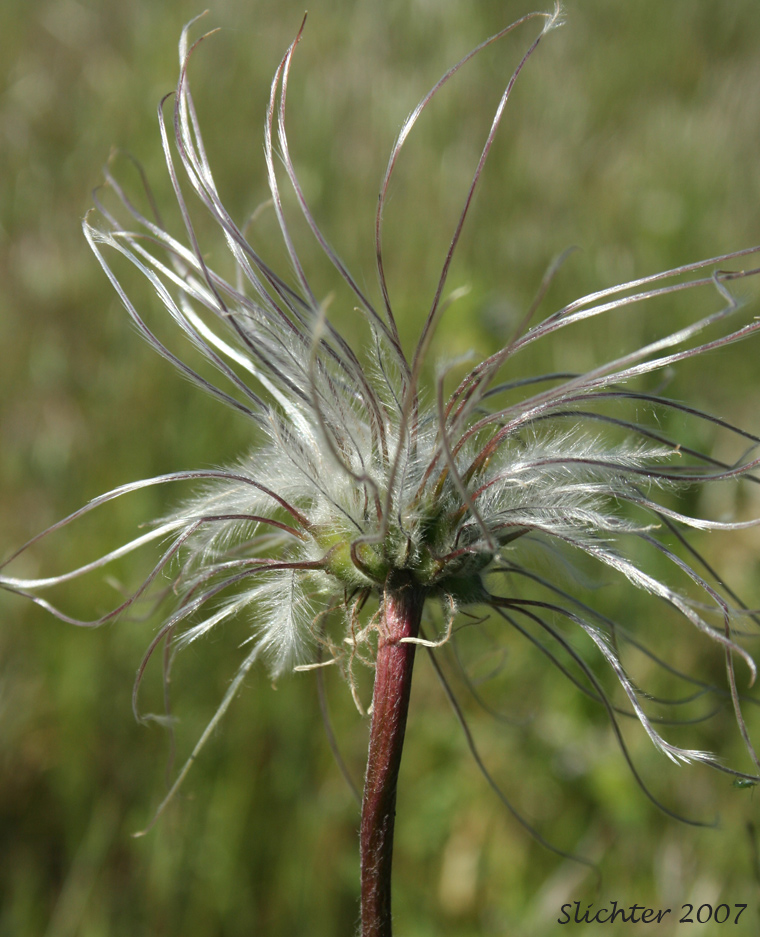
The photo above shows the plumed seed head of sugar bowls. Photographed at Granny View in the Hells Canyon NRA......June 28, 2007.
Paul Slichter