[Bluebells and Lungworts: The Genus Mertensia East of the Cascade
Mts. of Oregon and Washington]
Long Bluebells, Long-flowered Lungwort, Small Bluebells, Trumpet Bluebells
Mertensia longiflora
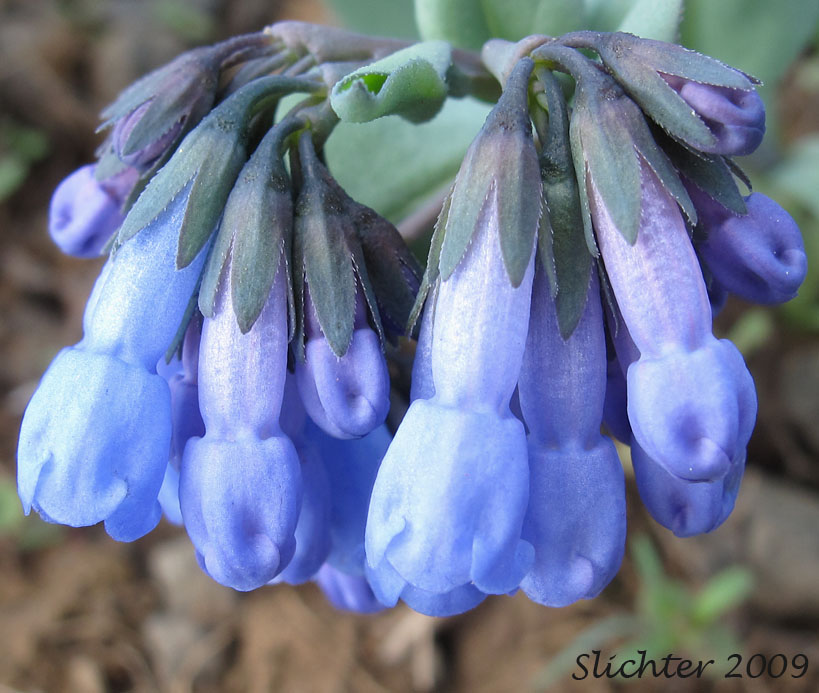
Close-up photo of the flower cluster of long bluebells as seen from from along Reecer Creek Road above its junction with forest service road #3521, Wenatchee National Forest........June 5, 2009. Note the very long corolla tube which is about
2 times longer than both the corolla limb and calyx.
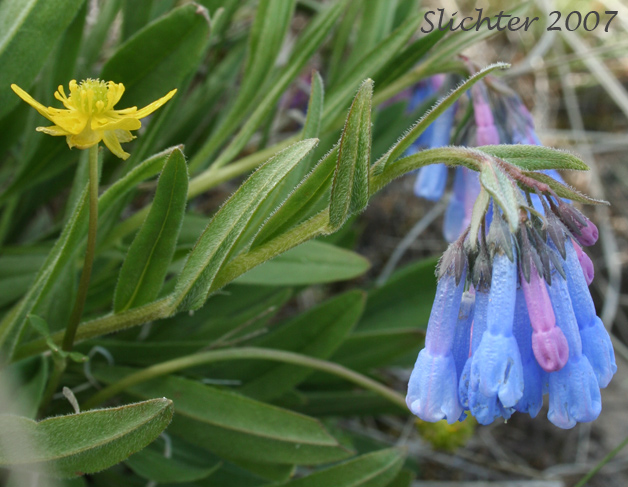 The
photo at right shows long bluebells as seen at Wilson Creek, a BLM site near the town of Wilbur, WA (Lincoln County) ........April 30, 2007. Note also the blossom of a sagebrush buttercup blooming at left.
The
photo at right shows long bluebells as seen at Wilson Creek, a BLM site near the town of Wilbur, WA (Lincoln County) ........April 30, 2007. Note also the blossom of a sagebrush buttercup blooming at left.
Characteristics:
Also known as long-flowered lungwort, long bluebells are an
attractive perennial wildflower suitable for the rock garden. One to several
stems arise from a branching tuberous base from 10-20 cm high. The stems are
generally unbranched. The leaves are covered with short, appressed and stiff
hairs above and glabrous below. The basal leaves are poorly developed or absent
in flowering plants while the leaves of the lower stem are obovate in shape,
those of the midstem oblong or obovate with rounded tips, and the upper leaves
ovate or oblanceolate with acute tips. When present, the basal leaf is is petiolate
with a broadly elliptic and rounded blade.
The pedicels are 2-6 mm long and are glabrous or covered with
stiff, straight and appressed hairs. The calyx is 5-6 mm long with linear to
lanceolate lobes which are glabrous except the finely ciliate margins. The corolla
is 1.5-2 cm long with the tube about 3 times longer than the shallowly lobed
limb. The style is slightly exserted from the mouth of the flower.
Habitat:
Long bluebells may be found in open to
lightly shaded places amongst sagebrush or beneath ponderosa pine from the foothills
to middle elevations in the mountains below 1700 meters.
Range:
Long bluebells may be found east of the Cascade Mts. from southern
British Columbia south across eastern Washington and Oregon to northeastern
California and east to northwestern Montana (to the west of the continental
divide) and the western edge of the Snake River Plains as far east as Boise,
Idaho.
 -
-  -
- 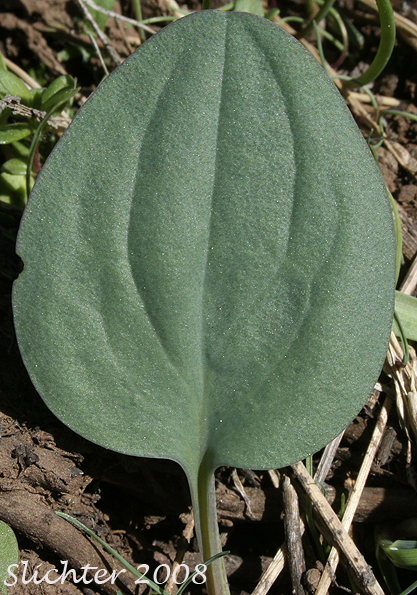
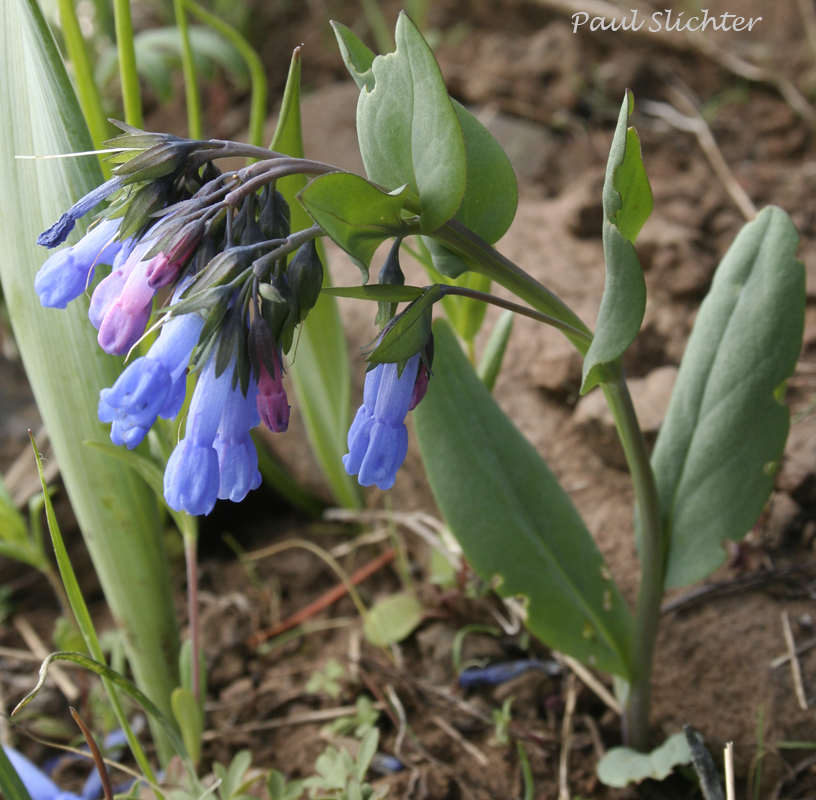
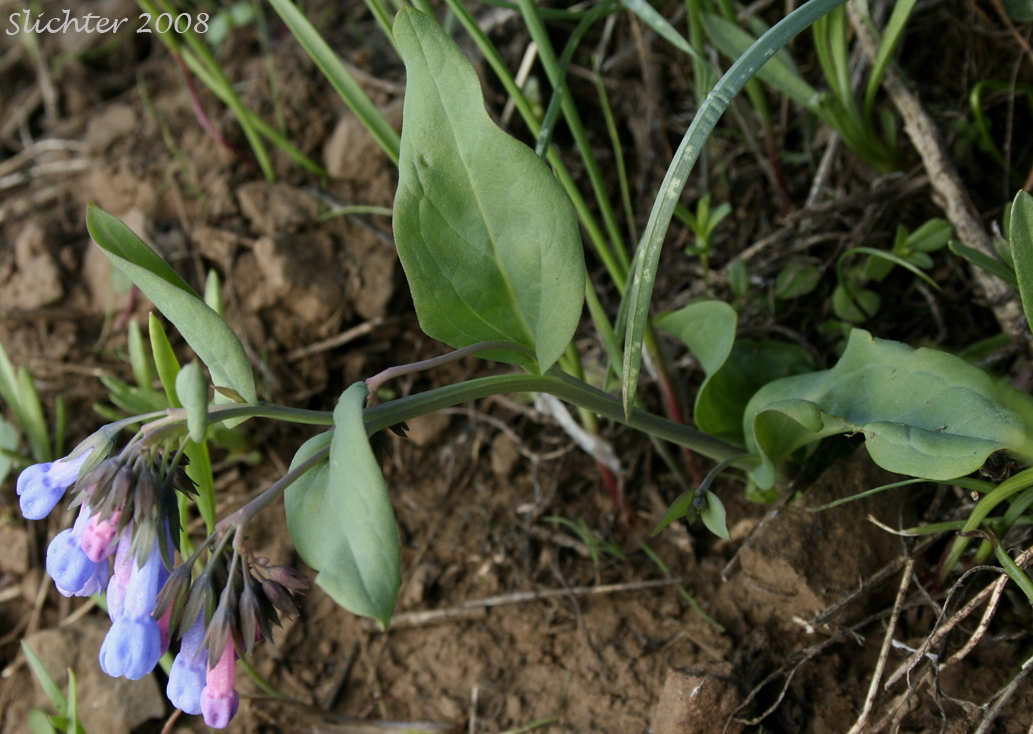
These 3 photos show close-up views of long bluebells as seen on moist soils (where the snow has just melted) at Buckhorn Lookout on the western edge of the Imnaha Canyon in the Wallowa-Whitman National Forest........June 27, 2008. Click each photo to see an enlarged version.
 -
-  -
- 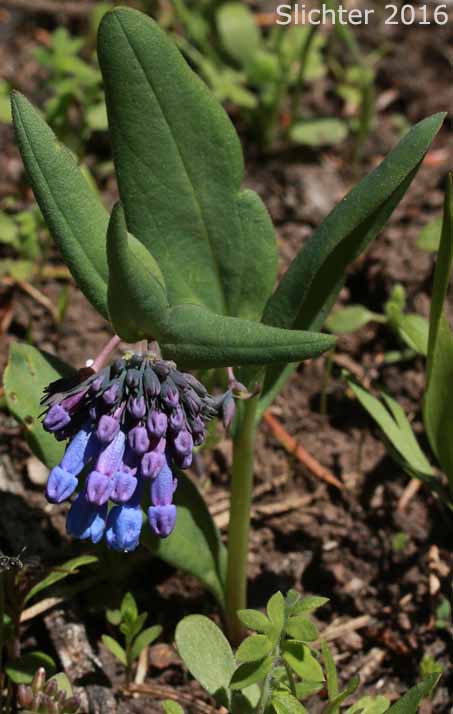
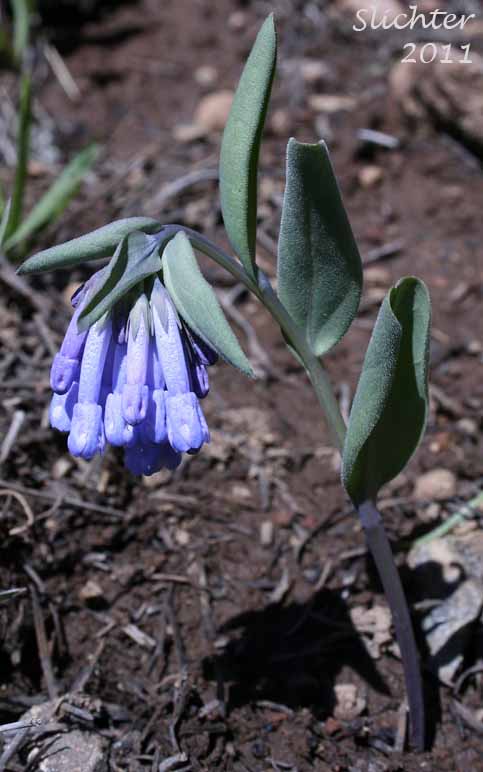
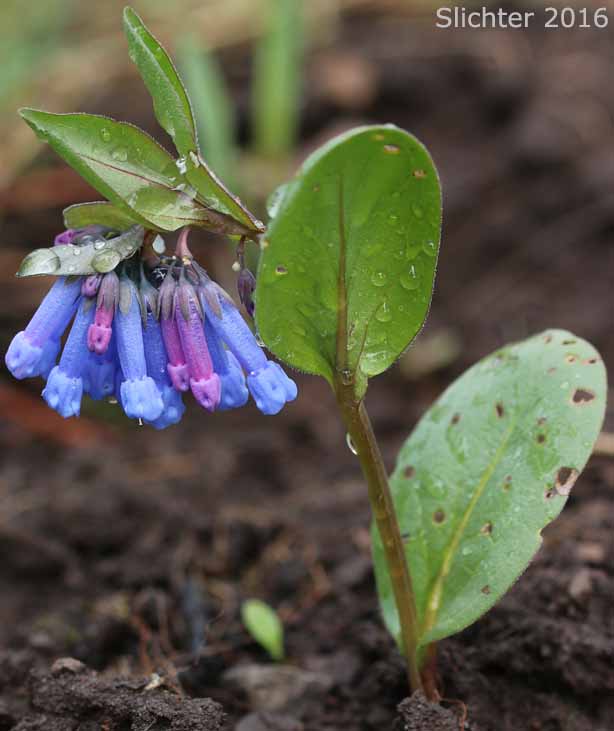
Long-flowered lungwort as seen left at about 6000' along FS Road 5401-811, on the northern approach to Baldy Mountain, Malheur National Forest........June 3, 2011. The photo at center shows long-flowered lungwort as seen along Johnson Creek near FS Road #42 on Ochoco National Forest lands at the western edge of Big Summit Prairie.......April 29, 2016. The photo at right shows long-flowered lungwort as seen near the southern summit of Round Mt., Ochoco National Forest..........May 28, 2016.
 -
- 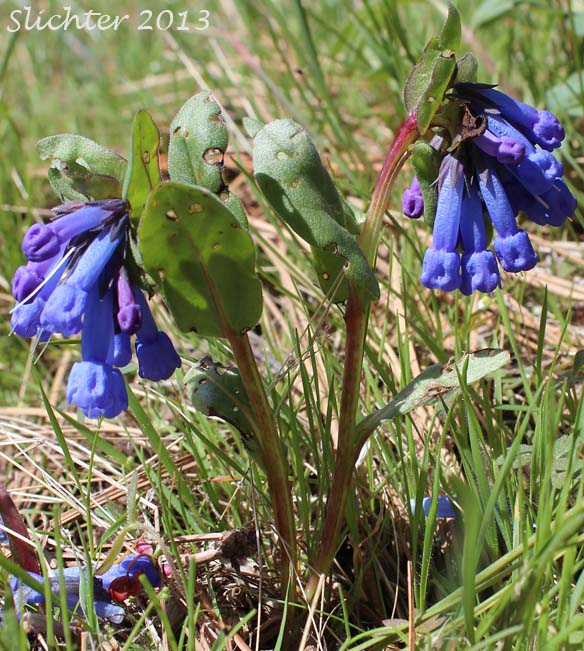
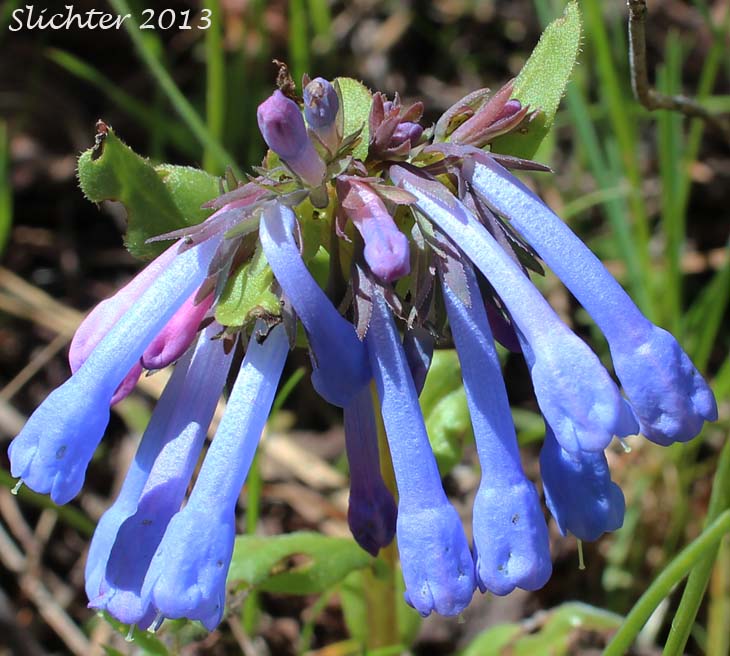
Long-flowered lungwort as seen in grasslands atop Kamiak Butte, Kamiak Butte County Park, Whitman County, Washington........April 29, 2013.
 -
- 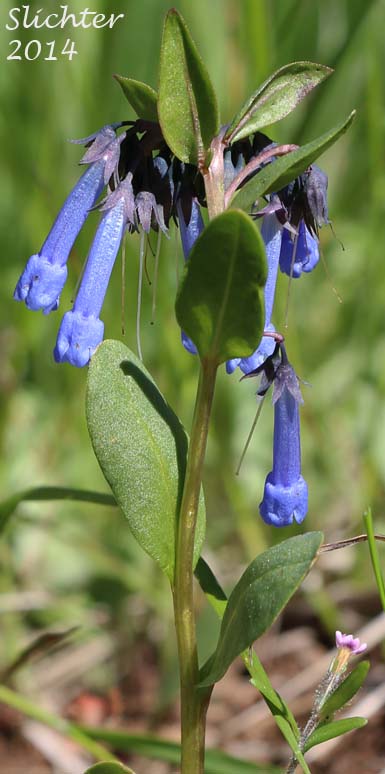
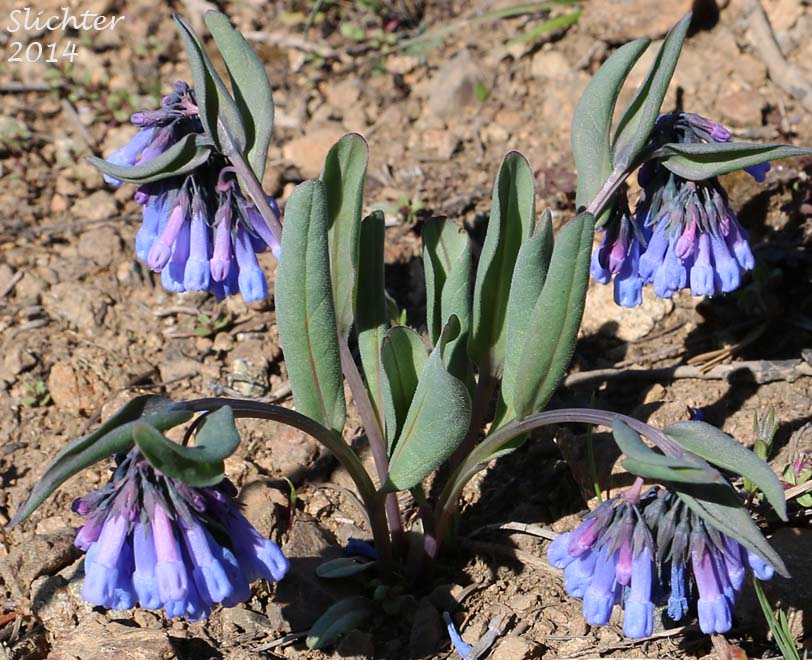
Long-flowered lungwort as seen along the Canyon Mountain Trail, Strawberry Mountain Wilderness..........May 29, 2014.
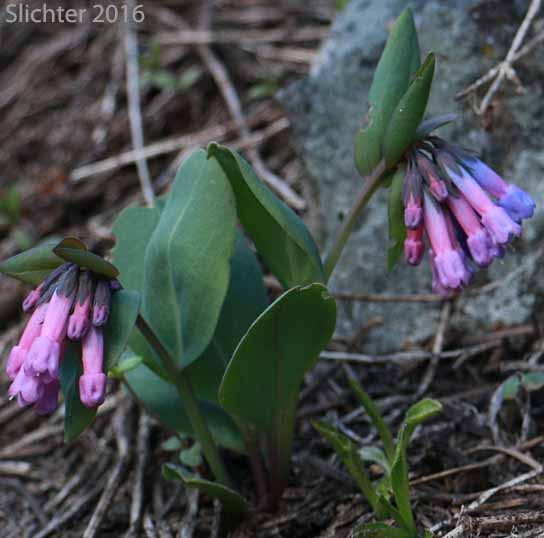 -
- 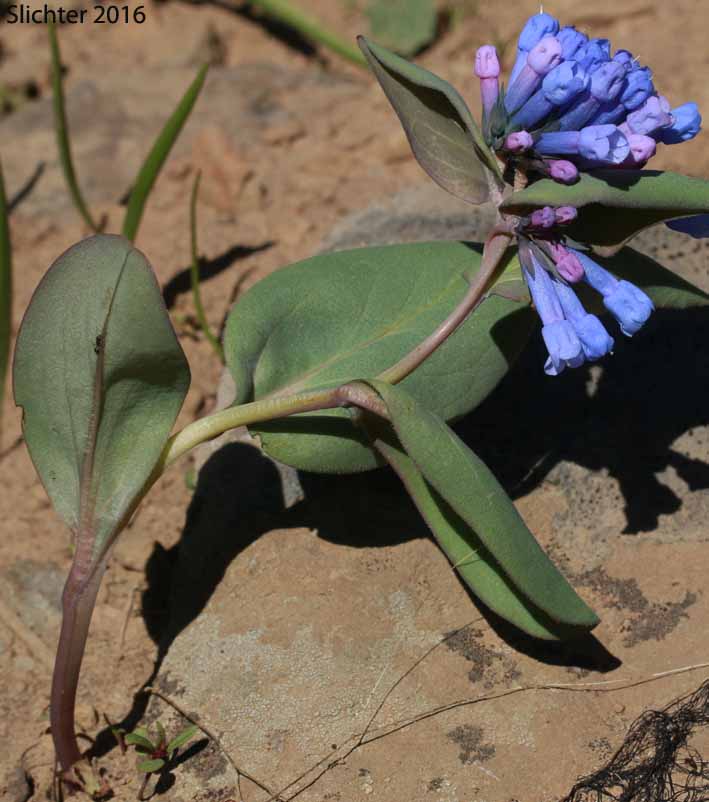 -
- 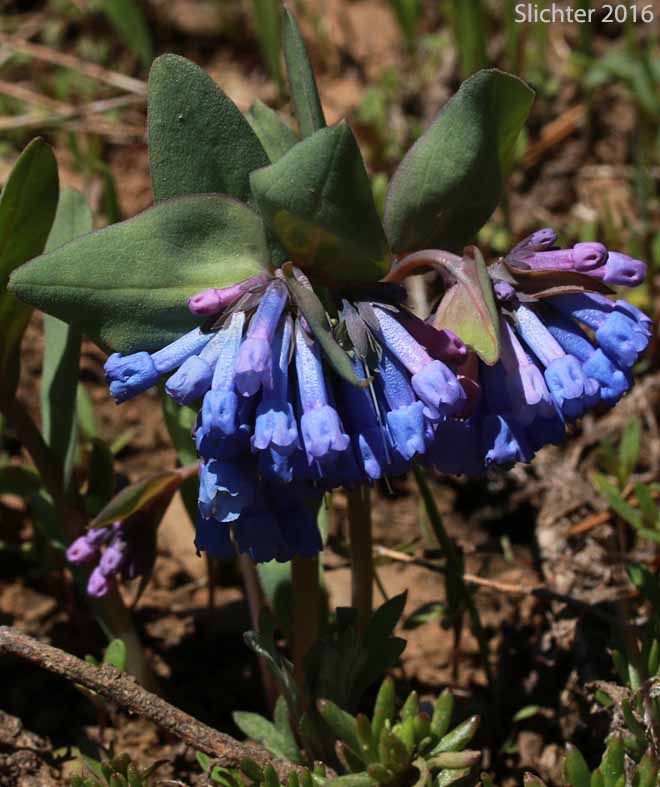
Long-flowered lungwort as seen blooming on scabland soils atop Lookout Mountain, Ochoco National Forest.........May 29, 2016.
 -
- 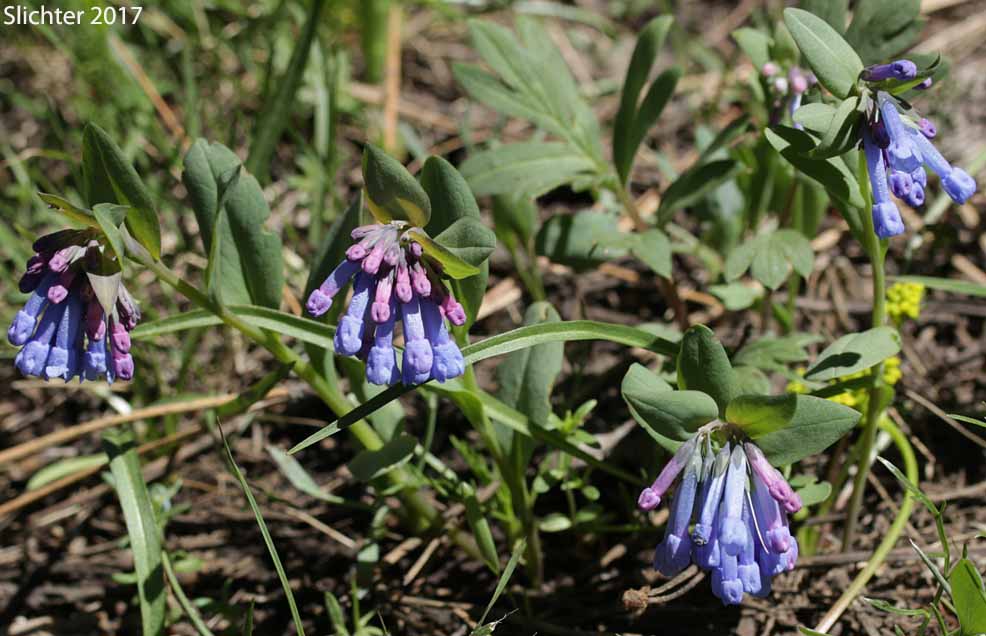
Long bluebells as seen along the Line Butte Trail #807 about a quarter mile uphill from the Fawn Creek Trailhead, southeastern slopes of Lookout Mt., Ochoco National Forest.........May 2, 2017.
 -
- 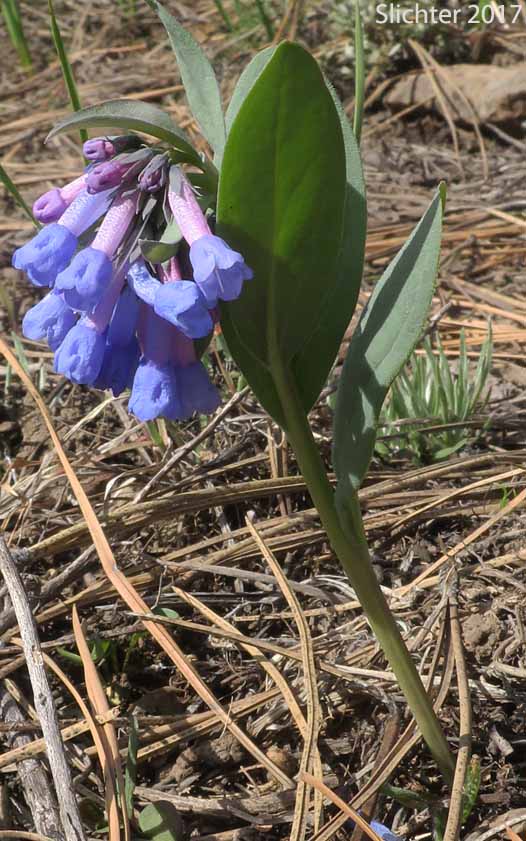
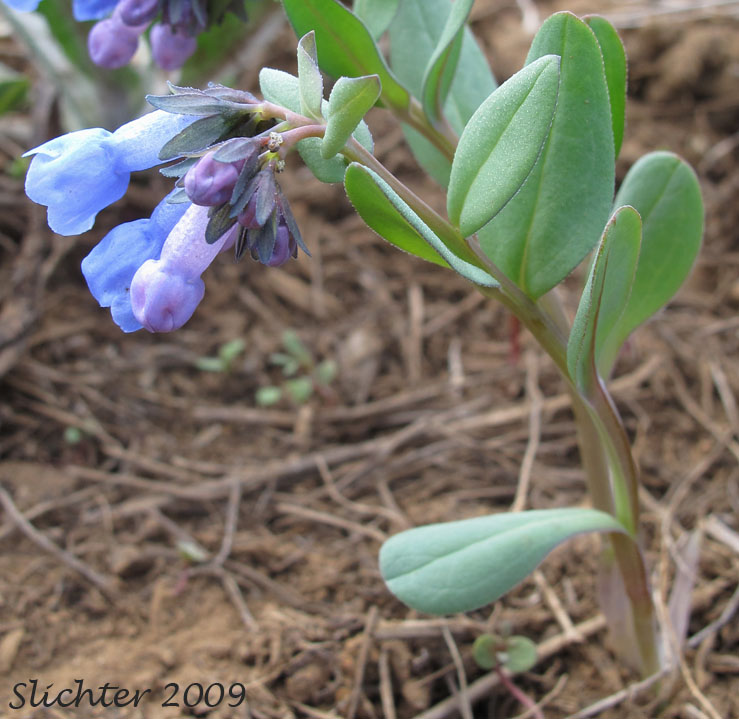
Long bluebells as seen (left) from from along Reecer Creek Road above its junction with forest service road #3521, Wenatchee National Forest........June 5, 2009. Note the lack of a basal cluster of leaves (a characteristic of the similar Mertensia oblongifolia). Long bluebells as seen right in open forest around a moist prairie west of Forest Road 4215 and Antler Prairie, Ochoco National Forest...........May 9, 2017.
 -
- 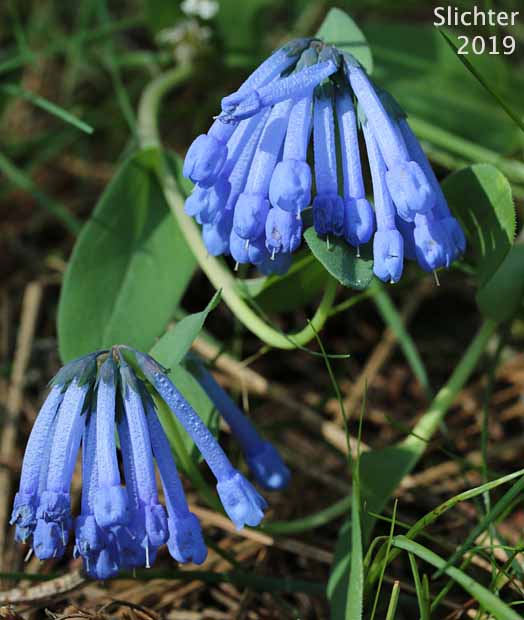
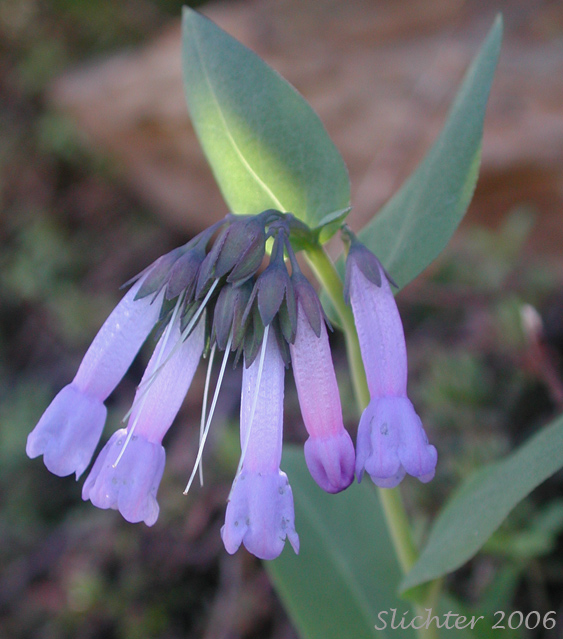
The photo at left shows long bluebells as seen from from the summit of Chewelah Peak, Colville NF in northeastern Washington........June 23, 2006. Note the glabrous leaves and calyx and the very long corolla tube which is about
2 times longer than both the corolla limb and calyx. The photo at right shows long bluebells blooming in open ponderosa pine forest on prehistoric Missoula Flood sandbars above the Little Spokane River near the old Spokane Country Club......May 4, 2019.

The photo above shows long bluebells from along the North Fork of the Crooked River, Big Summit Prairie, Ochoco NF..........May 23, 1998. Again, note the glabrous leaves and calyx and the very long corolla tube which is about 2 times longer than both the corolla limb and calyx.
 -
- 
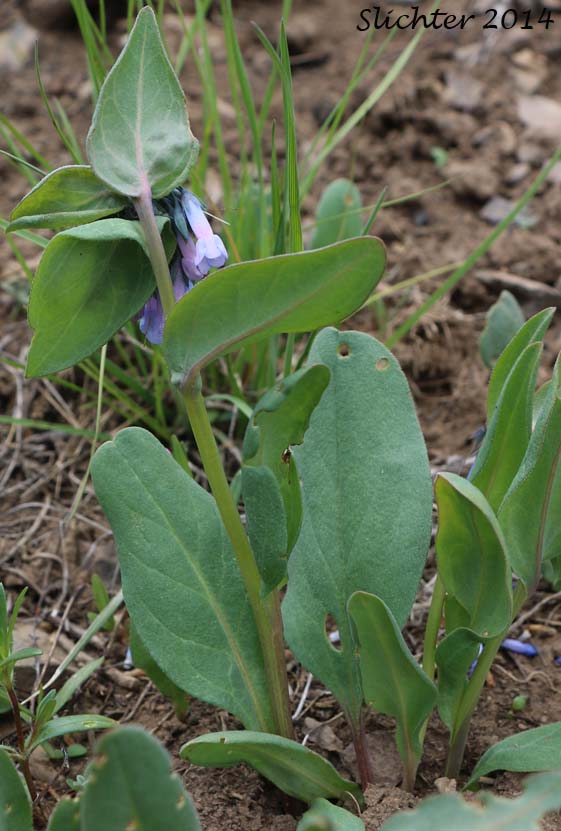
What appears to be long bluebells as seen in Summit Prairie, Malheur National Forest.........May 28, 2014. Generally, this species lacks basal leaves at flowering time.
 -
- 
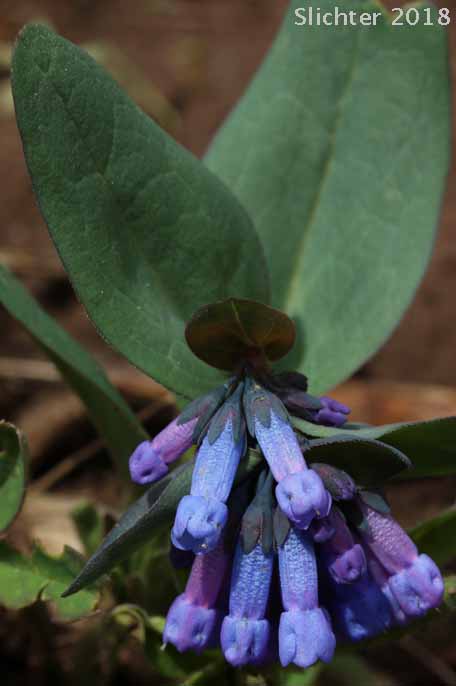
Long-flowered bluebells observed in bloom at left along Trail 808A adjacent to the Independent Mine, Lookout Mountain, Ochoco National Forest......May 26, 2018. The photo at right shows long-flowered bluebells as seen in woodlands along Forest Road 4240 about a mile south of Lame Dog Creek, Ochoco National Forest.......April 26, 2018.
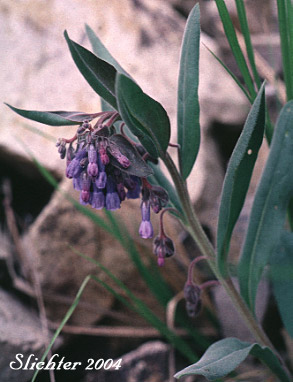
The photo above shows long bluebells as seen
near Big Summit Prairie in the Ochoco NF of central Oregon...........May 23,
1998.
Paul Slichter