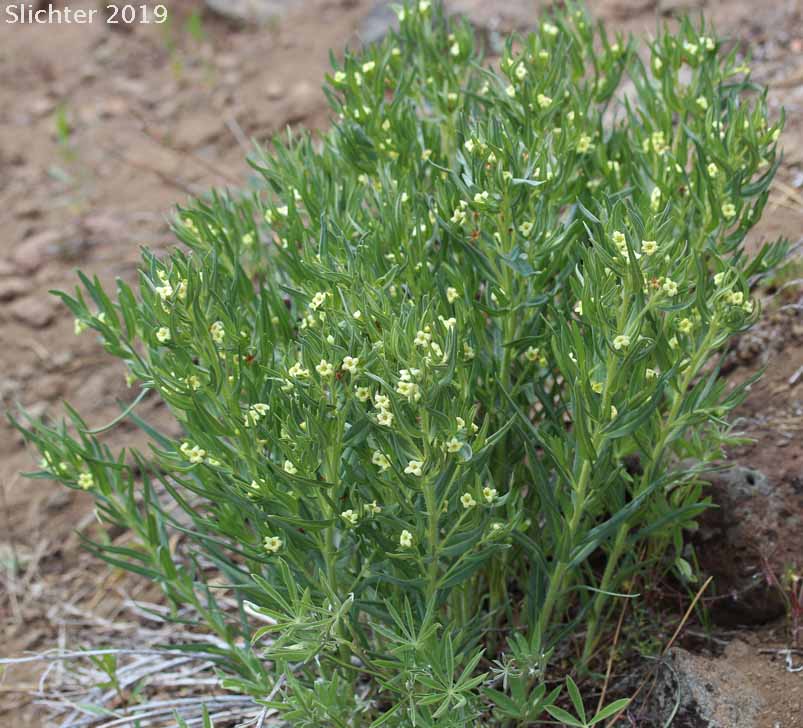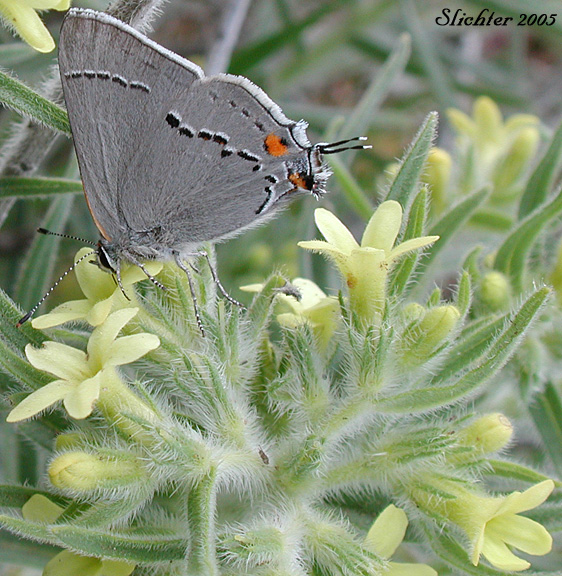
The photo above shows the attractive flowers of puccoon with a nectaring gray hairstreak (Strymon melinus) as seen above the mouth of the Deschutes River in the eastern Columbia River Gorge.........April 24, 2005.
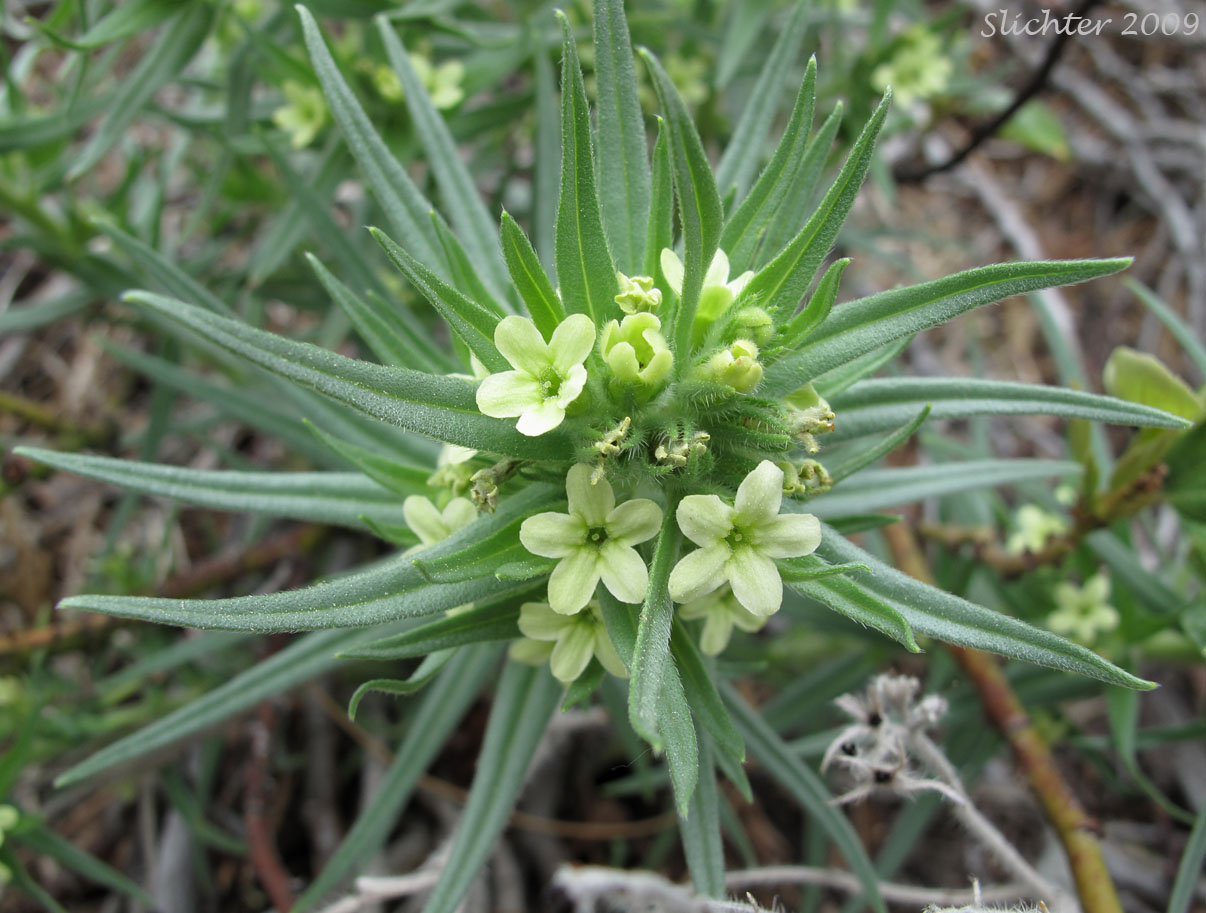
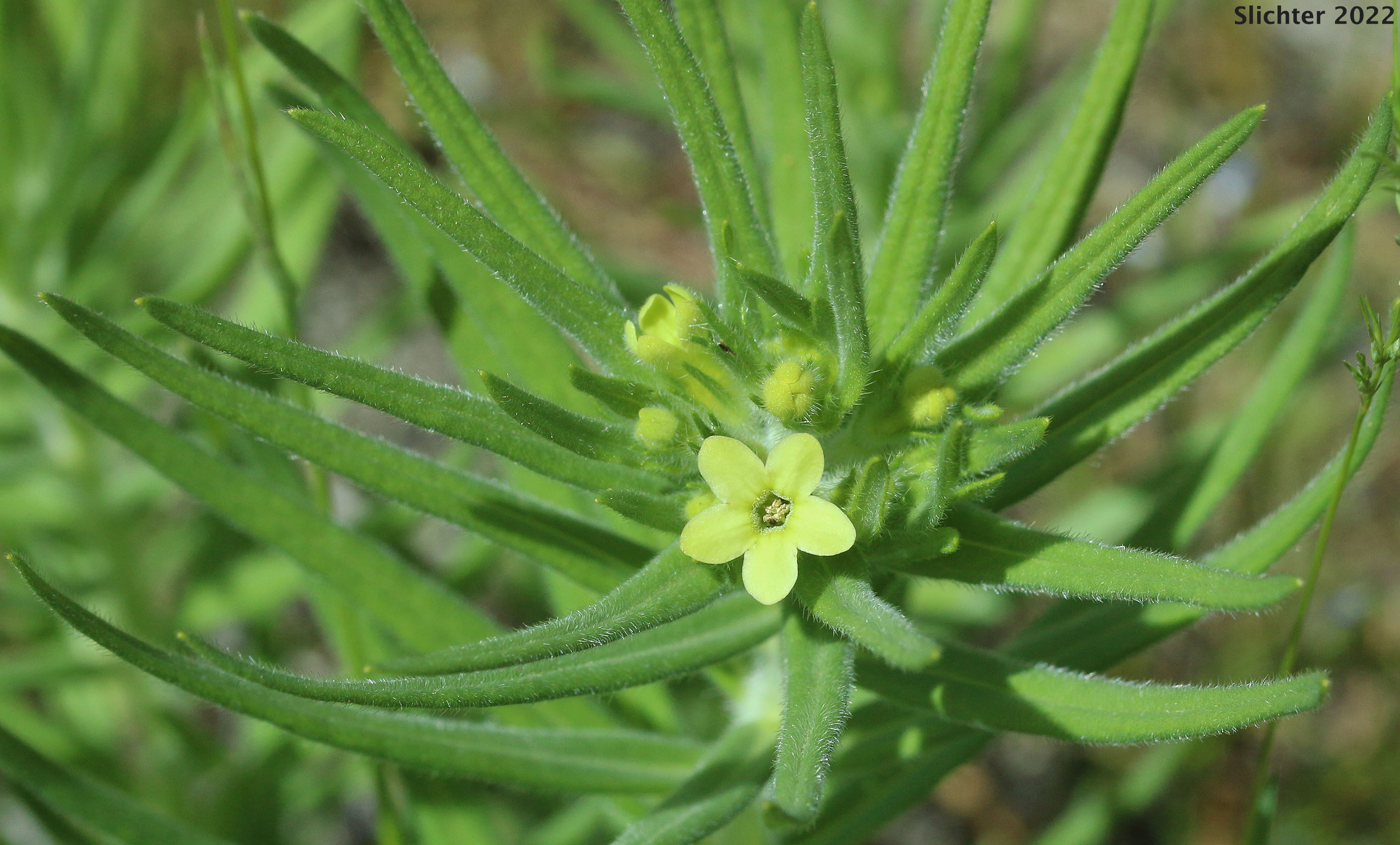
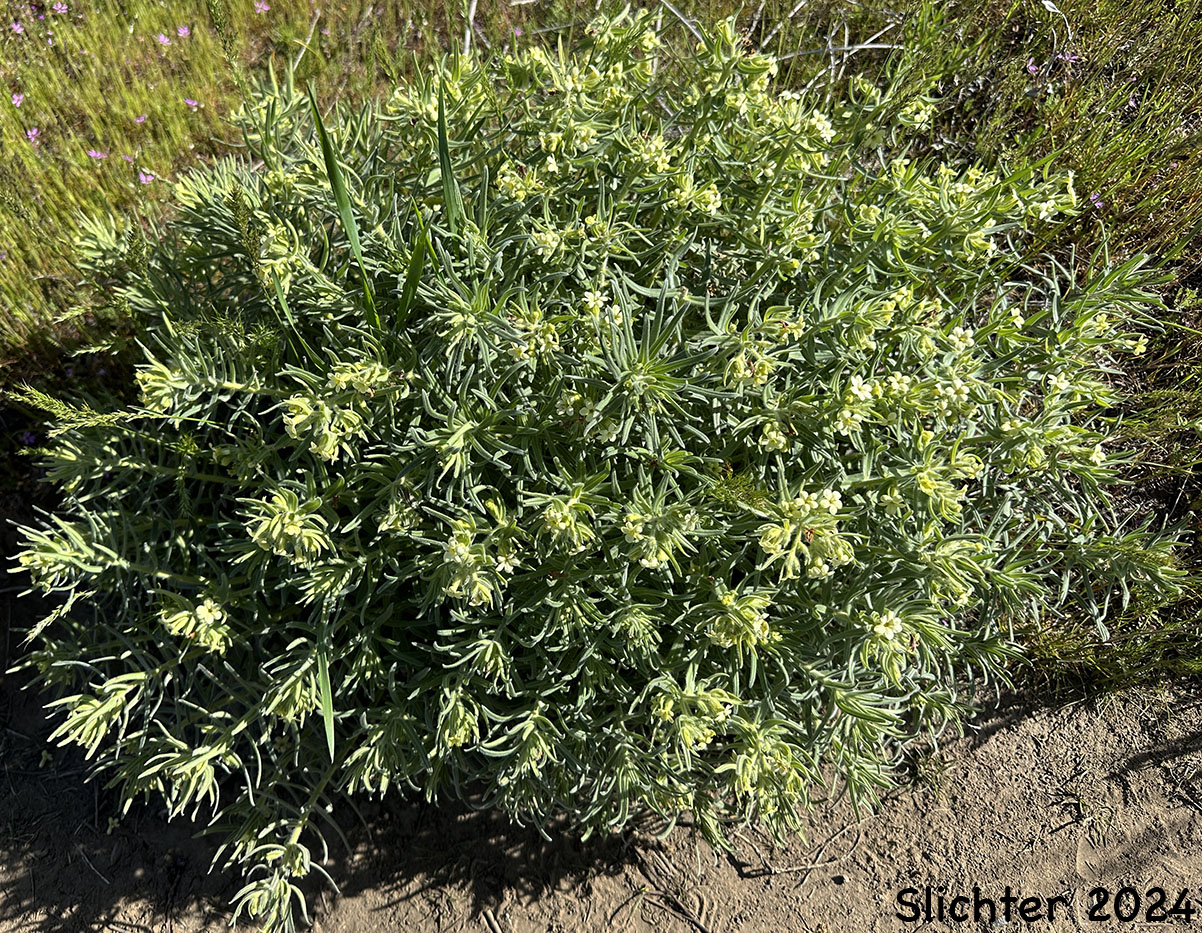
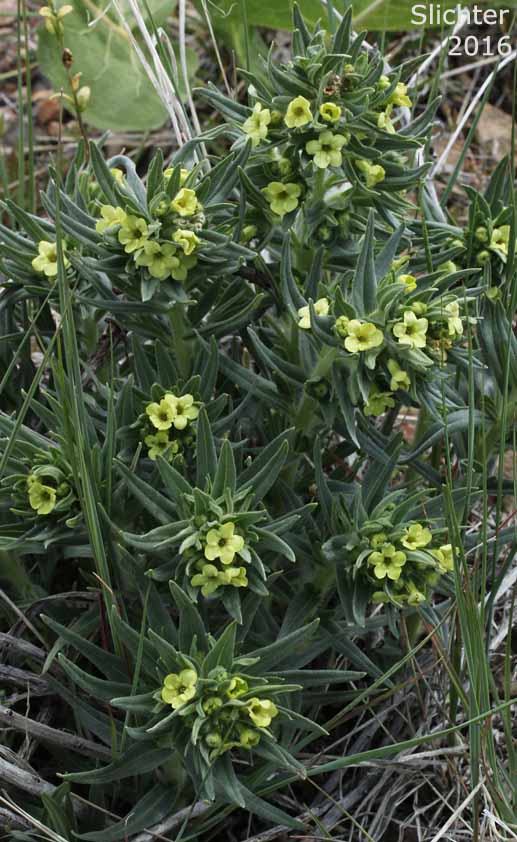
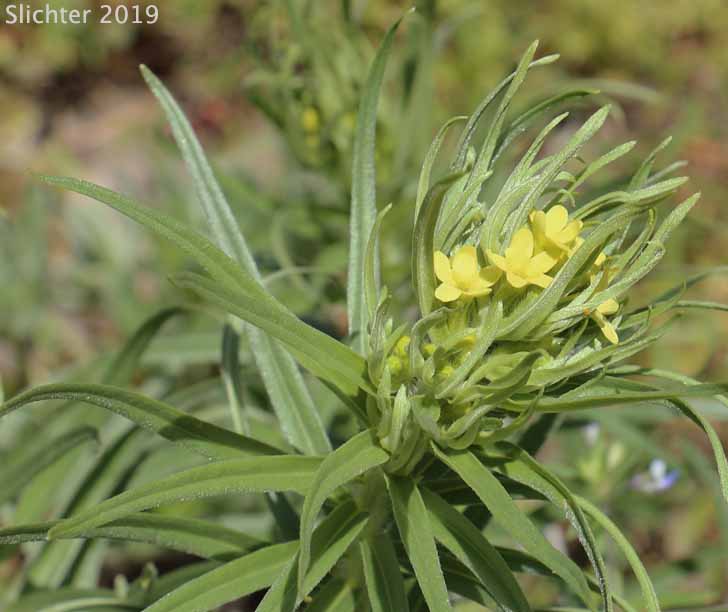
Puccoon is a perennial flower of some attractive nature with multiple leafy stems arising 20-60 cm high from a woody base. The stems are lax or almost prostrate to ascending. The leaves are all found on the stiffly haired stems, the lower ones largely reduced with the upper leaves numerous with sessile bases. Individual leaves are lanceolate to linear in shape and range from 3-10 cm long and 2-10 mm wide.
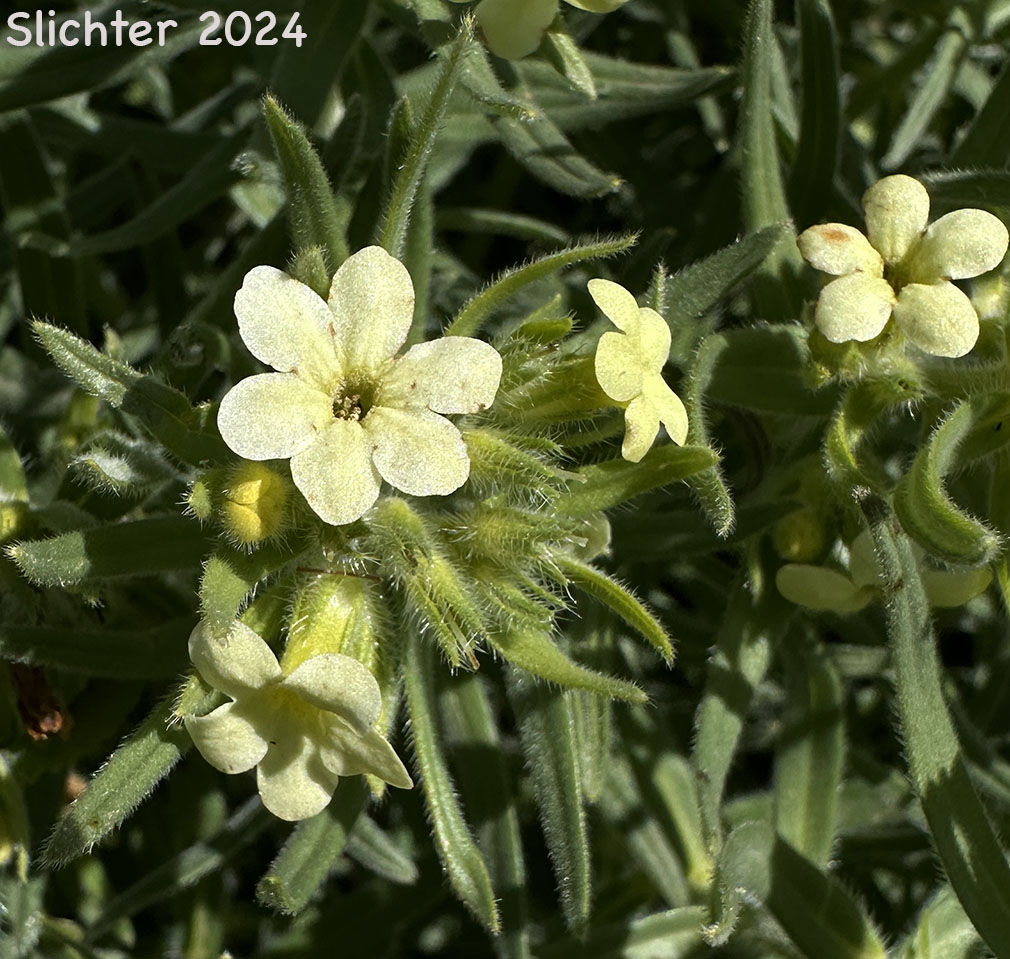
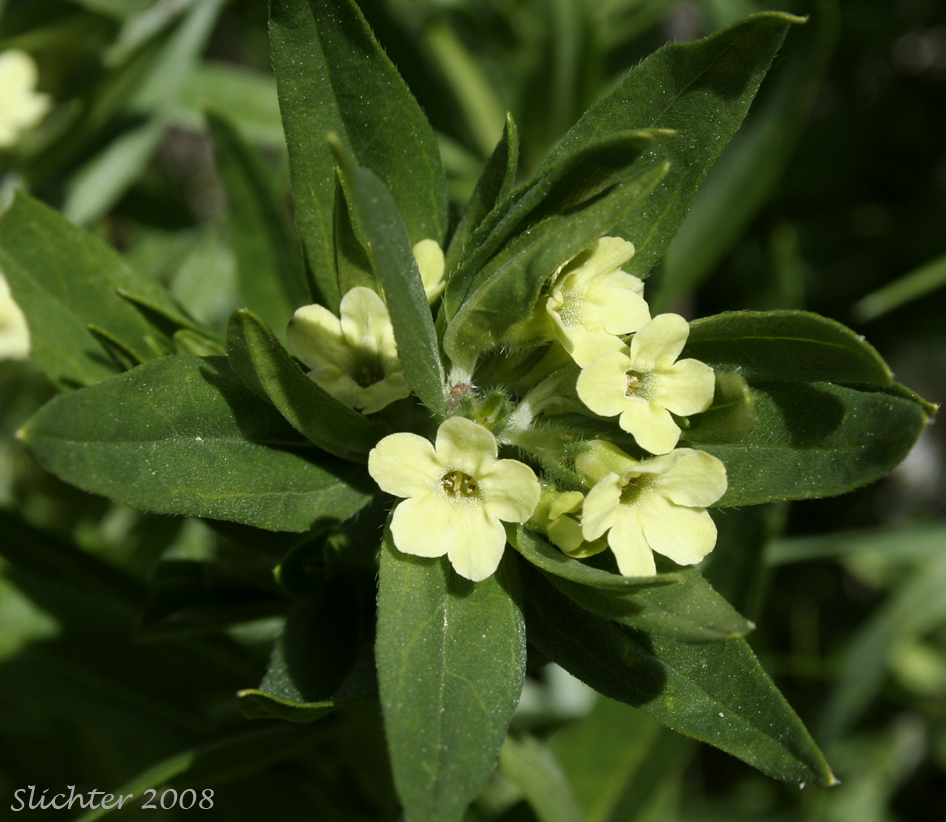
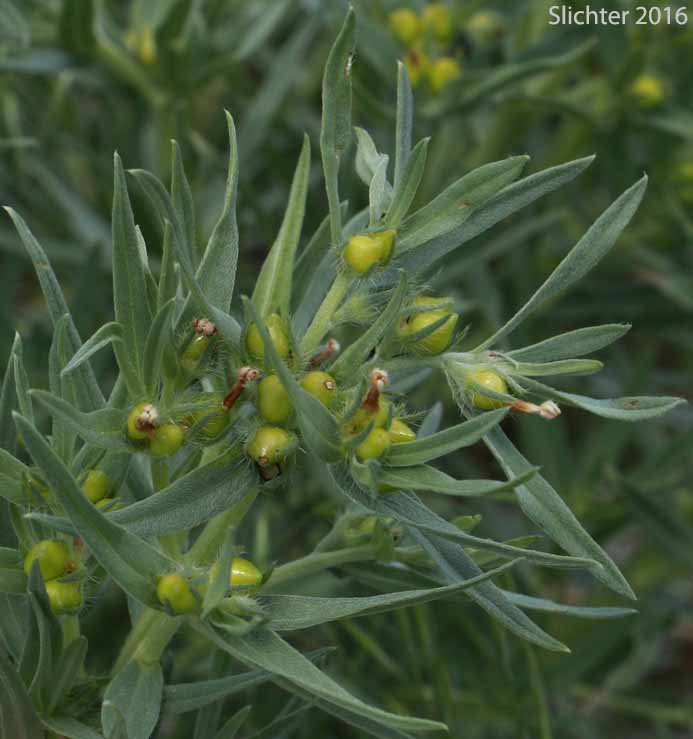
The flowers are clustered among leafy bracts in the upper axils. The flowers are 5-lobed with a light greenish-yellow coloration. The flowers are 8-13 mm long with the tube 4-6 mm long and the limb 7-13 mm wide. The corolla tube is glandular within the tip. Each flower produces 4 cone-shaped, hard and stony nutlets or seeds.
The genus name Lithospermum means stony (Litho-) seed (-sperm) in reference to the stony seeds or nutlets.
Puccoon was widely used as medicine by the Plains Indians. The roots were eaten when cooked and also were a remedy for respiratory ailments.
Puccoon may be found in a variety of open, fairly dry places in the foothills and grasslands to moderate elevations in the mountains. It may be found in sandy, gravelly and deep loam soils.
Puccoon may be found from southern British Columbia south to the east of the Cascades to northern California and thence east to southern Colorado. It is occasionally found in drier open places in the Puget trough.
 -
- 
 -
- 
 -
- 
 -
- 
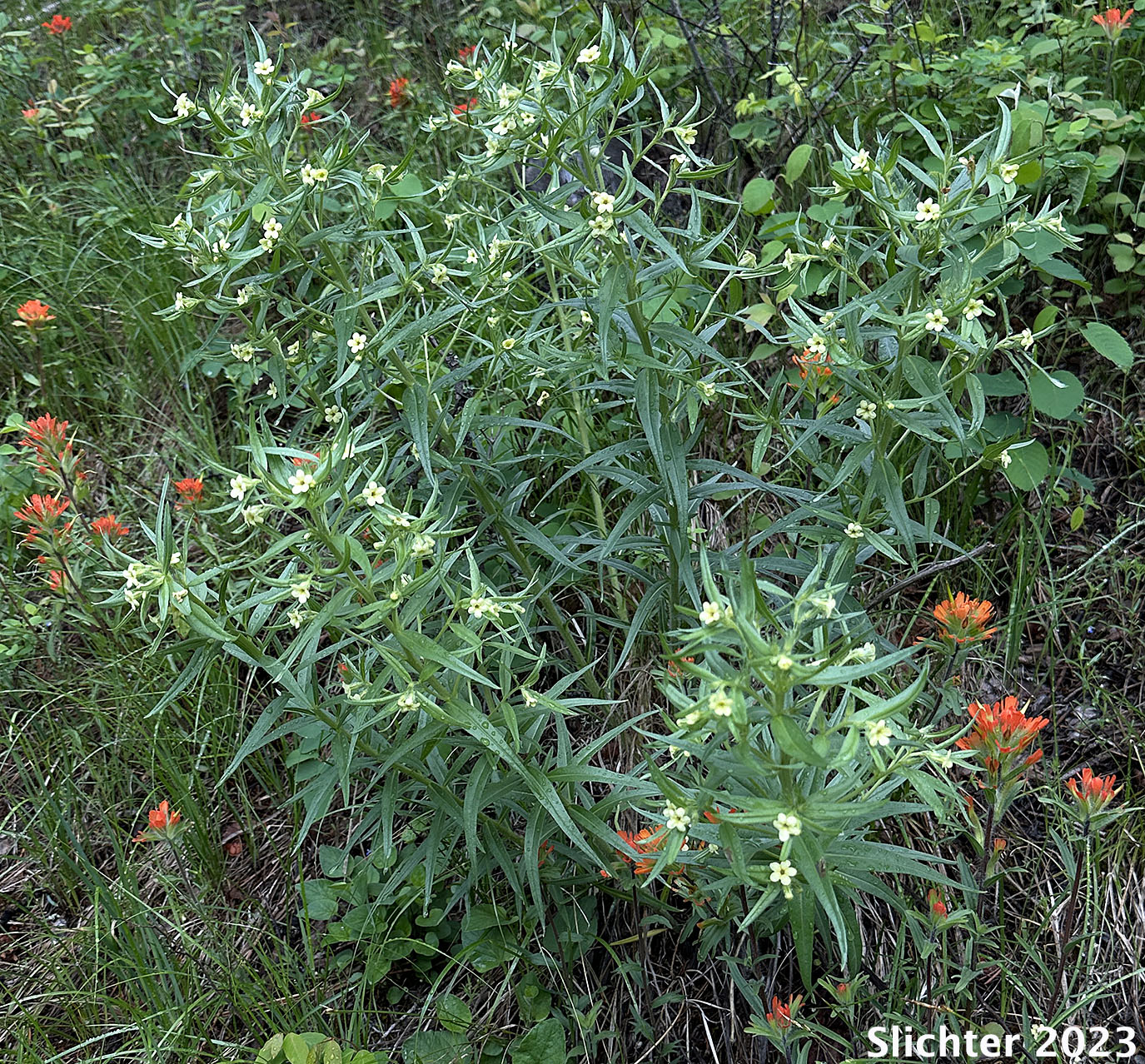
Puccoon blooming along with harsh paintbrush (Castilleja hispida var. acuta) along the Holland Falls National Recreation Trail #416, Flathead National Forest......May 27, 2023.
 -
-