Rocky Mountain Iris, Western Blue Flag, Western Iris
Iris missouriensis
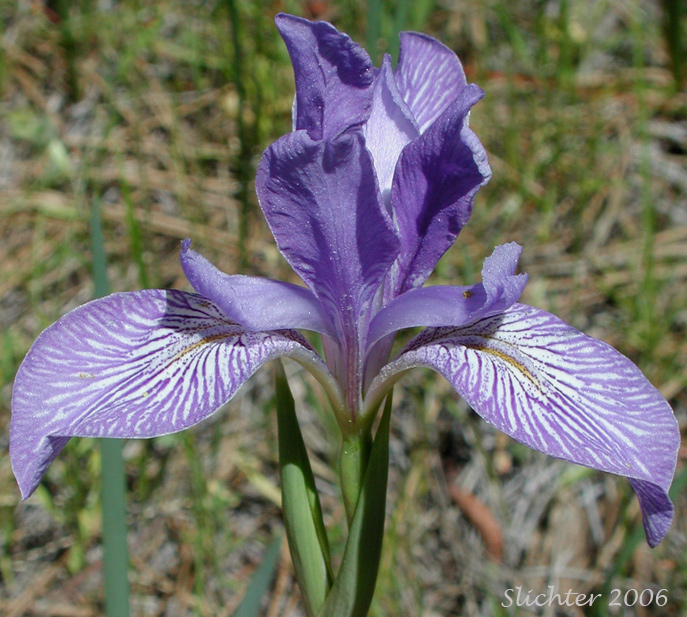
The photo above shows a close-up of the inflorescence of western blue flag as seen several miles northeast of Glenwood, WA........June 2006.
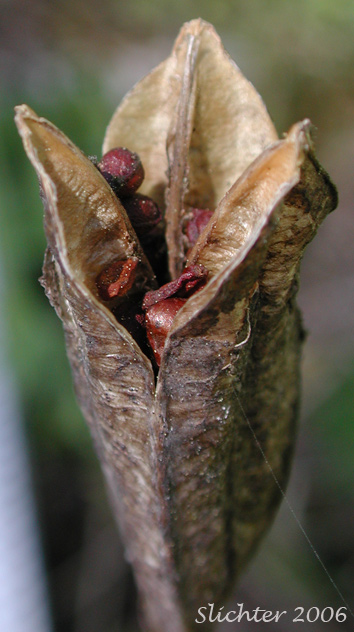 The photo at right shows the dried seed pod (from the 2005 season) and several seeds of western blue flag.
Characteristics:
Western blue flag is a pretty wildflower which spreads easily
via thick rhizomes to form broad clusters, which often appear ring-like as the
older plants in the middle die. The stems arise 30-90 cm with 2-4 thick grass-like
leaves 20-40 cm long and 5-10 mm wide.
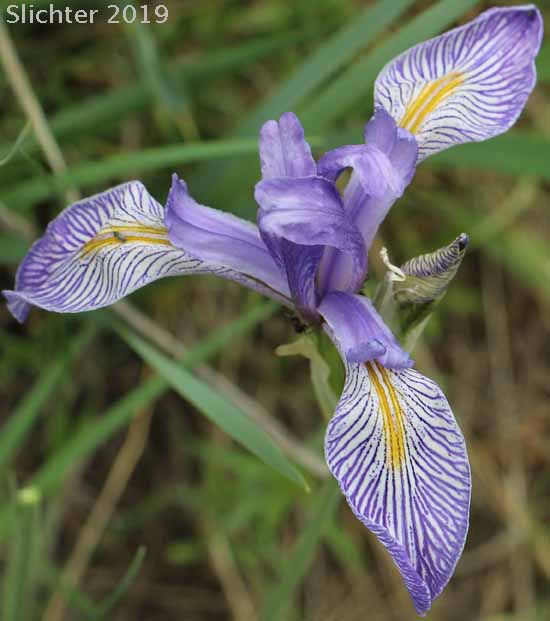
The 1-4 light blue to violet-blue flowers measure about 7.5
cm across. The 3 petals often stand upright and they tend to be slightly shorter
than the 3 spreading sepals which are oblanceolate in shape and 5-6 cm long.
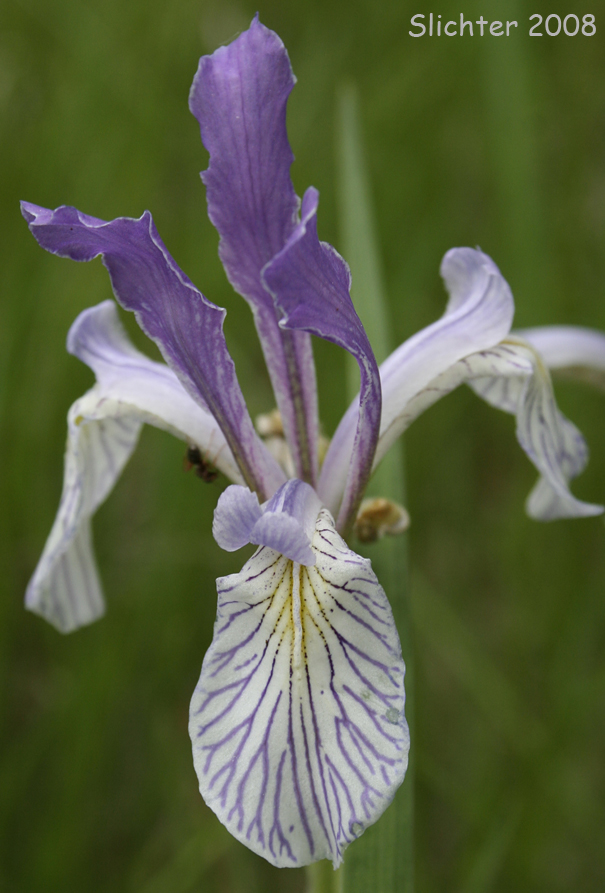
The throat may have a splash of yellow, and the petals and sepals may have blue
penciled lines (as seen in the photos).
Habitat:
Western Blue Flag is common in meadows which remain moist until
the time of flowering. It is most common in valley bottoms, but may be found
in moist areas amongst sagebrush or beneath Ponderosa Pines.
Range:
Western blue flag is widespread east of the Cascade Mts, east
to the Dakotas, north to British Columbia and south to northern Mexico.
Use:
Western blue flag is a pretty native iris for gardens east of
the Cascades! In addition, the rootstalks contain a toxin known as irisin,
which can be lethal if eaten.
 -
- 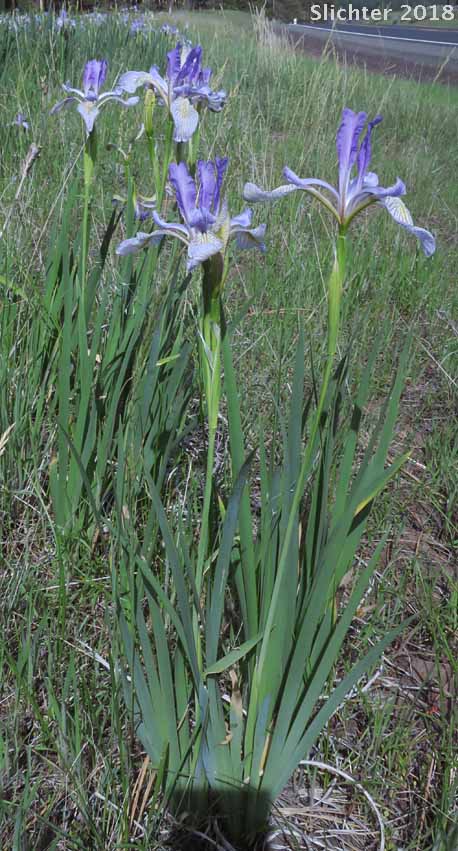
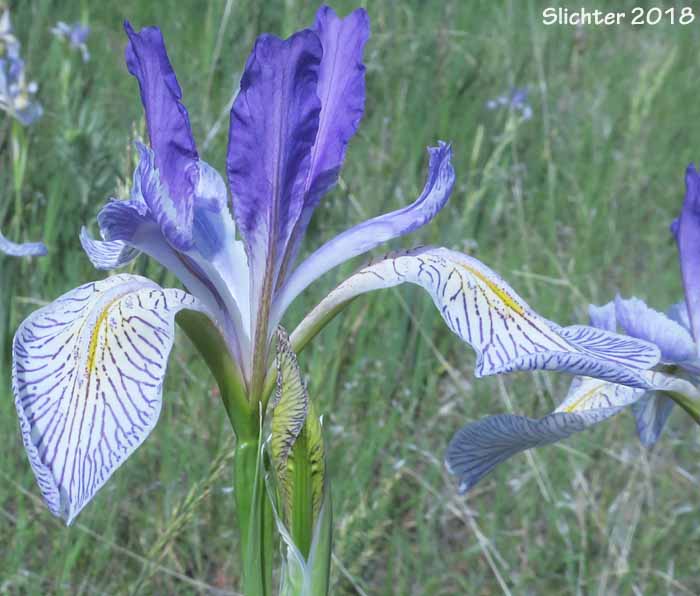
Western blue flag blooming along Crook County Road 123 about a mile east of the US Highway 26 junction, Crook County, OR.......May 19, 2018.
 -
- 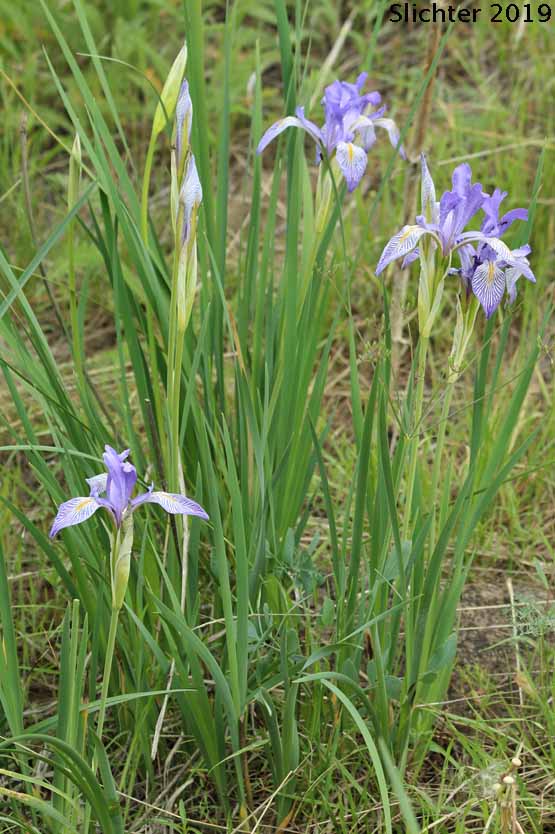
Western blue flag in bloom along the Umtanum Falls Trail, Yakima County, WA......May 25, 2019.
 -
- 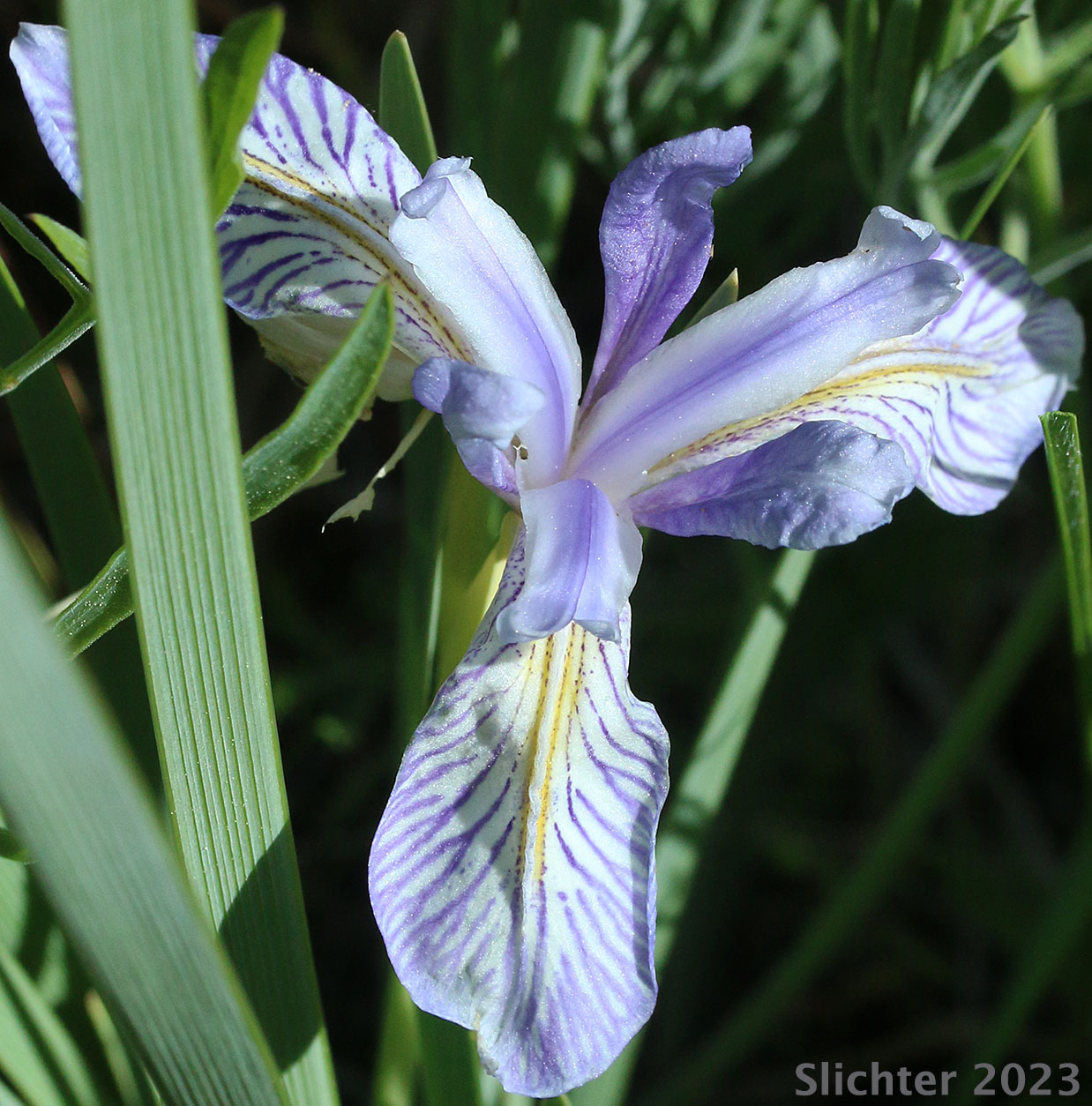
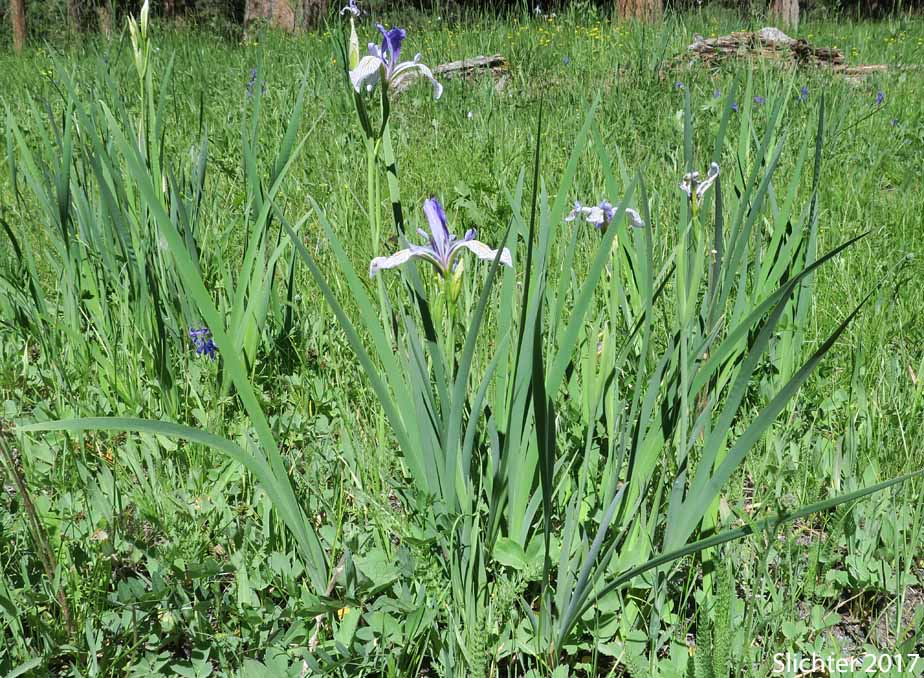
Western blue flag blooming at left along the Line Butte Trail #807 on the south side of Lookout Mt., Ochoco National Forest.........June 22, 2017. The photo at right shows western blue flag in bloom in wetlands along Dry Creek west of Cascade Camp in the Wenas Creek drainage, Yakima County, WA.....June 3, 2023.
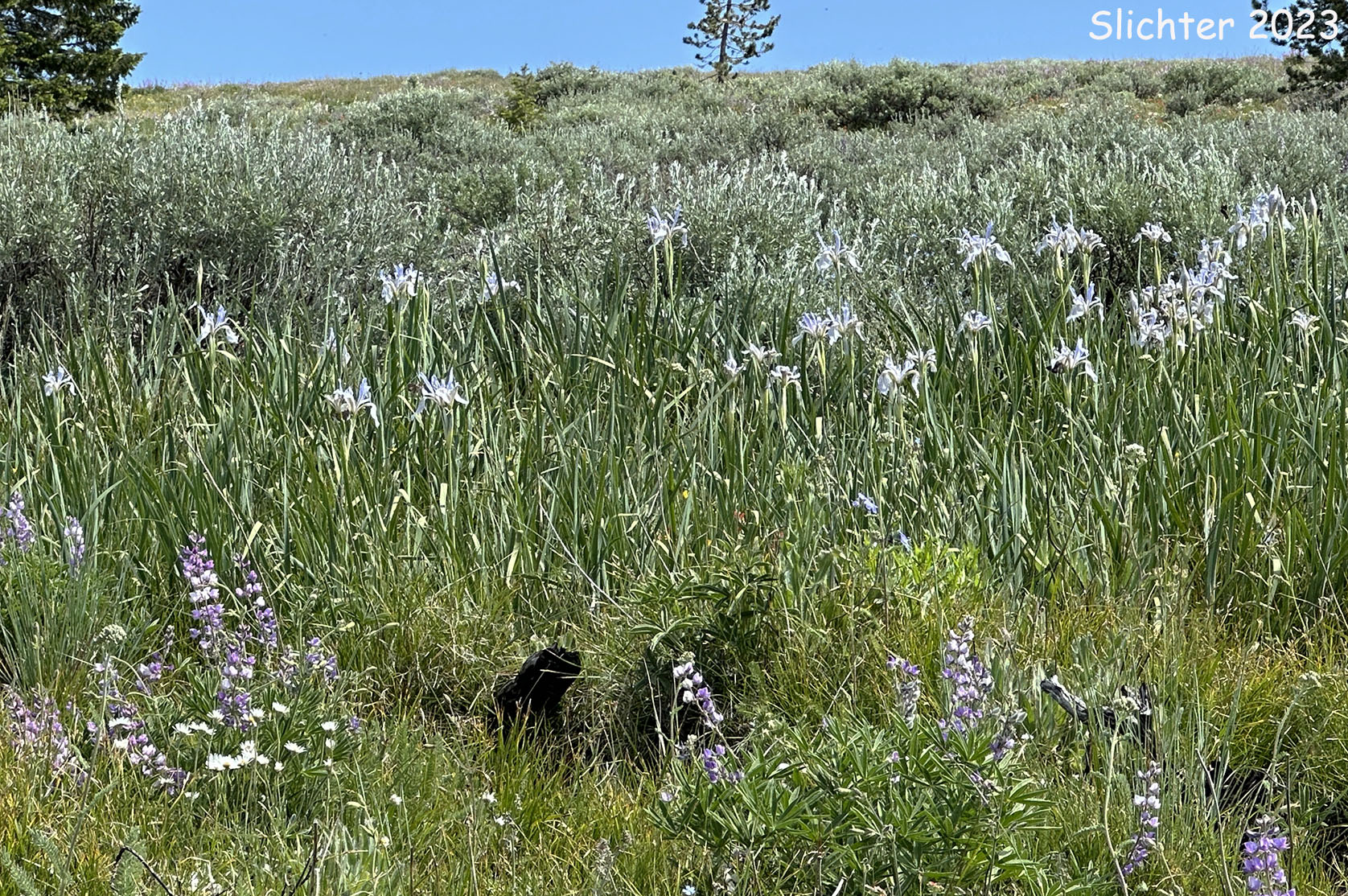
A habitat view of western blue flag in bloom along the Bullrun Trail #1961, Monument Rock Wilderness......July 9, 2023.
 -
- 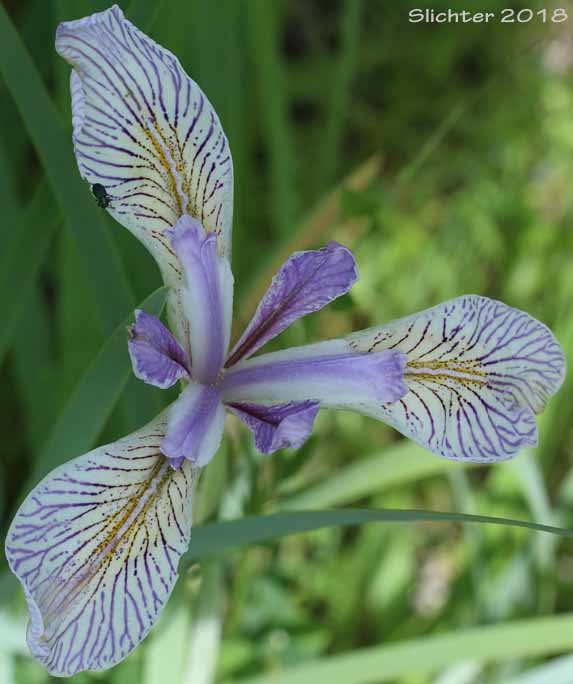
The photo at left shows a close-up of the flower of western blue flag as seen along the Indian Painted Rocks Trail along the lower Spokane River.........June 2, 2008. The photo at right shows a close-up view of the flower of western blue flag as seen along Indian Creek, northwestern corner of Big Summit Prairie, Ochoco National Forest........June 3, 2018.
 -
-  -
- 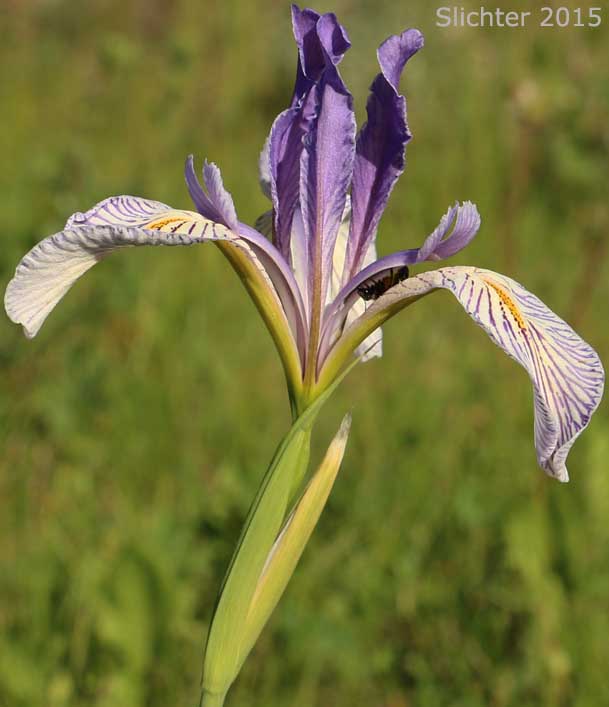
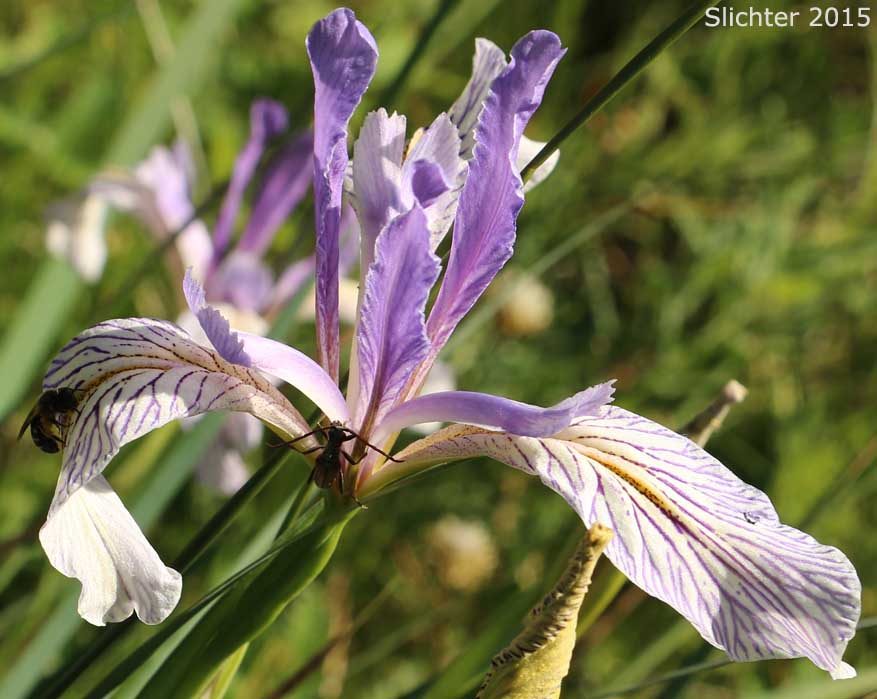
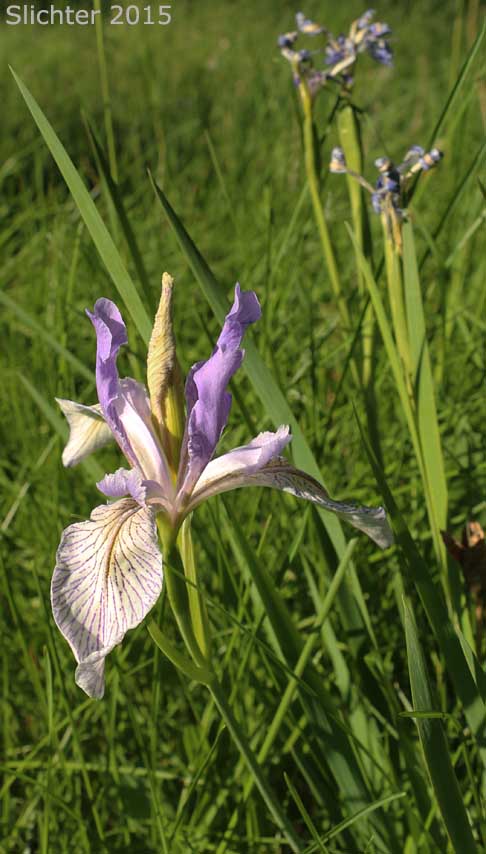
Western blue flags still in bloom in wetlands along the North Fork Crooked River about one and one-quarter mile south of the junction of FS Road #42 and #4215, Ochoco National Forest..........June 12, 2015.
 -
- 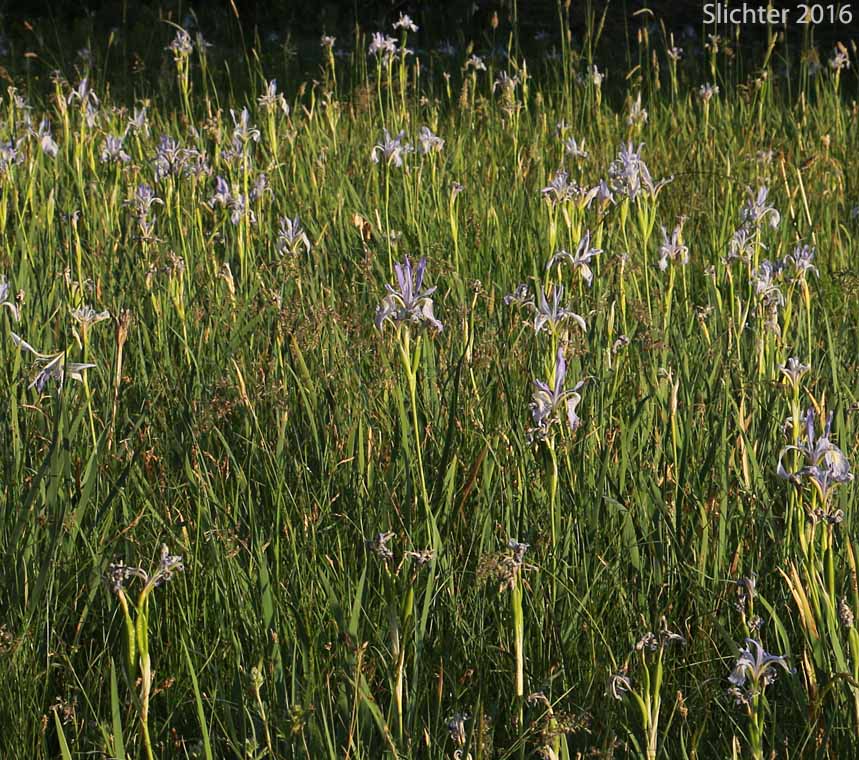
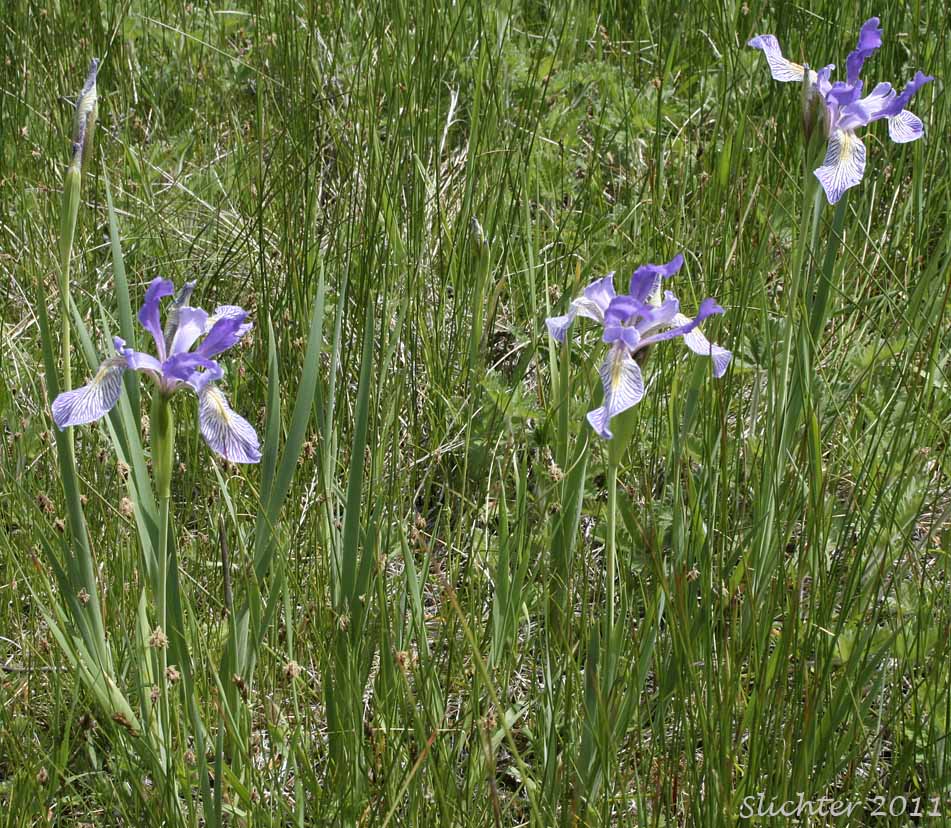
Western blue flag blooming (left) with clustered field sedge (Carex praegracilis) at its feet in meadows near Rock Creek, Escure Ranch (BLM), eastern Adams County, WA.........May 14, 2011. The photo at right shows western blue flag in bloom in wetlands surrounding alkaline flats at Hot Springs Campground, Hart Mt. National Antelope Refuge........June 9, 2016..
 -
-  -
- 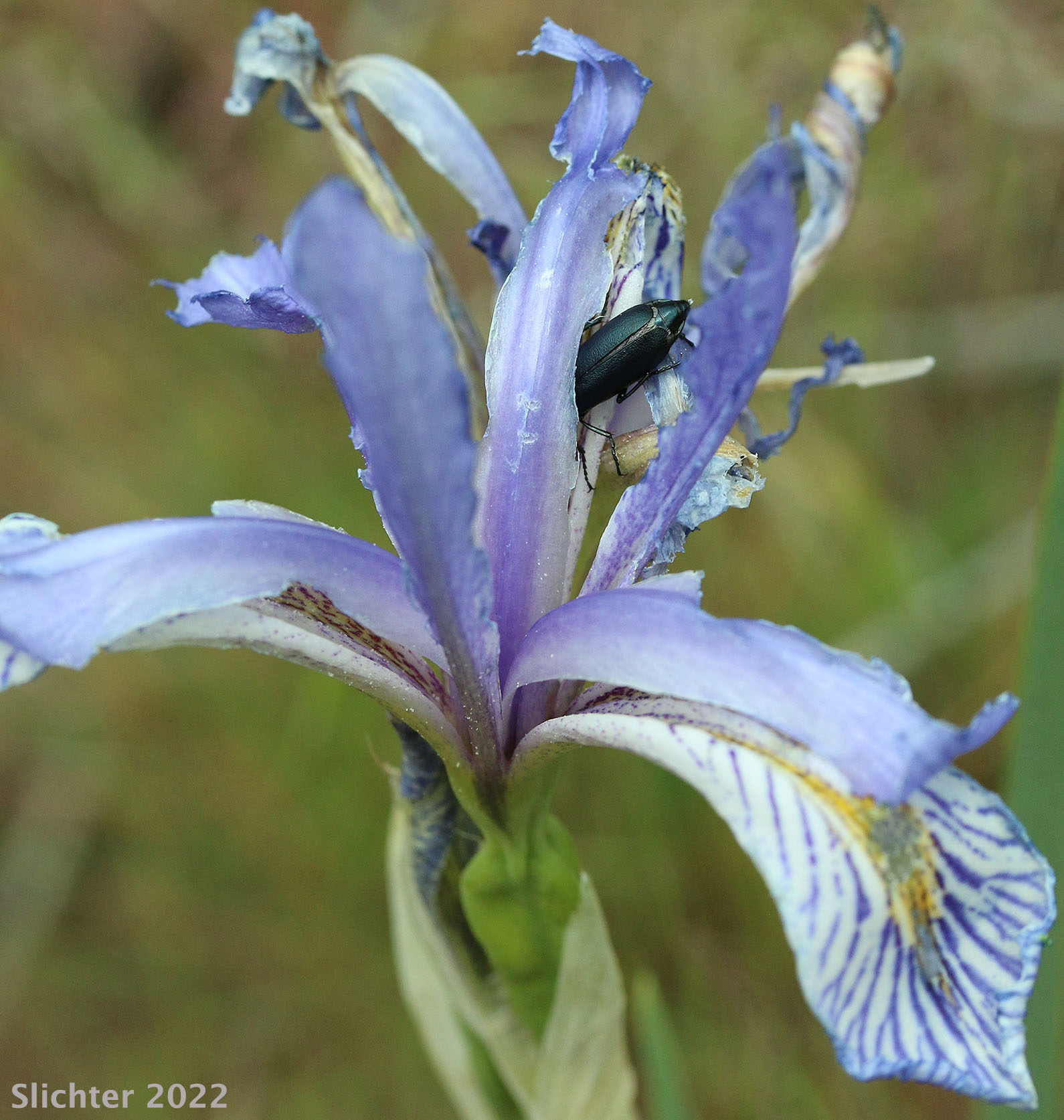
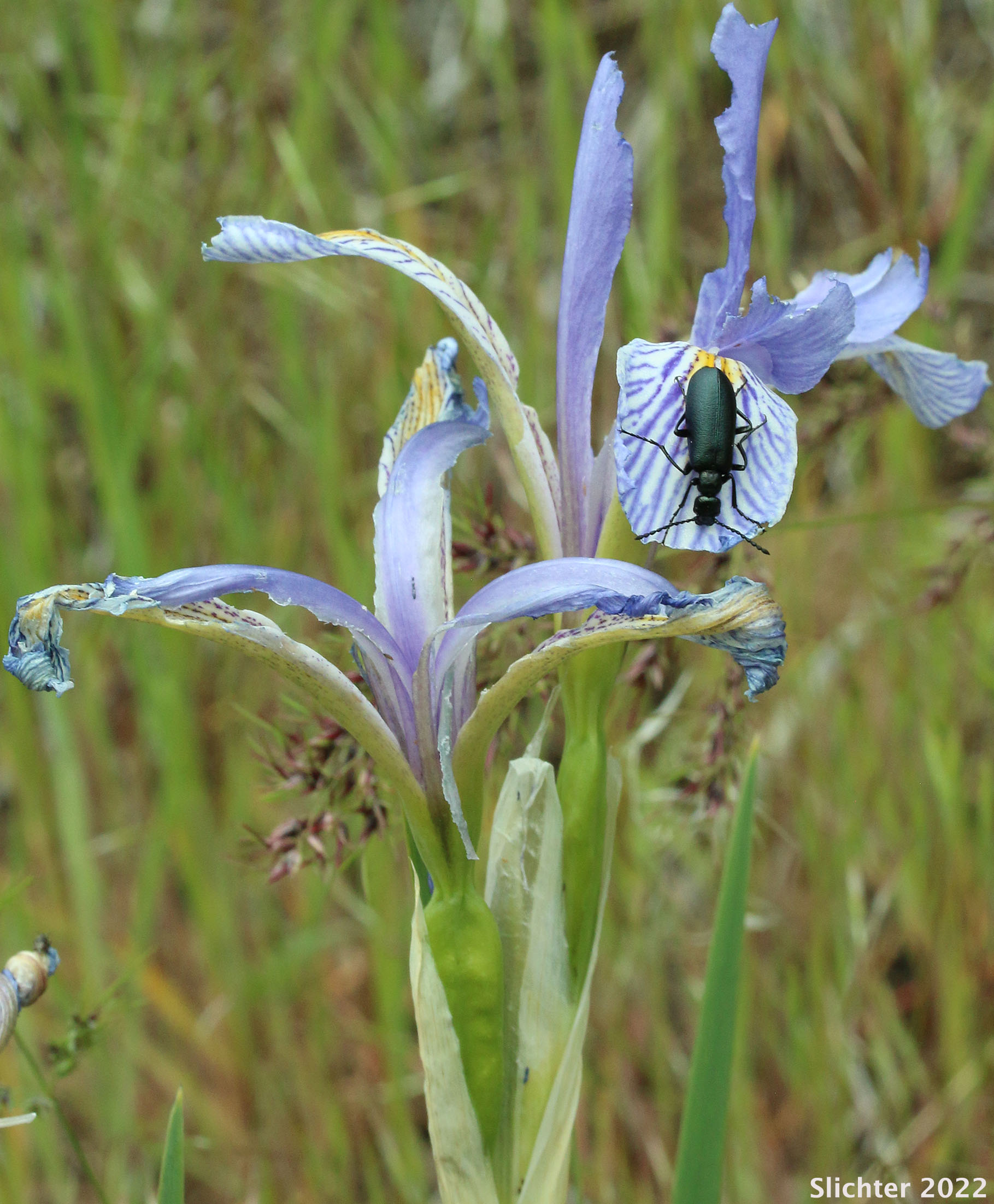
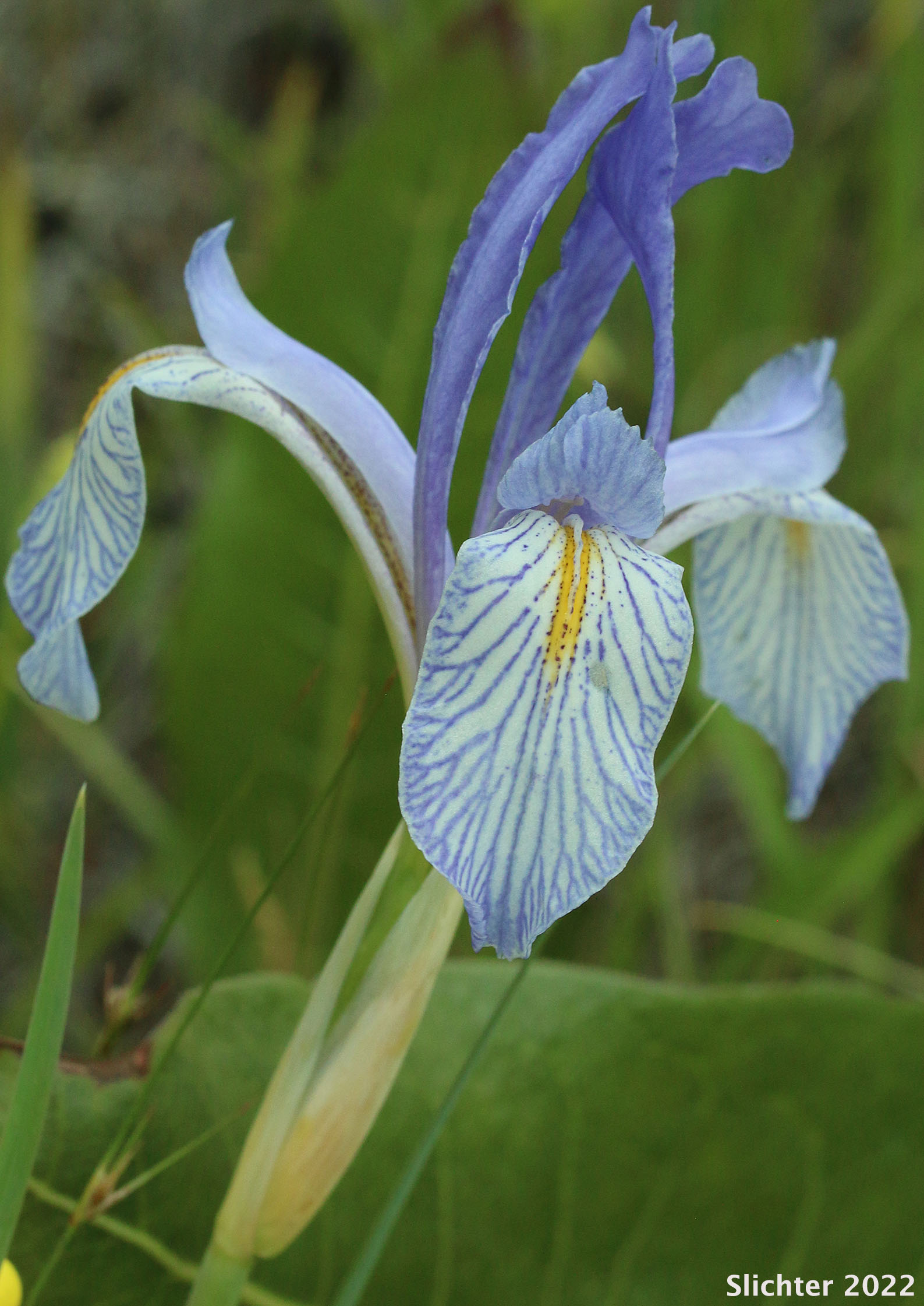
Several photos showing a beetle as a potential pollinator of western blue flag as seen in wetlands along Dry Creek about one-half mile upstream of Wenas Creek, DNR lands in Yakima County, WA.....May 29, 2022.
 -
- 
Paul Slichter