[The Barberry Family East of the Cascade Mountains of Oregon and Washington]
Creeping Oregon Grape, Low Oregon Grape
Berberis repens
Synonyms: Berberis aquifolium var. repens, Berberis nana, Berberis sonnei, Mahonia repens, Mahonia sonnei, Odostemon repens
 -
- 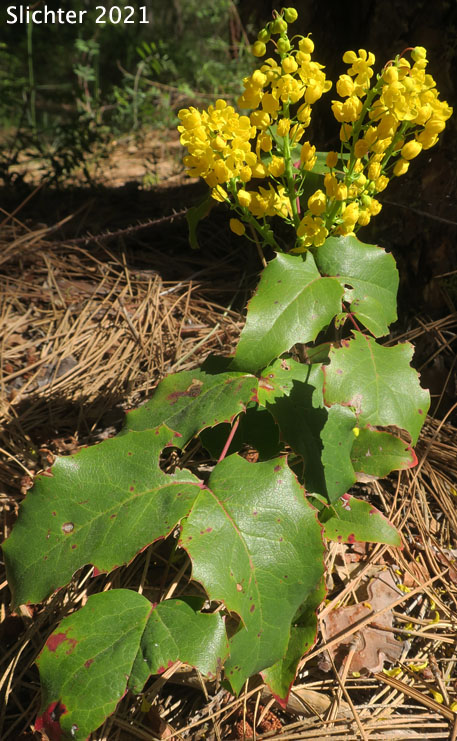
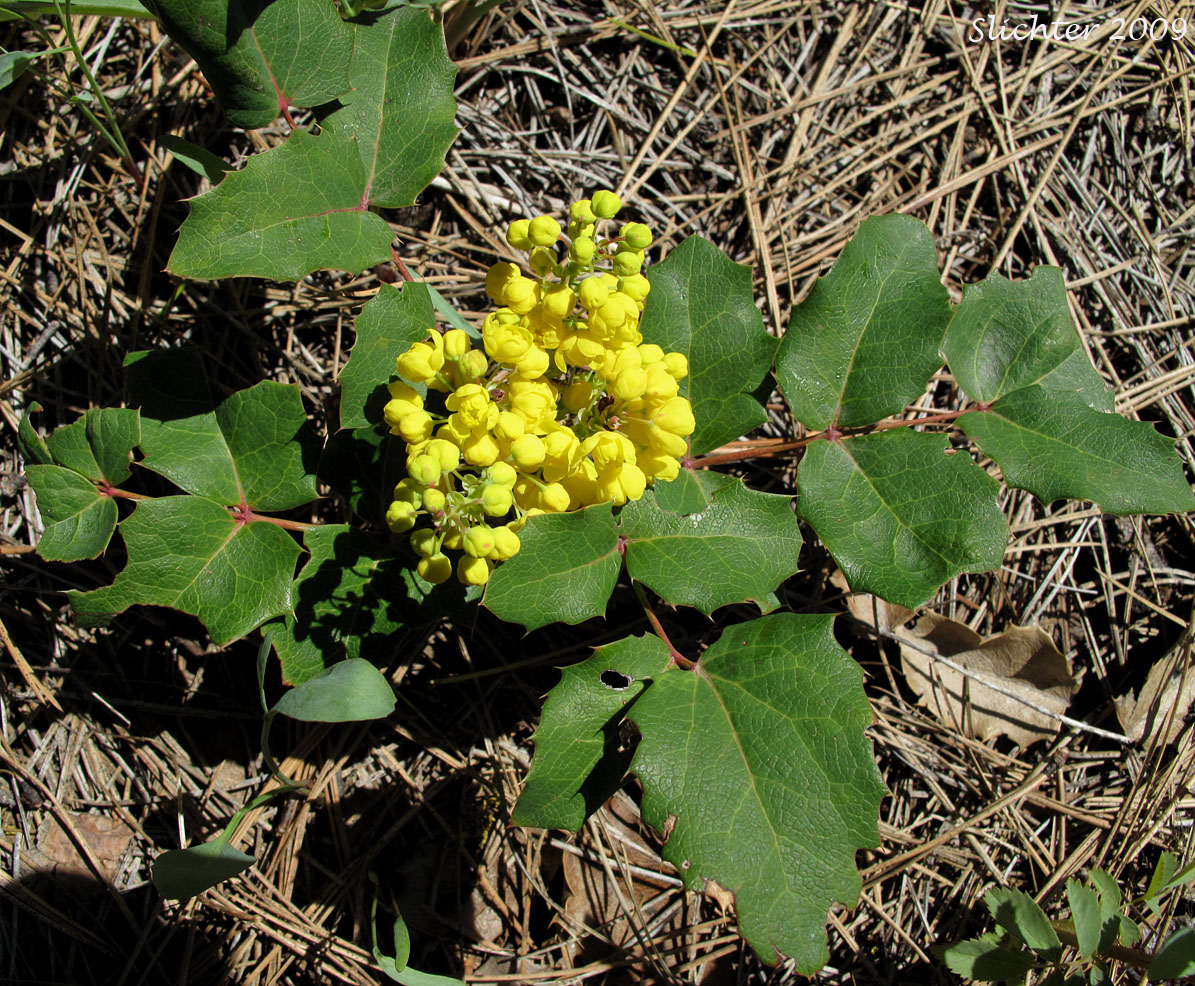
Creeping Oregon grape as seen at left from the trailhead to Canyon Creek in the Klickitat State Wildlife Area of south-central Washington.........May 8, 2009. The photo at right shows creeping Oregon grape in bloom in open forest at Brooks Memorial State Park, Klickitat County, WA.....My 4, 2021.
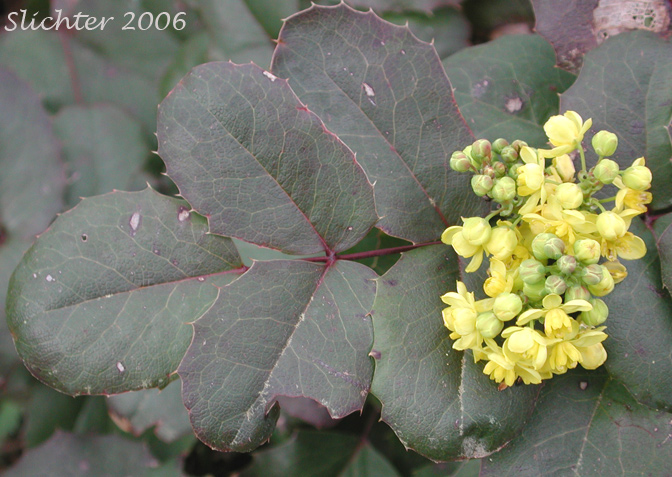
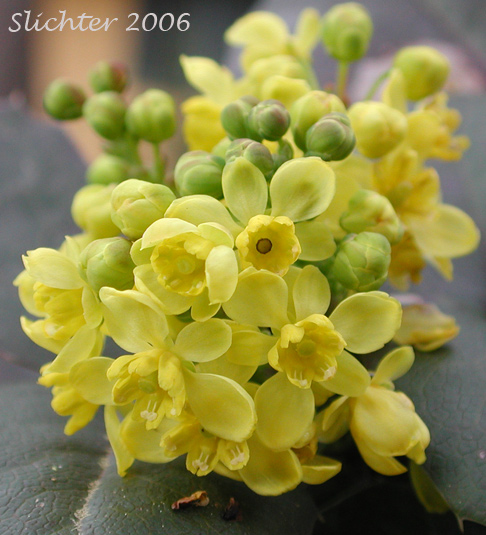 The photo at right shows a close-up of the flower cluster of creeping Oregon grape..........early April 2006.
Characteristics:
Creeping Oregon grape is a much smaller, more compact member
of a family valued by landscapers for their bright yellow flowers, evergreen
leaves, and bluish berries. It is similar to shining Oregon
grape, but is lower and more spreading, with trailing stems (repens
means crawling or trailing). It is stoloninferous with stems reaching from 7.5-15
cm in height. The compound pinnate leaves have 5-7 oval leaves, generally less
than twice as long as broad. The leaflet margins are edged with 15-43 spinulose
teeth, and the upper surface may be glossy or dull.
The compact racemes of bright yellow flowers are found at the
apex of the stems. The globose berries are dark blue with a glaucous
dusting.
The ripe berries of Creeping Oregon grape were used by Native Americans as
food. The berries were eaten raw, fermented into wine, or cooked to make jelly.
The roots were used as a source of yellow dye and the alkaloid (berberine) was
used as a cure for disorders of the stomach and intestines. The young leaves
are palatable to deer.
Habitat:
Creeping Oregon grape is a plant of open grassy to forested
areas, often on north-facing slopes in the Columbia River Gorge.
Range:
Creeping Oregon grape may be found east of the Cascade Mts from
eastern Washington south through Deschutes and Wasco Counties, Oregon to northeastern
California, southern Nevada, New Mexico, and north to South Dakota and Alberta.
 -
- 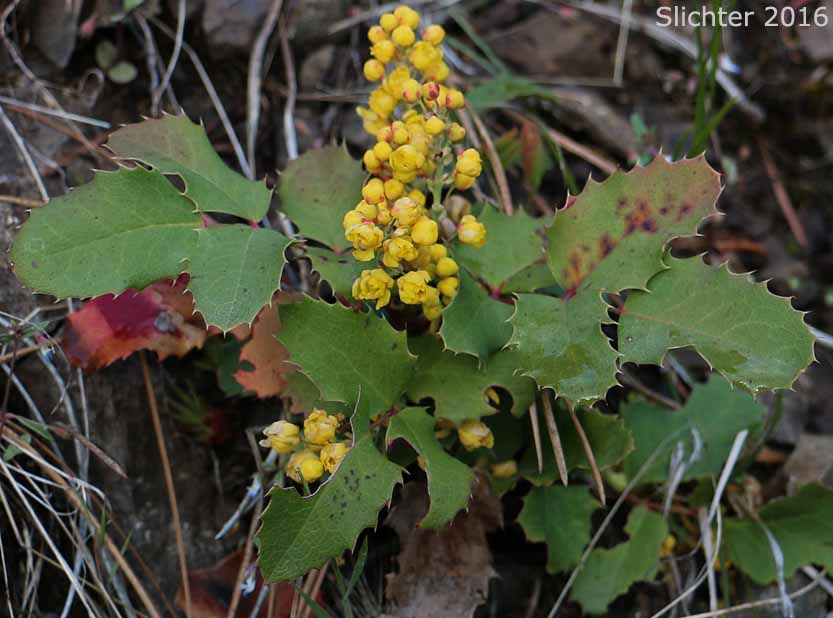
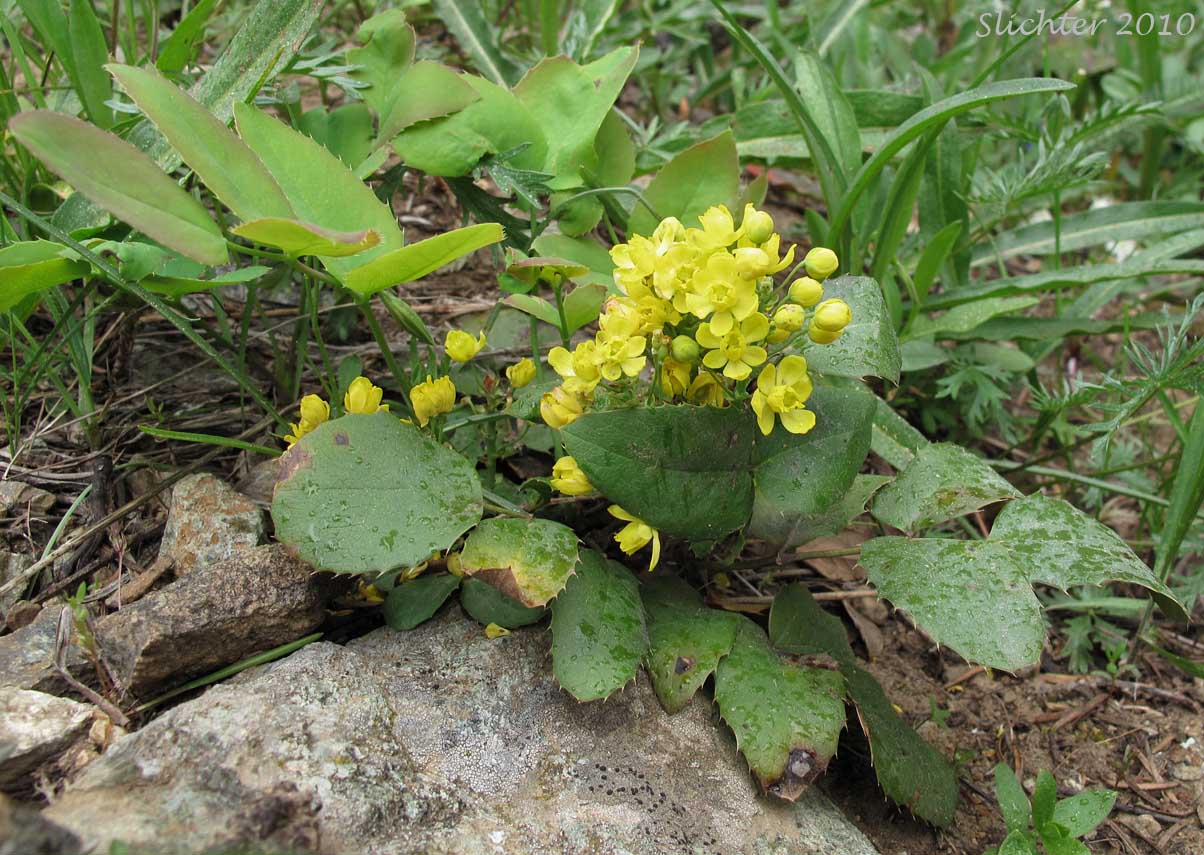
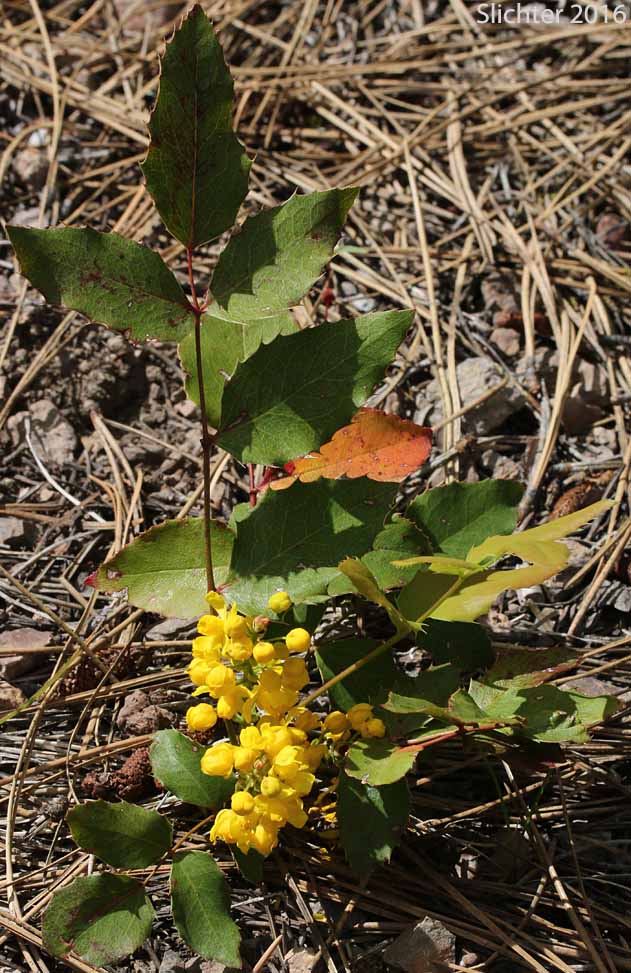
Creeping Oregon grape as seen left on Baldy Mountain, Strawberry Mt. Wilderness........July 2, 2010. The photo at right shows creeping Oregon grape in bloom on the hillside uphill to the north above Ochoco Forest Camp, Ochoco National Forest.........April 30, 2016.
 -
- 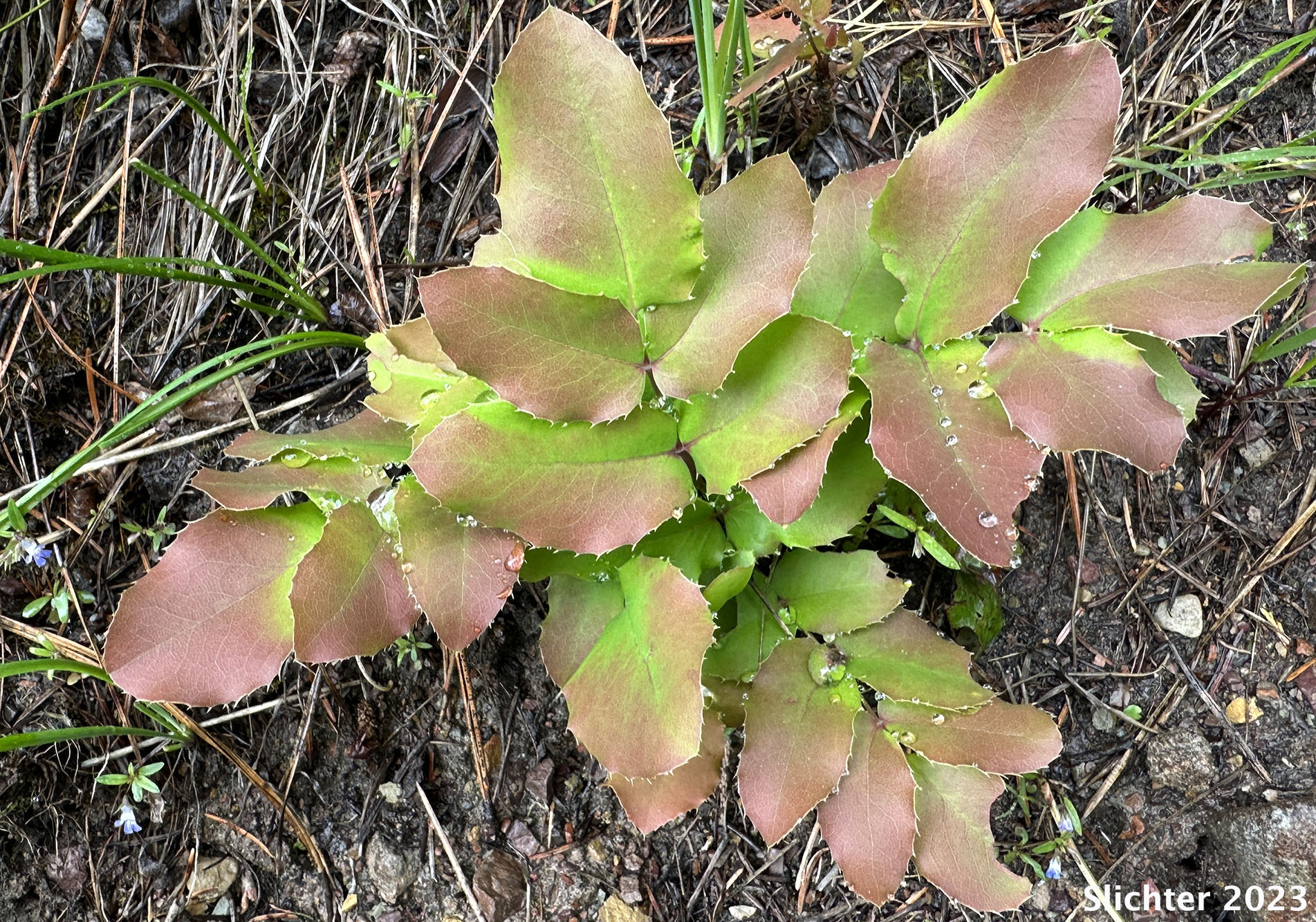
Creeping Oregon grape in bloom at left along the Fremont National Recreation Trail #160 in open woods near the middle trailhead on the western slopes of Hager Mountain, Fremont National Forest...........May 19, 2016. The photo at right shows the beautiful coppery spring foliage of creeping Oregon grape as seen along the Holland Falls National Recreation Trail #416, Flathead National Forest......May 27, 2023.
 -
- 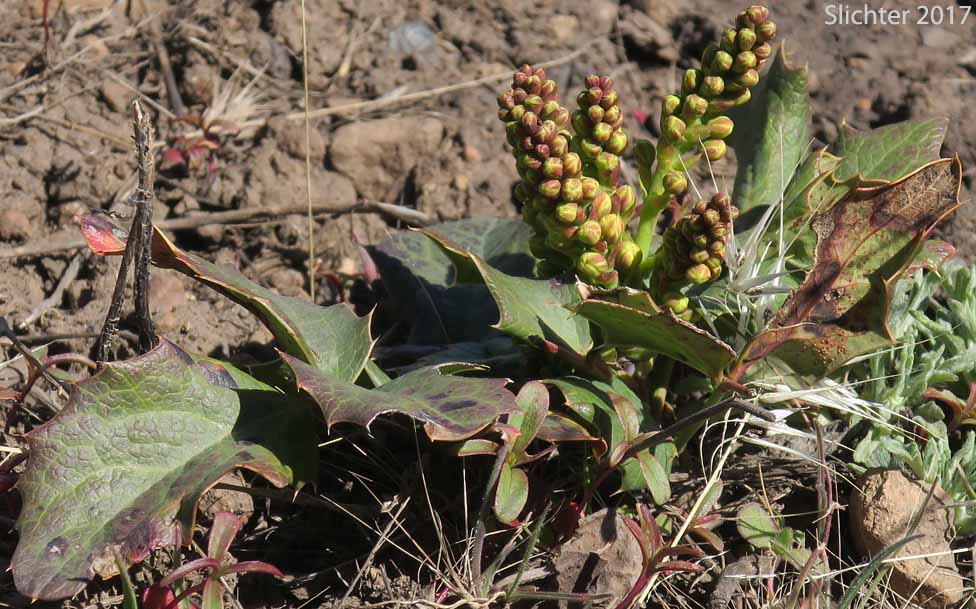
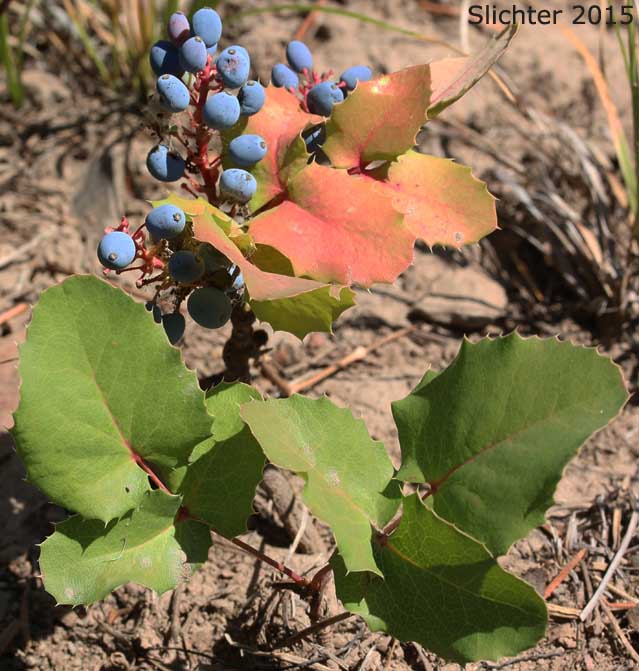
The ripening berries (left) of creeping Oregon grape as seen along the Slide Basin Trail #372, Strawberry Mountain Wilderness..........August 11, 2015. The photo at right shows creeping Oregon grape with flower buds as seen along Forest Road 2901 at a viewpoint looking east across the north end of Summer Lake, Fremont-Winema National Forest........April 30, 2017.
 -
- 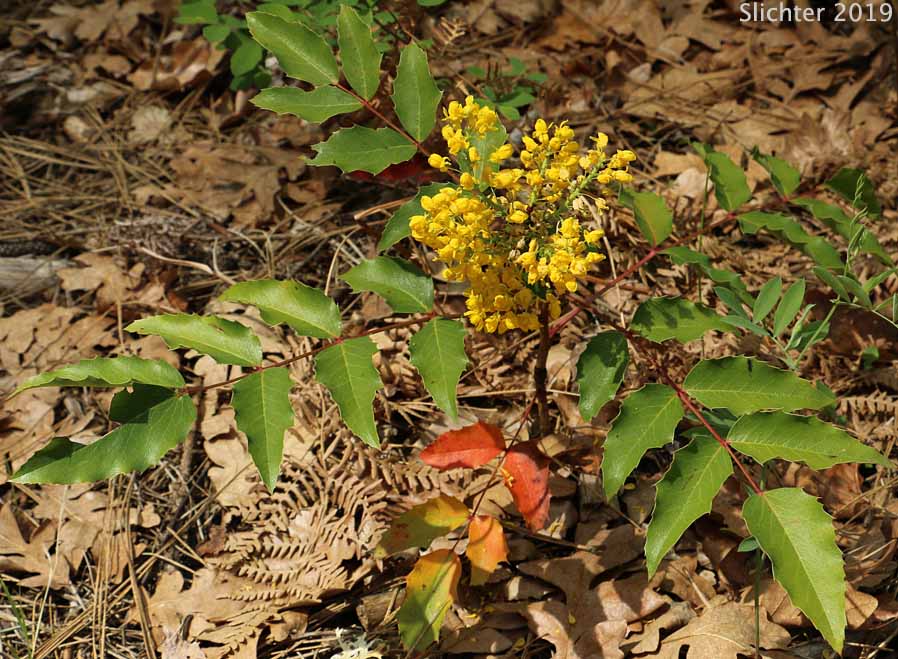
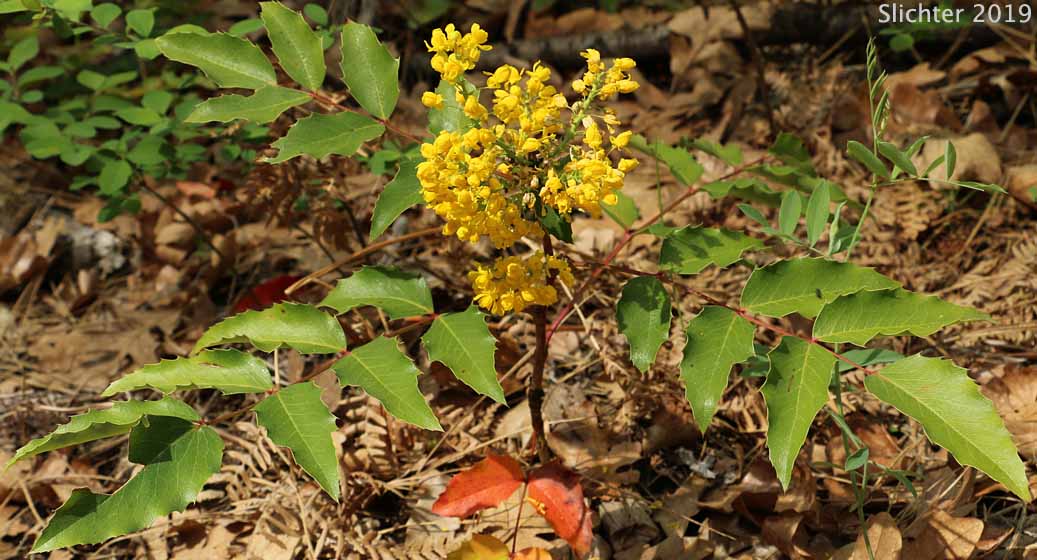
Creeping Oregon grape in bloom in open Oregon white oak - Douglas fir forest at Brooks Memorial State Park off US Highway 97.......May 13, 2019. These plants feature leaflets more than twice as long as wide (a characteristic of Berberis aquifolium), but the leaf margins of finely spinulose teeth is more reminiscent of Berberis repens. The lower leaf surfaces are not shiny, which favors the latter species.

Creeping Oregon grape from the banks of the North Fork Crooked
River near Big Summit Prairie, Ochoco N.F...........5-23-98.
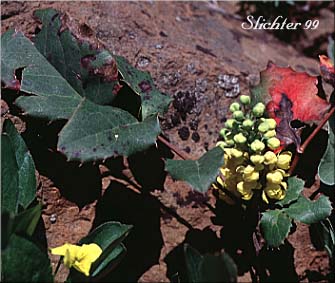
Creeping Oregon grape from Buckhorn Overlook,
the west rim of the Imnaha Canyon, Wallowa-Whitman N.F...........5-30-99.
Paul Slichter